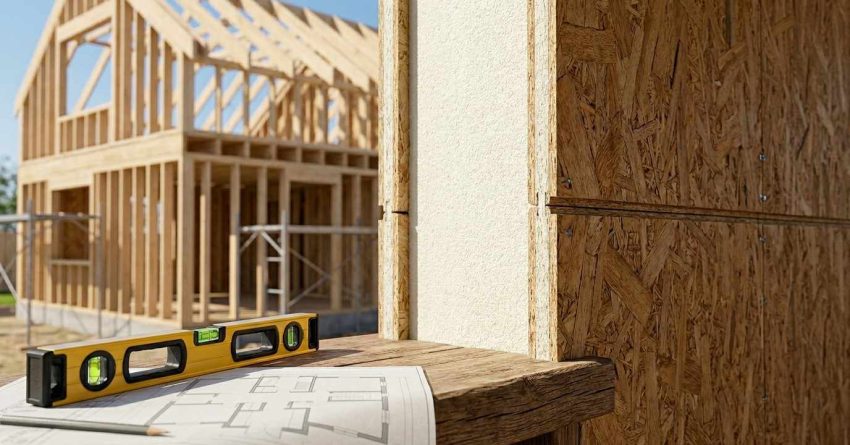
SIP panels go up faster, insulate better, and create a tighter building envelope than traditional stick framing — but only when the assembly sequence is followed correctly from the first plate to the final tape joint. Understanding each phase of the SIP assembly process helps homeowners, property managers, and builders avoid costly mistakes, coordinate trades efficiently, and get a structurally sound, energy-efficient building from the ground up.
This guide matters now because SIP construction is growing rapidly across residential new builds, and errors made during panel setting or sealing are expensive to correct after the fact.
This article walks through every stage of the SIP assembly process — from site preparation and panel delivery through wall and roof installation, rough-in coordination, and final air sealing.
What Is a SIP Panel and Why It Matters for New Construction
A structural insulated panel, or SIP, is a high-performance building component made of a rigid foam insulation core bonded between two structural facing boards, typically oriented strand board (OSB). The result is a single panel that simultaneously handles structural load, insulation, and air barrier functions — three jobs that traditional framing handles with separate materials and trades.
SIPs are manufactured off-site to precise dimensions based on architectural drawings. This prefabrication means panels arrive ready to install, reducing on-site labor time and material waste significantly compared to conventional framing methods.
SIP panels are one of the most efficient structural systems used in tiny home construction — our complete guide to tiny homes covers how these builds come together from foundation to finish and why SIPs have become a preferred method for compact, high-performance residential builds.
How SIPs Differ from Traditional Framing
Traditional stick framing uses dimensional lumber studs spaced at regular intervals, with insulation added separately between cavities. SIPs eliminate the thermal bridging that occurs at every stud in a conventionally framed wall. Because the foam core runs continuously across the panel face, there are no interruptions in the insulation layer, which produces measurably better energy performance.
SIP walls also carry structural loads through the panel itself rather than through individual studs, which allows for larger open spans and fewer interior load-bearing walls in the finished building.
Key Components of a SIP Panel
Every SIP panel consists of three primary components: the OSB facing on each side, the foam core (typically expanded polystyrene or polyurethane), and the spline connection system used to join panels at their edges. Panels are available in standard thicknesses ranging from 4.5 inches to 12.25 inches, with thicker panels providing higher R-values for walls and roofs in colder climates.
Site and Foundation Preparation Before SIP Installation
SIP construction demands a level, square, and properly anchored foundation. Unlike stick framing, which can accommodate minor irregularities through shimming and field adjustments, SIP panels are manufactured to exact dimensions. If the foundation is out of square or the sill plate is not level, panels will not align correctly, and gaps at joints will compromise both structural integrity and air sealing.
Before the first SIP panel is lifted into place, the foundation and site must meet precise tolerances — if your project needs professional site prep services, our handyman team can assess levelness, anchor bolt placement, and sill plate conditions before your panel delivery arrives.
Foundation Requirements for SIP Builds
The foundation must be square to within one-quarter inch across the diagonal before sill plate installation begins. Anchor bolts must be positioned according to the SIP manufacturer’s layout drawings, which are typically provided as part of the panel package. Any deviation from the specified bolt pattern will require field modification of the bottom plate, which adds time and introduces potential weak points.
The sill plate, which sits between the foundation and the first SIP panel, must be pressure-treated lumber and must be installed with a sill seal gasket to prevent air and moisture infiltration at the foundation-to-wall connection.
Delivery, Storage, and Staging of SIP Panels
SIP panels are large, heavy, and sensitive to moisture. Panels should be stored flat on a level surface, off the ground, and covered with a breathable tarp if they will sit on-site for more than a day or two before installation. Panels stored upright or on uneven ground can develop permanent bows that make installation difficult.
Staging panels in the order they will be installed — typically starting with the longest wall sections — reduces crane or lift time and keeps the assembly sequence moving efficiently.
Step-by-Step SIP Assembly Process for New Builds
The assembly sequence for SIP walls and roofs follows a specific order that cannot be reversed without significant rework. Each step builds on the previous one, and skipping or rushing any phase creates problems that compound through the rest of the build.
Step 1 — Installing the Bottom Plate and Sill Seal
The bottom plate is a pressure-treated lumber member that is anchored to the foundation and serves as the base connection for the first course of wall panels. The plate must be drilled to accept the anchor bolts and must be set in a continuous bead of sill seal foam tape to close the gap between the plate and the foundation surface.
Once the bottom plate is secured and level, a second bead of SIP adhesive is applied to the top face of the plate immediately before each panel is set. This adhesive creates an airtight bond between the panel and the plate and is a critical component of the building’s air barrier system.
Step 2 — Lifting and Setting Wall Panels
Wall panels are lifted into position using a crane, forklift, or panel lift, depending on panel size and site access. Each panel is set onto the bottom plate, aligned with layout marks, and braced temporarily while connections are made.
The panel-setting phase of SIP assembly requires precision structural carpentry work, including accurate plate layout, panel alignment, and connection detailing — our carpentry services page explains how skilled carpenters support structural builds at every stage.
Panels must be plumb, square, and aligned with adjacent panels before any permanent fasteners are driven. Rushing this step is one of the most common causes of alignment problems that carry through the entire wall system.
Step 3 — Connecting Panels with Splines and Adhesive
Adjacent panels are connected at their vertical edges using either a solid lumber spline, a surface spline (a narrow strip of OSB), or a SIP spline (a smaller foam-core panel). The spline type is specified by the manufacturer based on structural requirements.
Before the spline is inserted, both mating surfaces receive a continuous bead of SIP adhesive. The spline is then driven into the routed channel in the panel edge using a rubber mallet, and the panels are pulled tight together using panel clamps or ratchet straps. Fasteners are then driven through the OSB facing into the spline at the spacing specified in the manufacturer’s installation guide.
Step 4 — Installing Roof SIP Panels
Roof SIP panels span between the top plates of the wall panels and any interior ridge beams or structural supports. Roof panels are typically thicker than wall panels to achieve the required R-value for the roof assembly and to handle snow and wind loads.
Roof panels are set in the same sequence as wall panels — adhesive applied, panel lifted and positioned, connections made at the ridge and eave, and fasteners driven at the specified pattern. The ridge connection is a critical structural point and must be detailed exactly as shown in the engineered drawings.
Step 5 — Sealing, Taping, and Air Barrier Completion
Once all panels are set and fastened, every joint, penetration, and connection point must be sealed to complete the air barrier. This includes taping all OSB-to-OSB seams with SIP tape, applying expanding foam sealant to any gaps at panel edges, and sealing around all window and door rough openings.
The air barrier in a SIP building is only as effective as its weakest joint. A single unsealed gap at a panel connection can allow significant air infiltration that undermines the energy performance of the entire building envelope.
Electrical and Mechanical Rough-In Within SIP Walls
SIP walls do not have open stud cavities for running wiring. Electrical and mechanical systems must be planned before panels are set and routed through pre-chased conduit or field-drilled channels in the foam core.
Running wiring through SIP walls requires careful electrical rough-in planning before panels are sealed, since field modifications are significantly more difficult after assembly is complete — our electrical services team is experienced in working within SIP construction timelines and panel constraints.
Pre-Chased Conduit vs. Field-Drilled Channels
Many SIP manufacturers offer panels with pre-chased conduit runs built into the foam core at the time of fabrication. These chases are specified during the design phase and positioned to align with the electrical layout. Pre-chased panels are the preferred method because they eliminate the need for field drilling and reduce the risk of damaging the foam core.
When pre-chased panels are not available or when field changes require additional runs, a specialized hot knife or drill bit is used to create channels through the foam. These channels must be sealed after wiring is pulled to maintain the air barrier and prevent thermal bridging through the opening.
Common SIP Assembly Mistakes and How to Avoid Them
Several errors appear consistently across SIP builds, particularly on projects where the installation crew is working with SIPs for the first time.
Skipping or under-applying SIP adhesive at panel joints is the most frequent mistake. The adhesive is not optional — it is a structural and air-sealing component. Panels that are set dry or with insufficient adhesive will have gaps at joints that allow air movement and reduce the structural connection between panels.
Failing to brace panels adequately during setting is another common problem. Panels that shift before fasteners are driven can create alignment issues that are difficult to correct without disassembling the connection.
Improper taping at panel joints can compromise both air sealing and surface quality — our drywall finishing for SIPs team understands the specific finishing requirements that SIP interiors demand, including how joint treatment at the interior face affects both performance and appearance.
Finally, not following the manufacturer’s fastener schedule is a code compliance issue. SIP panels are engineered systems, and the fastener type, size, and spacing are part of the structural design. Substituting fasteners or changing spacing without engineering approval can void the panel warranty and create liability issues.
Working with SIP Contractors vs. DIY Assembly
SIP assembly is achievable for experienced owner-builders, but it requires careful planning, the right equipment, and a thorough understanding of the manufacturer’s installation manual before the first panel is lifted. The consequences of errors in SIP construction are more significant than in stick framing because panels are harder to modify after installation.
Hiring a contractor with documented SIP installation experience reduces risk substantially. An experienced SIP crew will have the panel clamps, adhesive guns, and lifting equipment needed to work efficiently, and they will be familiar with the common problem points before they encounter them on your project.
Whether you are managing a SIP build from the ground up or integrating panels into a broader construction project, our new build remodeling support team can coordinate across trades to keep your timeline on track and your assembly sequence correct.
When to Hire a Professional SIP Installer
Hire a professional SIP installer when the building is more than one story, when the roof panel spans are long or complex, when the project is in a high-wind or high-snow-load zone, or when the electrical and mechanical systems require coordination with the panel layout. For straightforward single-story builds with simple roof geometry, experienced owner-builders with proper equipment can complete the assembly successfully by following the manufacturer’s installation guide precisely.
Conclusion
The SIP assembly process for new builds follows a clear sequence — foundation preparation, panel delivery and staging, wall and roof panel installation, joint sealing, and rough-in coordination — where each phase depends on the accuracy of the one before it.
Getting the foundation level, the adhesive applied correctly, and the joints sealed completely determines whether the building performs as designed or requires costly remediation after the fact.
At Mr. Local Services, our team connects homeowners and builders with skilled professionals who understand SIP construction from the ground up — contact us today to find the right expert for your new build project.
Frequently Asked Questions
How long does SIP assembly take for a typical new build?
A typical single-story SIP home can have its wall and roof panels set in two to five days with an experienced crew and proper lifting equipment. Total assembly time depends on building size, panel complexity, and site access conditions.
Do SIP panels require a special foundation?
SIP panels do not require a unique foundation type, but the foundation must be level, square, and anchored precisely to the manufacturer’s bolt layout. Any deviation from the specified tolerances will cause alignment problems during panel installation that are difficult to correct.
Can SIP panels be used for both walls and roofs?
Yes. SIP panels are manufactured for both wall and roof applications. Roof panels are typically thicker than wall panels to meet insulation requirements and handle structural loads from snow and wind. Both use the same adhesive and spline connection system.
How is electrical wiring run through SIP walls?
Wiring in SIP walls runs through pre-chased conduit channels built into the foam core during manufacturing, or through channels field-drilled with a hot knife after panels are set. Pre-chased panels are preferred because field drilling is time-consuming and must be sealed afterward to maintain the air barrier.
Are SIP buildings more energy-efficient than stick-framed buildings?
SIP buildings consistently outperform stick-framed buildings in energy efficiency because the continuous foam core eliminates thermal bridging at studs. According to the Structural Insulated Panel Association, SIP homes can use significantly less energy for heating and cooling compared to conventionally framed homes of the same size.
What adhesive is used in SIP construction?
SIP-specific polyurethane adhesive is used at all panel-to-panel and panel-to-plate connections. This adhesive serves both a structural bonding function and an air-sealing function. Standard construction adhesives are not an acceptable substitute and should never be used in place of manufacturer-specified SIP adhesive.
Can SIP panels be modified after installation?
Minor modifications — such as adding an electrical chase or adjusting a rough opening — are possible after installation but require careful work to avoid damaging the foam core or OSB facing. Structural modifications, such as cutting a new opening in a load-bearing SIP wall, require engineering review before any cuts are made.