Construction projects in the USA typically cost between $150 and $500 per square foot, but that total is built phase by phase — and each phase carries its own price range, variables, and potential surprises. Knowing what each stage costs before work begins helps you plan a realistic budget, evaluate contractor bids with confidence, and avoid the financial stress that derails so many projects.
This guide breaks down every major construction phase, explains what drives the cost at each stage, and gives you the numbers you need to plan your project from the ground up.
Read through each phase to understand what you’re paying for, what affects the price, and how to keep your budget on track from start to finish.
What Drives Construction Phase Costs?
Before looking at individual phase prices, it helps to understand why costs vary so widely from one project to the next. Three factors shape nearly every line item on a construction budget.
Labor rates vary significantly by region. A framing crew in a high-cost metro area may charge two to three times more than the same crew in a rural market. According to the U.S. Bureau of Labor Statistics, construction laborers earn a median hourly wage of around $22, but specialty trades like electricians and plumbers earn considerably more.
Material costs fluctuate with supply chains, fuel prices, and seasonal demand. Lumber, concrete, and steel are particularly volatile. Locking in material pricing early in your project timeline can protect your budget from mid-build increases.
Project scope and complexity determine how many labor hours each phase requires. A simple rectangular footprint costs less to frame than a multi-gable roofline. A single-story build costs less to rough-in mechanically than a three-story structure.
Understanding what drives costs at each phase is the foundation of any successful project — our remodeling cost factors breaks down every variable that affects your total investment, from scope to finish level.
Site Preparation and Foundation Phase Costs
Site preparation is the first billable phase of any construction project and one of the most variable. Costs depend heavily on lot conditions, soil type, and the complexity of the foundation design.
Excavation, Grading, and Concrete Work
Excavation typically runs between $1,500 and $5,500 for a standard residential lot, though rocky or heavily sloped terrain can push costs significantly higher. Grading — leveling and shaping the soil for proper drainage — adds another $500 to $3,000 depending on the area involved.
Foundation work is the largest cost in this phase. A poured concrete slab foundation for a 2,000-square-foot home averages $8,000 to $15,000. Full basement foundations range from $20,000 to $50,000 or more, depending on depth, waterproofing requirements, and local soil conditions.
If your lot requires tree removal, utility connections, or soil remediation, budget an additional $2,000 to $10,000 for those preparatory steps before excavation begins.
For a complete breakdown of what site preparation involves and how contractors price this work, our site preparation costs resource covers every variable in detail.
Framing and Structural Phase Costs
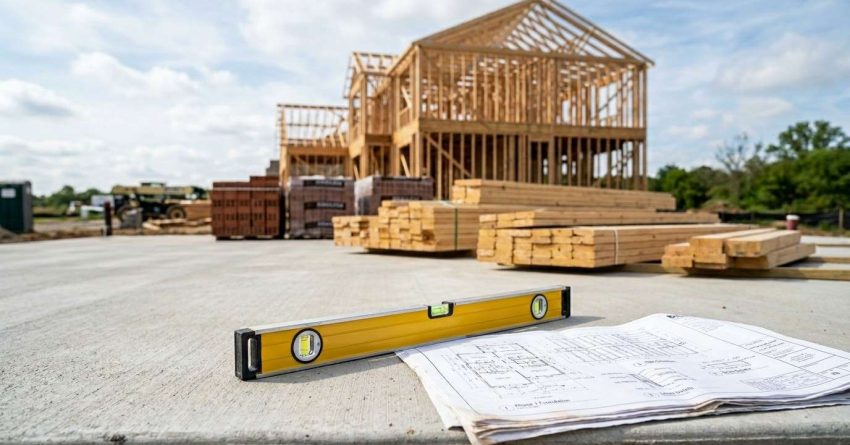
Framing is the skeleton of your building and typically represents one of the largest single-phase costs in residential construction. It includes all structural walls, floor systems, roof trusses, and sheathing.
Wood, Steel, and Labor Breakdown
Wood framing for a standard 2,000-square-foot home costs between $20,000 and $50,000, including materials and labor. The wide range reflects lumber prices, roof complexity, and the number of stories. Steel framing runs higher — typically $30,000 to $65,000 for the same footprint — but offers greater durability and resistance to moisture and pests.
Labor accounts for roughly 40 to 50 percent of framing costs. An experienced framing crew can complete a standard residential structure in one to two weeks, but complex designs with multiple roof lines, dormers, or cantilevers add time and cost.
A detailed breakdown of framing costs by square footage and home size is available in our house framing cost guide.
Roofing Phase Costs
Materials, Pitch, and Installation Fees
Roofing costs depend on three primary factors: the size of the roof deck, the material selected, and the pitch of the roof. Steeper pitches require more safety equipment and slower installation, which increases labor costs.
Asphalt shingles — the most common residential roofing material in the USA — cost between $5,000 and $12,000 installed for a standard 2,000-square-foot home. Metal roofing runs $10,000 to $25,000 for the same footprint. Tile and slate roofing can exceed $30,000 depending on material grade and roof complexity.
Underlayment, flashing, ridge vents, and gutters are often quoted separately and can add $1,500 to $4,000 to the roofing phase total.
Roofing is one of the most variable phases in any build — if you need a full replacement or new installation, our roofing installation costs guide covers materials, labor, and what to expect at every price point.
Plumbing, Electrical, and HVAC Rough-In Costs
Mechanical Systems Installation Pricing
The mechanical rough-in phase runs concurrently with framing completion and happens before walls are closed. This is when plumbers, electricians, and HVAC technicians run all pipes, wires, and ductwork through the open wall and floor cavities.
Plumbing rough-in for a new residential build typically costs $7,000 to $15,000, covering supply lines, drain-waste-vent systems, and fixture rough-ins. Homes with multiple bathrooms or complex layouts cost more.
Electrical rough-in ranges from $8,000 to $15,000 for a standard home, covering panel installation, circuit runs, outlet and switch boxes, and rough-in for fixtures and appliances. Homes with smart systems, EV chargers, or high-amperage appliances require larger panels and more circuits, increasing cost.
HVAC rough-in — including ductwork, air handler placement, and refrigerant line sets — typically runs $6,000 to $12,000 for a central forced-air system in a 2,000-square-foot home. Zoned systems and high-efficiency equipment add to this figure.
Rough-in plumbing is one of the most labor-intensive mechanical phases — our plumbing rough-in pricing resource explains what’s included in this stage and how contractors calculate the cost. Electrical rough-in work runs parallel to plumbing in most builds, and understanding what it covers helps you evaluate bids accurately — our electrical rough-in work outlines the full scope and typical pricing ranges. HVAC installation during the rough-in phase sets the foundation for your home’s comfort and energy efficiency — our HVAC system installation guide explains what this phase includes and how sizing affects cost.
Interior Finishing Phase Costs
Interior finishing is the most visible phase of construction and often the most customizable — which also makes it the most variable in cost. This phase covers everything from drywall to flooring, painting, doors, windows, and trim.
Drywall, Flooring, and Painting Costs
Drywall is typically the first interior finish trade on-site after rough-in inspections pass — our drywall installation costs covers material grades, labor rates, and what affects the final price. For a 2,000-square-foot home, drywall installation typically runs $8,000 to $16,000 including hanging, taping, and finishing.
Flooring is one of the most visible and cost-variable interior finishes in any construction project — our flooring installation pricing guide walks through every material option and what each costs to install. Costs range from $3 to $22 per square foot installed, depending on whether you choose vinyl plank, hardwood, tile, or carpet.
Interior painting is the final finish layer before move-in and one of the most impactful on overall appearance — our interior painting costs explains how painters price residential projects and what affects the total. Expect to pay $4,000 to $11,000 for interior painting on a standard 2,000-square-foot home.
Doors, Windows, and Trim Installation
Door installation wraps up the interior finish phase and affects both security and aesthetics — our door installation fees resource covers pre-hung vs. slab options and what labor typically adds to the cost. Interior door packages for a full home typically run $3,000 to $8,000 installed.
Windows are installed during the exterior phase but trimmed out during interior finishing — our window installation costs explains how frame type, glass grade, and labor combine to set the final price. Window trim-out and casing work adds $1,500 to $4,000 to the interior finishing budget.
Final Inspection and Punch-List Phase Costs
The final phase of construction covers inspections, corrections, and the punch list — the list of small items that need adjustment or completion before the project is officially closed out.
Municipal inspections are typically included in your permit fees, which range from $500 to $2,000 for most residential projects. However, if inspections reveal code deficiencies, correction costs vary widely depending on the trade involved.
Punch-list work — fixing minor drywall imperfections, adjusting doors that don’t latch, touching up paint, and completing trim details — typically costs $1,500 to $5,000 for a new build. Smaller tasks that fall between major phases are often handled most cost-effectively by a skilled handyman, and our handyman punch-list work explains what these services cover and how they’re priced.
A detailed breakdown of what punch-list work involves and how contractors price it is available in our construction punch list costs guide.
How to Budget Across All Construction Phases
Budgeting for a construction project means accounting for every phase — not just the ones that feel most significant. A few practical principles help keep projects on track financially.
Build in a contingency. Most construction professionals recommend setting aside 10 to 15 percent of your total budget for unexpected costs. Site conditions, material price changes, and design modifications all create unplanned expenses. A structured approach to setting this reserve is covered in our construction contingency budget guide.
Get phase-specific bids. Rather than accepting a single lump-sum bid, ask contractors to break their pricing down by phase. This makes it easier to compare bids, identify where costs are high, and make informed decisions about where to invest more or scale back.
Sequence your spending. Structural and mechanical phases are not the place to cut costs — errors here are expensive to fix after walls are closed. Interior finishes offer more flexibility to adjust material grades and still achieve a quality result.
For a complete picture of what your project will cost from start to finish, our full remodeling cost guide brings together every phase, trade, and variable in one comprehensive resource.
Conclusion
Construction phase costs vary widely based on location, materials, and project complexity, but understanding each phase’s typical price range gives you the foundation to plan and budget with confidence. From site preparation and framing through mechanical rough-ins and interior finishes, every phase contributes to the total investment in your property.
Knowing where costs are fixed and where flexibility exists helps you make smarter decisions at every stage of the build. The phases that matter most structurally deserve the most careful investment, while finishes offer room to align spending with your priorities.
At Mr. Local Services, our network of skilled professionals covers every phase of residential and commercial construction — contact us today to get transparent, phase-by-phase pricing for your project.
Frequently Asked Questions
What is the most expensive phase of home construction?
Framing and structural work is typically the most expensive single phase, often representing 15 to 25 percent of total construction costs. Foundation work and mechanical rough-ins are also major cost drivers, particularly for larger or more complex homes.
How much does it cost to build a 2,000-square-foot home in the USA?
A 2,000-square-foot home in the USA typically costs between $300,000 and $1,000,000 to build, depending on location, finish level, and site conditions. The national average for new residential construction runs approximately $150 to $500 per square foot for all phases combined.
Can I save money by completing some construction phases myself?
Homeowners can legally handle some finish work — painting, flooring installation, and basic trim — in most states. However, structural, plumbing, electrical, and HVAC work requires licensed contractors and permits. Attempting unlicensed work in these phases can void insurance, fail inspections, and create costly corrections.
How long does each construction phase take?
Site preparation and foundation work typically takes two to four weeks. Framing takes one to three weeks. Mechanical rough-ins run two to four weeks concurrently. Interior finishing is the longest phase, often taking four to eight weeks depending on the scope and number of trades involved.
What permits are required for each construction phase?
Most jurisdictions require a building permit before any structural work begins, plus separate permits for plumbing, electrical, and HVAC work. Permit fees typically range from $500 to $2,000 for residential projects, and each phase requires a passing inspection before the next phase can begin.
How do I know if a contractor’s phase-by-phase bid is fair?
Compare bids from at least three licensed contractors, ask each to itemize costs by phase and trade, and verify that material allowances are clearly specified. Unusually low bids often reflect missing scope items that appear as change orders later in the project.
What happens if a construction phase goes over budget?
Most construction contracts include a change order process for scope additions and unforeseen conditions. Maintaining a 10 to 15 percent contingency reserve gives you the financial flexibility to absorb overruns without stopping work or compromising quality in later phases.