Building an ADU typically costs $150,000 to $300,000 or more — but most homeowners discover their initial budget was off by 20% to 40% once hidden expenses surface.
Understanding where those gaps appear is the difference between a project that stays on track and one that stalls mid-construction. These overlooked costs are not rare exceptions — they are standard parts of every ADU build that contractors rarely itemize upfront.
This guide covers every major hidden cost category, from site preparation through ongoing compliance, so you can plan with accurate numbers and avoid the surprises that derail most ADU projects.
Site Preparation and Land Costs
Most ADU quotes begin at the foundation — but the work required before a foundation can be poured is rarely included in base bids.
Soil Testing and Grading Fees
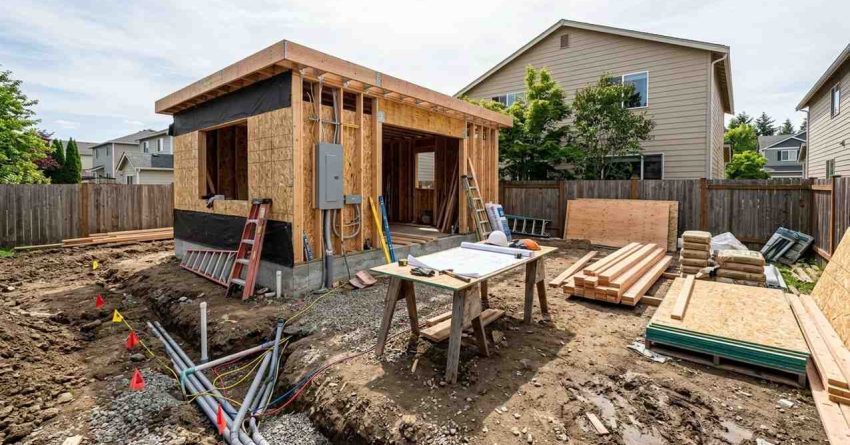
Soil testing determines whether your lot can support a new structure without additional reinforcement. Depending on results, you may need compaction work, drainage corrections, or engineered fill. Grading fees to level the build site and direct water away from the structure typically run $1,500 to $5,000 before a single framing nail is driven.
Tree Removal and Utility Marking
Mature trees in the build zone must be removed, and their root systems may require grinding or chemical treatment to prevent future foundation damage. Utility marking — required before any excavation — can reveal buried lines that need rerouting, adding $500 to $3,000 or more depending on what is found.
Site preparation is one of the most underestimated line items in any ADU project — our complete ADU cost breakdown covers every major expense category so you can build a realistic budget before breaking ground.
Permits, Fees, and Inspections
Permit costs are the most commonly underestimated hidden expense in ADU construction, and they vary dramatically by jurisdiction.
Impact Fees and School District Levies
Many cities and counties charge impact fees when a new dwelling unit is added to a property. These fees fund infrastructure improvements and can range from $5,000 to $25,000 depending on your location. Some school districts add their own levies on top of municipal fees, which are rarely disclosed in early project estimates.
Multiple Inspection Rounds
ADU projects typically require inspections at framing, rough plumbing, rough electrical, insulation, and final completion stages. Each failed inspection triggers a re-inspection fee. Budgeting for two to three re-inspection rounds per trade is realistic for most first-time ADU builders.
Permit costs vary significantly by municipality, and understanding the full ADU permit process before you apply can prevent costly delays and unexpected fee assessments.
Utility Connection and Infrastructure Costs
Connecting a new dwelling unit to existing utility systems is one of the largest hidden cost categories — and one of the least discussed.
Separate Meter Installation
Many municipalities require ADUs to have separate utility meters for water, gas, and electricity. Meter installation fees, utility company connection charges, and panel upgrades to support the additional load can total $8,000 to $20,000 depending on the distance from existing infrastructure and local utility rates.
Sewer Lateral and Water Line Extensions
If your existing sewer lateral lacks capacity for an additional unit, a new lateral must be installed from the main line to the ADU. Water line extensions face similar requirements. These are not optional — they are code requirements in most jurisdictions, and they are almost never included in base construction bids.
Extending a sewer lateral or running a new water line requires licensed professionals — our plumbing connection work team handles utility tie-ins for ADUs from initial assessment through final inspection.
Design, Engineering, and Architectural Fees
A permitted ADU requires stamped architectural drawings and, in most cases, a structural engineer’s review. Architectural fees for a standard ADU typically run 8% to 15% of total construction cost. On a $200,000 build, that is $16,000 to $30,000 in design fees alone — before a permit application is submitted.
Structural engineering reviews, energy compliance calculations, and Title 24 reports (required in California and similar energy code states) add another $2,000 to $5,000. These costs are fixed regardless of project size, which means they hit smaller ADU budgets proportionally harder.
Interior Finishing and Systems Costs
Base construction bids often cover framing, sheathing, and roofing — but interior systems and finishes are frequently listed as allowances that underestimate real costs.
HVAC, Plumbing, and Electrical Rough-In
Mechanical systems in a new ADU must be designed, permitted, and installed independently from the main house. A properly sized mini-split system for a 500-square-foot ADU costs $3,000 to $8,000 installed. Plumbing rough-in for a bathroom and kitchen adds $4,000 to $10,000. Electrical panel sub-feed, wiring, and fixture installation typically runs $5,000 to $12,000.
Installing a properly sized heating and cooling system in a compact ADU requires careful load calculation — explore your HVAC installation options to understand what equipment, labor, and permitting costs to expect.
Flooring, Drywall, and Finish Carpentry
Flooring, drywall finishing, interior doors, trim, and cabinetry are the line items where ADU budgets most commonly exceed allowances. Material costs have increased significantly since 2022, and labor shortages in finish trades mean longer lead times and higher rates.
Flooring is one of the most visible finish decisions in an ADU, and material choices affect both upfront cost and long-term durability — reviewing flooring installation costs early helps you allocate budget accurately. Drywall finishing, taping, and texturing add up quickly in a new build — understanding what goes into drywall and ceiling work helps you evaluate contractor bids with confidence.
Landscaping, Drainage, and Exterior Work
Construction activity damages existing landscaping, compacts soil, and disrupts drainage patterns. Restoring the yard to a functional, code-compliant state after construction is a cost that almost no ADU budget accounts for upfront.
Concrete pathways, fencing for privacy between the main house and ADU, exterior lighting, and drainage corrections to meet local grading requirements can add $5,000 to $15,000 to the final project cost. In areas with strict stormwater management requirements, engineered drainage solutions may be required before a certificate of occupancy is issued.
Grading, drainage correction, and hardscape restoration after construction are rarely included in base ADU bids — our landscape and drainage work team can assess your site and provide accurate post-construction restoration estimates.
Financing Costs and Carrying Expenses
ADU construction typically takes 9 to 18 months from permit application to certificate of occupancy. During that period, financing costs accumulate whether or not construction is actively progressing.
Construction loan interest, origination fees, and appraisal costs add 3% to 6% to total project cost for most borrowers. If the project experiences delays — which are common due to permit backlogs, material lead times, or inspection scheduling — carrying costs extend accordingly. A project delayed by three months on a $250,000 construction loan at 8% interest adds approximately $5,000 in interest alone.
If you are evaluating financing structures for your ADU, a dedicated resource on ADU financing options can help you compare construction loans, HELOCs, and cash-out refinancing before committing to a lender.
Ongoing Maintenance and Compliance Costs
The hidden costs of an ADU do not end at the certificate of occupancy. Rental ADUs require ongoing compliance with local habitability standards, which may include annual inspections in some jurisdictions. Landlord insurance riders for an ADU unit typically add $500 to $1,500 per year to existing homeowner policies.
Routine maintenance — HVAC filter changes, plumbing checks, appliance servicing, and exterior upkeep — applies to the ADU as a separate dwelling unit with its own maintenance schedule. Budgeting 1% to 2% of construction cost annually for maintenance is a standard rule of thumb for any residential structure.
Once your ADU is occupied, routine upkeep becomes an ongoing cost — Mr. Local Services provides ongoing home maintenance support to keep your ADU safe, functional, and compliant year-round.
Planning your ADU budget accurately means accounting for every cost category before construction begins, not discovering them mid-project. If you are ready to move from identifying hidden costs to building a complete project budget, our full ADU cost guide organizes every expense category — from land prep through final inspection — into a single planning resource.
Conclusion
Hidden ADU costs are not surprises — they are predictable expenses that standard contractor bids routinely exclude. Site preparation, permits, utility connections, design fees, and interior systems each carry real price tags that add 20% to 40% above base construction estimates.
Accounting for these costs before signing a construction contract protects your project timeline, your financing, and your return on investment. The homeowners who stay on budget are the ones who planned for every line item from the start.
Mr. Local Services connects you with skilled professionals across every trade involved in ADU construction and maintenance — from plumbing and HVAC to landscaping and ongoing upkeep. Contact us to get accurate estimates before your project begins.
Frequently Asked Questions
What is the average hidden cost percentage on an ADU build?
Most ADU projects run 20% to 40% over initial contractor estimates once permits, utility connections, site preparation, and finish work are fully accounted for. On a $200,000 base bid, that means $40,000 to $80,000 in additional costs is realistic.
Are ADU permit fees included in contractor quotes?
Permit fees are rarely included in base contractor quotes. Contractors typically list permits as a pass-through cost billed separately, and impact fees, school district levies, and re-inspection fees are almost never itemized in initial bids.
Do I need a separate utility meter for my ADU?
Most municipalities require separate meters for ADUs, particularly for water and electricity. Requirements vary by jurisdiction, so confirming local code requirements before finalizing your utility connection plan is essential to avoid costly mid-project changes.
How much do ADU architectural and engineering fees cost?
Architectural fees for a permitted ADU typically run 8% to 15% of total construction cost. Structural engineering, energy compliance reports, and Title 24 calculations add another $2,000 to $5,000 on top of architectural fees.
What ongoing costs should I budget for after my ADU is built?
Budget 1% to 2% of construction cost annually for routine maintenance. Add landlord insurance riders ($500 to $1,500 per year), any required annual inspections, and utility costs for the separate unit. These recurring expenses directly affect your net rental income projections.