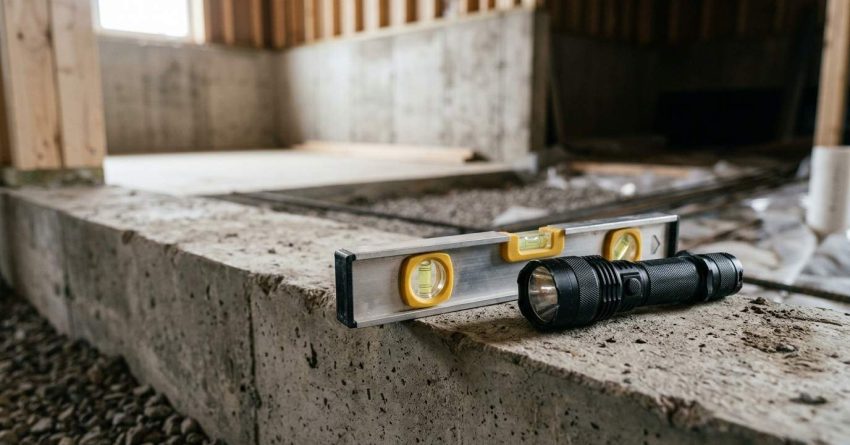
A foundation inspection checklist helps homeowners, landlords, and property managers systematically identify early warning signs of structural damage — from hairline cracks to drainage failures — before minor issues become major repairs.
Catching foundation problems early can save thousands of dollars in repair costs and prevent safety hazards that affect the entire structure of a property.
This checklist walks through every key area to examine, explains what each warning sign means, and helps you decide when a professional assessment is the right next step.
What a Foundation Inspection Covers
A foundation inspection evaluates the structural base of a property — including the concrete slab, block walls, footings, and the soil conditions surrounding them. It looks at both visible symptoms inside the home and physical conditions outside along the perimeter.
Inspections cover two primary areas: the exterior foundation and the interior structure. Both must be assessed together because damage on one side almost always produces symptoms on the other.
Understanding what a foundation inspection covers is the first step toward protecting your property — our foundation repair services explains the full scope of repair options available when an inspection reveals structural concerns.
Exterior Foundation Checks
Walk the full perimeter of the property and examine:
- Visible cracks in the foundation wall (note width, length, and direction)
- Gaps between the foundation and the soil line
- Soil pulling away from or pressing against the foundation
- Efflorescence (white mineral deposits) indicating water movement through concrete
- Damaged or missing mortar between block courses
- Bowing or bulging sections of the foundation wall
Interior Foundation Checks
Inside the home, look for:
- Cracks running along walls, ceilings, or floors
- Doors and windows that stick, drag, or no longer close squarely
- Sloping or uneven floors
- Gaps between walls and ceilings or walls and floors
- Visible moisture, staining, or mold in the basement or crawl space
Foundation Inspection Checklist: Step-by-Step
Work through each step in order. Document what you find with photos and written notes before contacting a professional.
Step 1 — Check for Cracks in Walls and Floors
Examine every wall surface, floor slab, and ceiling for cracks. Hairline cracks in drywall are common after settling and are usually cosmetic. Horizontal cracks in basement walls, stair-step cracks in brick or block, and cracks wider than 1/4 inch are serious warning signs that require professional evaluation.
Note the direction of each crack. Vertical cracks often indicate settling. Horizontal cracks suggest lateral soil pressure. Diagonal cracks typically point to differential settlement — where one section of the foundation moves more than another.
For a dedicated breakdown of crack patterns and what each one signals, see our guide on foundation crack types
Step 2 — Inspect Doors and Windows for Misalignment
Open and close every exterior door and window. Doors that stick at the top, drag at the bottom, or no longer latch properly are a common early indicator of foundation movement. Windows that crack along the corners of the frame or no longer open smoothly show the same pattern.
Check the gap between the door frame and the door itself. An uneven gap — wider at the top on one side — indicates the frame has shifted out of square due to foundation movement beneath it.
Step 3 — Look for Water Intrusion and Moisture Damage
Inspect the basement walls, floor slab, and crawl space for any signs of water entry. Look for water stains, rust streaks, efflorescence, peeling paint, or active seepage after rain. Check floor corners and wall-floor joints, which are the most common entry points for groundwater.
Moisture intrusion identified during a foundation inspection often signals a broader problem — our water damage restoration guide covers how standing water, seepage, and humidity damage are assessed and resolved before they compromise structural integrity.
Step 4 — Examine the Basement or Crawl Space
Enter the basement or crawl space and inspect the structural supports directly. Look for wood rot, pest damage, or deterioration on floor joists and beams. Check that support posts are plumb and sitting squarely on their footings. Examine the vapor barrier in crawl spaces for tears, gaps, or pooling water beneath it.
Minor issues discovered in a crawl space — such as damaged vapor barriers, deteriorating supports, or pest entry points — can often be addressed quickly through crawl space repairs handled by an experienced handyman before they escalate into major structural problems.
Step 5 — Assess Grading and Drainage Around the Property
Walk the perimeter and observe how the ground slopes relative to the foundation. The soil should slope away from the home at a minimum grade of 6 inches over the first 10 feet. Flat or inward-sloping ground directs rainwater toward the foundation, increasing hydrostatic pressure and the risk of water intrusion.
Check that downspouts extend at least 4 to 6 feet from the foundation and discharge water away from the structure. Clogged or short downspouts are one of the most common causes of preventable foundation water damage.
Proper grading and drainage around a property are critical to keeping water away from the foundation — our drainage and grading services help homeowners correct slope issues and redirect water flow before it causes long-term foundation damage.
Step 6 — Review Structural Supports and Load-Bearing Elements
In the basement or crawl space, verify that all load-bearing walls above are supported by beams or posts that transfer weight directly to the footing. Look for any signs of sagging, deflection, or movement in the main beam. Check that lally columns or support posts show no signs of rust, corrosion, or shifting at their base plates.
Any gap between a support post and the beam it is meant to carry is a critical finding that requires immediate professional attention.
Warning Signs That Require Immediate Attention
Some findings during a foundation inspection cannot wait for a scheduled follow-up. Contact a structural professional immediately if you observe any of the following:
- Horizontal cracks in basement walls, especially with bowing or inward movement
- Cracks wider than 1/2 inch anywhere in the foundation
- Floors that slope more than 1 inch over 10 feet
- Visible separation between the foundation and the structure above it
- Active water entry during or after rain
- Structural supports that are visibly shifted, rotted, or missing
Certain foundation warning signs — particularly floor heaving, wall separation, and persistent moisture — may be connected to hidden plumbing failures, and a plumbing leak inspection can help rule out or confirm underground pipe damage as a contributing cause.
How Often Should a Foundation Be Inspected?
Most residential properties benefit from a foundation inspection every 3 to 5 years under normal conditions. Properties in areas with expansive clay soils, high water tables, or frequent freeze-thaw cycles should be inspected more frequently — every 1 to 2 years.
An inspection is also warranted after any significant weather event, including heavy flooding, prolonged drought, or an earthquake. Newly purchased properties should always receive a foundation inspection before closing, regardless of the age of the structure.
When to Call a Professional for Foundation Assessment
A visual checklist is a useful starting point, but it does not replace a professional structural assessment. Call a licensed foundation specialist or structural engineer when you find cracks wider than 1/4 inch, observe any horizontal cracking or wall bowing, notice significant floor slope, or identify active water intrusion that cannot be traced to a surface drainage issue.
When foundation warning signs go beyond surface-level cracks, scheduling a professional home inspection gives homeowners a complete structural assessment from a qualified expert who can identify root causes and recommend the right course of action.
Early professional evaluation almost always costs less than delayed repair. Foundation problems do not resolve on their own — they progress.
Conclusion
A foundation inspection checklist gives homeowners and property managers a structured way to identify structural warning signs before they escalate into costly repairs. Cracks, moisture, drainage failures, and misaligned doors are all early signals that deserve attention.
Consistent inspections — combined with prompt action on warning signs — protect long-term property value and structural safety across every type of residential and commercial building.
At Mr. Local Services, our trusted professionals are ready to assess, repair, and maintain your foundation and the systems that support it — contact us today to schedule a comprehensive property evaluation.
Frequently Asked Questions
What is the difference between a foundation inspection and a home inspection?
A home inspection covers the entire property, including electrical, plumbing, roofing, and structure. A foundation inspection focuses specifically on the structural base of the building, examining cracks, settlement, drainage, and load-bearing elements in greater depth than a standard home inspection typically allows.
Can I do a foundation inspection myself?
Homeowners can perform a visual foundation inspection using a checklist to identify surface-level warning signs. However, a professional structural engineer or licensed foundation specialist is needed to assess crack severity, measure differential settlement, and recommend appropriate repairs.
How much does a foundation inspection cost?
A professional foundation inspection typically costs between $300 and $1,000 depending on property size, location, and the scope of the assessment. Some foundation repair companies offer free visual inspections, though an independent structural engineer provides the most objective evaluation.
What causes foundation cracks?
Foundation cracks are caused by soil settlement, hydrostatic water pressure, freeze-thaw cycles, tree root intrusion, poor drainage, and shrinkage of concrete during curing. The direction and width of a crack help determine whether it is cosmetic or structurally significant.
How long does a foundation inspection take?
A thorough foundation inspection of a standard residential property typically takes 1 to 3 hours. Larger properties, those with extensive crawl spaces, or homes with complex drainage conditions may require additional time for a complete assessment.