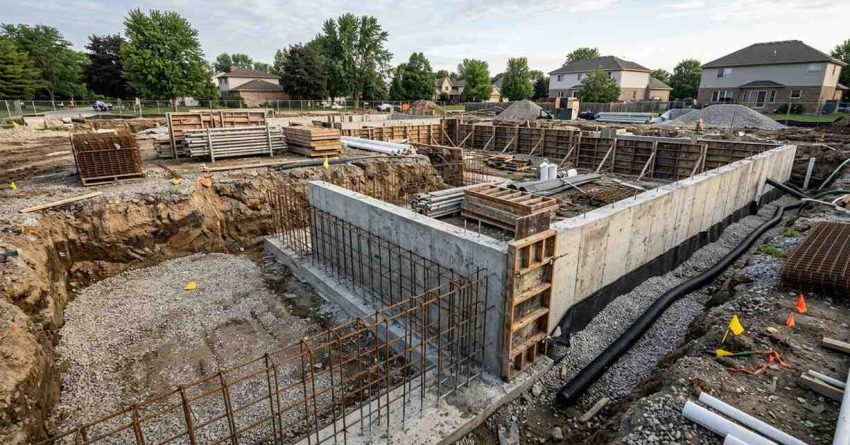
foundation type, home size, soil conditions, and regional labor rates. Whether you are building new or repairing an existing structure, knowing what drives these numbers helps you plan accurately and avoid costly surprises.
Foundation work is one of the largest structural investments a property owner will face, and getting the pricing wrong at the planning stage can derail an entire project budget.
This guide breaks down every major cost factor — from foundation type and labor to permits, repairs, and contractor selection — so you can move forward with a clear, realistic budget.
What Goes Into a Foundation Cost Estimate
A foundation cost estimate is not a single number. It is a combination of several distinct cost categories that each carry their own variables. Understanding these components separately makes it far easier to evaluate contractor quotes and identify where costs can be controlled.
Labor typically accounts for 40 to 60 percent of total foundation costs. Excavation crews, concrete workers, and structural specialists all bill at different rates, and the complexity of the job directly affects how many hours each trade requires on site.
Materials make up the remaining portion of most estimates. Concrete, rebar, form boards, waterproofing membranes, and drainage systems all carry market-driven prices that fluctuate with supply chain conditions. In 2025, concrete material costs remained elevated in many USA regions due to ongoing supply pressures.
Labor Costs vs. Material Costs
Labor costs for foundation work range from $50 to $150 per hour depending on the trade, region, and project complexity. A straightforward slab pour in a low-cost labor market will sit at the lower end. A full basement excavation in a high-demand metro area will push toward the upper range.
Material costs are more predictable once the foundation type is confirmed. Concrete averages $125 to $150 per cubic yard nationally, though regional pricing varies. Rebar, waterproofing, and drainage materials add $1,000 to $5,000 or more depending on the scope.
Permit and Inspection Fees
Permits are non-negotiable for foundation work in virtually every USA jurisdiction. Permit fees typically range from $500 to $2,000 depending on the municipality and project scope. Inspection fees are often bundled into the permit cost but can add $200 to $500 separately. Always confirm permit requirements with your local building department before work begins.
Foundation work is one of the most significant investments a property owner can make — our home services cost guide covers pricing benchmarks across every major service category to help you plan your full property budget with confidence.
Foundation Cost by Type
Foundation type is the single largest driver of total project cost. Each type has a distinct construction method, material requirement, and labor intensity that produces a very different price range.
Concrete Slab Foundation Costs
A concrete slab foundation is the most common choice in warmer USA climates where frost depth is minimal. Slab foundations cost between $5,000 and $14,000 for a standard residential home, with the average falling around $7,000 to $9,000. The slab is poured directly on prepared ground, making it faster and less labor-intensive than other types.
Understanding its specific cost drivers is essential before requesting quotes — our concrete slab foundation walks through everything that affects slab pricing from pour thickness to reinforcement requirements.
Crawl Space Foundation Costs
Crawl space foundations elevate the home slightly above grade, creating an accessible space beneath the structure. Costs range from $8,000 to $21,000, with the wide range driven by depth, access requirements, and whether encapsulation or vapor barriers are included. Crawl spaces are common in moderate climates and areas with moderate soil movement.
Full Basement Foundation Costs
A full basement is the most expensive foundation type, with costs ranging from $18,000 to $40,000 or more for a standard residential footprint. Excavation depth, waterproofing requirements, and egress window installation all add to the base cost. Basements are most common in colder USA regions where frost depth requires deeper footings regardless.
Key Factors That Affect Foundation Pricing
Even within the same foundation type, two projects can produce dramatically different final costs. Several variables consistently move the price up or down regardless of the type selected.
Soil Conditions and Site Preparation
Soil is one of the most unpredictable cost variables in any foundation project. Expansive clay soils, high water tables, and rocky terrain all require additional site preparation that adds cost before a single yard of concrete is poured. Soil testing typically costs $500 to $3,000 and is strongly recommended before finalizing any foundation budget.
Soil conditions are one of the most unpredictable cost variables in any foundation project, and knowing what to expect before breaking ground can prevent costly surprises — our soil testing costs resource explains what site assessments involve and how results directly affect your foundation budget.
Home Size and Footprint
Foundation cost scales directly with the square footage of the home. A 1,000-square-foot footprint will cost significantly less than a 2,500-square-foot footprint using the same foundation type. Most contractors price foundation work at $4 to $25 per square foot depending on type, with slabs at the lower end and full basements at the upper end.
Regional Labor Rates Across the USA
Labor rates vary significantly across USA regions. The Northeast and West Coast consistently show the highest labor costs, while the Southeast and Midwest tend to run 15 to 30 percent lower for comparable work. Always collect at least three local quotes to establish a realistic regional baseline before committing to a budget.
Foundation Repair vs. New Foundation Costs
Not every foundation project involves new construction. Many homeowners and property managers face the decision of whether to repair an existing foundation or invest in full replacement. The cost difference between these two paths is substantial.
Common Repair Types and Price Ranges
Foundation repairs range from minor crack sealing to major structural stabilization. Common repair types and their typical costs include:
- Crack injection (epoxy or polyurethane): $250 to $800 per crack
- Pier installation (push or helical piers): $1,000 to $3,000 per pier
- Mudjacking or slab leveling: $500 to $1,500 per section
- Wall anchoring or carbon fiber straps: $4,000 to $12,000 depending on wall length
- Full underpinning: $10,000 to $30,000 or more
When cracks, settling, or water intrusion appear, homeowners face a critical decision between repair and full replacement — our foundation repair options outlines the most common repair methods, what each addresses, and the price ranges you can expect for each approach.
When Repair Is No Longer Enough
Repair becomes impractical when structural damage is widespread, when the foundation type is fundamentally incompatible with current soil or load conditions, or when repair costs approach 60 to 70 percent of full replacement cost. A licensed structural engineer’s assessment — typically costing $300 to $700 — is the most reliable way to determine which path makes financial and structural sense.
How to Budget for Foundation Work
Budgeting for foundation work requires more than collecting a single quote. A realistic budget accounts for the base contract price, contingency reserves, permit costs, and any related work that the foundation project may trigger.
Contingency Planning and Hidden Costs
A standard contingency for foundation work is 10 to 20 percent of the total contract value. This reserve covers unexpected soil conditions, utility conflicts discovered during excavation, and material price adjustments between quote and project start. Hidden costs that frequently appear mid-project include tree root removal, underground utility relocation, and drainage system upgrades.
Foundation work often connects to broader renovation projects, and building a realistic contingency into your overall plan is essential — our remodeling cost planning resource helps homeowners and property managers align foundation budgets with larger improvement timelines.
Always request an itemized quote that separates labor, materials, permits, and contingency line items. A quote that bundles everything into a single number makes it nearly impossible to identify where overruns are occurring if the project runs long.
Choosing the Right Foundation Contractor
Foundation work requires a licensed structural contractor in virtually every USA state. Licensing requirements, insurance minimums, and bonding standards vary by state, so verifying credentials before signing any contract is essential.
Request proof of general liability insurance with a minimum of $1 million per occurrence and workers’ compensation coverage for all on-site employees. Ask for references from at least three completed foundation projects of similar scope and verify those references directly.
While foundation work requires a licensed structural contractor, many related tasks — grading, drainage correction, and minor concrete repairs — can be handled efficiently by a skilled professional, and our handyman service options explains exactly which jobs fall within that scope.
Get a minimum of three written quotes. Price differences of 20 to 30 percent between qualified contractors are common and do not always reflect quality differences. Review each quote line by line to understand what is and is not included before making a final decision.
Conclusion
Foundation costs in the USA span a wide range, driven by foundation type, soil conditions, home size, regional labor rates, and whether the project involves new construction or repair. Understanding each cost component separately gives homeowners and property managers the clarity needed to evaluate quotes accurately and budget with confidence.
Repair decisions require careful analysis — the line between a cost-effective fix and a necessary replacement is not always obvious without professional assessment. Getting that assessment early prevents expensive mistakes later in the process.
At Mr. Local Services, we connect property owners with licensed foundation professionals who deliver transparent pricing, honest assessments, and quality workmanship. Contact us today to get matched with a trusted foundation contractor in your area.
Frequently Asked Questions
How much does a foundation cost for a new house in the USA?
A new house foundation in the USA typically costs between $5,000 and $40,000 depending on the foundation type, home size, and regional labor rates. Concrete slabs are the least expensive option, while full basements represent the highest cost range.
What is the most affordable foundation type?
A concrete slab foundation is generally the most affordable option, with average costs ranging from $5,000 to $14,000 for a standard residential home. Slabs require less excavation and labor than crawl space or basement foundations, which keeps overall costs lower.
How long does it take to install a foundation?
A concrete slab foundation typically takes 1 to 3 weeks from excavation to cure. Crawl space foundations take 2 to 4 weeks, and full basement foundations can take 4 to 8 weeks depending on depth, waterproofing requirements, and weather conditions.
Does homeowners insurance cover foundation repair?
Homeowners insurance typically does not cover foundation repair caused by settling, soil movement, or gradual deterioration. Coverage may apply if the damage results from a sudden covered event such as a burst pipe or specific natural disaster. Review your policy carefully and consult your insurer before assuming coverage.
How do I know if my foundation needs repair?
Common signs that a foundation needs professional evaluation include visible cracks in walls or floors, doors and windows that stick or no longer close properly, uneven or sloping floors, and gaps between walls and ceilings. A licensed structural engineer can assess severity and recommend the appropriate repair approach.
Can I finance foundation repair or replacement?
Yes. Foundation work can be financed through home equity loans, home equity lines of credit, personal loans, or contractor financing programs. Some foundation repair companies offer in-house financing. Compare interest rates and terms carefully before committing to any financing arrangement.
How do I get an accurate foundation cost estimate?
Getting an accurate estimate requires at minimum three written quotes from licensed local contractors, a soil assessment if soil conditions are unknown, and a clear scope of work that separates labor, materials, permits, and contingency. Itemized quotes are always more reliable than lump-sum pricing for foundation projects.