Building a new driveway from scratch is one of the most impactful exterior decisions you will make for a new property. The right material, proper base preparation, and correct drainage design determine how long your driveway lasts, how much maintenance it needs, and how well it holds up under daily use. Getting these decisions right from the start saves thousands of dollars in repairs over the life of the property.
New build driveway projects involve more planning than most homeowners expect, from permits and grading to material selection and contractor coordination.
This guide covers every stage of new build driveway construction — materials, planning, the installation process, typical timelines, costs, and how to choose a contractor who delivers lasting results.
What Is Driveway Construction for a New Build?
Driveway construction for a new build is the process of designing and installing a completely new driveway surface on a property that has no existing driveway. It begins with raw ground and ends with a finished, functional surface that connects the street to the garage, parking area, or home entrance.
Unlike driveway replacement projects, new build construction requires full site assessment, grading, drainage planning, and base layer installation before any surface material is applied. There is no existing structure to work from, which means every decision — from slope angle to material depth — must be made from the ground up.
Driveway construction is one component of a broader set of outdoor property improvements — our landscape services guide covers the full range of exterior work available for new and existing properties, helping you plan every aspect of your outdoor space from the ground up.
How New Build Driveways Differ from Replacement Projects
Replacement projects involve removing an old surface and installing a new one over an existing base. New build projects require excavating raw soil, installing a compacted aggregate base, managing drainage from scratch, and applying the surface layer — all without the structural head start that a replacement project provides. The scope, timeline, and cost are typically greater for new builds as a result.
Driveway Materials for New Construction: Which One Is Right for You?
Material selection is the most consequential decision in new build driveway construction. Each option carries different upfront costs, maintenance requirements, lifespan expectations, and aesthetic outcomes. The right choice depends on your climate, budget, soil conditions, and how the driveway will be used.
Concrete Driveways
Concrete is the most widely used material for new build residential driveways in the United States. It offers a lifespan of 30 to 50 years with proper installation and moderate maintenance. Concrete handles heavy vehicle loads well, resists rutting, and can be finished in multiple textures and colors to match the property’s exterior.
The main drawbacks are higher upfront cost compared to asphalt and susceptibility to cracking in freeze-thaw climates if the base is not properly prepared. Concrete also requires a curing period of at least 7 days before vehicle use.
Concrete remains one of the most popular choices for new build driveways because of its durability and low long-term maintenance requirements — our concrete driveway installation explains the full process, finish options, and what to expect from a professional installation.
Asphalt Driveways
Asphalt costs less upfront than concrete and is faster to install and cure — typically ready for light vehicle use within 24 to 48 hours. It performs well in cold climates because it flexes slightly under freeze-thaw cycles rather than cracking. The tradeoff is a shorter lifespan of 20 to 30 years and the need for seal coating every 3 to 5 years to prevent surface oxidation and water infiltration.
Gravel and Crushed Stone Driveways
Gravel is the most affordable new build driveway option and the fastest to install. It drains naturally, requires no curing time, and is easy to repair by adding fresh material. The limitations are ongoing maintenance — gravel migrates over time and needs periodic regrading — and a less finished appearance that may not suit all properties or HOA requirements.
Pavers and Decorative Options
Concrete pavers, brick, and natural stone offer the highest aesthetic value and can significantly increase curb appeal and property value. Individual units can be replaced if damaged without disturbing the surrounding surface. Pavers carry the highest installation cost of any driveway material and require a well-prepared sand or gravel base to prevent shifting.
Planning Your New Build Driveway: Key Decisions Before Construction Starts
Thorough planning before construction begins prevents costly mistakes, permit violations, and drainage problems that are difficult to correct after installation.
Permits, Zoning, and Local Codes
Most municipalities require a permit for new driveway construction, particularly when the driveway connects to a public road or involves significant grading. Permit requirements vary by location and may include specifications for driveway width, setback distances from property lines, and approved materials.
Before any excavation begins, understanding local permit requirements is essential — our property permits guide walks through the approval process, common zoning restrictions, and how to avoid costly delays on new construction projects.
Failing to obtain required permits can result in fines, mandatory removal, and complications when selling the property. Always confirm requirements with your local building department before work begins.
Sizing, Slope, and Drainage Considerations
A standard single-car driveway is 10 to 12 feet wide. A double-car driveway typically runs 20 to 24 feet wide. Length depends on the distance from the street to the garage or parking area.
Slope is critical for drainage. A driveway that is too flat will pool water, which accelerates surface deterioration and can direct runoff toward the foundation. The recommended cross-slope for drainage is 1 to 2 percent away from the home. Driveways on steep lots may require additional drainage channels or French drains to manage water flow effectively.
The New Build Driveway Construction Process Step by Step
Understanding the construction sequence helps homeowners set realistic expectations for timelines, site disruption, and when the driveway will be ready for use.
Site Preparation and Excavation
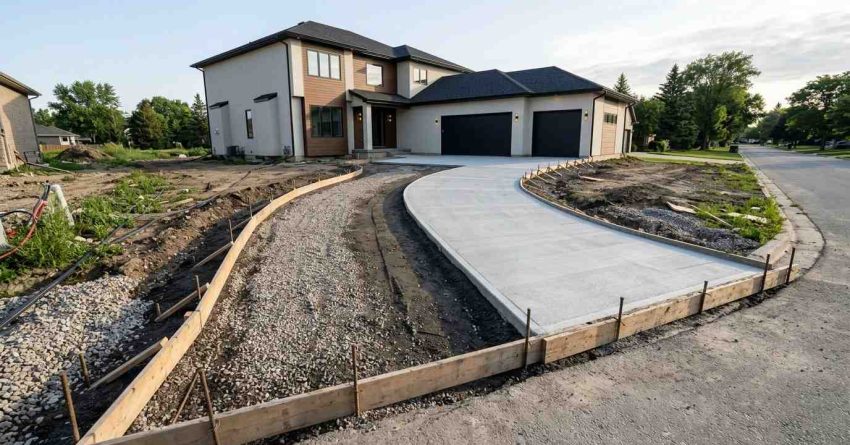
The first step is clearing and excavating the driveway area to the required depth. For concrete, excavation typically reaches 8 to 12 inches below the finished surface level. For asphalt, 10 to 14 inches is common. The excavated area must be graded to the correct slope before base material is added.
Any soft spots, organic material, or unstable soil must be removed and replaced with compacted fill at this stage. Skipping this step is one of the most common causes of premature driveway failure.
Base Layer and Compaction
A compacted aggregate base — typically crushed stone or gravel — is installed over the prepared subgrade. This layer provides structural support, distributes vehicle load, and allows water to drain away from the surface. Base depth varies by material and expected load but typically ranges from 4 to 8 inches for residential driveways.
Compaction is performed in lifts using a plate compactor or roller. Each lift must reach the required compaction density before the next layer is added. Inadequate compaction leads to settling, cracking, and surface failure within a few years of installation.
Surface Installation and Curing
Once the base is compacted and inspected, the surface material is installed. Concrete is poured, screeded, and finished before control joints are cut to manage cracking. Asphalt is laid hot and compacted immediately with a roller. Pavers are set individually on a prepared sand bed and then compacted and jointed.
Curing requirements vary by material. Concrete requires 7 to 28 days before full load-bearing use. Asphalt is typically ready for light vehicle traffic within 24 to 48 hours but reaches full hardness over 6 to 12 months.
Understanding how a driveway is built from scratch also helps homeowners recognize when repairs are needed later — our driveway repair options covers resurfacing, crack filling, and restoration services for driveways that have aged past their original installation.
How Long Does New Build Driveway Construction Take?
A standard residential new build driveway takes 3 to 7 days from excavation to completed surface installation, not including curing time. The timeline depends on driveway size, material selected, weather conditions, and site complexity.
Concrete projects require additional time for curing before the surface can be used. Asphalt projects move faster from installation to use. Paver installations take longer due to the labor-intensive nature of individual unit placement.
Weather is the most common cause of delays. Concrete cannot be poured in freezing temperatures or during heavy rain. Asphalt requires warm ambient temperatures for proper compaction. Scheduling new build driveway work during dry, moderate-temperature periods reduces the risk of weather-related delays.
Cost of Driveway Construction for a New Build
New build driveway construction costs vary widely based on material, size, site conditions, and regional labor rates. General cost ranges for a standard two-car driveway (approximately 600 square feet) are:
- Gravel: $1,500 to $3,000
- Asphalt: $3,000 to $7,000
- Concrete: $5,000 to $12,000
- Pavers: $10,000 to $25,000 or more
These figures represent installation only and do not include permit fees, drainage work, or site preparation costs that may be required on challenging lots.
Factors That Affect the Final Price
Several variables push costs above or below the typical range. Lot slope and soil conditions affect excavation depth and base requirements. Driveway length and width directly determine material volume and labor hours. Decorative finishes, stamped patterns, or colored concrete add cost over standard finishes. Regional labor rates vary significantly across the United States.
Driveway construction is one of many exterior investments that affect overall property value — our home improvement costs resource breaks down pricing across the most common residential projects, giving homeowners a realistic budget framework before committing to any contractor.
Driveway Maintenance After New Build Construction
A new driveway requires specific care in the months following installation to reach its full lifespan potential. Concrete driveways should not be sealed for at least 30 days after installation to allow full curing. After that, sealing every 3 to 5 years protects the surface from water infiltration, staining, and freeze-thaw damage.
Asphalt driveways should receive their first seal coat 6 to 12 months after installation, once the surface has fully hardened. Subsequent seal coating every 3 to 5 years extends the surface life significantly.
Keeping a new driveway clean is one of the simplest ways to extend its lifespan — our pressure washing services explains how professional cleaning removes oil stains, algae, and surface buildup that can degrade concrete and asphalt over time.
Avoid using metal snow shovels or sharp-edged tools on new concrete or asphalt surfaces. Deicing salts should not be used on concrete driveways during the first winter, as they accelerate surface scaling in new installations.
Choosing the Right Contractor for New Build Driveway Work
New build driveway construction requires a contractor with specific experience in site preparation, drainage design, and the material you have selected. Not all paving contractors have equal expertise across all material types. A contractor who specializes in asphalt may not be the best choice for a decorative paver installation.
When evaluating contractors, ask for references from completed new build projects specifically — not just replacement work. Request a written scope of work that includes excavation depth, base material specifications, compaction requirements, and surface thickness. A reputable contractor will provide this detail without hesitation.
Verify that the contractor is licensed and insured in your state. Confirm that permit applications will be handled by the contractor or clearly assigned to the homeowner before work begins.
For smaller driveway-related tasks such as edging, patching, or sealing, a skilled handyman can often handle the work without the overhead of a full contractor — our handyman services outlines the types of property tasks our professionals manage for homeowners and property managers.
Conclusion
New build driveway construction involves material selection, site preparation, drainage planning, and a multi-stage installation process that determines long-term performance and property value.
Choosing the right material and contractor from the start prevents costly repairs and ensures the driveway performs reliably for decades across all weather conditions.
At Mr. Local Services, our network of skilled professionals handles every stage of new build driveway construction — from planning and permits to surface installation and long-term maintenance — so your property starts strong and stays that way.
Frequently Asked Questions
What is the best driveway material for a new build home?
Concrete is the most popular choice for new build driveways because of its durability, low maintenance requirements, and 30 to 50-year lifespan. Asphalt is a cost-effective alternative in colder climates, while pavers offer the highest aesthetic value for properties where curb appeal is a priority.
Do I need a permit to build a new driveway?
Most municipalities require a permit for new driveway construction, especially when the driveway connects to a public road. Requirements vary by location and may include specifications for width, setback distances, and approved materials. Always confirm with your local building department before work begins.
How thick should a new build driveway be?
Concrete driveways for residential use are typically 4 inches thick over a compacted base. Driveways expected to support heavy vehicles such as RVs or trucks should be 5 to 6 inches thick. Asphalt residential driveways are typically 2 to 3 inches of compacted surface over a 4 to 8-inch aggregate base.
How long does a new build driveway last?
Lifespan depends on material and maintenance. Concrete driveways last 30 to 50 years with proper care. Asphalt driveways last 20 to 30 years with regular seal coating. Pavers can last 50 years or more when properly installed and maintained. Gravel driveways last indefinitely with periodic regrading and material replenishment.
Can I use my new driveway immediately after installation?
Asphalt driveways are typically ready for light vehicle use within 24 to 48 hours of installation. Concrete driveways require a minimum of 7 days before vehicle use and should not reach full load capacity for 28 days. Pavers can generally be used within 24 hours of installation completion.
What causes new driveways to crack prematurely?
The most common causes of early cracking are inadequate base compaction, insufficient surface thickness, poor drainage design, and tree root intrusion. Concrete driveways without properly spaced control joints are also prone to uncontrolled cracking. Choosing an experienced contractor who follows correct base preparation standards is the most effective way to prevent premature failure.
How much does a new build driveway cost on average?
A standard two-car concrete driveway of approximately 600 square feet typically costs between $5,000 and $12,000 installed. Asphalt driveways in the same size range typically cost $3,000 to $7,000. Paver driveways start around $10,000 and can exceed $25,000 for larger or more decorative installations. Site conditions, regional labor rates, and permit fees affect the final total.