Choosing between a custom and a production builder is one of the most important decisions a homeowner or property investor makes — and the right answer depends entirely on your budget, timeline, and how much control you want over the final result.
Understanding this distinction helps you avoid costly surprises, set realistic expectations, and move forward with confidence. The wrong builder type for your situation can mean months of delays or a home that does not match your vision.
This guide breaks down what each builder type offers, where they differ on cost, timeline, and design, and how to decide which path fits your property goals.
What Is a Custom Home Builder?
A custom home builder constructs a home entirely from scratch based on your specific design, preferences, and land. There is no pre-existing floor plan to choose from. Every element — from the foundation layout to the cabinet hardware — is determined by you and your architect or designer, then executed by the builder.
Custom builders work on a single project at a time or manage a small number of simultaneous builds. This focused approach allows for a high degree of communication, flexibility, and personalization throughout the construction process. You are involved in decisions at every stage, from site preparation through final walkthrough.
This builder type is best suited for homeowners who own land, have a clear vision for their home, and have the budget and patience to see a fully bespoke project through from concept to completion.
What Custom Builders Typically Handle
Custom builders coordinate every trade involved in construction — excavation, framing, roofing, plumbing, electrical, HVAC, insulation, drywall, flooring, painting, and finish carpentry. They act as the general contractor, managing subcontractors and timelines on your behalf. Some custom builders offer design-build services, meaning they handle both the architectural design and the physical construction under one contract.
Understanding the full scope of what custom builders offer becomes clearer when you explore our remodeling services overview, which covers every phase of residential construction and improvement from planning through completion.
What Is a Production Home Builder?
A production home builder — also called a tract or spec builder — constructs homes in volume using a set of pre-designed floor plans on land the builder already owns or has developed. Buyers choose from a catalog of available plans and a defined set of upgrades. The builder then constructs the home using standardized materials, processes, and subcontractor relationships that allow for faster, more cost-efficient delivery.
Production builders operate at scale. A single builder may construct dozens or hundreds of homes simultaneously within a planned community or subdivision. This volume-based model drives down per-unit costs and compresses timelines, but it also limits how much a buyer can customize the final product.
Production building methods share structural similarities with prefabricated approaches — our guide to tiny home construction explains how standardized building techniques apply to smaller-scale residential projects and what buyers should expect from the process.
How Production Builders Operate
Production builders pre-purchase materials in bulk, negotiate long-term subcontractor agreements, and use repeatable construction sequences that reduce labor time and waste. Buyers typically select a lot within the development, choose a floor plan from the available catalog, and then work with a design center to select finishes within a defined upgrade menu. Changes outside that menu are usually not permitted once construction begins.
Key Differences Between Custom and Production Builders
The core differences between custom and production builders come down to three areas: cost, timeline, and design control. Understanding each helps you match the right builder type to your actual situation.
Cost and Budget Considerations
Custom homes almost always cost more per square foot than production homes. The reasons are straightforward: custom projects require individual design work, unique material sourcing, and a higher level of builder attention per project. According to the U.S. Census Bureau, the average cost per square foot for a contractor-built single-family home in the United States was significantly higher than for homes built for sale — the category that includes most production builds.
Production homes benefit from economies of scale. Bulk material purchasing, standardized labor processes, and pre-negotiated subcontractor rates all reduce the per-unit cost. The tradeoff is that the upgrade pricing within a production builder’s design center is often marked up significantly above market rate, so buyers who want a heavily upgraded production home may find the final cost approaches custom territory.
Once a home is built — whether custom or production — ongoing maintenance becomes the priority, and our handyman repair services outlines the full range of repair and upkeep tasks that keep any property in top condition after construction is complete.
Timeline and Project Duration
Production homes are typically faster to complete. A standard production home in an active subdivision can be finished in four to eight months from contract signing, depending on the builder’s backlog and material availability. The standardized process eliminates the design and approval phases that add time to custom projects.
Custom homes take longer at every stage. The design phase alone — working with an architect, finalizing plans, obtaining permits — can take three to twelve months before a single shovel breaks ground. Total project timelines of twelve to twenty-four months are common for custom builds, and complex projects can run longer.
For property managers and landlords evaluating new construction as an investment, timeline directly affects carrying costs, rental income start dates, and overall return on investment.
Design Flexibility and Personalization
This is where custom and production builders diverge most sharply. A custom home gives you complete control over every design decision — room dimensions, ceiling heights, window placement, structural features, and every finish material. The only limits are your budget and local building codes.
Production homes offer a defined menu of choices. You may select from three or four floor plans, choose countertop materials from a set list, and pick cabinet finishes from available options. Structural changes — moving walls, adding rooms, changing window sizes — are generally not possible once the plan is selected.
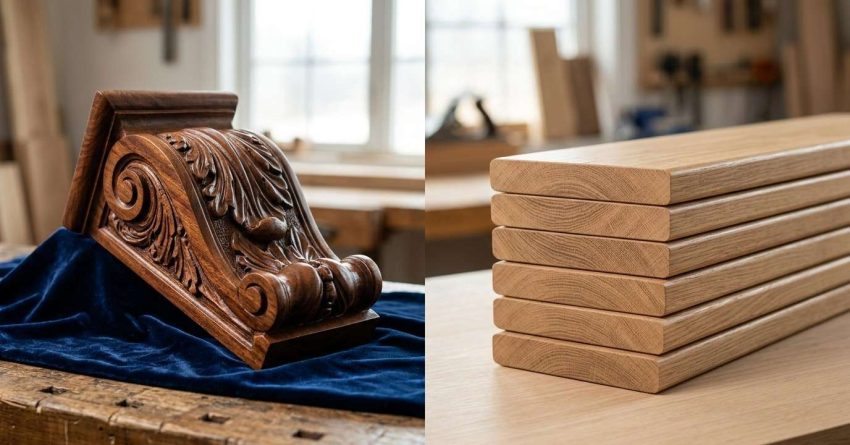
Design flexibility in custom builds often extends to interior woodwork and built-ins — our custom carpentry work details how skilled carpenters contribute to personalized finishes, cabinetry, and structural wood elements that production homes rarely include as standard.
Which Builder Type Is Right for Your Property Goals?
The right builder type depends on what you are trying to accomplish, what resources you have available, and how much involvement you want in the construction process.
A custom builder makes sense when you own land, have a specific vision that no existing floor plan can satisfy, and have the budget and time to invest in a fully personalized project. It also makes sense for property investors building a high-end rental or a property intended for long-term appreciation in a market where custom homes command a premium.
A production builder makes sense when you want a new home at a predictable price point, within a defined timeline, in an established community with existing infrastructure. It is also the more practical choice for first-time buyers, buyers working within a tighter budget, or investors who need a property ready to rent or sell within a specific window.
For homeowners who find that neither builder type fully meets their needs, exploring home remodeling options can bridge the gap — allowing you to customize an existing production home or expand a custom build over time as your needs evolve.
Questions to Ask Before You Decide
Before committing to either builder type, work through these practical questions:
- Do you own land, or are you purchasing within a development?
- What is your realistic all-in budget, including design fees, permits, and contingency?
- How much time can you dedicate to the construction process?
- How important is design control versus move-in speed?
- Are you building a primary residence, a rental property, or a resale investment?
- What does the local market reward — custom finishes or standardized new construction?
Your answers will point clearly toward one builder type or the other. If you are still uncertain, consulting with a licensed general contractor or a real estate professional familiar with your local market can help you evaluate both paths objectively.
If you need guidance on what to look for in a builder agreement, our custom home builder questions resource walks through the key contract terms and vetting criteria every buyer should review before signing.
How Home Services Support Both Builder Types
Regardless of which builder type you choose, the work does not end at move-in. Both custom and production homes require ongoing maintenance, system servicing, and periodic upgrades to protect their value and keep them safe and functional year-round.
Both custom and production homes require reliable mechanical systems from day one, and our residential plumbing services explains what new construction plumbing involves, what to inspect after a build, and when to call a professional for post-construction issues.
Electrical work is a critical component of any new build regardless of builder type — our home electrical services covers what new construction wiring includes, what code compliance requires, and how to address electrical needs after your home is complete.
Heating and cooling systems must be planned early in any construction project, and our HVAC installation guide walks through what new construction HVAC involves, how system sizing is determined, and what ongoing maintenance both custom and production homeowners should schedule.
Whether you are managing a newly built custom home or maintaining a production home in a subdivision, having a reliable home services partner ensures that every system — plumbing, electrical, HVAC, carpentry, and beyond — stays in peak condition long after the builder has moved on.
Conclusion
Custom and production builders represent two fundamentally different approaches to new home construction — one built around complete personalization, the other around efficiency and predictability. The right choice depends on your budget, timeline, design priorities, and long-term property goals.
Both paths lead to a new home, but the experience, cost structure, and outcome differ significantly. Understanding those differences before you commit protects your investment and sets realistic expectations for the entire process.
At Mr. Local Services, we support homeowners and property managers at every stage — from new construction planning through long-term maintenance — so your property stays safe, functional, and well-maintained no matter which builder path you chose.
Frequently Asked Questions
What is the main difference between a custom and a production builder?
A custom builder constructs a home to your exact specifications on land you own, while a production builder builds from pre-designed floor plans within a development. Custom builds offer full design control; production builds offer speed and lower base costs.
Is a custom home always more expensive than a production home?
Custom homes typically cost more per square foot due to individual design work and unique material sourcing. However, heavily upgraded production homes can approach custom pricing, so total cost depends on the specific choices made in both cases.
How long does it take to build a custom home compared to a production home?
Production homes typically take four to eight months to complete. Custom homes usually require twelve to twenty-four months when accounting for design, permitting, and construction phases, though complex projects can take longer.
Can you customize a production home after purchase?
Yes. Many homeowners remodel production homes after purchase to add the personalization the original build did not include. This can involve structural changes, finish upgrades, additions, or system improvements depending on budget and local permitting requirements.
What should I look for when choosing between builder types?
Evaluate your land ownership status, budget, timeline flexibility, and how much design control matters to you. Also consider your end goal — primary residence, rental property, or resale investment — since each scenario may favor a different builder type.
Do both custom and production homes require the same ongoing maintenance?
Yes. Both home types require regular maintenance of plumbing, electrical, HVAC, roofing, and structural systems. The specific maintenance schedule may vary based on materials used and system specifications, but neither builder type eliminates the need for ongoing professional servicing.
What is a semi-custom home builder?
A semi-custom builder offers a middle ground — pre-designed floor plans that can be modified within defined limits. Buyers can adjust room sizes, add features, or change structural elements to a greater degree than a production home allows, but with less flexibility and lower cost than a fully custom build. Our guide to semi-custom home building covers this option in full detail.