Choosing between a custom home and a spec home is one of the biggest financial decisions a homeowner will make, and the right answer depends entirely on your timeline, budget, and how much control you want over the final result.
Most buyers face this decision without a clear framework. Understanding what separates these two paths saves time, prevents costly surprises, and helps you move forward with confidence.
This guide explains both options clearly, compares them side by side, and helps you identify which choice fits your situation, priorities, and long-term property goals.
What Is a Custom Home?
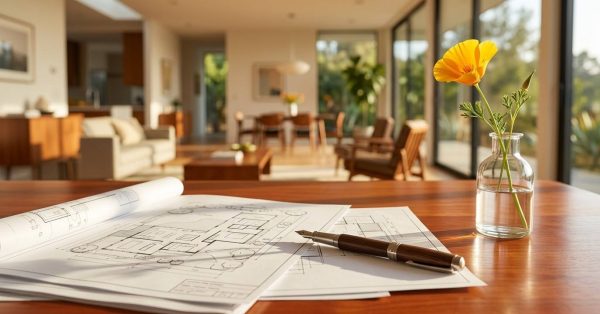
A custom home is a property built entirely to the buyer’s specifications on a lot the buyer owns or selects. Every element, from the floor plan and room dimensions to the materials, finishes, and fixtures, is chosen by the homeowner in collaboration with an architect and a general contractor.
The buyer is involved at every stage. You approve the design drawings, select the structural systems, choose the interior finishes, and sign off on changes as construction progresses. Nothing is predetermined. The result is a home that reflects exactly what you want, built the way you want it.
Understanding the difference between these two paths starts with knowing how each is built, our guide to new home construction options covers the full range of building approaches available to homeowners today.
What Does the Custom Home Building Process Look Like?
The custom home process typically begins with land acquisition, followed by architectural design, permitting, and then construction. From the first design meeting to move-in day, the timeline commonly runs 12 to 24 months depending on the complexity of the design, local permitting timelines, and contractor availability.
The buyer works closely with an architect to develop blueprints, then selects a general contractor to manage the build. Throughout construction, the homeowner makes ongoing decisions about materials, finishes, and any design adjustments. This level of involvement is both the greatest strength and the most demanding aspect of building custom.
What Is a Spec Home?
A spec home, short for speculative home, is a property built by a developer or builder without a specific buyer in mind. The builder constructs the home based on what they believe will appeal to the local market, using standard floor plans, finishes, and materials selected to maximize broad appeal and construction efficiency.
By the time a buyer enters the picture, the home is either already complete or nearing completion. The buyer selects from what is available rather than designing from scratch. Spec homes are sold through real estate agents or directly by the builder and are typically priced to move within a defined market window.
What Are the Advantages of Buying a Spec Home?
The primary advantage of a spec home is speed. A buyer can close and move in within weeks rather than waiting 12 to 24 months for construction to finish. Spec homes also carry a known, fixed price at the time of purchase, which simplifies financing and budget planning.
Because the builder has already made all design decisions, the buyer avoids the time and mental load of managing hundreds of choices. For buyers who want a new home without the complexity of a custom build, spec homes offer a practical, lower-friction path to ownership.
Custom Home vs Spec Home Key Differences at a Glance
| Factor | Custom Home | Spec Home |
| Design control | Full — buyer decides everything | Limited — builder decides most elements |
| Timeline | 12–24 months from design to move-in | Weeks to a few months |
| Price certainty | Variable — costs can increase during build | Fixed at time of purchase |
| Lot selection | Buyer selects or owns the land | Lot is predetermined by builder |
| Personalization | Unlimited within budget | Minimal — upgrades may be available pre-close |
| Financing complexity | Higher — construction loans required | Standard mortgage financing |
| Builder relationship | Long-term, collaborative | Transactional |
| Risk level | Higher — design and cost changes possible | Lower — finished product is visible |
This comparison reflects the core trade-off: custom homes offer maximum control at the cost of time and complexity, while spec homes offer speed and simplicity at the cost of personalization.
When Does a Custom Home Make More Sense?
A custom home is the stronger choice when you have a specific vision for how you want to live and no existing property on the market meets that vision. If you have particular accessibility needs, a unique lot, a non-standard family configuration, or strong preferences about layout and materials, building custom is the only way to get exactly what you need.
Custom builds also make sense when you plan to stay in the home long-term. The upfront investment in design and construction is easier to justify when you intend to live in the property for 10 or more years. Buyers who are building on inherited land or in areas with limited housing inventory also find that custom construction is the most practical path.
One of the most valued aspects of a custom home is the ability to specify built-ins, cabinetry, and structural woodwork, and our custom carpentry work professionals can bring those design details to life exactly as planned.
When Does a Spec Home Make More Sense?
A spec home is the better choice when your timeline is short, your financing is straightforward, and you are comfortable with the design decisions the builder has already made. Buyers relocating for work, families with school enrollment deadlines, or anyone who needs to be in a home within a defined window will find spec homes far more practical.
Spec homes are also a strong option for first-time buyers who want the benefits of a new construction home, modern systems, builder warranties, energy efficiency, without the complexity of managing a custom build. The ability to see the finished product before committing reduces uncertainty and makes the decision easier to evaluate.
Spec homes often come with standard flooring that buyers later want to upgrade, and our flooring installation services make it straightforward to replace or enhance any surface after closing.
Hidden Costs Both Options Share
Regardless of which path you choose, new construction carries costs that buyers frequently underestimate. Land preparation, utility connections, landscaping, window treatments, and appliances are often not included in the base price of either a custom or spec home. Buyers should budget an additional 10 to 20 percent above the purchase or construction price to cover these items.
Whether you choose a custom or spec home, post-move updates are common, from layout changes to finish upgrades, and our home remodeling services are designed to help you personalize any property after purchase. Routine repairs and minor fixes are inevitable in any new home, and having access to reliable handyman repair services ensures those small issues get resolved quickly without disrupting your schedule.
Permit fees, HOA setup costs, and property tax adjustments at closing are additional line items that catch many buyers off guard. Working with a buyer’s agent and a financial advisor before committing to either option helps you build a complete picture of the true total cost.
If you want a broader framework for planning your property investment, our home building guide walks through every major decision point from land selection to final walkthrough.
How to Make the Final Decision
The decision between a custom home and a spec home comes down to four practical questions. First, how much time do you have? If you need to move within six months, a spec home is almost certainly the right choice. Second, how important is design control? If you have specific requirements that no existing home can meet, custom is the only path that delivers them.
Third, what is your risk tolerance? Custom builds carry more financial and timeline uncertainty than spec homes. Cost overruns, design changes, and construction delays are real possibilities that buyers must be prepared to manage. Fourth, what is your long-term plan for the property? A custom home built for a 20-year stay justifies a higher upfront investment in a way that a shorter-term ownership horizon does not.
Answering these four questions honestly will point you toward the right option more reliably than any comparison of features or prices alone.
Conclusion
Custom homes and spec homes serve different buyers at different stages of life. The right choice depends on your timeline, your need for design control, your financial flexibility, and how long you plan to stay.
Both paths lead to new construction with modern systems and builder warranties, the difference is how much involvement you want and how much time you have to invest in the process.
At Mr. Local Services, we support homeowners at every stage, from new construction decisions to post-move improvements, repairs, and upgrades. Contact us today to connect with skilled professionals who keep your property performing at its best.
Frequently Asked Questions
How long does it take to build a custom home?
Most custom homes take between 12 and 24 months from the initial design phase to move-in. Timeline varies based on design complexity, local permitting requirements, and contractor availability.
Are spec homes lower quality than custom homes?
Not necessarily. Spec homes built by reputable developers use standard-grade materials that meet local building codes. Quality depends on the builder, not the construction model. Buyers should review builder reputation and request a home inspection before closing.
Can I make changes to a spec home before closing?
In some cases, yes. If the home is still under construction, builders may allow buyers to select finishes or make minor modifications for an additional cost. Once construction is complete, changes are generally not available before closing.
Which option has better resale value?
Both can hold strong resale value when built in desirable locations. Custom homes may command a premium if the design appeals broadly to future buyers. Spec homes in established developments often benefit from comparable sales data that supports consistent pricing.
Do I need a real estate agent for either option?
A buyer’s agent is recommended for both. For spec homes, an agent helps negotiate price, upgrades, and closing terms with the builder. For custom homes, an agent can assist with land acquisition and help coordinate the transaction alongside your architect and contractor.