A custom home gives you complete design control from the ground up, while a semi-custom home offers a builder’s existing floor plan with selected modifications. Both paths lead to a newly built home, but they differ significantly in cost, timeline, flexibility, and the level of involvement required from you as the buyer. Choosing the wrong path can mean budget overruns, delays, or a finished home that does not match your expectations.
This comparison matters now because new home construction costs and timelines have shifted considerably, making the choice between these two options more consequential than ever for buyers across the USA.
This guide breaks down every key difference between custom and semi-custom homes, helping you match the right build type to your budget, goals, and lifestyle.
What Is a Custom Home?
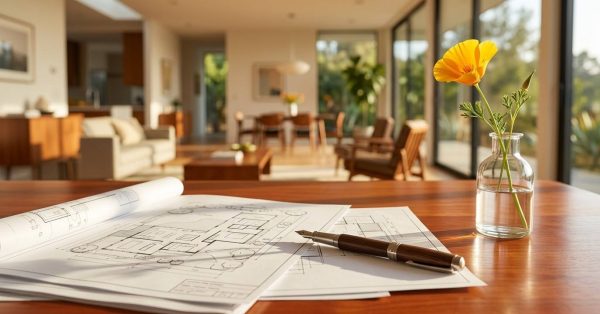
A custom home is a one-of-a-kind residence designed and built entirely to the owner’s specifications on a lot the owner typically selects and purchases independently. Nothing about the floor plan, materials, or finishes is predetermined. The homeowner works directly with an architect to create original blueprints, then hires a general contractor or custom home builder to execute the design.
Key Features of a Fully Custom Build
Every element of a custom home is chosen by the owner. This includes the structural layout, room dimensions, ceiling heights, window placement, exterior style, roofing materials, interior finishes, and mechanical systems. There are no standard packages or preset options. If you want a 12-foot kitchen island, a dedicated home theater, or a primary suite that spans the entire second floor, a custom build can accommodate it.
Understanding what a custom home is becomes much clearer when you have a solid grasp of the overall home building process, which covers every stage from land selection and design to permits, construction, and final inspection.
Who Builds Custom Homes?
Custom homes are built by custom home builders or general contractors who specialize in one-off projects rather than production communities. These builders do not maintain model homes or preset communities. They work from your architect’s plans and coordinate all subcontractors — framing crews, electricians, plumbers, roofers, and finish carpenters — on your behalf.
What Is a Semi-Custom Home?
A semi-custom home starts with a builder’s existing floor plan and allows the buyer to make a defined set of modifications before construction begins. The structural layout is largely fixed, but buyers can adjust elements like room configurations, exterior elevations, cabinet styles, countertop materials, flooring, and fixture selections within the builder’s available options.
How Semi-Custom Differs From Production Homes
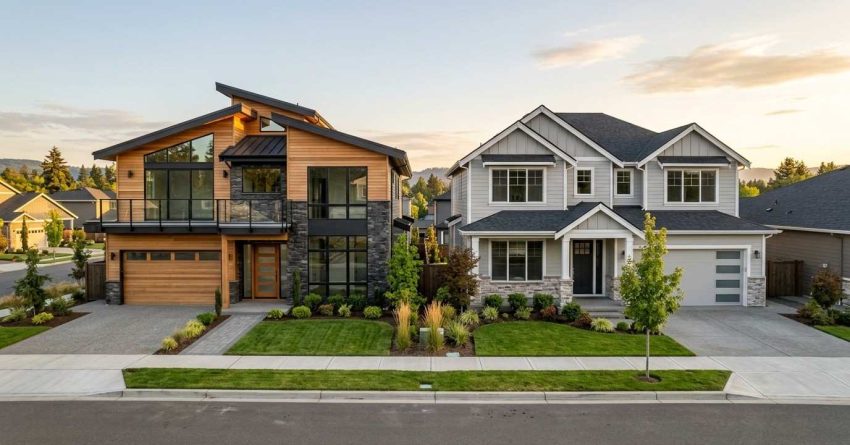
A production home — also called a spec home or tract home — is built entirely to the builder’s standard specifications with little to no buyer input. A semi-custom home sits one step above that, offering meaningful personalization within a controlled framework. Semi-custom homes occupy a specific position in the broader landscape of new home construction options, sitting between fully custom builds and standard production homes in terms of flexibility, cost, and timeline.
What You Can and Cannot Change
In a semi-custom home, buyers typically control interior finishes, fixture selections, some structural options like adding a bedroom or extending a garage, and exterior color and material choices. What buyers generally cannot change includes the home’s foundational footprint, load-bearing wall placement, and the overall structural engineering of the design. The builder’s plan sets the boundaries; the buyer personalizes within them.
Custom Home vs Semi-Custom Home: Core Differences
The differences between these two build types affect every stage of the project — from the first design meeting to the day you receive your keys.
Design Flexibility
Custom homes offer unlimited design flexibility. Every decision is yours, from the placement of electrical outlets to the pitch of the roofline. Semi-custom homes offer meaningful but bounded flexibility. You are choosing from a menu rather than writing the menu yourself. For buyers who have a clear and specific vision that no existing floor plan can satisfy, only a custom build will deliver the result they want.
Cost Comparison
Custom homes cost more than semi-custom homes in almost every market. The primary cost drivers are architectural fees, the complexity of managing a fully bespoke build, and the absence of the economies of scale that semi-custom builders achieve by repeating similar designs. Semi-custom builders purchase materials in bulk and have established subcontractor relationships that reduce per-unit costs. For homeowners who want a high-quality new build without the premium of full customization, our home remodeling services offer a practical alternative that delivers significant design control at a fraction of the cost of either build type.
Timeline and Build Process
Custom homes take longer to complete. The design phase alone — working with an architect to produce original blueprints, revising them, obtaining permits, and finalizing specifications — can take six months to a year before a single foundation is poured. Semi-custom homes move faster because the structural design is already engineered and permitted at the community level. Buyers make their selections, and construction begins on a more predictable schedule.
Which Option Fits Your Budget and Goals?
Neither option is universally better. The right choice depends on how specific your vision is, how much time you have, and what your budget can realistically support.
When a Custom Home Makes Sense
A custom home is the right choice when you own or plan to purchase a specific lot that requires a purpose-designed structure, when your lifestyle needs are highly specific and no existing floor plan comes close to meeting them, or when you are building a long-term primary residence and want every detail to reflect your preferences. Custom builds also make sense when the land itself — its topography, orientation, or size — demands a design that works around its unique characteristics.
When a Semi-Custom Home Is the Better Choice
A semi-custom home is the better choice when you want a new build with meaningful personalization but need a more predictable budget and timeline. It suits buyers who are comfortable with a well-designed floor plan and primarily want to control finishes and aesthetics rather than structure. Buyers with strict budget ceilings sometimes find that tiny home builds offer a third path worth exploring — delivering full design customization at a significantly lower total investment than either a custom or semi-custom home.
Land, Lot, and Location Considerations
Custom home buyers must secure their own land before design work begins. This adds a layer of complexity that semi-custom buyers do not face, since semi-custom homes are typically built within established communities where the builder already owns and develops the lots.
For custom builds, lot selection affects everything — zoning regulations, setback requirements, utility access, soil conditions, and the orientation of the home on the property. A lot with significant slope, poor drainage, or limited road access can add substantial cost to the foundation and site preparation phases.
Once your lot is secured, professional landscape planning services help you maximize the usable space around your new home — from grading and drainage to plantings, hardscaping, and long-term curb appeal.
Semi-custom buyers choosing a lot within a builder’s community should still evaluate the specific lot carefully. Corner lots, lots backing to open space, and lots with favorable sun orientation often carry a premium but deliver long-term lifestyle and resale value.
Working With Builders and Contractors
The builder relationship looks very different depending on which path you choose. Custom home buyers are managing a more complex relationship — coordinating between an architect, a general contractor, and multiple subcontractors, often without the safety net of a builder’s established process.
Skilled builders often partner with specialists for interior finish work, and our custom carpentry work team handles everything from built-in cabinetry and trim to structural framing details that define the character of a custom or semi-custom home.
Questions to Ask Before You Commit
Before signing any contract with a builder, ask how many projects they are currently managing, what their average timeline looks like from contract to close, how they handle change orders and cost overruns, and what warranty coverage they provide on both structural elements and finishes. For semi-custom builders, ask specifically which elements are fixed and which are truly modifiable — the answer will tell you quickly whether their definition of “semi-custom” matches yours.
Maintaining Your New Home After Move-In
A newly built home requires less immediate maintenance than an older property, but it is not maintenance-free. The first year of ownership is critical for identifying and addressing any construction deficiencies covered under your builder’s warranty, as well as establishing the routine upkeep habits that protect your investment long-term.
After move-in, keeping your new home in peak condition is straightforward when you have reliable home maintenance services available for everything from minor repairs and touch-ups to seasonal upkeep tasks that protect your investment year-round.
A newly built home’s mechanical systems require regular attention, and scheduling routine HVAC system maintenance from the first year of ownership helps prevent costly breakdowns and keeps your home comfortable in every season.
Exterior maintenance — including roof inspections, gutter cleaning, caulking around windows and doors, and driveway sealing — should begin in the first year regardless of how new the construction is. Weather exposure begins the moment construction is complete.
Conclusion
Custom and semi-custom homes represent two distinct approaches to building a new residence, each with real trade-offs in cost, flexibility, timeline, and complexity. The right choice depends on how specific your vision is and what your budget and schedule can support.
Both paths require careful planning, the right builder relationships, and a clear understanding of what you can and cannot control throughout the process. Buyers who go in informed make better decisions and experience fewer costly surprises.
At Mr. Local Services, we connect homeowners with skilled professionals across every stage of the building and maintenance journey — from pre-construction planning to post-move-in upkeep — so your new home stays in excellent condition from day one.
Frequently Asked Questions
What is the main difference between a custom home and a semi-custom home?
A custom home is designed entirely from scratch to the owner’s specifications, while a semi-custom home starts with a builder’s existing floor plan and allows modifications within a defined set of options. Custom builds offer unlimited flexibility; semi-custom builds offer meaningful but bounded personalization.
Are custom homes always more expensive than semi-custom homes?
Yes, in nearly all cases. Custom homes carry higher costs because of architectural fees, the complexity of managing a one-off build, and the absence of the bulk purchasing and process efficiencies that semi-custom builders use to control costs.
How long does it take to build a custom home compared to a semi-custom home?
Custom homes typically take 18 to 24 months or longer from initial design to move-in. Semi-custom homes generally run 10 to 14 months because the structural design is already engineered and the builder’s process is established.
Do I need to own land before building a custom home?
Yes. Custom home builders work on land you own or purchase independently. Semi-custom builders typically sell lots within their own communities as part of the build contract, so land acquisition is handled through the builder.
Can I make structural changes to a semi-custom home?
Some structural changes are possible — such as adding a bedroom, extending a garage, or modifying a roofline — but they depend entirely on what the builder allows. Load-bearing walls, the foundational footprint, and core structural engineering are generally fixed.
What happens if I want changes after construction starts?
Changes after construction begins are called change orders and they almost always increase cost and extend the timeline. This applies to both custom and semi-custom builds. Finalizing all decisions before construction starts is the most effective way to control budget and schedule.
Is a semi-custom home a good investment compared to a custom home?
Both can be strong investments depending on location, build quality, and market conditions. Semi-custom homes in established communities often benefit from comparable sales data that supports resale value. Custom homes on unique lots can command premiums but may also face a smaller buyer pool at resale.