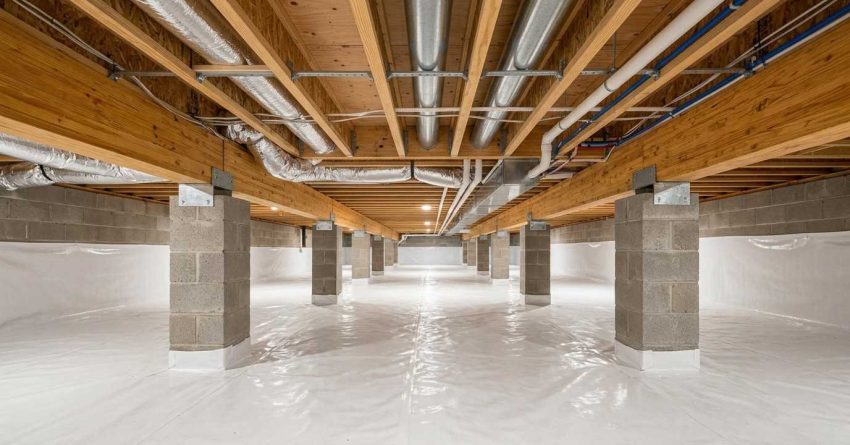
A crawlspace foundation supports your home from below ground level, creating an accessible space between the soil and your floor system that houses critical structural, mechanical, and moisture-control components. When properly maintained, it protects your home’s structural integrity, indoor air quality, and long-term property value. When neglected, it becomes the source of some of the most expensive and disruptive repairs a homeowner can face — from sagging floors and rotting beams to mold growth and pest infestations.
Understanding your crawlspace foundation is one of the most practical steps you can take to protect your property investment and avoid costly emergency repairs.
This guide covers everything you need to know: what a crawlspace foundation is, how it works, what can go wrong, how to inspect and repair it, and how to keep it in top condition year-round.
What Is a Crawlspace Foundation?
A crawlspace foundation is a type of building foundation that elevates a home above the ground, creating a shallow, accessible space — typically 18 inches to 4 feet in height — between the soil and the floor system. This space runs beneath the entire footprint of the home or a portion of it, providing access to plumbing, electrical wiring, HVAC ductwork, and structural support members without requiring a full basement excavation.
Crawlspace foundations are common across the United States, particularly in regions with expansive soils, high water tables, or sloped terrain where slab foundations are impractical. They offer a cost-effective middle ground between a concrete slab and a full basement, combining accessibility with structural elevation.
The crawlspace itself is defined by its perimeter foundation walls, which are typically constructed from poured concrete, concrete block, or treated wood. Interior support piers and beams carry the load of the floor system above, while the soil floor below is managed through vapor barriers, drainage systems, and ventilation to control moisture.
How Crawlspace Foundations Differ from Slab and Basement Foundations
A slab foundation is a single layer of poured concrete placed directly on the ground, with no accessible space beneath the home. It is the simplest and least expensive foundation type but offers no access to mechanical systems running beneath the floor. A basement foundation excavates several feet below grade, creating a full-height usable space beneath the home — significantly more expensive to build and waterproof.
A crawlspace foundation occupies the middle ground. It elevates the home off the ground like a basement but without the depth or cost of full excavation. Unlike a slab, it allows access to pipes, ducts, and structural members for inspection and repair. Unlike a basement, it is not designed as living or storage space. This accessibility is one of its greatest advantages — and one of its greatest maintenance responsibilities.
Types of Crawlspace Foundations Used in U.S. Homes
The two primary crawlspace foundation types in U.S. residential construction are vented crawlspaces and encapsulated (sealed) crawlspaces. A vented crawlspace uses foundation vents to allow outside air to circulate beneath the home, relying on airflow to manage moisture. An encapsulated crawlspace seals the entire space with a heavy-duty vapor barrier and controls the environment through conditioned air or a dehumidifier.
A third variation — the unvented conditioned crawlspace — is increasingly common in energy-efficient construction. In this system, the crawlspace is treated as part of the home’s conditioned envelope, with insulation applied to the foundation walls rather than the floor joists above. Each type has distinct maintenance requirements, performance characteristics, and suitability based on climate and soil conditions.
Key Components of a Crawlspace Foundation
A crawlspace foundation is a system of interdependent components. Understanding each one helps homeowners identify problems early, communicate clearly with contractors, and make informed decisions about repairs and upgrades.
Footings, Piers, and Support Beams
Footings are the concrete pads or continuous strips of concrete buried below the frost line that distribute the weight of the home into the soil. They form the base of the perimeter foundation walls and interior support piers. Footings must be sized and placed correctly for the soil type and load they carry — undersized or improperly placed footings are a leading cause of foundation settlement.
Piers are vertical support columns that rise from footings to carry the weight of the floor beams above. In older homes, piers are often constructed from stacked concrete block, brick, or wood posts. In newer construction and repair work, adjustable steel piers or helical piers are used for precision leveling and long-term stability. When piers settle, shift, or deteriorate, the floor system above begins to sag — one of the most visible signs of crawlspace foundation failure.
Beams and joists form the floor structure that rests on top of the piers and perimeter walls. Main beams — typically large dimensional lumber or engineered wood — span between piers and carry the floor joists that run perpendicular to them. The subfloor is nailed or screwed to the joists above. When moisture damages beams and joists, the entire floor system is compromised.
Vapor Barriers and Moisture Control Systems
The soil in a crawlspace constantly releases moisture vapor through a process called soil evaporation. Without a vapor barrier, this moisture migrates upward into the floor system, causing wood rot, mold growth, and elevated indoor humidity. A vapor barrier is a polyethylene or reinforced plastic sheet installed across the soil floor of the crawlspace to block this moisture transfer.
Standard vapor barriers are 6-mil polyethylene sheeting, but professional-grade encapsulation systems use 12-mil to 20-mil reinforced barriers that cover the floor, walls, and piers in a continuous sealed layer. A properly installed vapor barrier is one of the most critical components in any crawlspace — our vapor barrier installation resource covers material types, installation steps, and what to expect from a professional service.
In addition to vapor barriers, moisture control systems may include interior drainage channels, sump pumps, and dehumidifiers. These components work together to manage both vapor and liquid water intrusion, keeping the crawlspace dry under all conditions.
Insulation, Vents, and Access Points
Insulation in a crawlspace is installed either between the floor joists above (in vented crawlspaces) or against the perimeter foundation walls (in conditioned or encapsulated crawlspaces). Floor joist insulation — typically fiberglass batts — slows heat transfer between the crawlspace and the living space above. Wall insulation in conditioned crawlspaces uses rigid foam board or spray foam to create a thermal boundary at the foundation perimeter.
Foundation vents are screened openings in the perimeter walls of a vented crawlspace that allow outside air to circulate and carry away moisture. Building codes historically required a minimum ratio of vent area to crawlspace floor area, though modern building science has shifted toward sealed, conditioned crawlspaces in many climates. Vents can be manually operated or equipped with automatic openers that respond to temperature.
Access points — typically a hatch in the floor or an opening in the foundation wall — provide entry for inspection and maintenance. A properly sized and weather-sealed access point is essential for routine crawlspace care and emergency repairs.
Common Crawlspace Foundation Problems
Crawlspace foundations are exposed to conditions that make them vulnerable to a specific set of problems. Identifying these problems early is the difference between a manageable repair and a major structural failure.
Moisture Intrusion and Standing Water
Moisture is the most common and most damaging problem in crawlspace foundations. It enters through multiple pathways: soil vapor rising through an unprotected floor, surface water draining toward the foundation, groundwater seeping through foundation walls, and condensation forming on cold surfaces when warm humid air enters through vents.
The consequences of unchecked moisture are severe. Wood structural members absorb moisture and begin to rot, losing load-bearing capacity over time. Metal fasteners and hardware corrode. Mold colonies establish themselves on organic surfaces. Insulation becomes saturated and loses its thermal value. When moisture intrusion in a crawlspace goes unaddressed, it can escalate into a full structural emergency — our water damage services outlines how professionals assess, contain, and restore properties affected by water infiltration at the foundation level.
Standing water in a crawlspace is a critical condition requiring immediate attention. It indicates that drainage is failing — either from a high water table, a plumbing leak, or inadequate grading around the foundation. Standing water accelerates every form of crawlspace damage simultaneously.
Structural Damage: Sagging Floors and Settling Piers
Sagging or bouncy floors are one of the most noticeable signs of crawlspace foundation problems. They occur when the structural members supporting the floor — piers, beams, or joists — have been weakened by moisture damage, pest activity, or physical settlement. A floor that was once level and firm becomes soft, springy, or visibly uneven.
Pier settlement occurs when the soil beneath a footing compresses, erodes, or shifts, causing the pier to sink or tilt. This transfers uneven loads to adjacent structural members, creating a cascading effect of stress across the floor system. In severe cases, doors and windows in the home above begin to stick or fail to close properly — a sign that the structural distortion has reached the wall framing.
Beam and joist damage from wood rot is a slower process but equally serious. Rot typically begins at points of persistent moisture contact — where a beam rests on a pier, where a joist meets the foundation wall, or where insulation has trapped moisture against wood. Rotted wood loses its structural integrity gradually, making the problem easy to overlook until significant damage has occurred.
Mold, Pest Infestation, and Air Quality Issues
A damp crawlspace is an ideal environment for mold growth. Mold spores are present in all outdoor air and require only moisture, organic material, and moderate temperatures to colonize. Crawlspace wood framing, insulation, and cardboard vapor barriers provide abundant organic material. Once established, mold colonies release spores continuously into the air — and because homes draw air upward from the crawlspace through a process called the stack effect, mold in the crawlspace directly affects indoor air quality throughout the home.
Crawlspace moisture also attracts pests. Termites are drawn to moist, softened wood and can cause catastrophic structural damage before their presence is detected. Rodents enter through foundation vents and gaps in the perimeter, nesting in insulation and gnawing on wiring and pipes. Crawlspace moisture creates ideal conditions for pest activity, particularly termites and rodents — our pest control services explains how licensed technicians identify infestations, treat the source, and protect your foundation from recurring damage.
Air quality problems from crawlspace contamination include elevated humidity throughout the home, musty odors, and exposure to mold spores and pest waste. These conditions are particularly harmful to occupants with respiratory conditions, allergies, or compromised immune systems.
How to Inspect Your Crawlspace Foundation
Regular inspection is the most effective tool for catching crawlspace problems before they become expensive repairs. Most homeowners can perform a basic visual inspection themselves, though certain conditions require professional assessment.
What to Look For During a Visual Inspection
Before entering the crawlspace, gather a flashlight or headlamp, a moisture meter if available, a dust mask rated for mold spores (N95 minimum), knee pads, and disposable gloves. Wear clothing you can wash immediately afterward.
Begin at the access point and scan the entire space systematically before moving. Look for standing water, wet soil, or water stains on the foundation walls — these indicate active or recent water intrusion. Check the vapor barrier for tears, gaps, or areas where it has been displaced. Look for white mineral deposits (efflorescence) on concrete surfaces, which indicate water has been moving through the concrete.
Examine wood structural members closely. Press a screwdriver firmly into beams and joists — wood that is soft, spongy, or crumbles easily is rotted and structurally compromised. Look for dark staining, fuzzy growth, or discoloration on wood surfaces, which indicate mold or fungal activity. Check piers for cracking, tilting, or separation from the beams above. Look for gaps between the beam and the pier top, which indicate settlement.
Inspect insulation for sagging, displacement, or moisture saturation. Check foundation vents for damage, blockage, or missing screens. Look for evidence of pest activity: mud tubes on foundation walls (termites), droppings, gnaw marks, or nesting material (rodents).
When to Call a Professional Inspector
A professional inspection is warranted when you observe any of the following: standing water or significant moisture staining, visible mold growth covering more than a small isolated area, soft or rotted structural wood, cracked or tilting piers, sagging floors above the crawlspace, evidence of active pest infestation, or any condition you cannot safely assess yourself.
Professional crawlspace inspectors use moisture meters, thermal imaging cameras, and structural assessment tools to identify problems that are not visible to the naked eye. They can also assess the severity of damage and provide a prioritized repair plan. Many crawlspace contractors offer free or low-cost initial inspections — our handyman inspection services connect homeowners with experienced professionals who can assess crawlspace conditions and flag problems before they become costly repairs.
A professional inspection is also recommended before purchasing a home with a crawlspace foundation, after any significant weather event involving flooding or heavy rain, and as part of an annual maintenance routine.
Crawlspace Foundation Repair Options
The appropriate repair approach depends on the type and severity of the problem identified during inspection. Most crawlspace repairs fall into three categories: structural repairs, moisture management repairs, and combined remediation projects.
Pier Repair and Replacement
When piers have settled, cracked, or deteriorated beyond the point of stability, they must be repaired or replaced. The repair method depends on the pier type and the cause of failure.
For concrete block piers that have shifted or cracked, the standard repair involves removing the damaged pier, re-leveling the footing, and rebuilding with new materials. In many cases, adjustable steel column posts replace the original masonry piers, providing a more durable and precisely adjustable support. These steel columns can be fine-tuned to restore the floor to level without disturbing the surrounding structure.
For more severe settlement caused by soil failure beneath the footings, helical piers or push piers are driven deep into stable soil or bedrock below the affected area. These systems transfer the structural load past the unstable surface soil to a reliable bearing layer, permanently stabilizing the foundation. Helical pier installation is a specialized structural repair that requires a licensed foundation contractor.
Beam and Joist Repair
Beam and joist repair addresses wood structural members that have been damaged by rot, moisture, or pest activity. The repair scope ranges from sistering — attaching a new structural member alongside a damaged one — to full replacement of compromised sections.
Sistering is the most common repair for localized joist damage. A new joist of the same dimensions is cut to length, coated with a wood preservative, and fastened alongside the damaged joist with structural screws or bolts. This restores the load-carrying capacity of the floor system without requiring full replacement. For beams with more extensive damage, sections may need to be cut out and replaced with new lumber or engineered wood products.
Before any wood repair is performed, the moisture source causing the damage must be identified and corrected. Repairing structural wood without addressing the underlying moisture problem will result in the same damage recurring within a few years.
Waterproofing and Drainage Solutions
Waterproofing a crawlspace requires more than a vapor barrier — our crawlspace waterproofing solutions details the drainage systems, sump pump options, and professional sealing methods used to keep foundations dry year-round.
Interior drainage systems channel water that enters the crawlspace to a collection point before it can accumulate. A perimeter drain channel — typically a slotted pipe or drainage mat installed along the base of the foundation walls — collects water and directs it to a sump pit. A sump pump then removes the collected water from the crawlspace automatically.
Exterior waterproofing addresses water before it enters the crawlspace. This includes improving the grading around the foundation so that surface water drains away from the home, extending downspouts to discharge water well away from the foundation, and in some cases, installing exterior drainage systems or waterproof coatings on the outside of foundation walls.
Crawlspace Encapsulation vs. Vented Crawlspace
The decision between encapsulation and a vented crawlspace depends on your climate, soil conditions, and existing moisture levels — our encapsulation vs vented crawlspace guide walks through both systems with side-by-side comparisons to help you choose the right approach for your home.
Benefits of Full Encapsulation
Crawlspace encapsulation is the process of sealing the entire crawlspace — floor, walls, and piers — with a continuous heavy-duty vapor barrier, closing all foundation vents, and controlling the environment with a dehumidifier or conditioned air supply. The result is a clean, dry, controlled space that behaves as part of the home’s conditioned envelope.
The benefits of full encapsulation are well-documented. A sealed crawlspace eliminates soil vapor as a moisture source, dramatically reducing the risk of wood rot, mold, and pest activity. It improves indoor air quality by preventing contaminated crawlspace air from entering the living space. It reduces heating and cooling costs by eliminating the thermal losses associated with a cold, unconditioned crawlspace. And it creates a clean, accessible space for mechanical system maintenance.
Encapsulation is the recommended approach in humid climates, in homes with a history of moisture problems, and in any situation where the crawlspace has been identified as a source of indoor air quality issues. The upfront cost is higher than basic vapor barrier installation, but the long-term savings in energy costs, repair prevention, and property value protection make it a strong investment for most homeowners.
When a Vented Crawlspace Is Appropriate
A vented crawlspace relies on outside air circulation to manage moisture. It is appropriate in dry climates where outdoor humidity levels are consistently low enough that introducing outside air does not add moisture to the crawlspace. In these conditions, ventilation effectively carries away soil vapor before it can accumulate.
However, building science research has consistently shown that vented crawlspaces underperform in humid climates. When outdoor air is more humid than the crawlspace air — which is common in summer months across much of the United States — ventilation actually introduces moisture rather than removing it. This is why many building codes and energy standards now favor sealed, conditioned crawlspaces over vented designs.
A vented crawlspace may also be appropriate as a temporary condition while planning a full encapsulation project, or in situations where budget constraints make immediate encapsulation impractical. In these cases, maintaining functional vents, a quality vapor barrier, and regular inspections is essential to managing moisture risk.
Crawlspace Foundation Maintenance Schedule
Consistent maintenance is the most cost-effective strategy for protecting a crawlspace foundation. A structured schedule — combining seasonal tasks with annual professional inspections — catches problems early and extends the life of every component in the system.
Seasonal Maintenance Tasks
Spring is the highest-risk season for crawlspace moisture problems. Snowmelt and spring rains increase groundwater levels and surface runoff, both of which can overwhelm drainage systems and introduce water into the crawlspace. Spring maintenance tasks include inspecting the vapor barrier for damage after winter, checking the sump pump for proper operation, clearing foundation vents of debris, and inspecting the perimeter grading to ensure water drains away from the foundation.
Summer maintenance focuses on humidity management. In humid climates, summer is when condensation and mold risk peak in vented crawlspaces. Check dehumidifier operation and empty or drain the collection reservoir as needed. Inspect wood structural members for early signs of mold or moisture staining. Crawlspace conditions directly affect your home’s heating and cooling efficiency — our crawlspace HVAC maintenance resource explains how seasonal HVAC servicing intersects with crawlspace ventilation and why both should be addressed together.
Fall maintenance prepares the crawlspace for winter. Inspect and seal any gaps in the foundation perimeter that could allow cold air infiltration or pest entry. Check insulation for displacement or damage. Verify that all mechanical systems in the crawlspace — pipes, ducts, and electrical — are in good condition before cold weather arrives.
Winter maintenance is primarily monitoring. In cold climates, exposed pipes in the crawlspace are vulnerable to freezing. Check that pipe insulation is intact and that the crawlspace temperature stays above freezing. After any significant storm, inspect for water intrusion.
Annual Professional Inspection Checklist
An annual professional inspection provides a comprehensive assessment that goes beyond what a homeowner can observe during a visual walkthrough. Annual crawlspace inspections should always include a review of exposed pipes and drain lines — our crawlspace plumbing inspection explains what licensed plumbers look for when assessing crawlspace pipe conditions and how to prevent freeze damage and leaks.
A complete annual inspection covers: moisture meter readings at multiple points on structural wood members, thermal imaging to identify hidden moisture or insulation gaps, structural assessment of all piers and beams, vapor barrier condition and coverage, sump pump operation and pit condition, dehumidifier performance, pest evidence assessment, and a review of all mechanical systems in the crawlspace.
The inspection should produce a written report with findings, photographs, and prioritized recommendations. This documentation is valuable for tracking the condition of the crawlspace over time and for disclosure purposes when selling the property.
Cost of Crawlspace Foundation Repair and Maintenance
Understanding the cost landscape for crawlspace work helps homeowners budget realistically, evaluate contractor proposals, and make informed decisions about repair timing and scope.
Average Repair Costs by Problem Type
Crawlspace repair costs vary widely based on the type of problem, the severity of damage, the size of the crawlspace, and regional labor rates. The following ranges represent typical costs for common repair types in the U.S. market.
Vapor barrier installation for a standard crawlspace ranges from $1,200 to $4,000 for basic 6-mil polyethylene sheeting, with professional-grade encapsulation systems ranging from $5,000 to $15,000 or more depending on crawlspace size and the scope of wall coverage, vent sealing, and dehumidification equipment included.
Pier repair and replacement costs range from $500 to $1,500 per pier for standard concrete block or steel column repairs, with helical pier systems for severe settlement running $1,000 to $3,000 per pier installed. A full foundation stabilization project involving multiple piers can range from $5,000 to $25,000 depending on the number of piers and the depth required to reach stable soil.
Beam and joist repair through sistering typically costs $100 to $300 per joist for labor and materials, with full beam replacement ranging from $1,500 to $5,000 depending on beam size and accessibility. Mold remediation in a crawlspace ranges from $500 to $4,000 for localized treatment, with full remediation of heavily contaminated spaces running higher.
Factors That Affect Total Project Cost
Several factors influence the final cost of any crawlspace repair project beyond the base repair type. Crawlspace access and height significantly affect labor costs — a low, difficult-to-navigate crawlspace requires more time and specialized equipment than a taller, easily accessible space. The size of the crawlspace directly affects material quantities for vapor barriers, drainage systems, and insulation.
The presence of multiple overlapping problems — for example, moisture damage that has caused both mold growth and structural wood rot — increases total project cost because each problem must be addressed in sequence. Correcting the moisture source, remediating the mold, and then repairing the structural damage are three separate scopes of work.
Geographic location affects both labor rates and material costs. Crawlspace repair costs in high cost-of-living metropolitan areas are typically 20 to 40 percent higher than in rural or lower cost-of-living regions. Crawlspace repair costs often intersect with broader renovation budgets — our foundation repair and remodeling helps homeowners understand how crawlspace work fits into larger remodeling projects and how to plan costs across both scopes.
How Crawlspace Foundation Health Affects Property Value
A crawlspace foundation in poor condition is one of the most significant value-reducing factors a property can have. Home inspectors are trained to identify crawlspace problems, and their findings directly influence buyer decisions, financing approvals, and sale prices.
Buyers and their agents treat crawlspace issues as red flags for several reasons. Moisture damage and mold indicate ongoing maintenance neglect. Structural damage to piers and beams raises concerns about the safety and stability of the entire home. Pest evidence — particularly termite damage — triggers additional specialized inspections and can derail financing entirely. Any of these findings gives buyers leverage to negotiate price reductions or demand repairs as a condition of sale.
Conversely, a well-maintained or recently encapsulated crawlspace is a genuine selling point. It signals to buyers that the home has been cared for, that the foundation is sound, and that they are unlikely to face expensive surprises after closing. A healthy crawlspace foundation directly supports the structural integrity of your floors — our flooring and foundation health explains how crawlspace moisture and settling affect flooring materials and what restoration options are available.
For landlords and property managers, crawlspace condition affects not only property value but also habitability standards and liability exposure. Mold and pest infestations originating in the crawlspace can create tenant health complaints, code violations, and legal liability. Proactive crawlspace maintenance is a risk management strategy as much as a property value strategy.
Choosing the Right Contractor for Crawlspace Foundation Work
Crawlspace foundation work spans multiple trades — structural engineering, waterproofing, mold remediation, pest control, and general contracting. Choosing the right contractor requires understanding which type of professional is appropriate for each scope of work and how to evaluate their qualifications.
For structural repairs involving piers, beams, and foundation walls, look for contractors with specific experience in foundation repair and, for severe settlement cases, a licensed structural engineer involved in the repair design. Ask for references from similar projects, verify licensing and insurance, and request a written scope of work with itemized pricing before signing any contract.
For encapsulation and moisture management, look for contractors who specialize in crawlspace work and can demonstrate experience with the specific system they are proposing — vapor barrier brands, drainage system designs, and dehumidifier specifications should all be clearly documented. Be cautious of contractors who propose encapsulation as a solution to active structural problems without addressing the structural issues first.
Get a minimum of three written estimates for any significant crawlspace project. Compare not just the total price but the scope of work, materials specified, warranty terms, and the contractor’s process for identifying and addressing problems discovered during the work. Finding a qualified contractor for crawlspace work requires vetting experience, licensing, and service scope — our trusted crawlspace contractors connects homeowners with vetted professionals who handle everything from inspections to full foundation repairs.
Mr. Local Services connects homeowners and property managers with skilled crawlspace professionals across all service categories — from initial inspection through complete encapsulation, structural repair, and ongoing maintenance. Contact us to get matched with a qualified local expert for your crawlspace foundation needs.
Conclusion
A crawlspace foundation is a complex system of structural, moisture-control, and mechanical components that requires consistent attention to perform reliably. Understanding its components, recognizing early warning signs, and responding with the right repair approach protects both the structure and the long-term value of your property.
Moisture management, structural integrity, and regular professional inspection are the three pillars of a healthy crawlspace — each one reinforcing the others in a system that either works together or fails together.
Mr. Local Services is here to help you take the right action at every stage — whether you need a professional inspection, a targeted repair, or a complete encapsulation system. Connect with a qualified crawlspace expert today and keep your foundation performing at its best.
Frequently Asked Questions
How often should a crawlspace foundation be inspected?
A crawlspace foundation should be inspected at least once per year by a qualified professional, with homeowner visual checks each season. Annual inspections catch moisture damage, structural changes, and pest activity before they escalate into major repairs.
What is the difference between a vapor barrier and crawlspace encapsulation?
A vapor barrier is a plastic sheet installed on the crawlspace floor to block soil moisture. Encapsulation is a complete system that seals the floor, walls, and piers with a heavy-duty barrier, closes foundation vents, and controls humidity with a dehumidifier or conditioned air supply.
How do I know if my crawlspace has a moisture problem?
Signs of crawlspace moisture problems include musty odors in the home, condensation on windows, soft or springy floors, visible mold on wood surfaces, rust on metal components, and elevated indoor humidity. A moisture meter reading above 19 percent on structural wood indicates a problem.
Can I encapsulate my crawlspace myself?
Basic vapor barrier installation is a DIY-accessible project for homeowners comfortable working in confined spaces. Full encapsulation — including wall coverage, vent sealing, drainage systems, and dehumidification — is a complex multi-component project best handled by a professional to ensure proper sealing, drainage design, and equipment sizing.
What causes crawlspace piers to settle or fail?
Crawlspace piers settle when the soil beneath their footings compresses, erodes, or shifts due to moisture changes, poor soil compaction, or inadequate footing size. Organic material in the soil decomposing over time and tree root activity near the foundation can also cause pier movement.
How long does crawlspace encapsulation last?
A professionally installed crawlspace encapsulation system using high-quality materials typically lasts 15 to 25 years with proper maintenance. The vapor barrier itself may last longer, but dehumidifiers, sump pumps, and drainage components require periodic servicing and eventual replacement.
Does crawlspace encapsulation increase home value?
Yes. A properly encapsulated crawlspace is a documented selling point that signals foundation health, reduced moisture risk, and lower long-term maintenance costs to buyers. It can also improve energy efficiency ratings, which positively affects appraisal values in energy-conscious markets.
What pests are most commonly found in crawlspaces?
Termites, carpenter ants, rodents (mice and rats), and wood-boring beetles are the most common crawlspace pests in U.S. homes. All are attracted to moisture and organic material. Termites and carpenter ants cause direct structural damage to wood framing, while rodents damage insulation, wiring, and pipes.
How much does it cost to repair a crawlspace foundation?
Crawlspace foundation repair costs range from a few hundred dollars for minor vapor barrier repairs to $25,000 or more for comprehensive structural stabilization with helical piers. Most homeowners spend between $3,000 and $10,000 for a combination of moisture management and moderate structural repairs.
What is the stack effect and why does it matter for crawlspaces?
The stack effect is the natural upward movement of air through a building caused by temperature and pressure differences between lower and upper levels. In homes with crawlspaces, this draws air from the crawlspace into the living space above — meaning mold spores, moisture, pest waste, and soil gases in the crawlspace directly affect the air quality throughout the home.