
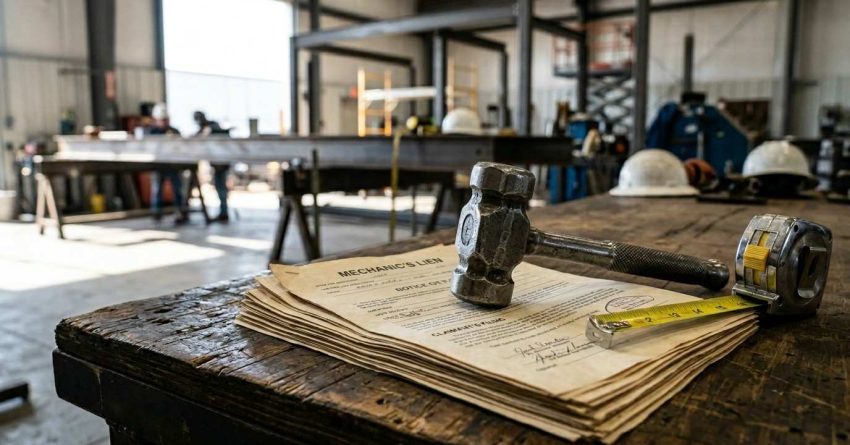
Construction contracts are legally binding agreements that define the scope, cost, timeline, and responsibilities for any building, renovation, or repair project on your property. Whether you are hiring a contractor for a kitchen remodel, a roof replacement, or a full home addition, understanding the legal framework behind these agreements protects your investment and prevents costly disputes. This guide covers the essential elements of construction contract law that every homeowner, landlord, and property manager in the USA needs to know.
Skipping the fine print on a construction contract is one of the most common — and expensive — mistakes property owners make when hiring contractors.
This guide explains what every contract must include, your legal rights as a property owner, key clauses to review, and the steps to take if something goes wrong.
What Is a Construction Contract?
A construction contract is a legally enforceable agreement between a property owner and a contractor that outlines the terms of a construction, renovation, or repair project. It establishes what work will be performed, how much it will cost, when it will be completed, and what happens if either party fails to meet their obligations.
In the USA, construction contracts are governed by a combination of state contract law, the Uniform Commercial Code where applicable, and specific construction statutes that vary by state. Courts generally enforce these agreements as written, which is why the language inside them matters as much as the handshake that precedes them.
A valid construction contract requires four core elements: an offer (the contractor’s proposal), acceptance (your agreement to the terms), consideration (the agreed payment), and mutual intent to be legally bound. Without all four, the agreement may not hold up in court.
Understanding construction contracts is one part of a broader set of property ownership responsibilities — our home services guide covers the full range of maintenance, repair, and improvement decisions every property owner needs to make.
Key Elements Every Construction Contract Must Include
Every enforceable construction contract should contain the following:
- Scope of work: A detailed description of every task the contractor will perform, including materials, finishes, and specifications
- Project timeline: Start date, milestone dates, and a projected completion date
- Contract price: Total cost, payment schedule, and conditions for price adjustments
- Change order process: How modifications to the original scope are requested, approved, and priced
- Warranty terms: What defects or failures the contractor will repair after project completion
- Dispute resolution method: Whether disagreements go to mediation, arbitration, or litigation
- Termination conditions: Circumstances under which either party can end the agreement
- Contractor license and insurance information: Proof of valid licensing and liability coverage
Missing any of these elements creates ambiguity that typically benefits the contractor, not the property owner.
Types of Construction Contracts Used in the USA
The structure of a construction contract determines how costs are calculated and how risk is distributed between you and the contractor.
Fixed-price contracts (also called lump-sum contracts) set a single total price for the entire project. The contractor absorbs cost overruns, but you pay the same amount even if the project comes in under budget. This format works best for well-defined scopes with detailed plans.
Cost-plus contracts require you to pay the contractor’s actual costs — labor, materials, subcontractors — plus an agreed fee or percentage. These offer flexibility for complex or evolving projects but require careful oversight of expenses.
Time-and-materials contracts bill by the hour for labor and at cost for materials. They suit small, undefined scopes but carry the highest risk of budget overruns without a clear cap.
Unit-price contracts break the project into measurable units — square footage of flooring, linear feet of framing — and price each unit separately. These are common in commercial construction and large residential projects.
The type of contract you choose often depends on the scope of work involved — homeowners planning major renovations can learn how scope and pricing are structured by reviewing our remodeling services before signing any agreement.
Legal Rights and Obligations of Each Party
A construction contract creates enforceable rights and duties for both the property owner and the contractor. Understanding both sides of this relationship helps you hold contractors accountable and avoid unintentional breaches on your own part.
Homeowner and Property Owner Rights
As the property owner, you have the legal right to:
- Receive the work described in the contract, completed to the standard of quality specified
- Inspect work in progress and request corrections for defects before final payment
- Withhold payment for incomplete or non-conforming work, subject to the contract’s payment terms
- Receive lien waivers from the contractor and any subcontractors upon payment, protecting your property from mechanic’s liens
- Terminate the contract for cause if the contractor materially breaches the agreement
You also have the right to a written contract for any project above a certain dollar threshold — a requirement that varies by state but typically applies to projects over $500 in most jurisdictions.
Contractor Duties and Legal Responsibilities
Licensed contractors in the USA are legally required to:
- Perform all work in a workmanlike manner, meeting applicable building codes and industry standards
- Obtain all required permits before work begins and ensure inspections are completed
- Carry general liability insurance and, where required by state law, workers’ compensation coverage
- Pay all subcontractors and material suppliers to prevent mechanic’s liens from attaching to your property
- Complete the project within the agreed timeline or provide documented justification for delays
A contractor who fails to meet these obligations may be in breach of contract, subject to license suspension, or liable for damages — including the cost of correcting defective work.
Common Construction Contract Clauses Explained
The body of a construction contract contains several standard clauses that define how the project operates day to day. These are the sections most property owners skim — and the ones that matter most when problems arise.
Payment Terms and Schedules
Construction contracts typically structure payment in installments tied to project milestones rather than a single upfront payment. A common structure includes a deposit at signing (typically 10–30% of the total contract value), progress payments at defined milestones, and a final payment upon satisfactory completion.
Be cautious of any contractor who demands more than 30% upfront before work begins. Large upfront payments reduce your leverage if the contractor underperforms or abandons the project.
Some contracts include a retainage clause, which withholds a percentage of each progress payment — typically 5–10% — until the project is fully complete and inspected. Retainage protects you against incomplete work and gives the contractor a financial incentive to finish.
Payment schedules vary significantly by project size and contractor type — for smaller scopes of work, understanding how handyman service agreements are typically structured can help set realistic expectations before committing to a larger contract.
Change Order Provisions
A change order is a written amendment to the original contract that documents any modification to the scope, cost, or timeline. Every change — no matter how small — should be captured in a signed change order before the work is performed.
Verbal agreements to change the scope are legally risky and difficult to enforce. Contractors who proceed with unapproved changes and then bill for them at project completion have a weak legal position, but disputing those charges still costs time and money.
Your contract should specify that no additional work will be authorized or paid for without a written, signed change order that includes the revised price and any impact on the project timeline.
Dispute Resolution and Termination Clauses
Most construction contracts include a dispute resolution clause that specifies how disagreements will be handled. The three most common methods are:
Mediation involves a neutral third party who helps both sides reach a voluntary agreement. It is the least expensive and fastest option.
Arbitration is a private, binding process where an arbitrator hears both sides and issues a decision. Many contracts require arbitration instead of litigation, which limits your ability to sue in court.
Litigation means resolving the dispute through the court system. It offers the most formal legal protections but is the most expensive and time-consuming option.
Termination clauses define the conditions under which either party can end the contract. A termination for cause clause allows you to end the agreement if the contractor materially breaches it — for example, by abandoning the project or performing defective work. A termination for convenience clause allows either party to end the contract without cause, typically with written notice and payment for work completed to date.
Construction Contract Violations and Legal Remedies
When a contractor fails to meet their contractual obligations, you have several legal remedies available depending on the nature and severity of the breach.
What to Do When a Contractor Breaches a Contract
A material breach occurs when the contractor’s failure is significant enough to defeat the purpose of the contract — for example, abandoning the project, using substandard materials, or failing to complete the work within a reasonable time after the agreed deadline.
If you believe a contractor has breached your agreement, take these steps:
- Document everything. Photograph defective work, save all written communications, and keep a written log of events with dates.
- Send written notice. Notify the contractor in writing of the specific breach and give them a reasonable opportunity to cure it. Most contracts require this step before you can terminate.
- Withhold final payment. Do not release the final payment until all deficiencies are corrected and you have received lien waivers.
- File a complaint with the state licensing board. Most states allow property owners to file complaints against licensed contractors for code violations, abandonment, or fraud.
- Pursue legal remedies. Depending on the amount in dispute, options include small claims court, mediation, arbitration, or civil litigation.
Contractor breaches that result in incomplete or defective work — such as failed waterproofing or improper drainage installation — can lead to costly secondary damage, and our water damage repairs explains what remediation typically involves when construction errors cause property damage.
Licensing, Permits, and Compliance Requirements
One of the most important protections a construction contract provides is the requirement that the contractor hold a valid license and obtain all necessary permits before work begins.
Why Permits Matter for Property Owners
Building permits are issued by local government authorities and confirm that proposed work meets applicable building codes. When a contractor pulls a permit, the work is subject to inspection by a licensed building official — an independent check that the work meets minimum safety and quality standards.
Unpermitted work creates serious problems for property owners. It may not meet code, which can create safety hazards. It can complicate or void your homeowner’s insurance coverage. And when you sell the property, unpermitted work must typically be disclosed and may need to be brought into compliance at your expense.
Always verify that your contractor is licensed in your state and that all required permits are listed in the contract as the contractor’s responsibility. Never agree to skip permits to save money — the long-term liability falls on you as the property owner.
Permit requirements vary by trade and project type — roofing work is one of the most commonly permit-required categories, and our roofing permit requirements outlines what licensed roofing contractors are responsible for securing before work begins.
How to Protect Yourself Before Signing a Construction Contract
The best time to protect your interests is before you sign — not after a dispute arises. Follow these steps before committing to any contractor:
Verify the contractor’s license. Check your state’s contractor licensing board website to confirm the license is active, in good standing, and covers the type of work being performed.
Confirm insurance coverage. Ask for a certificate of insurance showing general liability coverage and workers’ compensation. Call the insurer directly to verify the policy is active.
Get at least three written bids. Compare bids carefully — a significantly lower bid may indicate the contractor plans to cut corners, use inferior materials, or add costs through change orders later.
Read the entire contract before signing. Do not rely on verbal assurances. If a term is not in writing, it is not enforceable.
Never pay the full amount upfront. Structure payments to milestone completions so you retain financial leverage throughout the project.
Require lien waivers with each payment. A lien waiver from the contractor and any subcontractors confirms they have been paid and waive their right to file a mechanic’s lien against your property.
A structured pre-signing review can prevent the most common contracting mistakes — our contract review checklist walks through every clause, credential, and condition you should verify before work begins.
Before committing to any contractor, it helps to understand the full range of services available and how reputable providers operate — our full home services overview gives property owners a complete picture of what to expect from licensed, professional service providers.
Conclusion
Construction contract law gives property owners the legal framework to define expectations, enforce quality standards, and resolve disputes when projects go wrong. Knowing what your contract must include — and what your rights are when a contractor falls short — is the foundation of every successful construction project.
Permits, licensing, payment structure, and dispute resolution clauses are not bureaucratic details. They are the mechanisms that protect your property, your investment, and your legal standing throughout the project.
At Mr. Local Services, we connect homeowners and property managers with licensed, insured professionals who operate transparently and stand behind their work — so you can move forward with confidence on every project.
Frequently Asked Questions
What is the difference between a fixed-price and a cost-plus construction contract?
A fixed-price contract sets one total price for the entire project, regardless of actual costs. A cost-plus contract charges you the contractor’s actual expenses plus an agreed fee, offering flexibility but less cost certainty.
Do I need a written contract for small home repair projects?
Most states require written contracts for projects above a certain dollar threshold, often $500 or more. Even for smaller projects, a written agreement protects both parties and prevents misunderstandings about scope and payment.
Can a contractor legally place a lien on my property?
Yes. If a contractor or subcontractor is not paid for work performed, they can file a mechanic’s lien against your property in most states. Requiring lien waivers with each payment is the most effective way to prevent this.
What should I do if a contractor abandons my project?
Document all incomplete work with photographs, send written notice of the breach, file a complaint with your state’s contractor licensing board, and consult an attorney about recovering costs through arbitration or litigation.
Is verbal agreement legally binding in construction?
Verbal agreements can be legally binding in some circumstances, but they are extremely difficult to enforce because there is no written record of the terms. Always require written contracts and written change orders for any construction work.
What is a change order and why does it matter?
A change order is a written amendment to the original contract that documents any modification to the scope, cost, or timeline. Without a signed change order, you have no legal obligation to pay for work that was not in the original agreement.
How do I verify that a contractor is properly licensed in my state?
Visit your state’s contractor licensing board website and search the contractor’s name or license number. Confirm the license is active, covers the trade being performed, and has no disciplinary actions on record.


