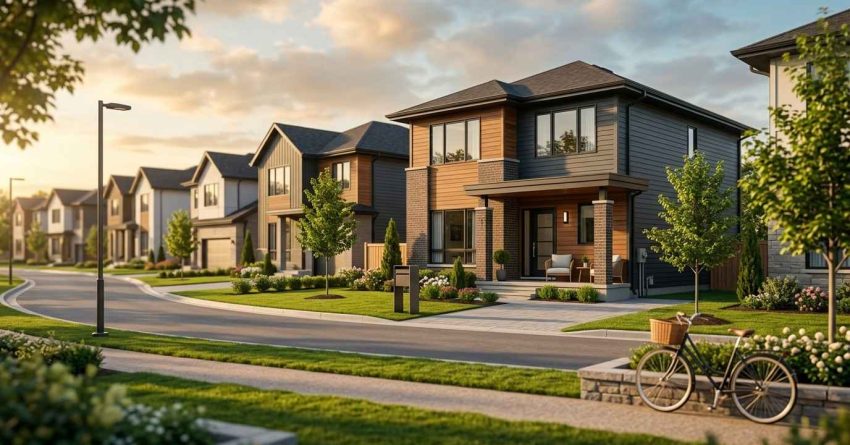
Build-to-rent single family investment is one of the fastest-growing strategies in U.S. residential real estate, offering investors purpose-built rental homes designed for long-term tenant occupancy and consistent cash flow. Unlike traditional landlord models, BTR communities are developed from the ground up with rental tenants in mind, creating neighborhoods where every home, amenity, and maintenance system is optimized for the rental experience. Investors across the country are taking notice as housing demand outpaces supply and homeownership rates remain under pressure.
This matters now because rising mortgage rates and affordability challenges are pushing millions of Americans toward long-term renting, creating sustained demand for high-quality single family rental homes in desirable markets.
This guide explains how BTR single family investment works, what drives its growth, how to evaluate opportunities, and how to protect your portfolio through smart property maintenance.
What Is Build-to-Rent Single Family Investment?
Build-to-rent single family investment refers to the development or acquisition of single family homes that are purpose-built for the rental market rather than for individual sale. Instead of converting existing homes into rentals, BTR investors work with developers to create entire communities of detached or attached single family homes designed specifically for long-term tenants.
These communities typically include professional on-site management, shared amenities such as parks or fitness areas, and standardized maintenance systems that make large-scale operations efficient. The homes are built to rental-grade specifications, meaning durable finishes, low-maintenance landscaping, and systems designed to withstand higher turnover and usage than owner-occupied homes.
Build-to-rent is one specialized path within the broader world of rental property investment, which covers every strategy landlords and investors use to generate income from residential real estate. BTR sits at the intersection of residential development and long-term rental management, making it a distinct asset class with its own risk profile, return structure, and operational requirements.
How BTR Differs from Traditional Rental Properties
The most important distinction between BTR and traditional rental properties is intentionality. Traditional rentals are typically homes that were built for sale and later converted to rental use. BTR homes are designed from the start for tenants, which means floor plans, finishes, and infrastructure are all chosen with rental operations in mind.
BTR communities also operate at scale. Rather than managing individual scattered-site rentals, BTR investors oversee dozens or hundreds of homes within a single geographic footprint, which creates operational efficiencies that individual landlords cannot replicate. Understanding how BTR communities differ from traditional rental properties helps investors choose the strategy that best fits their financial goals and risk tolerance.
Why Investors Are Choosing BTR Single Family Homes in the USA
BTR single family homes have become one of the fastest-growing segments in real estate investment, attracting both institutional capital and individual investors seeking stable, long-term returns. The appeal comes from a combination of structural housing market trends, favorable demographics, and the operational advantages that come with purpose-built rental communities.
The U.S. housing market faces a well-documented supply shortage. According to the National Association of Realtors, housing affordability has reached multi-decade lows, pushing a growing share of households into the rental market for longer periods than previous generations. This structural shift creates durable demand for quality single family rentals in suburban and secondary markets.
Demand Drivers Fueling the BTR Market
Several converging forces are driving demand for BTR single family homes across the United States. Millennials and Gen Z renters increasingly prefer the space and privacy of a single family home but face significant barriers to homeownership, including high down payment requirements, elevated mortgage rates, and limited inventory in desirable markets.
Suburban migration accelerated during and after the pandemic, with renters seeking larger homes, yards, and access to good schools without the financial commitment of a mortgage. BTR communities are positioned directly in the path of this demand, offering suburban living with the flexibility of a lease. The U.S. Census Bureau reports that the homeownership rate has remained below 66% in recent years, reflecting the sustained scale of the rental market.
Financial Advantages for Long-Term Investors
BTR single family investment offers several financial advantages that distinguish it from other residential investment strategies. Because homes are built to a consistent specification, operating costs are more predictable than with scattered-site portfolios of older homes. New construction also means lower near-term capital expenditure requirements, as major systems such as roofing, HVAC, and plumbing are under warranty for the first several years of operation.
Rental income from BTR communities tends to be stable because tenants in single family homes stay longer than apartment renters, reducing vacancy and turnover costs. Investors who understand property cash flow can structure BTR acquisitions to generate consistent monthly income while building equity over time. The combination of predictable expenses, lower vacancy, and long-term appreciation potential makes BTR an attractive vehicle for investors with a five-to-ten-year horizon.
How Build-to-Rent Single Family Communities Work
A BTR community functions as a managed residential neighborhood where every home is owned by a single investor or investment entity and leased to individual tenants. The investor or their management company handles all leasing, maintenance, and tenant relations across the entire community, creating a vertically integrated rental operation.
Most BTR communities are developed in partnership with a homebuilder who constructs the homes to the investor’s specifications. The investor either purchases the completed homes at a negotiated bulk price or funds the construction directly through a development agreement. Once the community is stabilized, meaning a target occupancy level is reached, the asset can be held for ongoing cash flow or sold to another institutional buyer.
Development and Construction Process
The development process for a BTR community typically begins with land acquisition in a target market, followed by entitlement, design, and construction. Investors work closely with builders to select floor plans, finishes, and community amenities that will appeal to the target tenant demographic. Construction timelines vary by market and project size but generally range from 18 to 36 months from land acquisition to first occupancy.
During construction, investors must manage draw schedules, builder performance, and pre-leasing activity to ensure the community reaches stabilization as quickly as possible after completion. Many BTR developers begin marketing and leasing before construction is finished, using model homes or virtual tours to secure early commitments from prospective tenants.
Property Management in BTR Communities
Effective property management is the operational backbone of any BTR investment. Professional property management services are central to the BTR model, handling everything from tenant screening and lease administration to routine maintenance coordination across entire communities. Because BTR communities operate at scale, management systems must be efficient, technology-enabled, and capable of handling high volumes of service requests without sacrificing tenant satisfaction.
Most BTR investors engage a third-party property management company with experience in single family rental operations. The management fee typically ranges from 8% to 12% of collected rent, depending on the market and scope of services. Some larger institutional investors build in-house management platforms to capture this margin and maintain tighter control over the tenant experience.
Key Considerations Before Investing in BTR Single Family Properties
Before committing capital to a BTR project, investors must evaluate a range of factors that will determine whether the investment meets their return objectives. Before committing capital, investors should review the full landscape of single family home investment to understand how BTR fits within the broader spectrum of residential investment strategies.
The most critical variables include market selection, land and construction costs, projected rental rates, stabilization timelines, and exit strategy. Each of these factors interacts with the others, meaning a favorable rental market can still produce poor returns if land costs are too high or construction timelines run over budget.
Location Selection and Market Analysis
Market selection is the single most important decision in a BTR investment. The ideal BTR market combines strong population growth, a tight housing supply, a large renter-by-choice demographic, and favorable landlord-tenant regulations. Secondary and tertiary markets in the Sun Belt, Mountain West, and Southeast have attracted significant BTR investment in recent years due to their combination of affordability, job growth, and in-migration.
Investors should analyze local rental rate trends, vacancy rates, new supply pipelines, and the competitive landscape of existing single family rentals before selecting a site. Proximity to employment centers, quality school districts, and retail amenities are key drivers of tenant demand and lease renewal rates in BTR communities.
Financing Options for BTR Investments
BTR investments can be financed through a variety of structures depending on the investor’s scale, experience, and capital position. Exploring all available real estate financing options early in the planning process helps BTR investors secure the most favorable terms for large-scale residential development projects.
Common financing structures include construction-to-permanent loans, which convert from a construction facility to a long-term mortgage upon stabilization, and debt fund financing, which offers more flexible terms for experienced developers. Institutional investors often use joint venture equity structures, pairing their development expertise with capital from pension funds, family offices, or real estate private equity firms. Individual investors entering the BTR space at smaller scale may use conventional investment property loans or portfolio lenders who specialize in single family rental portfolios.
Maintaining and Protecting Your BTR Investment
Long-term investment performance in BTR communities depends as much on operational execution as it does on initial market selection. A well-located community with poor maintenance practices will experience higher vacancy, lower renewal rates, and accelerating capital expenditure as deferred maintenance compounds over time.
Protecting the long-term value of a BTR portfolio depends on consistent, professional home maintenance services that keep every unit safe, functional, and attractive to quality tenants. Proactive maintenance programs reduce emergency repair costs, extend the useful life of major systems, and signal to tenants that the property is well-managed, which directly supports lease renewal rates.
Essential Property Maintenance Services for BTR Homes
BTR communities require a comprehensive maintenance program that covers both routine upkeep and responsive repairs. From minor repairs to seasonal upkeep, reliable handyman services give BTR property owners a single point of contact for the routine maintenance tasks that keep rental homes in top condition.
Key maintenance categories for BTR single family homes include HVAC servicing, plumbing inspections, roofing assessments, landscaping, pest control, and appliance maintenance. Establishing service contracts with qualified local providers for each category ensures that maintenance requests are handled quickly and consistently across the entire community. Investors who treat maintenance as a revenue-protecting activity rather than a cost center consistently outperform those who defer routine upkeep.
Risks and Challenges of Build-to-Rent Single Family Investment
BTR investment carries meaningful risks that investors must understand and plan for before committing capital. Every BTR investor benefits from a clear understanding of investment risk management, which outlines how to identify, assess, and mitigate the financial and operational risks inherent in large-scale rental development.
Construction risk is one of the most significant challenges in BTR. Cost overruns, material delays, and builder performance issues can extend timelines and erode projected returns. Investors should negotiate fixed-price contracts where possible and maintain contingency reserves of at least 10% to 15% of total project cost.
Market risk is also a factor. Rental rate growth can slow or reverse if new supply enters a market faster than demand absorbs it, or if economic conditions reduce household formation. Investors who concentrate their portfolios in a single market are particularly exposed to local economic downturns. Diversification across multiple markets and submarkets reduces this concentration risk.
Regulatory risk is an emerging concern in some jurisdictions, where local governments have introduced rent control measures, eviction moratoriums, or restrictions on institutional ownership of single family homes. Investors should conduct thorough regulatory due diligence in every target market and monitor legislative developments that could affect operating income or exit valuations.
Conclusion
Build-to-rent single family investment combines the stability of residential real estate with the operational efficiency of purpose-built rental communities, making it one of the most compelling strategies in today’s U.S. housing market. Investors who understand the development process, market dynamics, and financial structure of BTR are well-positioned to generate durable returns.
Success in BTR depends on disciplined market selection, sound financing, and a commitment to professional property management and maintenance that protects asset value over the long term.
Mr. Local Services connects BTR investors and property managers with skilled maintenance professionals across every service category, helping you protect your portfolio, satisfy tenants, and maximize the performance of every home in your community.
Frequently Asked Questions
What is the minimum investment required for a build-to-rent single family project?
The minimum investment for a BTR project varies widely by market and project scale. Smaller individual investors may enter the BTR space with a single purpose-built rental home for as little as $300,000 to $500,000, while institutional community developments typically require $10 million or more in total project cost.
How long does it take for a BTR community to reach stabilization?
Most BTR communities reach stabilization, defined as 90% to 95% occupancy, within 12 to 18 months of delivering the first homes. Lease-up velocity depends on market demand, rental pricing, and the quality of the pre-leasing and marketing program.
Are BTR single family homes a good investment in a high-interest-rate environment?
BTR investments can still perform well in high-rate environments if rental income is sufficient to cover debt service and operating costs. Investors should stress-test their underwriting at multiple rate scenarios and consider fixed-rate financing to protect against future rate increases.
What types of tenants typically rent in BTR communities?
BTR single family communities primarily attract families, young professionals, and remote workers who want the space and privacy of a single family home without the commitment of homeownership. These tenants tend to stay longer than apartment renters, which reduces vacancy and turnover costs for investors.
How does property maintenance affect BTR investment returns?
Deferred maintenance directly reduces BTR returns by increasing vacancy, lowering renewal rates, and accelerating capital expenditure. Investors who implement proactive maintenance programs consistently achieve higher net operating income and better long-term asset values than those who treat maintenance reactively.
What is the typical cap rate for a BTR single family investment?
Cap rates for BTR single family communities in the U.S. have generally ranged from 4.5% to 6.5% depending on market, location quality, and community scale. Newer communities in high-demand Sun Belt markets tend to trade at the lower end of this range due to strong investor demand.
Can individual investors compete with institutional buyers in the BTR market?
Individual investors can compete effectively in the BTR market by focusing on smaller projects, secondary markets, and submarkets that institutional buyers overlook. Building relationships with local homebuilders and leveraging flexible financing structures gives smaller investors access to opportunities that larger funds cannot pursue efficiently.