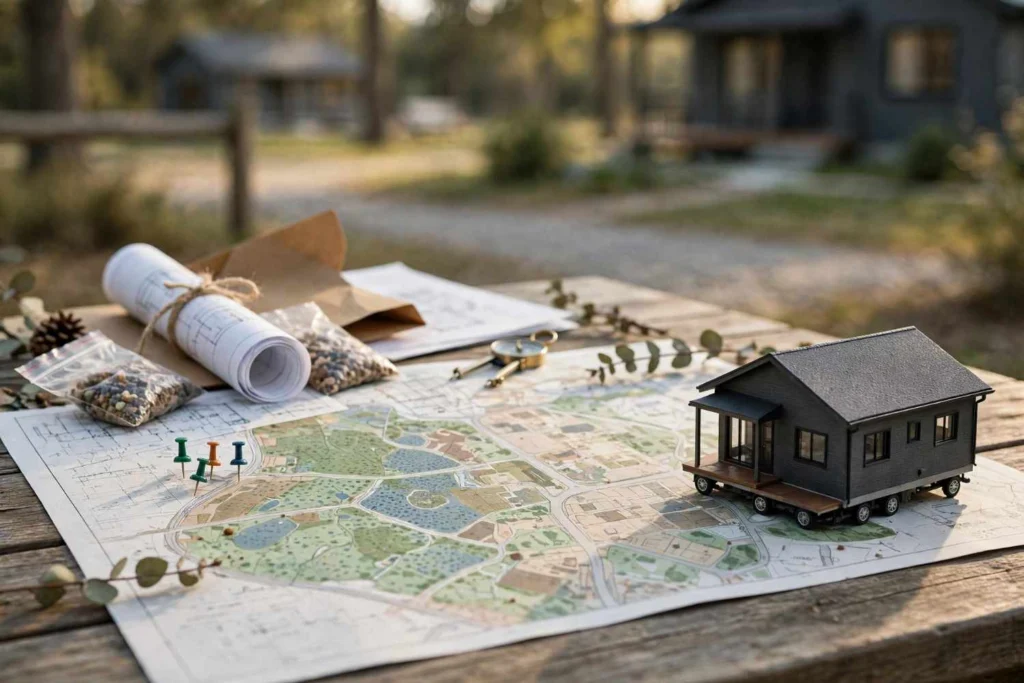
Park model homes are legal on private land zoned for residential or recreational use, in licensed RV parks and campgrounds, and in many manufactured home communities, but the exact rules shift block by block depending on your county. I’ve watched too many buyers fall in love with a unit before checking zoning, and that order of operations always causes problems.
Zoning boards classify park models differently than standard homes, and that classification decides everything else. Get it wrong, and you’re looking at fines, forced removal, or a home you can’t legally occupy long-term.
I’ll walk you through where these homes typically get approved, the paperwork that governs each location type, and the regional patterns that make some states far friendlier to park model living than others.
What Counts as a Park Model Home in Zoning Terms
Zoning offices don’t care what the manufacturer calls it. They care about square footage, wheels, and how the unit is titled.
A park model home is a transportable structure built on a single chassis, typically under 400 square feet, designed for seasonal or recreational use rather than permanent occupancy under most state building codes. That definition matters because it determines which zoning category residential, recreational, or RV a jurisdiction slots it into.
Park Model vs. Tiny Home vs. RV Classification
The three categories get confused constantly, and the confusion costs people money. A tiny home built on a foundation falls under residential building codes in most counties. A traditional RV is classified as a vehicle and registered with the DMV, not a building department.
Park models sit in an odd middle ground. They’re built to ANSI A119.5 standards rather than full residential code, which is exactly why some counties treat them like RVs, and others treat them like accessory structures. Always confirm which bucket your local zoning office puts them in before signing a purchase agreement.
RV Parks and Licensed Campgrounds
This is the easiest legal path, and it’s why most first-time park model owners start here. Licensed RV parks and campgrounds already carry the zoning approval and utility infrastructure that individual property owners have to build from scratch.
Seasonal vs. Year-Round Placement Rules
Not every RV park allows year-round occupancy, and that distinction trips people up constantly. Some parks operate under seasonal-use permits that require the unit to leave or be winterized and vacated for part of the year, often three to six months depending on the state’s definition of “temporary” occupancy.
Parks licensed for year-round or “long-term” stays are a different category entirely, usually requiring skirting, a permanent-style hookup, and sometimes a minimum lot lease term. I always tell people to ask for the park’s occupancy permit type directly instead of trusting a verbal answer from a rental office.
Private Land and Rural Residential Zoning
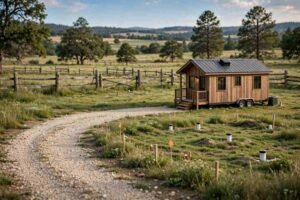
Placing a park model on land you own gives you the most control, and also the most homework. Rural residential and agricultural zoning designations are generally the most permissive, since many counties treat park models there as accessory structures rather than primary dwellings.
County Permits and Setback Requirements
Every county sets its own setback rules, the minimum distance a structure needs from property lines, roads, and septic fields. A foundation or slab requirement sometimes applies even to a wheeled unit, depending on how the county defines “permanent placement.”
Permits typically required include a placement or zoning permit, a septic or sewer connection approval, and an electrical hookup inspection. Skipping any one of these is the single most common reason park models get flagged during a county inspection.
Manufactured Home Communities and Land-Lease Parks
Manufactured home communities designed for long-term residents often accept park models, but acceptance varies by community, not by state law. These communities already have utility hookups, road access, and an established zoning designation, which removes a lot of the guesswork private land carries.
HOA and Community Rules to Check
A community’s own rules frequently matter more than county zoning here. Age or size restrictions, minimum square footage requirements, exterior material standards, and skirting requirements are all common HOA-level rules that can disqualify a park model even where the county itself allows it.
Always get the community’s written rules before signing a lease, not just a verbal confirmation from a sales rep. Written rules protect you if a new manager changes their interpretation later.
Backyard and Accessory Dwelling Unit (ADU) Placement
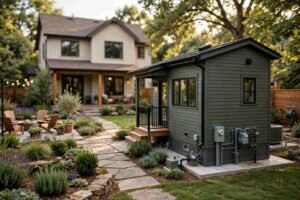
A growing number of homeowners want a park model as a backyard guest house or rental unit, and a growing number of cities are opening the door to exactly that. ADU-friendly zoning has expanded significantly since 2020 as cities address housing shortages, though rules on wheeled versus foundation-mounted units still vary widely.
When a Park Model Qualifies as an ADU
Most ADU ordinances require the unit to connect to permanent utilities and, in many jurisdictions, sit on a permanent foundation rather than a wheeled chassis. That single requirement disqualifies a lot of standard park models unless the manufacturer builds a foundation-ready version specifically for that market.
Where a park model does qualify, it typically needs its own address, its own utility meters or sub-meters, and a certificate of occupancy separate from the main house. A local handyman or general contractor familiar with ADU permitting can save you months of back-and-forth with the planning department.
States and Regions With the Most Flexible Placement Rules
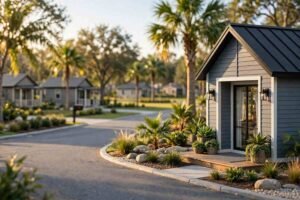
Some states have built genuinely park-model-friendly frameworks, while others still treat every unit as a de facto RV regardless of how it’s used. States with strong RV and recreational land traditions, including large swaths of Texas, Florida, and Arizona, tend to have more established park model communities and clearer permitting pathways.
Common Restrictions That Still Apply
Even in flexible states, floodplain restrictions, minimum lot size rules, and HOA covenants still override general permissiveness. A county being “park model friendly” in general doesn’t mean every parcel in that county qualifies, and it’s worth checking parcel-specific zoning before you commit to a purchase or a lease.
Where you land legally comes down to three things: how the unit is classified, how the specific parcel is zoned, and what the community or park rules add on top of that. Get those three answers before you buy, and the rest of the process moves a lot faster.
Conclusion
Placement rules shift as more cities update ADU and housing policy, so a location that’s restrictive today isn’t necessarily restrictive next year. We recommend staying in contact with your local zoning office as you narrow down a site.
At Mr. Local Services, we connect you with local pros who handle the permitting, utility hookups, and site prep that turn a legally zoned parcel into a move-in-ready home. Reach out, and we’ll help you get it done right.
Frequently Asked Questions
Can I place a park model home on any residential lot?
No, not every residential lot allows it. Zoning has to specifically permit accessory or recreational structures, and many standard single-family residential zones exclude them entirely.
Do park model homes need a permanent foundation?
Not always, but ADU and year-round residential placements increasingly require one. Seasonal RV park placements typically don’t.
Is a park model home considered an RV or a house?
It depends on the state and how it’s titled. Many states classify it as an RV for taxation and titling purposes even when it functions as a full-time residence.
Can I live in a park model home year-round legally?
Yes, in jurisdictions and parks that specifically permit year-round occupancy. Seasonal-use parks and some zoning codes restrict it to part-time use only.
What’s the difference between a park model and a manufactured home for zoning purposes?
A manufactured home meets HUD code and is built for permanent residential use, while a park model meets a lighter ANSI standard built around recreational use. That difference is exactly why zoning offices often treat them under separate rules.
Do I need a special permit to place a park model on private land?
Yes, most counties require a zoning or placement permit plus utility connection approvals. Requirements vary significantly by county.
Can an HOA block a park model home even if the county allows it?
Yes, HOA rules can be more restrictive than county zoning and often are. Always check community covenants separately from general zoning law.