Park model utility hookups connect electrical, water, and sewer lines to a fixed park model home, similar to how a traditional house ties into municipal or private utility systems. Most park models need a 30 or 50 amp electrical connection, a fresh water line, and either a sewer hookup or a septic system to function like a permanent residence. Some owners skip full hookups entirely and build an off-grid system instead.
I’ve watched more people choose park models over the last few years, and the utility question always comes up first. And it should. Getting hookups wrong means costly rework later, or worse, a home that never quite functions the way it needs to.
This guide walks through what standard utility hookups require, how solar and generator setups replace grid power, what off-grid water and waste systems look like day to day, and how to weigh full hookups against going off-grid, plus the permits and code checks that come before any of it.
What Utility Hookups Park Models Actually Need
A park model home connects to the same three utility categories as any house: electrical, water, and sewer. The difference is scale and setup. These homes typically run on a 30 or 50 amp service, not the 100-200 amp panels found in standard houses.
I always tell people to check their appliance load before picking an amp rating. A park model with a full kitchen, HVAC, and electric water heater needs the higher end of that range. A simpler setup with propane appliances runs fine on 30 amps.
Electrical Hookup Requirements
Electrical hookup for a park model is a pedestal connection, a junction box mounted on a post near the site that ties into the local utility grid or a private meter. A pedestal hookup is an electrical distribution point that supplies power to RVs and park models through a weatherproof outlet box. It needs a licensed electrician for the final tie-in in most jurisdictions.
The wiring inside the home still follows standard residential code in most states. Ground fault protection, proper breaker sizing, and weatherproof exterior fixtures all apply the same way they would in a stick-built house.
Water and Sewer Connection Basics
Water hookup runs a fresh water line from a municipal source or private well to the park model’s inlet, usually through a backflow preventer to protect the supply. Sewer hookup ties into either a municipal sewer line or an on-site septic system through a standard RV-style sewer connection.
I’ve seen plenty of sites where the water line freezes in winter because nobody insulated the hookup properly. Heat tape and proper insulation around exposed water lines saves a lot of headaches once temperatures drop.
Off-Grid Power Options for Park Model Living
Off-grid power removes the dependency on a utility company entirely. A solar and battery system can fully power a park model home when it’s sized correctly for the household’s daily energy use. Most off-grid setups combine solar panels, battery storage, and a generator as backup.
The sizing conversation matters more than the equipment brand. I’ve seen oversized systems waste money and undersized ones leave people without power during a run of cloudy days.
Solar Power Systems for Park Models
A solar setup for a park model usually includes rooftop or ground-mounted panels, a charge controller, an inverter, and a battery bank. Solar photovoltaic systems convert sunlight into usable electricity through panels made of semiconductor material. According to the U.S. Department of Energy, residential solar system costs have declined more than 50% over the past decade, making off-grid setups more accessible than before.
A typical park model runs comfortably on a 3-5 kilowatt solar array paired with 10-20 kilowatt-hours of battery storage. That range covers lighting, refrigeration, and small appliances without heavy air conditioning use.
Generators and Battery Backup
A backup generator covers the gaps solar can’t during extended cloudy stretches or heavy power draw. Propane and diesel generators both work well for park models, with propane offering cleaner burning and easier long-term storage.
I recommend pairing any generator with an automatic transfer switch. It kicks the generator on the moment battery levels drop too low, so nobody has to babysit the system overnight.
Off-Grid Water and Waste Solutions

Off-grid water and waste systems replace municipal hookups with self-contained storage and treatment. A park model without utility hookups needs a fresh water storage tank, a graywater or blackwater holding system, and a plan for regular servicing. These systems demand more hands-on management than a grid-connected home.
Waste management is the piece people underestimate most. Tank capacity and pump-out frequency need real planning before move-in day, not after.
Water Storage and Delivery Systems
A fresh water storage tank holds a supply that gets refilled through delivery service or hauled in manually. Most off-grid park models use tanks ranging from 500 to 1,500 gallons, depending on household size and refill frequency. A pressure pump moves water from the tank into the home’s plumbing system just like a municipal connection would.
I always suggest oversizing the tank a bit beyond the calculated need. Weather delays and scheduling gaps with delivery services happen more often than people expect.
Septic and Composting Toilet Options
A septic system treats wastewater on-site through a tank and drain field, working the same way it does for any rural home. Composting toilets offer an alternative that skips the water and sewer line entirely, breaking down waste through aerobic decomposition instead.
Composting toilets work well for smaller households or seasonal use. Full-time residents with larger families usually find a properly sized septic system more practical long term.
Choosing Between Full Hookup and Off-Grid Setups
The decision between full utility hookups and off-grid living comes down to location, budget, and how much hands-on system management someone wants. Full hookups cost more upfront in most cases but require far less ongoing maintenance than an off-grid system. Off-grid setups shine in remote locations where utility access is limited or unavailable.
I ask people one question before anything else: how remote is the land? That answer alone often settles the decision.
Cost and Lifestyle Tradeoffs
Full hookup installation runs higher initially because of trenching, permitting, and utility connection fees. Off-grid systems shift that cost toward equipment purchase and ongoing maintenance instead of one-time installation.
A full hookup setup means turning on a faucet and forgetting about it. An off-grid setup means checking battery levels, monitoring tank capacity, and scheduling regular servicing as part of normal life.
Permits, Codes, and Site Prep Considerations
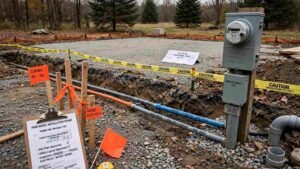
Utility hookups and off-grid systems both fall under local building and health codes, even on private land. Most counties require permits for electrical connections, septic installation, and sometimes even solar array installation on a fixed structure. Skipping this step risks fines or forced removal of the system later.
I never recommend starting hookup work before pulling permits. It costs more to fix a code violation after installation than it does to get the paperwork right from the start.
Working With Local Utility Providers
Utility providers handle the connection from their grid to a property’s meter or pedestal, but everything past that point falls on the property owner or their contractor. Coordinating early with the local utility company on meter placement and service capacity avoids delays once installation begins.
Some providers require a completed electrical inspection before they’ll energize a new connection. Building that inspection timeline into the project schedule keeps everything moving without surprise delays.
Conclusion
Park model utility hookups and off-grid systems both create a fully functional home, just through different approaches. Full hookups offer simplicity and low maintenance, while off-grid setups deliver independence in remote locations.
The right choice depends on the land, the budget, and how much system management someone wants to take on. Either path needs proper planning around electrical, water, and waste before move-in day arrives.
We help homeowners plan and install both traditional utility hookups and off-grid systems correctly the first time. Reach out to Mr. Local Services to get your park model connected the right way.
Frequently Asked Questions
Do park models need a special electrical hookup?
Yes, most park models need a 30 or 50 amp pedestal hookup rather than a standard residential panel. The right amp rating depends on total appliance load and HVAC use.
Can a park model run fully on solar power?
Yes, a properly sized solar and battery system can power a park model completely. Most setups pair solar with a generator for backup during extended cloudy periods.
How much does an off-grid water system cost for a park model?
Off-grid water systems typically cost several thousand dollars depending on tank size and pump equipment. Storage tanks range from 500 to 1,500 gallons based on household needs.
Is a septic system required for off-grid park model living?
A septic system isn’t strictly required since composting toilets offer an alternative. Full-time residents usually find septic systems more practical for larger households.
What permits are needed for park model utility hookups?
Most counties require permits for electrical connections and septic installation, even on private land. Some areas also require permits for fixed solar installations.
Is it cheaper to go off-grid or install full utility hookups?
Full hookups cost more upfront but require less ongoing maintenance than off-grid systems. Off-grid setups shift costs toward equipment and regular system upkeep instead.