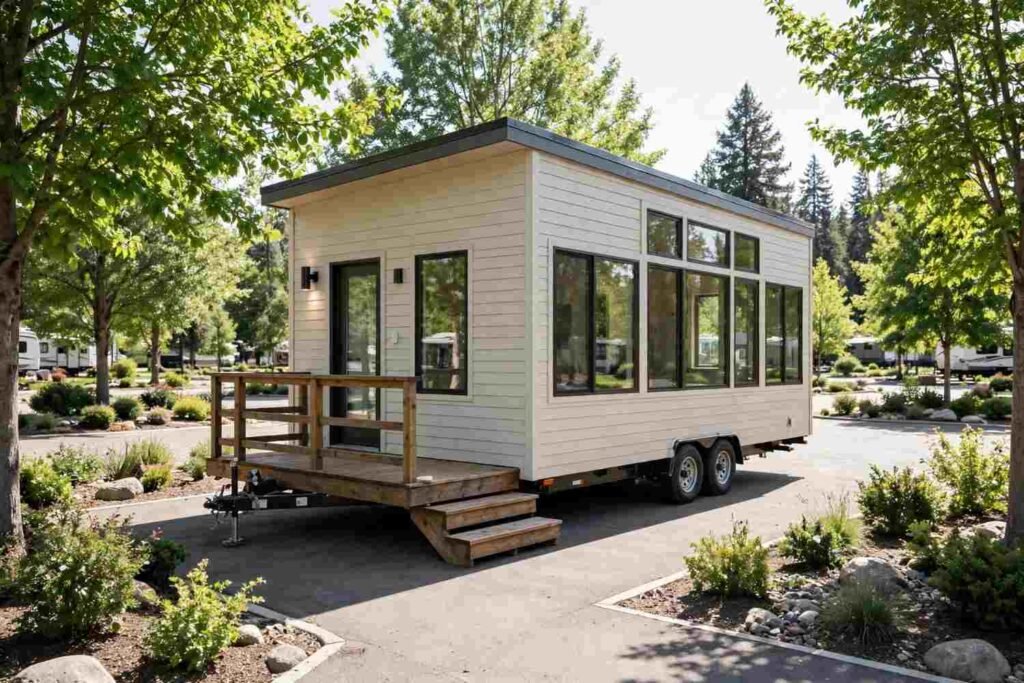
A park model is a factory-built recreational structure under 400 square feet, certified to the ANSI A119.5 code rather than HUD’s manufactured housing standard. That single classification decides where you park it, how you insure it, and whether anyone will let you live in it.
I watch buyers lose money on this every year. They purchase a beautiful unit, haul it to their land, and discover the county calls it a vehicle instead of a house.
This guide covers legal definitions, ANSI A119.5, federal and local law layers, placement rules, permits, occupancy limits, insurance, financing, utilities, ongoing compliance, and buyer verification steps.
What a Park Model Home Legally Is
A park model home is a recreational vehicle by law, not a house. The industry calls them park model RVs or recreational park trailers, and both names point back to the same legal reality.
The Recreation Vehicle Industry Association classifies recreational park trailers as RVs built on a single chassis, mounted on wheels, and designed for seasonal or temporary living. That definition sits at the center of every dispute owners have with zoning offices.
I tell people to stop thinking about square footage and start thinking about certification labels. The label determines the law that applies to your structure.
Park Model RV vs. Manufactured Home vs. Modular Home
These three categories look similar in a sales lot and behave completely differently in a courthouse. A park model follows ANSI A119.5. A manufactured home follows the federal HUD Code. A modular home follows the same local building code as a stick-built house.
| Structure Type | Governing Standard | Legal Status | Typical Title |
| Park Model RV | ANSI A119.5 | Recreational vehicle | Vehicle title |
| Manufactured Home | HUD Code (24 CFR 3280) | Housing unit | Vehicle or real property title |
| Modular Home | State/local building code (IRC) | Real property | Deed |
Manufactured homes and modular structures qualify for mortgages and real property status. Park models usually do not, and that gap drives most of the financing frustration I see.
The 400 Square Foot Rule
The 400 square foot ceiling is the defining measurement of the entire category. Cross it, and your structure stops being a recreational park trailer under ANSI A119.5.
That measurement excludes lofts in many interpretations, which is exactly why manufacturers build sleeping lofts instead of second bedrooms. It also excludes decks, hitch length, and exterior storage.
Some units get built at 399 square feet on purpose. That is not a coincidence, and it tells you how seriously builders treat the threshold.
Why Legal Classification Changes Everything You Own
Classification controls taxation, insurance eligibility, lending access, and legal occupancy. A vehicle gets registered and pays personal property tax. A house gets deeded and pays real estate tax.
Owners who plan a long-term stay need to understand this before purchase, because the classification travels with the unit. Reclassifying later means a foundation, an engineer, and a cooperative building department, and many jurisdictions simply refuse. The tiny homes and alternative dwelling options available today each carry their own classification consequences worth comparing side by side.
ANSI A119.5: The Code That Defines Park Models
ANSI A119.5 is the national standard for recreational park trailers, published through the American National Standards Institute consensus process. It sets construction, fire safety, plumbing, electrical, and egress requirements for units under 400 square feet.
This is not a building code in the way most homeowners think about codes. It is a manufacturing standard applied at the factory, verified by a third-party inspection agency, and documented on a label.
I treat A119.5 as the birth certificate of the unit. Everything downstream, from insurance to park admission, traces back to it.
What ANSI A119.5 Covers
The standard addresses structural design, fire and life safety, egress windows, LP gas systems, electrical distribution, and plumbing installation. It also governs weight distribution and chassis attachment, since these units travel on highways.
Egress requirements matter more than buyers expect. Loft ladders, window sizes, and exit paths get scrutinized because the standard assumes a compact interior with limited escape routes.
Fire separation between the cooking area and sleeping space also falls under A119.5. That single requirement shapes many floor plans you see on dealer lots.
How A119.5 Differs From HUD Code and IRC
HUD Code governs manufactured homes and covers thermal performance, wind zones, and permanent residential occupancy. The International Residential Code governs site-built and modular houses through local adoption and inspection.
A119.5 assumes recreational use. It does not require the same insulation values, wind ratings, or energy performance that permanent housing codes demand.
That difference is the legal foundation for most full-time occupancy bans. Jurisdictions are not being arbitrary when they refuse permanent residency, they are applying the code the unit was actually built to. Understanding HVAC and heating system requirements becomes critical once you plan year-round use in a structure built for seasons.
Reading the Data Plate and Certification Label
Every compliant unit carries a data plate inside, usually in a cabinet or closet, plus an exterior certification seal. The plate lists the manufacturer, serial number, build date, applicable standard, and the inspection agency.
I check three things immediately: the standard cited, the agency name, and the build date. A unit citing A119.5 with a recognized third-party seal has a defensible legal identity.
Missing or altered labels create real problems. Parks refuse entry, insurers refuse coverage, and lenders refuse applications without that documentation.
Federal, State, and Local Layers of Park Model Law
Three separate legal layers govern park models, and they frequently contradict each other. Federal agencies define the category, states handle titling and registration, and local governments control where the unit actually sits.
Owners get into trouble by assuming compliance at one level guarantees compliance at the others. A properly certified, properly registered unit still gets turned away by a county zoning administrator.
The practical rule is simple. Local control wins on placement, always.
Federal Position: RVIA, HUD, and DOT
RVIA administers the inspection program that verifies A119.5 compliance and issues the seal most parks recognize. HUD explicitly excludes recreational park trailers from manufactured housing regulation, which is why the HUD label never appears on these units.
The Department of Transportation governs highway transport, lighting, braking, and width limits. Most park models exceed standard width and require permitted transport.
None of these agencies grant you permission to live somewhere. That authority sits entirely with local government.
State-Level Titling and Registration
States generally title park models as recreational vehicles through the motor vehicle department rather than the county recorder. Registration renewal, personal property tax, and transfer procedures follow vehicle rules.
A handful of states allow conversion to real property when the unit sits on a permanent foundation and the title gets surrendered. That process varies dramatically and often requires an affidavit of affixture.
I always pull the title before a purchase closes. A clean, transferable vehicle title prevents the majority of ownership headaches.
Local Zoning and Land Use Control
Zoning ordinances decide whether a recreational vehicle can occupy a parcel, for how long, and under what conditions. Many jurisdictions permit park models only in licensed RV parks or designated recreational districts.
Others allow them as temporary housing during construction, as accessory structures, or under seasonal permits with defined time limits. A few rural counties have no restriction at all.
Call the planning department before you buy the unit, not after it arrives on a trailer.
Where You Can Legally Place a Park Model
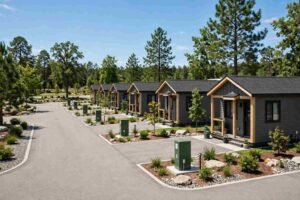
Placement is the question that determines whether your purchase becomes a home or an expensive lawn ornament. The legal answer depends entirely on the parcel, the zoning district, and the local definition of a dwelling.
I break placement into three practical scenarios. Each carries a different level of legal friction.
RV Parks and Park Model Communities
Licensed RV parks and park model resorts are the intended destination for these units. The park holds the land use approval, the utilities are already permitted, and the unit stays classified as a recreational vehicle.
This is the path of least resistance. It also comes with lot rent, park rules, and seasonal occupancy limits written into the lease.
Age restrictions on units are common. Many parks refuse anything over ten or fifteen years old, which affects resale value directly.
Private Land and Rural Parcels
Placing a park model on private land depends on whether local zoning treats an RV as a permitted dwelling. Agricultural and rural residential districts often allow it, sometimes with a conditional use permit.
Suburban and incorporated areas usually do not. Homeowners association covenants add another restriction layer that operates independently of zoning.
Access roads, setbacks, septic capacity, and utility easements all factor into approval. A licensed septic and plumbing evaluation on the parcel prevents most placement surprises before money changes hands.
Permanent Foundation Conversion
Some owners set the unit on a permanent foundation, remove the axles and hitch, and petition to reclassify it as real property. Success depends on the jurisdiction and the code the unit was built to.
The obstacle is A119.5 itself. Building departments compare the unit against residential code and frequently find it short on insulation, wind resistance, and structural anchoring.
Conversion works in some counties and gets denied flatly in others. Verify the process in writing before you commit to a foundation.
Permits, Inspections, and Certificates of Occupancy
Permitting a park model confuses building departments as often as it confuses owners. The unit arrives finished and certified, so the question becomes what remains to be inspected locally.
Most jurisdictions permit the site work rather than the structure. Foundation or pad, utility connections, setbacks, and anchoring all fall under local review.
Certificates of occupancy are the sticking point. Many departments will not issue one for a structure built to a recreational standard.
Which Permits Apply to a Non-Site-Built Structure
Typical requirements include a placement or setup permit, an electrical service permit, a plumbing connection permit, and sometimes a grading permit. Some counties add a floodplain review or a septic permit.
The structure itself usually escapes plan review because the factory certification substitutes for it. That saves time and creates false confidence.
Skipping local permits triggers stop-work orders, fines, and forced removal. I have seen units hauled off parcels at the owner’s expense.
Utility Connection and Setup Inspections
Inspectors verify the electrical pedestal, grounding, water supply protection, sewer connection, and gas piping. They check anchoring, blocking, and skirting where required by ordinance.
Connection standards follow local code even though the unit follows A119.5. That split creates the most common inspection failures I encounter.
Proper electrical service and hookup work performed by a licensed contractor clears these inspections far more reliably than owner-installed connections.
Why Some Jurisdictions Deny Occupancy
Denial usually comes down to one finding. The structure was not built to the residential code the jurisdiction adopted for permanent dwellings.
Officials also cite minimum dwelling size ordinances, which frequently sit between 600 and 1,000 square feet. A 399 square foot unit fails that test automatically.
Appeals, variances, and conditional use permits offer a path forward. They take months and produce inconsistent results.
Full-Time Occupancy vs. Recreational Use
ANSI A119.5 describes recreational park trailers as designed for temporary or seasonal use, not permanent residence. That single phrase drives occupancy law across the country.
Plenty of people live in park models year-round anyway. The legal exposure varies from zero enforcement to eviction notices, depending entirely on local attitude.
I separate what is legal from what is tolerated, and I encourage buyers to do the same.
The Seasonal Use Restriction
Many RV parks and counties cap continuous occupancy at 180 days, or require a 30-day break each year. Some restrict occupancy to specific months tied to a resort season.
These limits appear in park licenses, zoning text, and health department rules. They exist because the units lack the thermal and structural specifications permanent housing codes require.
Cold climates enforce this more strictly. Freezing plumbing and inadequate insulation create genuine safety issues in units built for mild seasons.
Park Rules, Leases, and Enforcement Reality
Park leases often prohibit permanent residency in writing while management tolerates it in practice. That arrangement holds until an inspection, a complaint, or an ownership change disrupts it.
Enforcement typically arrives through the park, not the county. Losing your lot means moving a unit that costs thousands to transport.
Read the lease line by line. The occupancy clause matters more than the rent.
Insurance, Financing, and Titling Consequences
Legal classification reaches straight into your wallet. Vehicle status changes the loan you qualify for, the policy that covers you, and the tax bill you receive.
Buyers routinely budget for the purchase price and forget these downstream costs. That gap creates the financial strain I see most often.
Every one of these consequences traces back to the A119.5 label.
Why Lenders Treat Park Models as Vehicles
Conventional mortgages require real property collateral. A titled vehicle does not qualify, so buyers use RV loans, chattel loans, or personal financing instead.
RV loan terms typically run shorter than mortgages and carry higher rates. Down payment requirements also run higher.
Some credit unions specialize in park model lending. Shop specifically for that product rather than assuming a general auto loan applies.
RV Insurance vs. Homeowners Policies
Standard homeowners policies exclude recreational vehicles. Coverage comes through an RV policy, a park model specific policy, or a manufactured home policy in limited cases.
Coverage differences matter during storms. Transit coverage, full-timer liability endorsements, and replacement cost provisions vary widely between carriers.
Damage from water intrusion and flooding events is where policy gaps become expensive lessons for owners who assumed standard coverage applied.
Real Property vs. Personal Property Taxation
Vehicle-titled park models generate personal property tax assessed by the state or county, usually annually and usually declining with age. Real property status generates real estate tax based on assessed land and improvement value.
Personal property tax often costs less in the short term. Real property status delivers appreciation, mortgage access, and clearer legal standing.
The tax treatment follows the title. Change one and the other follows.
Utilities, Systems, and Code-Compliant Connections
Park models arrive with factory-installed systems built to A119.5, then connect to site utilities governed by local code. That handoff point is where compliance problems concentrate.
I look at three systems on every unit. Electrical, water and sewer, and climate control determine whether the unit functions safely in its intended location.
Getting these right at setup prevents the majority of long-term maintenance calls.
Electrical Service and the 120/240V Question
Older park models often run on a single 30-amp or 50-amp RV service cord. Newer and larger units frequently include a full 120/240V panel resembling a residential setup.
The difference determines whether you plug into a pedestal or require a permanent service drop. It also determines which appliances the unit supports.
Verify the panel configuration before finalizing site electrical plans. Retrofitting service after the fact costs far more than planning it correctly.
Water, Sewer, and Septic Requirements
Units connect through either RV-style hookups or hard-plumbed connections depending on the model and the site. Backflow prevention, freeze protection, and proper venting all fall under local plumbing code.
Septic systems require sizing approval based on bedroom count and expected occupancy. Health departments treat park models inconsistently in these calculations.
Winterization is not optional in cold regions. Factory plumbing in these units sits in uninsulated cavities more often than buyers expect.
HVAC, Insulation, and Cold-Climate Compliance
A119.5 does not mandate the insulation values that residential codes require for permanent occupancy. Wall cavities are shallow, and thermal bridging is common.
Manufacturers offer four-season packages with upgraded insulation, heated tanks, and enclosed underbellies. Those packages matter enormously in northern climates.
Supplemental heat, skirting, and heat tape become standard practice for year-round use. Proper insulation and weatherization improvements extend usable seasons considerably in units originally built for mild weather.
Maintaining Code Compliance Over the Life of the Unit
What happens when a park model no longer meets the code it was built under? The certification reflects the unit as it left the factory, and modifications change that picture immediately.
Compliance is not permanent. It degrades through renovation, damage, and neglect.
I treat the original certification as a baseline to protect, not a permanent guarantee.
Modifications That Void Certification
Adding square footage past 400 changes the legal category outright. Structural alterations, roof modifications, and unpermitted electrical or gas work compromise the certification.
Removing the chassis, axles, or hitch converts the unit into something the standard no longer describes. Parks and insurers notice.
Cosmetic updates are safe. Flooring, cabinetry, paint, and fixtures change nothing legally, and quality interior painting and finish work improves value without touching compliance status.
Recertification, Repairs, and Documentation
Third-party agencies handle recertification inspections in some states, particularly after major repairs or when a unit is resold across state lines. Documentation carries enormous weight here.
I keep a file with the original data plate photo, title, permits, inspection records, and receipts for every significant repair. That file protects resale value.
Storm damage, roof leaks, and rot repairs deserve professional documentation. Undocumented repairs raise questions no seller wants to answer.
Common Legal Mistakes Park Model Owners Make
The same errors repeat across the country, and every one of them is preventable with a phone call to the right office.
Buying before confirming zoning tops the list. Owners fall in love with a unit, sign a purchase agreement, and then discover their parcel prohibits recreational vehicles as dwellings.
Assuming the RVIA seal grants occupancy rights comes second. Certification proves construction quality, nothing more.
Skipping permits to save time creates the most expensive outcomes. Retroactive permitting costs more, and forced removal costs the most.
Ignoring HOA covenants catches suburban buyers repeatedly. Covenants operate independently of zoning and often prohibit what the county allows.
Neglecting title verification creates ownership disputes years later. A missing, lien-encumbered, or mismatched title stalls every future transaction.
How to Verify a Park Model’s Legal Status Before Buying
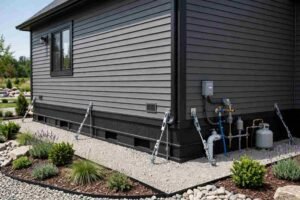
Verification takes a few hours and saves years of trouble. I run the same sequence on every unit I evaluate.
Start with the data plate and certification seal. Photograph both, confirm the standard cited is A119.5, and record the serial number and build date.
Pull the title next and match the serial number exactly. Check for liens through the state motor vehicle department.
Call the planning and zoning department for the exact parcel address. Ask specifically whether a recreational park trailer may be placed and occupied there, and ask for the answer in writing.
Confirm utility availability and inspection requirements with the building department. A pre-purchase professional home inspection and handyman assessment catches structural, roof, and system issues that paperwork never reveals.
Finally, verify insurability by requesting a quote before closing. Carriers decline units with age, condition, or certification problems, and that decline tells you something the seller will not.
Conclusion
Park model classification, ANSI A119.5 certification, zoning authority, and titling status work together to define what you legally own and where it belongs.
Every layer connects to deeper resources on placement, permits, utilities, and compliance maintenance that reward a closer look before you commit.
We help owners verify, prepare, and maintain these properties correctly. Connect with Mr. Local Services to get qualified professionals on your project.
Frequently Asked Questions
Is a park model home considered an RV or a house?
A park model is legally an RV. It carries ANSI A119.5 certification and a vehicle title, not a HUD label or a deed like permanent housing.
Can I live in a park model full time?
Local zoning and park rules decide that. Many jurisdictions restrict occupancy to seasonal periods because A119.5 governs recreational use, not permanent residence.
What is the maximum size of a park model home?
Four hundred square feet of floor area. Crossing that threshold moves the structure out of the recreational park trailer category entirely.
Do park models need building permits?
Site work almost always requires permits. Foundations, electrical service, water, sewer, and anchoring fall under local review even when the structure itself does not.
Can a park model be financed with a mortgage?
Rarely. Lenders treat vehicle-titled units as personal property, so buyers typically use RV loans, chattel financing, or personal loans instead.
Does the RVIA seal mean I can put it anywhere?
No. The seal verifies factory construction to A119.5 only. Placement and occupancy authority rests entirely with local zoning and land use officials.
What insurance covers a park model home?
RV policies or specialty park model policies. Standard homeowners insurance excludes recreational vehicles, so coverage requires a carrier that writes this class specifically.