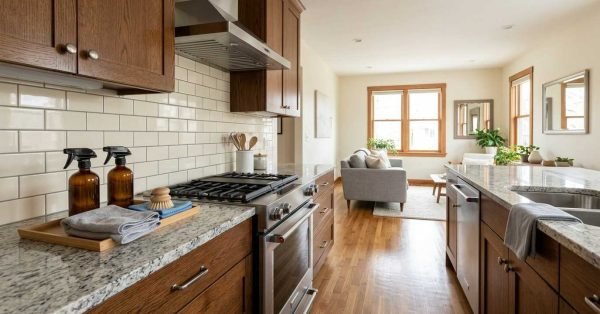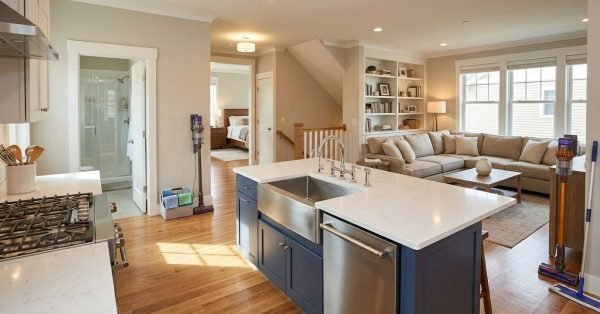
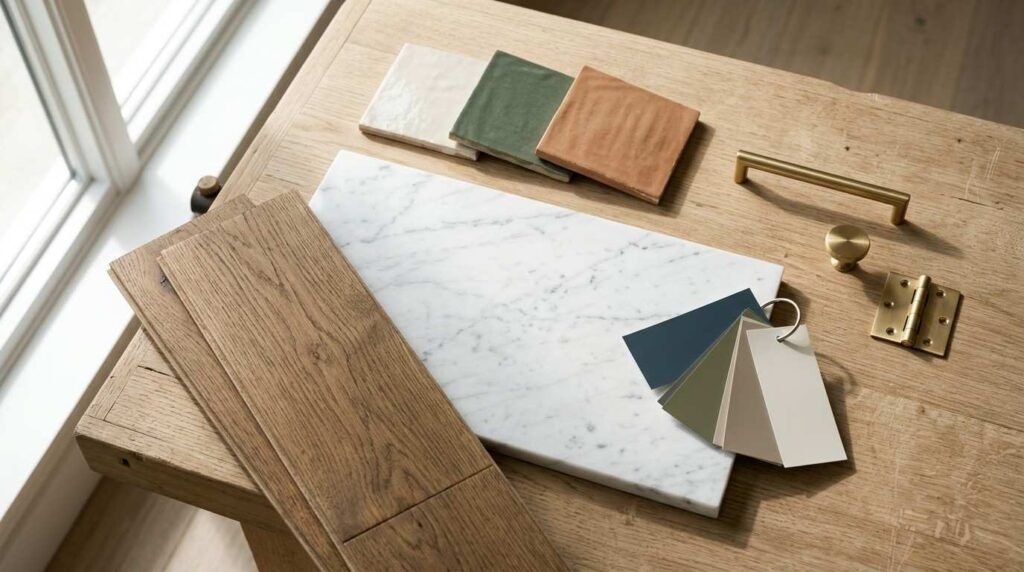
Interior finish materials are the visible, touchable surfaces and fixtures that turn a framed structure into a finished custom home. They cover flooring, wall treatments, millwork, cabinetry, countertops, doors, hardware, lighting, and plumbing fixtures. Every homeowner, landlord, and property manager lives with these choices daily.
I have watched finish decisions make or break budgets, timelines, and resale value. Finishes carry the largest share of visible cost in most custom builds, and rushed selections create expensive change orders and real regret later.
This guide walks through material categories, selection timing, palette design, budgeting, durability, sustainability, accessibility, and how we help you hire and coordinate the right finishing trades.
What Interior Finish Materials Are and Why They Define a Custom Home
Interior finish materials are the final layer of a building assembly: the surfaces you see, touch, and clean every day. They sit on top of framing, insulation, mechanical systems, and substrate. And they are the single biggest driver of how a custom home actually feels.
I think of finishes as the home’s personality. The structure keeps you safe. The finishes decide whether the space reads warm, clean, dramatic, or forgettable.
Finish Materials vs. Structural Materials
Structural materials carry load. Studs, joists, sheathing, and foundations all fall in that group, and homeowners rarely see them again after drywall goes up.
Finish materials carry perception and wear. Hardwood, tile, paint, quartz, trim, and fixtures absorb daily use and get judged constantly. They also get replaced far more often than anything structural.
The dividing line matters for budgeting. Structural costs are fairly predictable per square foot. Finish costs swing wildly based on taste.
The Three Finish Tiers: Builder, Mid, and Premium
Builder-grade finishes hit a price point. Think laminate counters, hollow-core doors, basic 3.25-inch baseboard, and flat builder white paint everywhere.
Mid-grade finishes add durability and detail. Engineered hardwood, quartz counters, solid-core doors, and taller trim profiles land here, and most custom homes live in this tier for the majority of the house.
Premium finishes buy craftsmanship and rarity. Natural stone slabs, full-custom cabinetry, hand-applied plaster, and specialty hardware push cost up fast. Smart owners mix tiers instead of picking one.
How Finishes Affect Property Value and Resale
Buyers judge kitchens and bathrooms first, which is exactly where finish density peaks. The National Association of Realtors 2025 Remodeling Impact Report tracks strong cost recovery on refinished hardwood flooring and new wood flooring among interior projects.
Property managers see a different return. Durable finishes cut turnover cost, shorten vacancy, and reduce maintenance calls across a portfolio.
Value comes from coherence, not price tags. A well-coordinated mid-grade palette outperforms a scattered mix of expensive pieces every time.
How Interior Finish Selection Fits Into the Custom Home Timeline
Finish selection starts far earlier than most people expect. I tell clients to lock major decisions before framing finishes, because electrical, plumbing, and blocking all depend on them.
Waiting creates rework. A freestanding tub, a wall-mount faucet, or a large-format tile layout each change rough-in positions.
Pre-Construction Selections and Allowances
Your builder sets allowances during contract negotiation: dollar figures assigned to categories like flooring, cabinetry, and lighting. Those numbers become your spending guardrails.
Realistic allowances require real shopping. I push clients to visit showrooms and price actual products before signing, not after.
The Rough-In to Finish Handoff
Rough-in covers everything hidden: wire, pipe, duct, and blocking. Once insulation and drywall close the walls, changes get expensive.
The handoff is a checkpoint, not a formality. Walk the framed house with your electrician and plumber, tape out fixture locations, and confirm heights in person.
Lead Times, Backorders, and Sequencing Risk
Custom cabinetry, specialty tile, and imported stone routinely run long. A single backordered item stalls a whole trade sequence.
I order long-lead items first and store them. Sequencing discipline protects your completion date more than any other habit.
Flooring Materials for Custom Homes
Flooring covers more square footage than any other finish, so it sets the tone for everything else. It also absorbs the most abuse.
I start every palette here. Once the floor is chosen, wall colors, cabinet tones, and trim decisions narrow themselves.
Hardwood, Engineered Wood, and Luxury Vinyl Plank
Solid hardwood delivers unmatched warmth and refinishes multiple times over decades. It also moves with humidity and dislikes basements.
Engineered wood keeps the real wood wear layer on a dimensionally stable core. That stability makes it the practical choice over concrete slabs and radiant heat.
Luxury vinyl plank wins on water resistance and price. Property managers lean on it heavily for rentals, and detailed LVP installation guidance helps set realistic expectations on subfloor prep.
Tile, Stone, and Polished Concrete
Porcelain tile handles water, heat, and traffic better than almost anything. Large-format sizes reduce grout lines and read cleaner in modern homes.
Natural stone brings variation no factory reproduces. It demands sealing and gentler cleaners.
Polished concrete works beautifully in slab-on-grade builds. It costs less than people assume and pairs well with radiant floor heat.
Matching Flooring to Room Function and Moisture Load
Wet zones get tile, stone, or waterproof vinyl. That rule never bends in bathrooms, laundry rooms, and mudrooms.
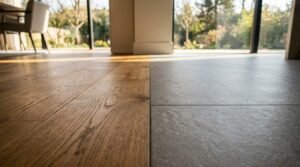
Living zones tolerate wood and softer materials. Transitions between materials need planning, since height differences create trip hazards and ugly thresholds.
Wall Finishes, Drywall, and Ceiling Treatments
Walls and ceilings form the largest continuous surface in the house. They also hide the most workmanship quality.
Bad drywall shows under raking light forever. Good drywall and ceiling finishing work disappears completely, which is exactly the point.
Drywall Levels of Finish (Level 1 Through Level 5)
The finish levels come from an industry standard published jointly by trade associations, and they range from taped-only to fully skim-coated. Most homes get Level 4 as the default.
Level 5 adds a full skim coat over the entire surface. I specify it for high-gloss paint, dark colors, and any wall washed by directional light.
Ask your builder which level is in the contract. The word “standard” hides real cost differences.
Paint Systems, Sheens, and Color Strategy
A paint system means primer plus topcoats matched to the substrate. Skipping primer on new drywall causes flashing and uneven sheen.
Sheen does the heavy lifting. Flat hides imperfections, eggshell balances cleanability, and semi-gloss protects trim and wet areas. Professional interior painting services handle sheen sequencing far more consistently than weekend crews.
Ceiling Details: Coffered, Tray, Beam, and Acoustic
Ceiling treatments add architecture without adding square footage. Coffered grids suit formal rooms, trays lift bedrooms, and exposed beams warm open plans.
Acoustic considerations matter in open layouts. Hard surfaces everywhere create echo that no amount of styling fixes.
Millwork, Carpentry, and Trim Packages
Millwork is the connective tissue of interior design. It frames openings, terminates surfaces, and signals craftsmanship at eye level.
I judge a builder by their trim returns and miters. Those small joints reveal everything.
Baseboards, Casing, Crown, and Wainscoting
Baseboard height scales with ceiling height. Nine-foot ceilings carry 5.25-inch base comfortably; eight-foot ceilings look heavy under it.
Casing profiles should agree with base and crown. Wainscoting, board and batten, and picture-frame molding all add texture, and custom carpentry and trim work make the difference between crisp and clumsy.
Built-Ins, Shelving, and Feature Walls
Built-ins solve storage and create focal points at once. Window seats, mudroom lockers, and library walls all earn their cost.
Feature walls need restraint. One per floor keeps them special.
Paint-Grade vs. Stain-Grade Decisions
Paint-grade millwork uses MDF or finger-jointed pine and costs less. It paints beautifully and stays stable.
Stain-grade uses solid hardwood with matched grain. It costs more, takes longer, and rewards you in rooms where wood tone is the whole point.
Cabinetry, Countertops, and Surface Materials
Cabinetry and counters consume the largest single slice of most finish budgets. They also anchor the two rooms buyers scrutinize hardest.
Kitchen and bath planning starts with the cabinet layout. Everything else adapts around it.
Stock, Semi-Custom, and Full-Custom Cabinetry
Stock cabinets come in fixed sizes and ship fast. They work well when your layout accommodates standard widths.
Semi-custom allows size, door style, and finish modifications on a standard box. Most custom homes land here for value.
Full-custom builds to your exact dimensions with any species, finish, or interior fitting. Broader kitchen and bath remodeling services coordinate cabinetry with plumbing and electrical so nothing lands out of sequence.
Quartz, Granite, Quartzite, and Solid Surface
Engineered quartz dominates because it never needs sealing and offers consistent patterning. Heat resistance is its one weak point.
Granite and quartzite bring natural depth and real heat tolerance. Both need periodic sealing.
Solid surface repairs and renews with sanding. It suits high-use rentals and integrated sink details.
Backsplashes, Wet Walls, and Tile Detailing
Backsplashes protect wall surfaces and carry pattern into the room. Full-height slab backsplashes read seamless; tile reads textured.
Detailing decides quality. Edge profiles, corner treatments, and outlet placement in the tile field all get planned before installation starts.

Doors, Windows, and Interior Hardware
Doors and hardware get touched more than any other finish in the house. Cheap versions announce themselves immediately.
I always upgrade doors before upgrading anything decorative. The tactile difference is constant.
Interior Door Styles, Cores, and Swing Logic
Hollow-core doors are light and inexpensive. Solid-core doors feel substantial, block sound, and cost roughly double.
Style should stay consistent throughout the home. Swing direction affects furniture placement, light spill, and privacy, and professional interior door installation prevents the racked frames and uneven reveals that plague DIY hangs.
Window Casing, Sills, and Interior Trim Integration
Interior window trim ties glazing into the wall plane. Craftsman-style stools and aprons suit traditional homes; drywall returns suit modern ones.
Consistency with door casing matters more than the specific profile. Mixed detailing looks accidental. Coordinated window installation and trim services keep the two systems aligned from rough opening through final caulk.
Hardware Finishes and Mixing Metals
Matte black, satin nickel, unlacquered brass, and bronze each set a distinct mood. Pick one dominant finish per floor.
Mixing metals works with intent. Two finishes maximum, with one clearly leading.
Lighting, Electrical, and Fixture Finishes
Lighting is the finish material people forget until it disappoints them. It determines how every other material actually looks.
I plan lighting alongside flooring and paint, never after. Color rendering changes everything.
Layered Lighting: Ambient, Task, and Accent
Ambient light fills the room. Recessed cans, flush mounts, and cove lighting handle this baseline layer.
Task light serves work surfaces: under-cabinet strips, pendants over islands, vanity sconces. Accent light highlights art, texture, and architecture.
Three layers on separate switches give you a room that works morning and night. Coordinated residential electrical services make sure the circuits and switch legs support that plan.
Color Temperature, CRI, and Dimming
Color temperature is measured in Kelvin. 2700K reads warm and residential; 3000K reads crisp; anything above 3500K feels commercial in a home.
CRI measures color accuracy against natural light. Specify 90 or higher so your paint, wood, and stone read true.
Dimming needs matched drivers and compatible switches. Mismatched pairings cause flicker and buzz.
Switch Plates, Outlets, and Visible Device Finishes
Devices are small and everywhere. Screwless plates in a coordinated color clean up walls instantly.
Plan outlet locations against furniture and counters. Placement mistakes here are permanent annoyances.

Plumbing Fixtures and Wet-Room Finish Materials
Wet rooms combine the highest finish density with the highest failure risk. Water finds every shortcut.
I treat bathrooms as a system, not a collection of pretty objects. What hides behind the tile matters most.
Faucets, Showers, Tubs, and Fixture Finish Families
Manufacturers group fixtures into finish families so faucets, shower trim, and accessories match exactly. Staying inside one family avoids subtle tone mismatches.
Valve bodies and trim are separate purchases. Buy them together, since licensed plumbing services need the valve on site before wall closure.
Waterproofing Assemblies Behind the Finish
Tile is not waterproof. The membrane, pan, and sealed joints behind it do the actual work.
Sheet membranes and liquid-applied systems both perform when installed to spec. Skipping this layer causes the slow leaks that trigger water damage restoration services years later.
Grout, Sealants, and Long-Term Maintenance
Epoxy grout resists staining and needs no sealing. Cement grout costs less and requires annual attention.
Silicone belongs at every change of plane. Grout in a corner cracks; sealant flexes.
Designing a Cohesive Material Palette Across the Whole Home
A cohesive palette is a limited set of materials repeated with intention across every room. It is the difference between a designed home and a collection of showrooms.
I cap most whole-home palettes at roughly a dozen materials total. Constraint creates calm.
Anchor, Secondary, and Accent Material Roles
Anchor materials repeat everywhere: your flooring, your primary wall color, your dominant metal finish. They provide continuity from room to room.
Secondary materials appear in two or three spaces. Counters, cabinet finishes, and tile fields fill this role.
Accents appear once. A statement stone, a bold tile, a distinctive light fixture each earn attention by being rare.
Texture, Sheen, and Undertone Coordination
Undertone causes more palette failures than color. A warm greige beside a cool gray tile reads dirty even though both are neutral.
I check undertones by comparing samples against a pure white card in daylight. The clash shows up instantly.
Texture and sheen add depth without adding color. Matte, honed, brushed, and polished surfaces in the same tone create richness quietly.
Sample Boards, Mockups, and Approval Workflow
Physical sample boards beat digital renderings every time. Group all materials for one room on a single board and live with it for a week.
Mockups matter for tile layouts, stain colors, and paint sheens. A four-by-four-foot mockup catches problems drawings never reveal.
Approval workflow keeps everyone honest. Signed selection sheets with product numbers, finishes, and quantities eliminate the “I thought we picked” conversation.
Budgeting Interior Finishes: Allowances, Costs, and Trade-Offs
Interior finishes typically represent the largest controllable slice of a custom home budget. Structure costs what it costs; finishes are where your decisions move the number.
I build finish budgets room by room, not category by category. Room-level thinking exposes trade-offs faster.
How Allowances Actually Work
An allowance is a placeholder dollar amount in your contract for a category you have not selected yet. Going over adds a change order; going under credits you back, sometimes partially.
Allowances hide traps. Confirm whether each one includes material only, or material plus labor, freight, and taxes.
I ask for allowance breakdowns in writing before signing. Vague numbers become disputes.
Where to Spend and Where to Save
Spend on things you touch daily and things that are hard to change later. Doors, hardware, faucets, flooring, and cabinetry all qualify.
Save on things that swap easily. Light fixtures, mirrors, paint colors, and cabinet pulls all update cheaply in five years.
Kitchens and primary bathrooms deserve disproportionate spend. Guest rooms and secondary baths tolerate restraint without anyone noticing.
Change Orders and Cost Creep Control
Change orders are the quiet budget killer. Each one carries material cost, labor cost, and a markup, plus schedule impact.
Lock selections before the relevant trade starts. Late changes cost multiples of early ones.
Track running totals weekly against your original allowances. Surprises at closing come from nobody watching the number.
Durability, Maintenance, and Lifecycle of Interior Finishes
Every finish has a service life. Planning around those lifecycles turns maintenance into a schedule instead of an emergency.
I map expected replacement intervals during selection. That map guides both budget and material choices.
Wear Ratings, Warranties, and Real-World Performance
Flooring carries wear ratings that indicate abrasion resistance. Higher ratings suit commercial traffic and busy family homes.
Warranties describe manufacturing defects, not abuse. Read the exclusions, since most warranties void with improper subfloor prep or cleaning chemicals.
Real-world performance depends on installation quality more than product grade. A premium material installed poorly fails first.
Households With Pets, Kids, and High Traffic
Pets scratch floors and stain grout. Textured LVP, porcelain, and matte finishes hide damage far better than glossy surfaces.
Kids test paint. Scrubbable eggshell and satin finishes survive; flat paint does not.
Landlords and property managers should default to the most repairable option in every category. Repairability beats perfection across a portfolio.
Seasonal and Annual Finish Maintenance
Annual tasks include resealing natural stone, checking silicone joints, and touching up paint. Each takes little time and prevents big failures.
Seasonal humidity swings affect wood. Stable indoor humidity protects hardwood, millwork, and doors from gapping and sticking, and dependable HVAC maintenance services keep that range consistent year-round.
Routine professional deep cleaning extends finish life more than any product claim. Grit is what actually wears surfaces down.
Once your materials, palette, budget, and maintenance plan are settled, one question remains: who do you actually hire to install and maintain all of it?

Sustainable, Low-VOC, and Healthy Interior Materials
Healthy material choices affect the air you breathe inside a sealed, well-insulated custom home. Tight envelopes trap whatever finishes release.
I specify low-emission products in bedrooms and children’s spaces without exception. The cost difference is small now.
Indoor Air Quality and Off-Gassing
Volatile organic compounds off-gas from paints, adhesives, sealants, and composite wood. The U.S. Environmental Protection Agency notes that indoor VOC concentrations run consistently higher than outdoor levels.
Off-gassing peaks in the first weeks after installation. Ventilate aggressively during and after finish work.
Certifications Worth Knowing
GREENGUARD Gold, FloorScore, and CARB Phase 2 all certify low emissions for specific product categories. Look for the mark on the product data sheet, not the marketing page.
Certification simplifies decisions. It removes guesswork from paints, flooring, adhesives, and cabinetry.
Accessibility and Aging-in-Place Finish Choices
Accessible finishes serve everyone, not just people with mobility needs. They also protect long-term property value as demographics shift.
I build accessibility into finish selection rather than retrofitting later. Blocking and layout decisions cost nothing during framing.
Slip Resistance and Floor Transitions
Slip resistance is measured by coefficient of friction, and wet areas need textured or small-format tile with more grout lines for grip.
Flush transitions between materials eliminate trip hazards. Thresholds under half an inch keep wheeled mobility devices rolling smoothly.
Reachability, Contrast, and Grab-Bar Blocking
Lever handles, rocker switches, and pull-out shelving all reduce strain. They cost the same as standard versions.
Visual contrast between floors, walls, and counters helps low-vision navigation. Adding plywood blocking behind bathroom walls now makes future grab bar and mobility installations simple and secure.
Choosing and Coordinating Interior Finish Professionals
Interior finishes involve more trades than any other phase of construction. Coordination failures show up as damaged surfaces, missed sequences, and finger-pointing.
We connect homeowners and property managers with vetted specialists across every finish category. One point of contact removes the scheduling chaos.
Which Trades Touch Interior Finishes
Flooring installers, painters, drywall finishers, trim carpenters, cabinet installers, electricians, plumbers, and tile setters all work in the same rooms within weeks of each other.
Each trade depends on the one before it. A late drywall crew delays paint, which delays flooring, which delays trim.
Vetting, Scope Clarity, and Transparent Pricing
Verify licensing, insurance, and recent local references in your category. General reviews matter less than category-specific work.
Written scope prevents disputes. Specify materials, prep work, number of coats, cleanup responsibility, and exactly what “complete” means. Reliable handyman and small-project services handle the punch-list items that fall between larger trade scopes.
Punch Lists, Warranty Work, and Post-Move-In Service
Walk every room with strong raking light before final payment. Tape flags on defects and photograph each one.
Hold a retainage until punch items close. Then schedule a ninety-day follow-up, since settling reveals nail pops, caulk cracks, and door adjustments after you move in.
Conclusion
Interior finishes connect materials, palette, budget, durability, and trade coordination into one system that shapes how your custom home performs daily.
Each category here opens into deeper resources on flooring, painting, cabinetry, plumbing, electrical, and specialty finish work across the broader home services landscape.
We help you select, install, and maintain every finish with vetted local professionals. Contact Mr. Local Services and start your project with confidence today.
Frequently Asked Questions
What are interior finish materials in a custom home?
Interior finish materials are the visible surfaces and fixtures inside a home. They include flooring, paint, drywall, trim, cabinetry, countertops, doors, hardware, lighting, and plumbing fixtures.
When should I choose interior finishes during construction?
Choose major finishes before framing is complete. Electrical, plumbing, and blocking positions depend on your fixture, cabinet, and tile decisions, so late changes create costly rework.
How much of a custom home budget goes to interior finishes?
Interior finishes typically consume the largest controllable share of the budget. Cabinetry, countertops, and flooring account for most of that spend in nearly every project.
What is the difference between Level 4 and Level 5 drywall?
Level 4 finishes joints and fasteners only. Level 5 adds a full skim coat across the entire surface, which matters under gloss paint and directional lighting.
Which interior finishes are most durable for rentals?
Luxury vinyl plank, porcelain tile, epoxy grout, and scrubbable satin paint perform best. Property managers prioritize repairable materials over premium ones across a portfolio.
How do I keep my interior finishes looking cohesive?
Limit your whole-home palette to roughly a dozen materials. Repeat anchor materials everywhere, use secondary materials in a few rooms, and reserve accents for single moments.
Do I need separate contractors for each interior finish?
Each finish category requires its own licensed trade. We coordinate flooring, painting, carpentry, cabinetry, electrical, and plumbing specialists so the sequence stays on schedule.