An accessory dwelling unit, or ADU, is a self-contained second living space on a single-family lot, and financing and insurance are the two decisions that determine whether the project actually happens. I have watched homeowners lose months because they picked a loan before they understood coverage.
The rules changed fast across the USA. States loosened zoning, lenders built new products, and insurers rewrote endorsements, so outdated advice now costs real money and real permit delays.
This guide covers project costs, equity financing, construction loans, grants, alternative funding, insurance coverage types, homeowners policy changes, contractor requirements, lender evaluation, mistakes, and timelines.
What ADU Financing and Insurance Actually Cover
Financing and insurance are the two money rails an ADU runs on. Financing pays for the build. Insurance protects the build, the finished structure, and everyone who steps onto the property while work happens.
I treat them as one decision because lenders demand proof of coverage before releasing funds. Skip the insurance conversation and the loan stalls at the first draw request.
What Counts as an ADU
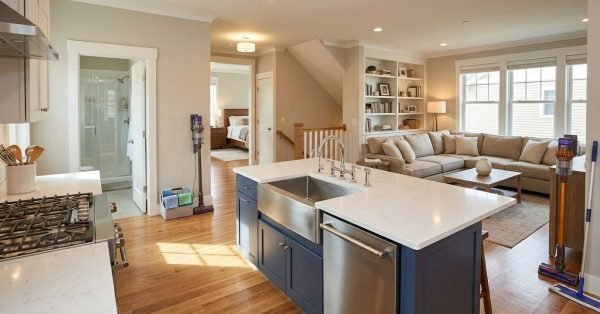
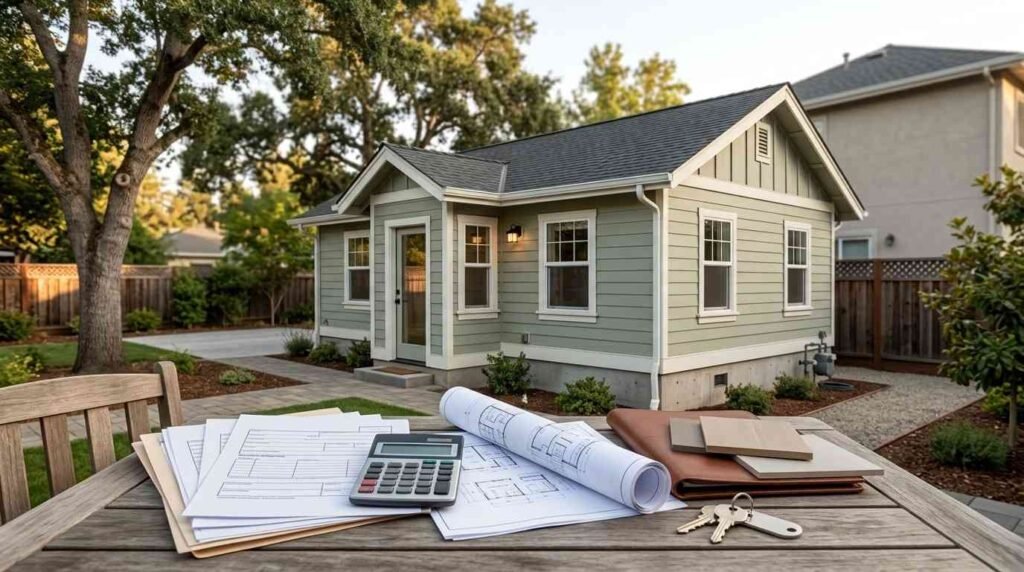
An ADU is a secondary residential unit with its own kitchen, bathroom, sleeping area, and entrance. Detached backyard cottages, garage conversions, basement apartments, and attached additions all qualify in most jurisdictions.
The classification matters enormously. Lenders price a detached unit differently than an interior conversion, and insurers rate them differently too.
Junior ADUs sit in their own category. These smaller interior units share plumbing with the main house and often carry lighter permit and coverage requirements.
Why Financing and Insurance Are Decided Together
Every construction lender requires a builder’s risk policy naming them as an additional insured. That requirement lands in the loan conditions, not the insurance shopping list, and it surprises people constantly.
Your insurer also cares about how you finance. A cash build with no lender oversight gets underwritten differently than a monitored construction draw.
The Cost Baseline Homeowners Start From
ADU costs vary wildly by region, size, and type. Garage conversions land at the low end. New detached construction with full utility runs sits at the top.
The U.S. Department of Housing and Urban Development documents ADUs as a growing affordable housing strategy, and its research notes that construction cost remains the single largest barrier for homeowners.
I tell every client to build the budget first and shop money second. The number you need drives which product actually fits.
How ADU Project Costs Shape Your Financing Choice
Your total project cost decides your financing category. Small budgets work with equity lines. Large ground-up builds need construction products with draw schedules.
I break every ADU budget into three buckets before recommending a loan. Hard costs, soft costs, and contingency.
Hard Costs vs. Soft Costs
Hard costs are the physical build. Foundation, framing, roofing, siding, drywall, flooring, electrical rough-in, plumbing, HVAC equipment, fixtures, and finishes.
Soft costs are everything you cannot touch. Architectural drawings, structural engineering, permit fees, impact fees, surveys, energy compliance reports, and utility connection charges.
Soft costs routinely reach 20 to 30 percent of a project. Homeowners who budget only hard costs run short right when permit and inspection requirements hit.
Permits, Utilities, and Site Work
Site conditions swing budgets more than finishes do. Sloped lots need retaining walls. Old panels need service upgrades. Distant sewer laterals need long trenches.
I always price a separate electrical panel evaluation early, because upgrading service ranks among the most common budget surprises in electrical service work.
Water and sewer connections deserve the same scrutiny. Some municipalities charge full new-connection fees for an ADU even when it shares the existing main line.
Contingency Budgeting
I set contingency at 10 to 15 percent minimum on renovations and conversions. Existing structures hide rot, outdated wiring, failed waterproofing, and undersized footings.
Lenders often require documented contingency in the loan file. That reserve protects them as much as it protects you.
Home Equity Financing Options for ADUs
Home equity is the most used ADU funding source in the country. You already own the collateral, rates beat unsecured debt, and closing moves faster than construction lending.
Equity products share one limitation. They cap at your current home value, not the value the finished ADU creates.
Home Equity Loans
A home equity loan is a fixed-rate second mortgage that funds as a single lump sum. Payments stay identical for the full term, which makes budgeting simple.
This product fits projects with firm, fully bid scopes. I recommend it for garage conversions and modest attached units where the number is locked.
HELOCs
A home equity line of credit works like a revolving account secured by your house. You draw as invoices arrive and pay interest only on the outstanding balance.
HELOCs suit phased builds beautifully. I use them when a homeowner completes framing this year and interior finishes next year.
Rates float on most HELOCs. That variability deserves real thought before you commit a multi-year build to it.
Cash-Out Refinancing
A cash-out refinance replaces your entire first mortgage with a larger one and returns the difference in cash. It makes sense when current rates sit at or below your existing rate.
Federal Reserve data shows homeowners hold historically large equity positions, and the Federal Reserve’s Financial Accounts report owners’ equity in real estate above $35 trillion.
I run the blended-rate math every time. Refinancing a low legacy rate to fund an ADU frequently costs more over time than a second lien.
Construction and Renovation Loans for ADUs
Construction products fund what you have not built yet. They underwrite against the completed value of the property, which unlocks far larger budgets than equity alone.
The tradeoff is process. Draw schedules, inspections, lien releases, and documentation add administrative weight to every phase.
Construction-to-Permanent Loans
A construction-to-permanent loan funds the build in draws, then converts to a standard mortgage at completion. One closing, one set of costs, one appraisal based on future value.
This structure carries new detached ADUs well. The lender appraises the finished property, so you borrow against the ADU you are creating.
Renovation Loans (203k and HomeStyle)
FHA 203(k) and Fannie Mae HomeStyle Renovation loans bundle purchase or refinance dollars with renovation dollars in a single mortgage. Both underwrite on as-completed value.
Fannie Mae’s HomeStyle Renovation guidelines permit renovation funds up to 75% of the as-completed appraised value, which covers many ADU builds outright.
These loans demand licensed contractors, approved bid packages, and structured inspections. Owner-builder arrangements rarely qualify.
Draw Schedules and Inspections
Construction lenders release money in stages tied to verified completion. Foundation, framing, mechanical rough-in, drywall, and final each trigger a draw.
An inspector verifies each milestone before funds move. I coordinate this calendar with the general contractor at kickoff, because a missed inspection stops payroll cold.
Government-Backed and Grant Programs
Public money for ADUs expanded sharply as states pushed housing supply. Grants, forgivable loans, and low-interest programs now exist across dozens of jurisdictions.
These programs carry conditions. Income limits, rent caps, and deed restrictions come attached to most of the generous ones.
State and Municipal ADU Grants
California runs the most established program through its ADU Grant, and multiple states now fund predevelopment costs like plans, permits, and soil reports.
The California Housing Finance Agency ADU Grant Program provides up to $40,000 toward predevelopment and non-recurring closing costs for qualifying homeowners.
City-level programs move fast and run out of money faster. I check municipal housing department pages quarterly because allocations reopen without much notice.
FHA and Fannie Mae Rental Income Rules
Fannie Mae and Freddie Mac both count projected ADU rental income toward loan qualification under specific appraisal conditions. That single rule opens financing for buyers who otherwise fall short on debt-to-income.
FHA followed with guidance allowing ADU rental income in qualification on eligible transactions. The documentation standard stays strict, requiring appraiser-supported market rent.
Affordable Housing Covenants
Some grants require you to rent the ADU at restricted rates for a set term. Fifteen to thirty years is common.
That covenant records against your title. I make sure homeowners read the restriction before they accept the money, because it follows the property through resale.
Alternative Funding Paths
Not every ADU gets built with a mortgage product. Plenty get built with combinations that never appear in lender brochures.
I see four alternatives work repeatedly. Each carries a different cost and risk profile.
Personal and Contractor Financing
Unsecured personal loans fund smaller conversions without touching your home title. Rates run higher, terms run shorter, and approval moves in days.
Many contractors offer financing through third-party lenders. I compare those terms against a credit union personal loan every time, because convenience pricing is real.
Cash, Phased Builds, and Retirement Funds
Phasing lets cash-funded projects move forward without debt. Shell and exterior in phase one, interior systems and finishes in phase two.
Retirement account borrowing appears often in these conversations. I flag the opportunity cost and the repayment triggers clearly, then let the homeowner decide with a tax professional.
Investor and Co-Ownership Structures
Some homeowners bring in an investor who funds construction in exchange for a share of rental income or equity. Written agreements govern everything.
These deals need a real estate attorney. Verbal arrangements around a permanent structure on titled land end badly.
Insuring an ADU: Coverage Types Explained
ADU insurance splits into two distinct phases. Coverage during construction, then coverage for the finished occupied unit.
Homeowners who buy only one of the two carry a gap. I have seen uninsured framing burn and uninsured tenants sue.
Builder’s Risk During Construction
Builder’s risk covers the structure under construction plus materials on site and in transit. Fire, wind, theft, and vandalism all fall inside a standard form.
Your existing homeowners policy generally excludes new construction. That exclusion is the single most misunderstood item in the entire ADU insurance conversation.
Construction lenders require builder’s risk naming them as additional insured. I place it before the first shovel moves.
Endorsements vs. Separate Policies
Once the ADU is finished, insurers handle it one of two ways. An endorsement adds the structure to your existing homeowners policy under Other Structures coverage. A separate dwelling policy insures it independently.
Endorsements cost less and simplify administration. Separate policies give higher limits and cleaner liability separation for rentals.
Attached ADUs usually fold into the main dwelling coverage. Detached units more often need dedicated Other Structures limits or a standalone policy.
Landlord and Rental Coverage
Renting the ADU changes your policy class. A standard homeowners form does not contemplate tenants, and a claim involving a renter can be denied outright.
Landlord policies, often written as DP-3 dwelling forms, cover the structure, liability arising from tenant occupancy, and lost rent. Long-term tenants and short-term guests get rated differently.
I confirm the intended use with the carrier in writing. Verbal assurances from a phone rep protect nobody at claim time.
Liability and Loss of Rental Income
Liability limits deserve an honest look once another household lives on your lot. More people means more exposure, and an umbrella policy raises limits cheaply.
Loss of rental income coverage pays your expected rent while a covered claim makes the unit uninhabitable. That provision matters most when the ADU income covers the loan payment.
What Changes on Your Homeowners Policy After an ADU
Adding an ADU changes your property’s insurable value, its occupancy profile, and its risk rating. All three affect your premium and your coverage adequacy.
I schedule a policy review the month construction finishes. Waiting until renewal leaves months of exposure.
Dwelling Value Recalculation
An ADU raises total replacement cost on the property. Underinsuring the combined structures triggers coinsurance penalties when a partial loss happens.
Carriers reprice using square footage, construction type, and finish level. Provide the actual permit set and final cost documentation, not estimates.
Occupancy and Tenant Disclosure
Disclose occupancy accurately. Family member, long-term tenant, short-term rental, and home office all carry different underwriting treatment.
Nondisclosure is the fastest route to a denied claim. Insurers verify occupancy after a loss, and they find rental listings easily.
Premium Impact Factors
Premium movement depends on ADU type, size, occupancy, distance from the main house, and local hazard exposure. Detached rented units move the needle most.
Mitigation earns discounts. Hardwired smoke and CO detection, monitored alarms, updated wiring, and fire-resistant roofing all reduce rated risk, and the same logic applies to roofing upgrades on the main house.
Contractor Insurance and Permit Requirements
Your contractor’s insurance protects you as much as it protects them. An uninsured trade injury on your property becomes your liability.
I verify coverage before signing, every time, without exception.
General Liability and Workers’ Comp
General liability covers property damage and third-party bodily injury caused by the contractor’s work. Workers’ compensation covers injuries to their own crew.
Without workers’ comp, an injured worker can pursue the homeowner directly. Your homeowners liability limit becomes the target.
Verify limits against project size. A million dollars per occurrence is the common floor for residential construction of this scale.
Licensing and Bonding Verification
State license boards publish active status, classification, and complaint history free of charge. I check the license number against the board record, not the business card.
Bonding provides a recovery path for incomplete or defective work. Licensed general contracting and remodeling work on a permitted ADU should always carry both a bond and current insurance.
Certificates of Insurance
Request a certificate of insurance issued directly by the contractor’s carrier or agent. Certificates emailed from the contractor get edited more often than anyone admits.
Ask to be named as additional insured on the general liability policy. That endorsement extends the contractor’s coverage to claims against you arising from their work.
How do lenders and insurers evaluate an ADU differently than a main house?
How Lenders and Insurers Evaluate ADUs
Lenders and insurers both treat an ADU as a distinct risk unit attached to your primary property. Their evaluation criteria overlap less than homeowners expect.
Understanding both lenses helps you package the project correctly from the start.
Appraisal and Valuation Factors
Appraisers value ADUs using comparable sales with similar secondary units, which stay scarce in many markets. Thin comp data produces conservative valuations.
Legal permitting status drives value more than finish quality. An unpermitted unit contributes little to appraised value and complicates both lending and insurance.
Rental Income Qualification
Lenders that count ADU rent require an appraiser-completed market rent schedule. They then apply a vacancy factor, typically 25%, before crediting income.
Freddie Mac’s seller servicer guidance permits ADU rental income in qualification under defined property and documentation conditions.
Common Financing and Insurance Mistakes
I see the same errors repeat across states and price points. Each one is preventable with a single conversation earlier in the process.
The costly mistakes cluster in three places. Coverage timing, budget completeness, and disclosure accuracy.
Homeowners skip builder’s risk and assume the homeowners policy covers construction. It does not, and the gap runs the full length of the build.
Budgets omit soft costs and contingency, then stall at rough-in. Financing a shortfall mid-project costs far more than sizing the loan correctly upfront.
Occupancy goes undisclosed after a tenant moves in. That single omission voids claims that would otherwise pay in full.
Contractor insurance goes unverified. A crew injury then lands squarely on the homeowner’s liability coverage.
Unpermitted work gets discovered at appraisal or claim. Retroactive permitting costs multiples of the original fee, and some jurisdictions require demolition.
Building Your ADU Financing and Insurance Timeline
Sequence protects your budget. I run financing, insurance, and construction on one shared calendar so nothing waits on nothing.
Feasibility comes first. Confirm zoning, setbacks, utility capacity, and maximum allowable size before spending a dollar on design.
Design and bidding come second. Complete plans produce accurate bids, and accurate bids produce correctly sized loans.
Financing application follows the bid package. Lenders underwrite off real numbers, and construction products need the full scope documented.
Builder’s risk binds before mobilization. Permits get pulled, the contractor’s certificate of insurance lands in your file, and work starts.
Construction runs on the draw and inspection schedule. Coordinate every milestone with your handyman and repair support for the small punch items that fall outside the main contract.
Final policy conversion closes the loop. Certificate of occupancy in hand, the ADU moves from builder’s risk to permanent coverage with correct occupancy and limits.
Conclusion
I covered ADU cost structure, equity and construction financing, grants, alternative funding, builder’s risk, landlord coverage, policy changes, contractor requirements, and lender evaluation criteria.
ADUs sit inside a larger property investment picture, and each financing product, coverage type, and permit step deserves its own deeper resource for full understanding.
We connect homeowners with vetted, insured professionals who build ADUs correctly the first time. Start your project with Mr. Local Services today.
Frequently Asked Questions
Can I use a HELOC to build an ADU?
Yes. A HELOC funds ADU construction in draws against your existing home equity, making it well suited to phased builds with variable timing.
Does an ADU raise my homeowners insurance?
Yes. An ADU increases total replacement cost and adds occupancy risk, so premiums rise, with detached rented units producing the largest increases.
Do I need builder’s risk insurance for an ADU?
Yes. Standard homeowners policies exclude new construction, and construction lenders require builder’s risk naming them as additional insured before releasing funds.
Will an ADU increase my property value?
Permitted ADUs add measurable appraised value. Unpermitted units contribute little and create complications with both lenders and insurance carriers.
Can I count ADU rental income to qualify for a loan?
Yes, on eligible programs. Lenders require an appraiser-completed market rent schedule and apply a vacancy factor before crediting the income.
What insurance does my ADU contractor need?
General liability and workers’ compensation, both current and verified. Request a certificate directly from their carrier and ask to be named additional insured.
Are there grants available for building an ADU?
Yes. Several states and cities fund predevelopment costs, though most grant programs attach income limits or long-term affordability covenants.