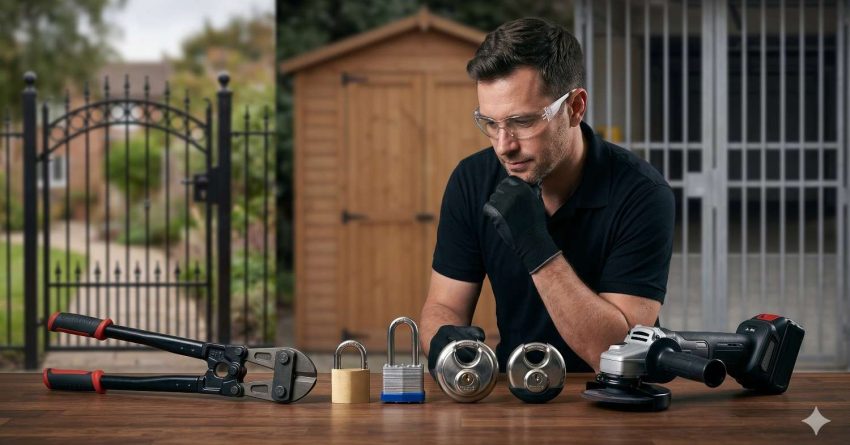
The best tool to cut off a lock is a pair of heavy-duty bolt cutters for most padlocks, or an angle grinder with a metal cutting disc for hardened or thick steel shackles. The right choice depends on the lock’s size, hardness, and where it sits. Choosing correctly saves time, prevents injury, and protects the surface or door the lock secures. This guide breaks down which tool works best and when.
The Best Tool to Cut Off a Lock
For most residential padlocks, 24-inch bolt cutters are the best tool to cut off a lock. They deliver enough leverage to slice through standard steel shackles in seconds with no power source required. For hardened steel, boron, or disc locks, an angle grinder fitted with a metal cutoff wheel is faster and more reliable. Hand tools fail on these.
Your choice should match the shackle thickness, the lock’s hardness rating, and your access to power. Bolt cutters work anywhere. Angle grinders need electricity or a charged battery. Both require eye protection, gloves, and steady control to avoid injury or damage to nearby surfaces.
Why Bolt Cutters Are the Top Choice
Bolt cutters use compound leverage to multiply hand force into thousands of pounds of cutting pressure. A 24-inch model handles shackles up to 7/16 inch thick, which covers nearly every standard padlock found on storage units, gates, sheds, and toolboxes. They are quiet, portable, and need no setup.
The trade-off is muscle. Cutting hardened shackles by hand is exhausting, and undersized bolt cutters will simply dent a lock instead of cutting it. Always size the tool to the job. For everyday locks, a quality pair from a reputable brand finishes the job cleanly without sparks, noise, or surface damage.
When an Angle Grinder Works Better
An angle grinder with a thin metal cutoff wheel cuts through any lock, including hardened steel, boron-alloy, and disc-style padlocks that resist bolt cutters. It works in under a minute on most shackles and handles locks too large for hand tools, such as those on commercial gates or shipping containers.
The drawbacks matter. Grinders throw sparks, generate intense heat, and require a power source. They can scorch doors, damage paint, or ignite nearby debris. Always wear a face shield, work gloves, and long sleeves. For property managers handling multiple stuck locks, the grinder is the most dependable option when bolt cutters fall short.
The right tool only works when paired with the right lock. Matching the cut method to the lock prevents wasted effort and keeps the surrounding hardware intact.
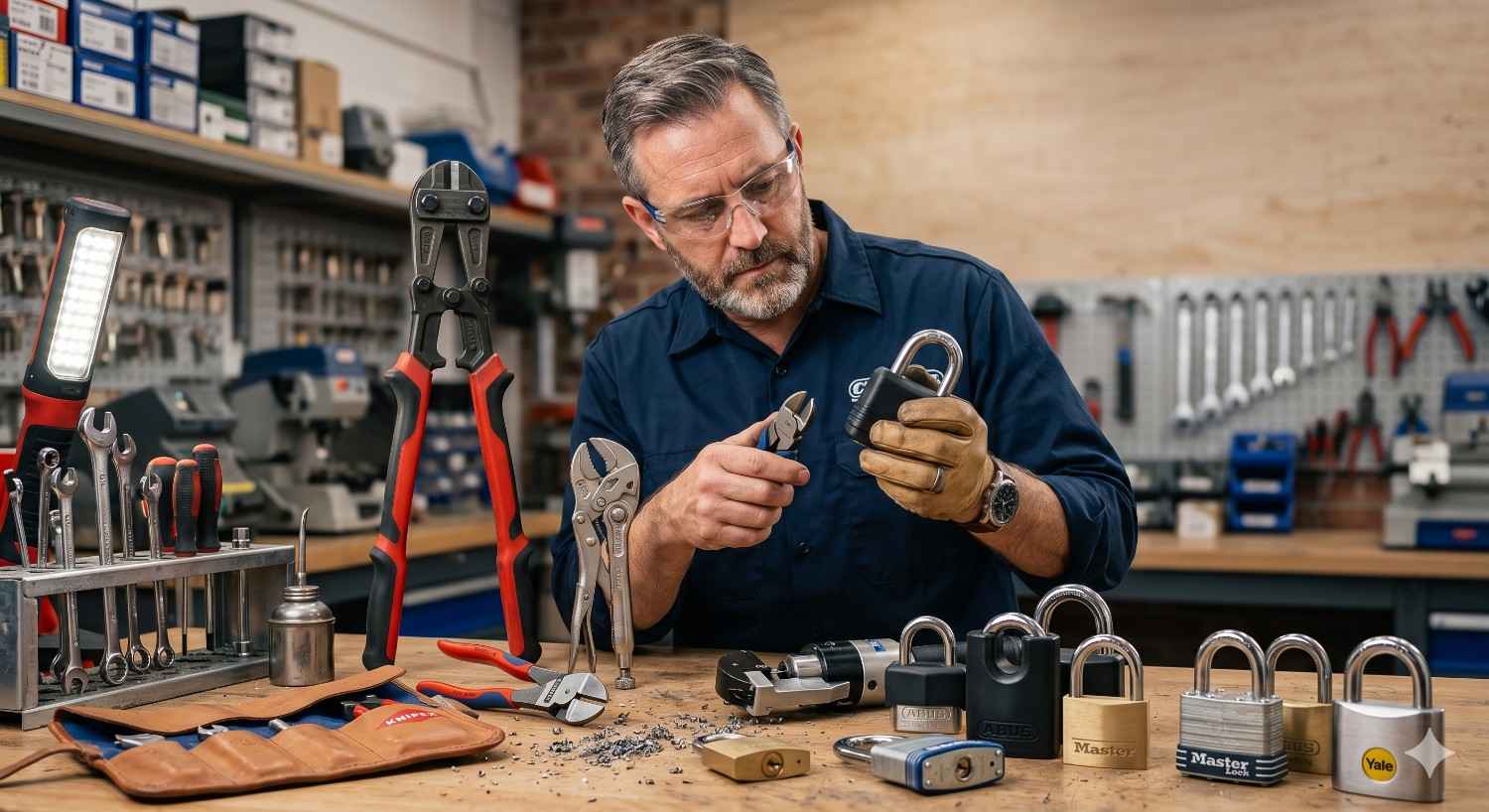
How to Choose the Right Lock-Cutting Tool
Start by identifying the lock. Standard brass or steel padlocks with shackles under 3/8 inch call for bolt cutters. Hardened, shrouded, or boron-alloy shackles call for an angle grinder. Disc locks and puck locks almost always require a grinder because their design hides the shackle from cutters.
Next, consider the environment. Bolt cutters are safer indoors, near vehicles, or close to flammable materials. Grinders need open ventilation and clear space. Finally, weigh the value of the locked item against potential collateral damage, since heat and sparks can mark doors or frames.
Matching the Tool to the Lock Type
Cheap padlocks yield to small bolt cutters. Mid-grade padlocks need 24-inch or 36-inch bolt cutters. High-security locks resist hand tools entirely and require a grinder with a quality cutting wheel. When in doubt, inspect the shackle thickness and the lock body for security markings before choosing.
When to Call a Locksmith Instead
Cutting a lock yourself makes sense when the lock is yours, the contents are low-risk, and you have the right tool. For high-security locks, locks on property you manage but did not install, or situations involving liability, a professional locksmith service is the safer route. Locksmiths often open locks without destroying them, preserving doors, gates, and hardware while documenting the work for property records.
Conclusion
Bolt cutters handle most padlocks, while an angle grinder cuts through hardened or oversized locks when leverage alone is not enough.
For homeowners, landlords, and property managers, choosing the right tool protects both the property and the people doing the work.
When the job calls for expertise or undamaged hardware, Mr. Local Services connects you with trusted locksmiths ready to help today.
Frequently Asked Questions
Can I cut a padlock with regular pliers?
No. Standard pliers lack the leverage to cut hardened steel. Use bolt cutters sized to the shackle, or an angle grinder for thicker, hardened locks.
How long does it take to cut a lock with bolt cutters?
A standard padlock takes between 5 and 30 seconds with properly sized 24-inch bolt cutters. Hardened shackles may take longer or require an angle grinder.
Is it legal to cut off your own lock?
Yes, cutting your own lock on your own property is legal. Cutting locks on property you do not own or manage may carry legal consequences without authorization.
What size bolt cutters do I need for a padlock?
A 24-inch bolt cutter handles most residential padlocks. For thicker shackles or commercial locks, choose 36-inch cutters or switch to an angle grinder.
Will an angle grinder damage the door or hasp?
It can. Sparks and heat may scorch surfaces or warp metal nearby. Shield surrounding areas with a metal plate and cut at a controlled angle.