Twenty minutes a day keeps a house clean far more reliably than a single exhausting weekend deep clean. I split that time into two ten-minute blocks, one in the morning and one at night, and the mess never gets the chance to pile up.
Most people fall behind on cleaning because they wait until the house feels overwhelming, then dread the hours it takes to fix it. That dread is the real problem, not the mess itself. A short daily habit removes the dread completely because the job never grows past twenty minutes.
I walk through why this method beats deep cleaning, what you need before you start, and the exact morning and evening steps. Then I cover a weekly room rotation, how daily habits fit with occasional deep cleans, common ways people fall off track, and how to tell when a problem needs more than a cleaning routine.
Why a Daily 20-Minute Cleaning Routine Works Better Than Weekend Deep Cleans
A weekend deep clean tackles a week’s worth of buildup in one long session. That’s exhausting, and it’s why so many people skip it entirely once life gets busy.
A daily routine spreads the same total effort across seven short sessions instead of one long one. Surfaces never get past a light wipe-down stage, which takes a fraction of the effort a caked-on mess requires.
The Psychology of Small Daily Habits vs. Big Cleaning Sessions
Small, repeated actions build habits. Big, occasional efforts build avoidance.
I’ve watched this play out the same way in almost every household. A twenty-minute task feels manageable enough to actually start. A three-hour deep clean feels big enough to postpone, and postponed tasks compound into bigger messes that feel even more postponable.
What You Need Before You Start Your Daily Routine
The routine only works with the right tools within arm’s reach. Hunting for supplies eats into your twenty minutes fast, and that’s exactly the kind of friction that kills a new habit in its first week.
I keep everything in one place, stationed centrally in the house, so grabbing it becomes automatic.

The Minimal Cleaning Caddy Every Home Needs
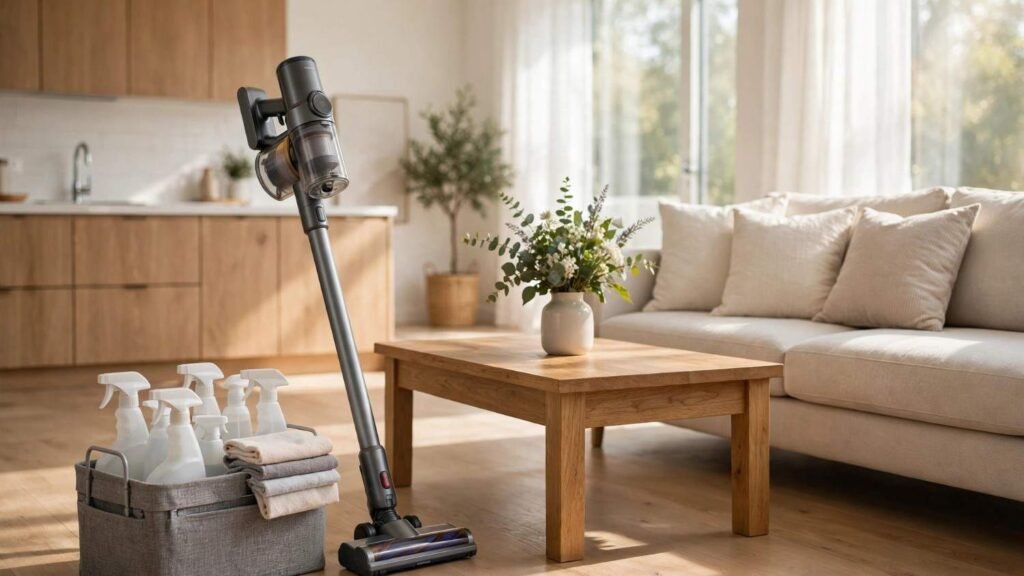
A basic caddy needs an all-purpose cleaner, microfiber cloths, a small trash bag, disinfecting wipes, and a duster. That’s it. Five items cover almost every surface in a typical home.
Skip the specialty products for now. A single all-purpose cleaner handles counters, appliance exteriors, and most hard surfaces without complicating your setup.
The Morning 10-Minute Reset (Kitchen and Living Areas)

Mornings set the tone for the rest of the day, and a lived-in house feels calmer when the kitchen and living room start the day reset. This block runs ten minutes, split roughly in half between the two spaces.
Kitchen Wipe-Down and Dish Routine
I load or empty the dishwasher first, since that task takes the least active effort and clears counter space for everything else. Counters and the stovetop get a quick wipe next, and the sink gets a rinse before I move on.
Five minutes covers this whole sequence once it becomes routine. The kitchen is the room that shows mess fastest, so this five minutes prevents most of the buildup that leads to a dreaded deep clean later.
Living Room and Entryway Quick Tidy
Throw pillows get fluffed, blankets get folded, and anything out of place gets returned to where it belongs. The entryway gets a fast scan for shoes, mail, and bags left overnight.
This isn’t a deep clean of the living room. It’s a reset that keeps clutter from accumulating into a project.
The Evening 10-Minute Wind-Down (Bedroom and Bathroom)

The evening block mirrors the morning one, covering the bedroom and bathroom before the day ends. Doing this at night means you wake up to a house that already feels orderly.
Bathroom Quick-Clean Checklist
I wipe the sink and counter, give the toilet a quick wipe, and hang up any towels left on the floor. A squeegee pass on the shower glass takes fifteen seconds and prevents the water spots that turn into a scrubbing job later.
This checklist runs five minutes once you’ve done it a few times. Consistency matters more than speed here.
Bedroom Reset Before Bed
Clothes go back in the closet or the hamper, the bed gets made, and surfaces get cleared of clutter. A made bed changes how a whole room feels, even when nothing else in it has changed.
Daily Routine by Room – A 7-Day Rotation Schedule
The core morning and evening routine handles the high-traffic rooms every single day. But a full house has more rooms than that, so I rotate one additional focus area through the week.
Sample Weekly Rotation Chart
Monday covers bathroom deep details like grout and mirrors. Tuesday focuses on bedroom dusting and vacuuming. Wednesday hits the kitchen appliances inside and out. Thursday covers living room surfaces and baseboards.
Friday handles floors throughout the main living areas. Saturday takes care of laundry and linens. Sunday stays light, reserved for a walk-through and prep for the week ahead.
Each rotation task adds five to ten minutes to that day’s routine, keeping the whole system inside a reasonable daily window.
How the Daily Routine Connects to Weekly and Monthly Deep Cleaning
A daily routine handles surface-level mess. It does not replace the deeper cleaning tasks that keep a home genuinely healthy.
What Still Needs Weekly Attention
Vacuuming carpets thoroughly, mopping floors, and cleaning inside the refrigerator still belong on a weekly or monthly schedule. The daily routine keeps things presentable between those sessions and makes the deeper cleanings faster since less grime has had time to set in.
Think of the daily routine as maintenance and the periodic deep clean as restoration. Both jobs matter, and each one makes the other easier.
Common Mistakes That Derail a Daily Cleaning Habit
Skipping a single day feels harmless, but it often turns into skipping three days, then a week. I treat the twenty minutes as non-negotiable, the same way I’d treat brushing my teeth.
Another common mistake is trying to do too much in the twenty minutes. Overloading the routine with extra tasks makes it feel like a chore again instead of a quick reset, and that feeling is exactly what causes people to quit.
Doing the routine at inconsistent times also weakens it. Anchoring it to an existing habit, like right after breakfast or right before brushing your teeth at night, makes it stick.
How to Keep Kids, Pets, and Busy Schedules From Breaking the Routine
Households with kids and pets generate mess faster than the twenty-minute window accounts for on its own. Assigning small tasks to kids, like putting toys in a bin or wiping their own placemat, keeps the total workload manageable without adding to your minutes.
Pet hair and tracked-in dirt respond well to a doormat system at every entry point and a quick daily sweep near pet feeding areas. Busy schedules sometimes mean the routine happens in two five-minute bursts instead of one ten-minute block, and that’s a completely fine trade-off.
When Daily Cleaning Isn’t Enough – Signs You Need Deeper Maintenance
A consistent cleaning routine keeps a house tidy, but it won’t fix underlying property issues. Some warning signs point to maintenance problems that cleaning alone can’t solve.
Water Damage, Pests, and Air Quality Warning Signs
A musty smell that persists after cleaning often points to hidden moisture or mold rather than dirt. Recurring pest sightings despite regular cleaning usually signal an entry point or nesting area that needs professional attention.
Persistent dust buildup shortly after cleaning can indicate an HVAC or air quality issue rather than a cleaning gap. The EPA notes that indoor air can carry pollutant concentrations several times higher than outdoor air, which is a factor cleaning alone doesn’t resolve.
Tools and Products That Make the 20-Minute Routine Easier

A few upgrades speed up the daily routine without much added cost. A cordless handheld vacuum handles quick pickups far faster than dragging out a full-size unit for a small spill.
Microfiber cloths outperform paper towels for streak-free wiping and get reused instead of thrown away. A wall-mounted caddy near the kitchen and a second one in the bathroom cut down on the walking time between tasks, which adds up over a full week.
Conclusion
A daily 20-minute routine keeps a house consistently clean, room by room, without the burnout that comes from occasional deep cleaning sessions. Small, repeated habits protect both the home and your time.
Cleaning consistently also makes it easier to spot property issues early, before they turn into bigger repairs. Staying on top of the small stuff protects the bigger investment.
We built Mr. Local Services to handle what a cleaning routine can’t fix on its own. Reach out when a cleaning habit uncovers a maintenance issue that needs a real professional.
Frequently Asked Questions
How long does it really take to keep a house clean every day?
Twenty minutes a day covers the core routine for most homes. I split it into a ten-minute morning block and a ten-minute evening block, which keeps each session light and manageable.
What’s the best time of day to clean for twenty minutes?
Right after breakfast and right before bed work best because they attach to habits you already have. Anchoring the routine to an existing habit makes it far more likely to stick long-term.
Can a 20-minute daily routine replace deep cleaning?
No, a daily routine handles surface-level mess but doesn’t replace weekly or monthly deep cleaning tasks. Vacuuming carpets thoroughly and cleaning inside appliances still need their own dedicated time.
What cleaning supplies do I actually need for a daily routine?
An all-purpose cleaner, microfiber cloths, a small trash bag, disinfecting wipes, and a duster cover nearly everything. Keeping these five items in one accessible spot removes the friction that causes people to skip the routine.
How do I keep a cleaning routine going with kids or pets at home?
Assigning kids small tasks and placing doormats at every entry point keeps the workload manageable. Splitting the routine into two five-minute bursts also works well for busy households.
What are signs that cleaning alone won’t fix a problem?
A musty smell that lingers after cleaning, recurring pests, or dust that returns quickly after wiping all point to underlying issues. These signs usually mean a moisture, air quality, or pest problem that needs professional evaluation.
Does a messy house always mean it’s not being cleaned enough?
Not necessarily. Clutter and mess are different problems. A house can be clean but cluttered, and a tidy-looking house can still have unaddressed dirt in overlooked corners.
What’s the biggest reason people quit a daily cleaning routine?
Skipping one day and letting it snowball into skipping a week is the most common reason people quit. Treating the twenty minutes as non-negotiable prevents that slide.