
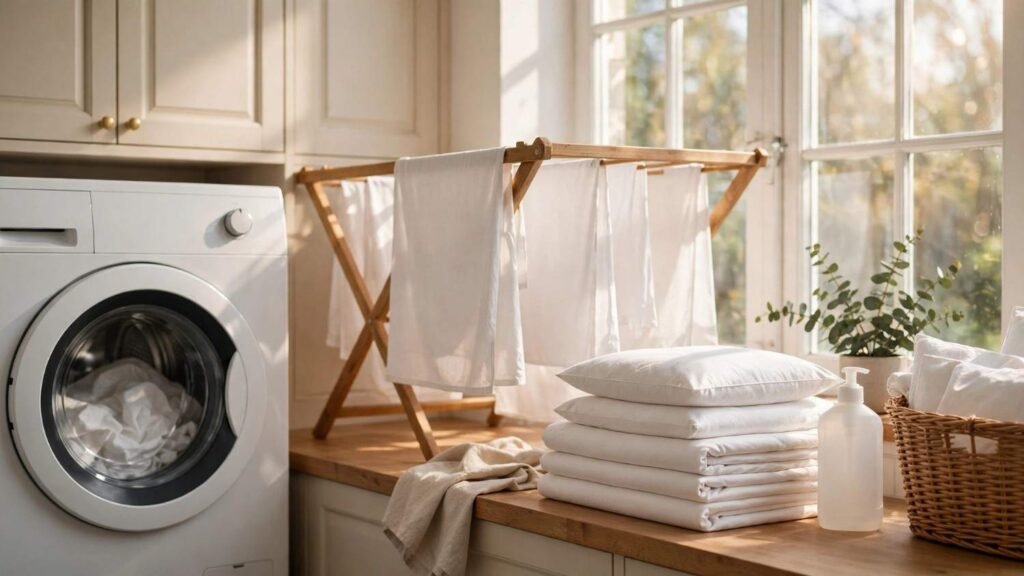
I wash my sheets every week, and I’ve learned the hard way that the wrong water temperature or a rushed drying cycle shortens their life fast. Bed linens last longer and stay fresher when you wash them on a regular schedule using the right water temperature, detergent amount, and drying method. Getting this right isn’t complicated once you know the basics.
Dirty linens hold onto sweat, skin cells, and dust mites faster than most people realize, and that buildup affects both hygiene and sleep quality. A good wash routine protects your investment in quality bedding and keeps your bedroom healthier.
I walk through how often to wash your sheets, how to sort and prep them before a wash, the water temperature and detergent that actually work, the safest way to dry them, and how to store linens between uses.
How Often You Should Wash Your Bed Linens
Most sheets need a wash once a week. Sweat, oil, and dead skin cells build up fast, even when the bed looks clean.
Pillowcases sometimes need more frequent washing than the rest of the set. Face oils and skincare products transfer onto the fabric every single night.
Dust mite allergies get worse with infrequent washing. The American College of Allergy, Asthma and Immunology notes that washing bedding weekly in hot water helps reduce dust mite allergens significantly.
Duvet covers and shams stretch that timeline a little further since they touch skin less directly. Every two weeks keeps them in good shape without over-washing the fabric.
Illness changes the math completely. A sick household member means washing sheets right away instead of waiting for the usual schedule.
Sorting and Prepping Sheets Before You Wash Them

I separate linens by color and fabric type before anything goes into the machine. Whites, colors, and delicate fabrics all react differently to detergent and heat.
Bed linens made from cotton, linen, or microfiber each carry their own care requirements. A cotton fabric is a natural fiber woven from the cotton plant’s soft fibers, known for breathability and durability through repeated washing.
Stains need attention before the wash cycle starts, not during it. A cold-water soak with a stain remover breaks down oils and sweat marks before hot water sets them permanently.
Zippers and buttons on duvet covers get closed before washing. Loose zippers snag other fabric and cause small tears over multiple cycles.
Checking care labels takes ten seconds and saves a lot of frustration. Some fabrics, especially blends with silk or specialty finishes, need cooler water and gentler cycles than standard cotton sheets.
The Right Water Temperature and Detergent for Bed Linens
Hot water, around 130°F, kills dust mites and bacteria most effectively. Cotton and linen sheets handle this heat without shrinking or fading in most cases.
Colored sheets and delicate fabrics do better in warm water instead. Warm water still lifts dirt and oil without stressing the dye or weakening delicate fibers over time.
Detergent amount matters more than people expect. Too much detergent leaves residue behind, and that residue actually attracts more dirt over future washes.
A mild, fragrance-free detergent works best for sensitive skin and for preserving fabric softness. Heavy fragrances and dyes in some detergents cause irritation, especially for people with sensitive skin conditions.
Fabric softener sounds helpful but coats fibers with a waxy layer over time. That coating reduces absorbency and breathability, which defeats the purpose of breathable bedding fabric in the first place.
Drying Bed Linens Without Damaging the Fabric

Low to medium heat protects fabric fibers far better than high heat settings. High heat breaks down elastic in fitted sheets and weakens cotton fibers faster than moderate heat does.
Overloading the dryer stops linens from tumbling properly. Sheets need room to move so they dry evenly and avoid wrinkling into permanent creases.
Wool dryer balls speed up drying time and reduce static without chemical dryer sheets. They also help separate fabric layers so heat reaches every part of the load.
Air drying works well for delicate linens like linen blends or embroidered pieces. Direct sunlight fades colors over time, so I dry these in shade or indoors near airflow.
Removing linens promptly after the cycle ends prevents musty odors and deep-set wrinkles. Leaving damp fabric sitting in a closed dryer invites mildew growth within hours.
Storing and Extending the Life of Your Bed Linens
Clean, fully dry linens store best in a breathable space like a linen closet. Moisture trapped in storage creates mildew and musty smells, even on freshly washed fabric.
Rotating between two or three sets extends the lifespan of each individual set. Constant use without rotation wears down fibers unevenly and shortens how long sheets stay usable.
Cotton and linen sheets typically need replacement every two to three years with regular use. Thinning fabric, persistent odors, and visible pilling all signal it’s time for a new set.
Folding sheets inside their matching pillowcase keeps sets together and saves time later. This small habit avoids digging through a stack to match sizes and patterns.
Cedar blocks or lavender sachets in the linen closet keep everything smelling fresh between washes. They also naturally deter moths and other fabric pests without added chemicals.
Conclusion
Washing bed linens on a regular schedule with the right water temperature and detergent keeps fabric fresh and durable. Proper drying and storage extend their lifespan even further.
A little consistency in your laundry routine protects your bedding investment and improves sleep hygiene. Small habits make a measurable difference over time.
We at Mr. Local Services connect homeowners with trusted cleaning and home care professionals who keep every part of your home fresh and well-maintained. Reach out to us when your home needs expert care beyond the laundry room.
Frequently Asked Questions
How often should I wash my bed sheets?
I wash mine once a week to keep sweat, oil, and dust mites from building up. Pillowcases sometimes need washing more often due to facial oil transfer.
What water temperature is best for washing bed linens?
Hot water around 130°F works best for killing bacteria and dust mites on white cotton sheets. Warm water suits colored or delicate fabrics without fading or weakening fibers.
Can I wash all my bed linens together?
I separate by color and fabric type since cotton, linen, and microfiber react differently to heat and detergent. Mixing whites with colors risks dye transfer and uneven wear.
Is fabric softener bad for bed sheets?
Fabric softener coats fibers with a waxy residue that reduces breathability and absorbency over time. I skip it and use wool dryer balls instead for softness.
How long do bed linens typically last?
Cotton and linen sheets usually last two to three years with regular weekly washing. Thinning fabric, odors, or pilling signal it’s time to replace them.
Should I air dry or machine dry my sheets?
Machine drying on low to medium heat works fine for cotton and most standard sheets. Delicate or embroidered linens do better air-drying in the shade to avoid fading and fiber damage.