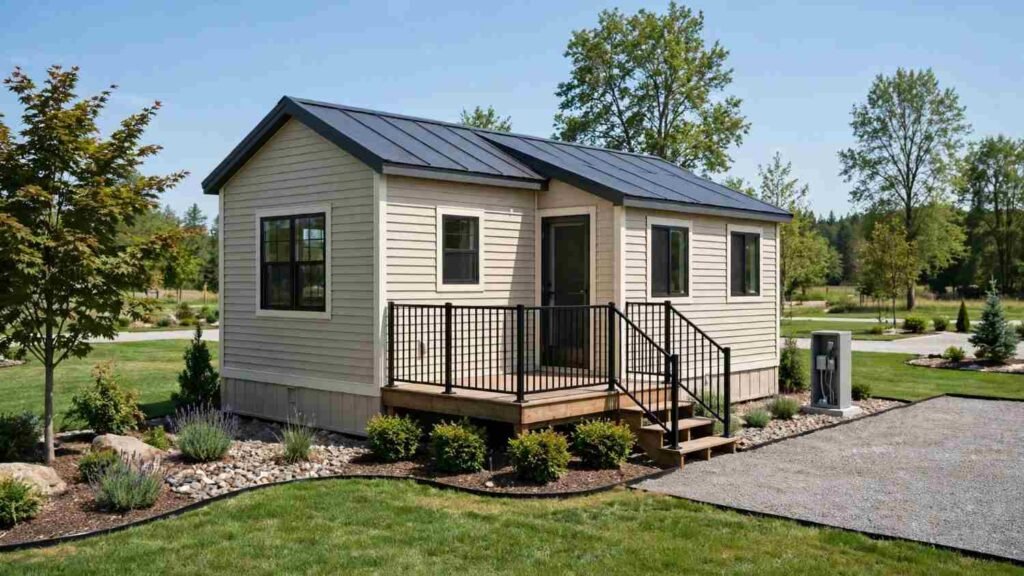
A park model home costs between $30,000 and $140,000, with most buyers landing somewhere around $60,000 to $90,000 for a well-equipped unit. I have watched this number swing wildly based on size, finish level, and where the home ends up sitting. Price is never just the sticker on the trailer.
That sticker price is only the starting line, though. Delivery, site prep, utility hookups, and ongoing lot costs stack on top of the purchase price, and skipping that math is how budgets fall apart halfway through a project.
I walk through the average price range for 2026, the specific factors that push cost up or down, what delivery and installation actually run, the ongoing expenses after you move in, and how to finance and budget the whole thing realistically.
Average Park Model Home Price Range in 2026
Park model prices split into a few clear tiers, and knowing which tier fits your goals saves a lot of back-and-forth with builders. A basic single-level unit sits at one end. A fully customized, resort-style build sits at the other.
Most buyers I talk to land in the middle. They want more than a bare-bones shell but don’t need premium everything.
Entry-Level vs. Luxury Park Model Pricing
An entry-level park model runs $30,000 to $50,000. These units come with standard finishes, a simple layout, and basic appliances. They work fine for a straightforward getaway or rental property.
Mid-range units land between $60,000 and $90,000. They add upgraded cabinetry, better insulation, and a more open floor plan.
Luxury park models climb to $100,000 to $140,000 or higher. Think full kitchens, high-end flooring, loft spaces, and premium exterior siding. The jump in price tracks directly with square footage and material quality.
New vs. Used Park Model Cost Differences
A used park model saves real money. Buyers typically pay 30% to 50% less than a comparable new unit, depending on age and condition.
That said, used units come with unknowns. Roof condition, plumbing age, and prior water damage all factor into whether the discount is actually a deal or a future repair bill.
I always tell people to get a used unit inspected before closing. A cheap upfront price disappears fast once hidden repairs surface.
What Affects Park Model Pricing (Key Cost Factors)
Price isn’t random. A handful of specific variables drive most of the difference between a $35,000 unit and a $120,000 one.
Size, Square Footage, and Floor Plan Impact
Park models generally run 400 to 500 square feet, per the ANSI A119.5 standard that defines the category. Every extra 50 square feet adds meaningfully to the base price.
Floor plan complexity matters too. A simple rectangular layout costs less to engineer and build than one with lofts, bump-outs, or multiple sleeping areas.
Open-concept designs tend to run slightly cheaper than segmented layouts. Fewer interior walls means less framing and finishing labor.
Materials, Finishes, and Custom Upgrades
Standard vinyl siding costs far less than fiber cement or wood siding. That single choice alone can shift the price by several thousand dollars.
Interior finishes swing cost even more. Laminate countertops versus quartz, vinyl plank versus hardwood, stock cabinets versus custom builds each upgrade compounds.
Custom upgrades like built-in storage, smart home wiring, or a full loft conversion push the total well past a base model quote. I recommend pricing the base unit first, then adding upgrades one at a time to see exactly where the budget moves.
Delivery, Site Prep, and Installation Costs
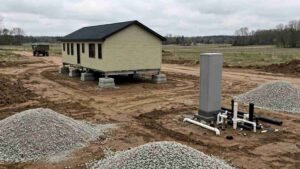
The purchase price gets most of the attention, but delivery and setup can add $5,000 to $15,000 before you ever step inside.
Land Prep, Foundation, and Utility Hookups
Site prep includes grading the lot, pouring a foundation or pier system, and connecting water, sewer, and electrical lines. Costs here depend heavily on how developed the land already is.
A raw lot with no existing utilities costs significantly more to prep than a park model dedicated site that already has hookups in place. Local trades finish utility connections, and pricing varies by region and terrain.
Transportation and Setup Fees
Transporting a park model typically runs $3 to $10 per mile, depending on distance and whether the unit needs a wide-load permit. Longer hauls and oversized units both push that number higher.
Setup fees cover leveling, anchoring, and connecting the home to its utility hookups once it arrives. Budget separately for this it rarely gets bundled into the base sale price.
Ongoing Costs After Purchase
Buying the unit is step one. Living in it costs money every single month, and that part of the budget gets skipped constantly.
Lot Rent, Utilities, and Insurance
Lot rent in a park model community ranges from $300 to $800 a month, depending on location and amenities. Utilities add another $100 to $300, and insurance for a park model typically runs $500 to $1,200 a year.
These numbers add up fast over a full year of ownership. I always build a full 12-month cost projection before anyone signs a purchase agreement.
Maintenance and Repair Budgeting
Set aside 1% to 2% of the purchase price annually for maintenance and repairs. Roof sealing, HVAC servicing, and appliance upkeep are the most common recurring costs.
Skipping this reserve fund is the single biggest mistake I see. Small maintenance issues turn into expensive repairs fast without a buffer set aside.
Financing Options and Budgeting Strategies

Financing a park model looks different from financing a traditional house, and that catches a lot of first-time buyers off guard.
Loan Types for Park Model Homes
Chattel loans are the most common option since park models are classified as personal property, not real estate, in most states. Terms typically run 10 to 20 years with higher interest rates than a standard mortgage.
Some buyers qualify for RV loans instead, since many park models meet ANSI standards similar to recreational vehicles. Personal loans and manufacturer financing round out the remaining options.
Building a Realistic Total Budget
A realistic budget adds purchase price, delivery, site prep, first-year lot rent, utilities, insurance, and a maintenance reserve into one total number. Skipping any single line item throws off the whole projection.
I build these budgets backward from monthly affordability, then work up to see what total purchase price actually fits.
How to Save Money Without Sacrificing Quality
Cutting cost doesn’t mean cutting corners. Certain choices save real money without compromising the home’s durability or comfort.
Smart Upgrade Choices That Protect Long-Term Value
Prioritize structural and mechanical upgrades over cosmetic ones. Better insulation, a quality roof, and a reliable HVAC system protect the home long-term far more than upgraded countertops do.
Buying floor models or prior-year inventory saves 10% to 20% without sacrificing quality. Negotiating delivery and setup as part of the purchase package also trims cost that would otherwise hit as a separate line item.
Conclusion
Park model pricing spans a wide range, and the real number depends on size, finishes, delivery distance, and ongoing lot costs stacked together. Understanding each piece keeps the budget honest from day one.
A well-planned purchase balances upfront quality with long-term maintenance reserves. That approach protects the investment far longer than chasing the lowest sticker price alone.
We help homeowners plan maintenance, repairs, and upgrades that protect a park model’s value for years. Reach out to Mr. Local Services when it’s time to maintain, repair, or improve your property.
Frequently Asked Questions
How much does a basic park model home cost?
A basic park model costs $30,000 to $50,000 with standard finishes. Mid-range and luxury units climb well past that starting point.
Is a used park model a good investment?
A used park model saves 30% to 50% over a new unit. I recommend a full inspection first, since hidden repair costs can erase that savings.
What size are most park model homes?
Most park models run 400 to 500 square feet, per ANSI A119.5 standards. Larger units with lofts push past that range.
How much does delivery and setup cost?
Delivery and setup typically add $5,000 to $15,000 on top of the purchase price. Distance and site prep needs drive most of that variation.
What’s the average monthly cost of owning a park model?
Lot rent, utilities, and insurance combined typically run $500 to $1,300 a month. Location and community amenities shift that range significantly.
Can you get a mortgage for a park model home?
Most park models don’t qualify for a traditional mortgage since they’re classified as personal property. Chattel loans and RV loans are the common financing paths instead.
How much should I budget for annual maintenance?
Set aside 1% to 2% of the purchase price every year for maintenance and repairs. Roof, HVAC, and appliance upkeep make up most of that cost.
How Much Do Park Models Cost? Price Breakdown & Budgeting
Meta Title: Park Model Cost Guide: 2026 Price Breakdown & Budget Tips
Meta Description: Park model homes cost between $30,000 and $140,000 depending on size and finishes. See the full price breakdown, hidden fees, and budgeting tips.
Suggested URL: mrlocalservices.com/park-model-cost-guide
A park model home costs between $30,000 and $140,000, with most buyers landing somewhere around $60,000 to $90,000 for a well-equipped unit. I have watched this number swing wildly based on size, finish level, and where the home ends up sitting. Price is never just the sticker on the trailer.
That sticker price is only the starting line, though. Delivery, site prep, utility hookups, and ongoing lot costs stack on top of the purchase price, and skipping that math is how budgets fall apart halfway through a project.
I walk through the average price range for 2026, the specific factors that push cost up or down, what delivery and installation actually run, the ongoing expenses after you move in, and how to finance and budget the whole thing realistically.
Average Park Model Home Price Range in 2026
Park model prices split into a few clear tiers, and knowing which tier fits your goals saves a lot of back-and-forth with builders. A basic single-level unit sits at one end. A fully customized, resort-style build sits at the other.
Most buyers I talk to land in the middle. They want more than a bare-bones shell but don’t need premium everything.
Entry-Level vs. Luxury Park Model Pricing
An entry-level park model runs $30,000 to $50,000. These units come with standard finishes, a simple layout, and basic appliances. They work fine for a straightforward getaway or rental property.
Mid-range units land between $60,000 and $90,000. They add upgraded cabinetry, better insulation, and a more open floor plan.
Luxury park models climb to $100,000 to $140,000 or higher. Think full kitchens, high-end flooring, loft spaces, and premium exterior siding. The jump in price tracks directly with square footage and material quality.
New vs. Used Park Model Cost Differences
A used park model saves real money. Buyers typically pay 30% to 50% less than a comparable new unit, depending on age and condition.
That said, used units come with unknowns. Roof condition, plumbing age, and prior water damage all factor into whether the discount is actually a deal or a future repair bill.
I always tell people to get a used unit inspected before closing. A low upfront price disappears fast once hidden repairs surface, and a pre-purchase roof inspection catches most of the expensive surprises early.
What Affects Park Model Pricing (Key Cost Factors)
Price isn’t random. A handful of specific variables drive most of the difference between a $35,000 unit and a $120,000 one.
Size, Square Footage, and Floor Plan Impact
Park models generally run 400 to 500 square feet, per the ANSI A119.5 standard that defines the category. Every extra 50 square feet adds meaningfully to the base price.
Floor plan complexity matters too. A simple rectangular layout costs less to engineer and build than one with lofts, bump-outs, or multiple sleeping areas.
Open-concept designs tend to run slightly cheaper than segmented layouts. Fewer interior walls mean less framing and finishing labor.
Materials, Finishes, and Custom Upgrades
Standard vinyl siding costs far less than fiber cement or wood siding. That single choice alone can shift the price by several thousand dollars.
Interior finishes swing cost even more. Laminate countertops versus quartz, vinyl plank flooring versus hardwood, stock cabinets versus custom builds each upgrade compounds.
Custom upgrades like built-in storage, smart home wiring, or a full loft conversion push the total well past a base model quote. I recommend pricing the base unit first, then adding upgrades one at a time to see exactly where the budget moves.
Delivery, Site Prep, and Installation Costs
The purchase price gets most of the attention, but delivery and setup can add $5,000 to $15,000 before you ever step inside.
Land Prep, Foundation, and Utility Hookups
Site prep includes grading the lot, pouring a foundation or pier system, and connecting water, sewer, and electrical lines. Costs here depend heavily on how developed the land already is.
A raw lot with no existing utilities costs significantly more to prep than a park model dedicated site that already has hookups in place. Local trades finish electrical utility hookups and plumbing connections, and pricing varies by region and terrain.
Transportation and Setup Fees
Transporting a park model typically runs $3 to $10 per mile, depending on distance and whether the unit needs a wide-load permit. Longer hauls and oversized units both push that number higher.
Setup fees cover leveling, anchoring, and connecting the home to its utility hookups once it arrives. Budget separately for this; it rarely gets bundled into the base sale price.
Ongoing Costs After Purchase
Buying the unit is step one. Living in it costs money every single month, and that part of the budget gets skipped constantly.
Lot Rent, Utilities, and Insurance
Lot rent in a park model community ranges from $300 to $800 a month, depending on location and amenities. Utilities add another $100 to $300, and insurance for a park model typically runs $500 to $1,200 a year.
These numbers add up fast over a full year of ownership. I always build a full 12-month cost projection before anyone signs a purchase agreement.
Maintenance and Repair Budgeting
Set aside 1% to 2% of the purchase price annually for maintenance and repairs. Roof sealing and inspection, HVAC servicing, and appliance upkeep are the most common recurring costs.
Skipping this reserve fund is the single biggest mistake I see. Small maintenance issues turn into expensive repairs fast without a buffer set aside.
Financing Options and Budgeting Strategies
Financing a park model looks different from financing a traditional house, and that catches a lot of first-time buyers off guard.
Loan Types for Park Model Homes
Chattel loans are the most common option since park models are classified as personal property, not real estate, in most states. Terms typically run 10 to 20 years with higher interest rates than a standard mortgage.
Some buyers qualify for RV loans instead, since many park models meet ANSI standards similar to recreational vehicles. Personal loans and manufacturer financing round out the remaining options.
Building a Realistic Total Budget
A realistic budget adds purchase price, delivery, site prep, first-year lot rent, utilities, insurance, and a maintenance reserve into one total number. Skipping any single line item throws off the whole projection.
I build these budgets backward from monthly affordability, then work up to see what total purchase price actually fits.
How to Save Money Without Sacrificing Quality
Cutting cost doesn’t mean cutting corners. Certain choices save real money without compromising the home’s durability or comfort.
Smart Upgrade Choices That Protect Long-Term Value
Prioritize structural and mechanical upgrades over cosmetic ones. Better insulation, a quality HVAC system, and a reliable roof protect the home long-term far more than upgraded countertops do.
Buying floor models or prior-year inventory saves 10% to 20% without sacrificing quality. Negotiating delivery and setup as part of the purchase package also trims cost that would otherwise hit as a separate line item.
Conclusion
Park model pricing spans a wide range, and the real number depends on size, finishes, delivery distance, and ongoing lot costs stacked together. Understanding each piece keeps the budget honest from day one.
A well-planned purchase balances upfront quality with long-term maintenance reserves. That approach protects the investment far longer than chasing the lowest sticker price alone.
We help homeowners plan maintenance, repairs, and upgrades that protect a park model’s value for years. Reach out to Mr. Local Services when it’s time to maintain, repair, or improve your property.
Frequently Asked Questions
How much does a basic park model home cost?
A basic park model costs $30,000 to $50,000 with standard finishes. Mid-range and luxury units climb well past that starting point.
Is a used park model a good investment?
A used park model saves 30% to 50% over a new unit. I recommend a full inspection first, since hidden repair costs can erase that savings.
What size are most park model homes?
Most park models run 400 to 500 square feet, per ANSI A119.5 standards. Larger units with lofts push past that range.
How much does delivery and setup cost?
Delivery and setup typically add $5,000 to $15,000 on top of the purchase price. Distance and site prep needs drive most of that variation.
What’s the average monthly cost of owning a park model?
Lot rent, utilities, and insurance combined typically run $500 to $1,300 a month. Location and community amenities shift that range significantly.
Can you get a mortgage for a park model home?
Most park models don’t qualify for a traditional mortgage since they’re classified as personal property. Chattel loans and RV loans are the common financing paths instead.
How much should I budget for annual maintenance?
Set aside 1% to 2% of the purchase price every year for maintenance and repairs. Roof, HVAC, and appliance upkeep make up most of that cost.