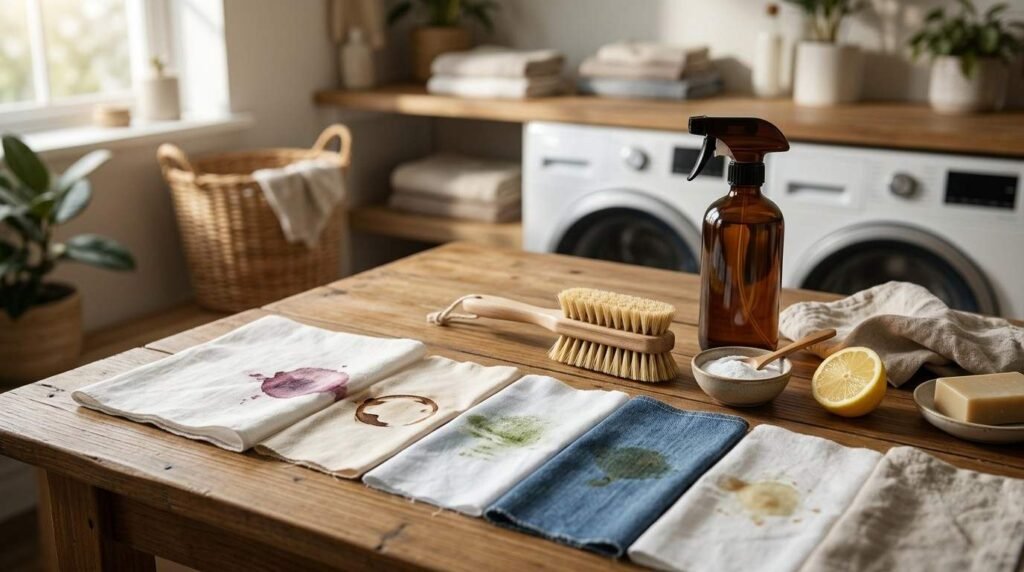
I built this stain removal chart because most people search for a fix at the worst possible moment, standing over a fresh spill with thirty seconds to act. Cold water and quick blotting solve most fresh stains before they set. The method changes based on what caused the stain and what it landed on.
A stain that sits for an hour behaves nothing like one you catch immediately. Fabric type changes the right approach too, and using the wrong method on the wrong material spreads a small problem into a permanent one.
I’ve organized this chart into five practical areas. I start with the ground rules that apply to nearly every stain, then move through everyday household spills, outdoor and pet-related messes, tougher technical stains like paint and rust, and how the approach shifts depending on the surface you’re treating, before covering when it’s smarter to call in a professional.
How to Read a Stain Removal Chart (Fast Reference)
A stain removal chart is a reference tool that matches stain type, fabric or surface, and treatment method into one quick lookup. I built mine around three questions: what caused the stain, what fabric or surface it’s on, and how much time has passed.
Stain Categories at a Glance
Most stains fall into four buckets. Protein-based stains include blood, sweat, and dairy. Tannin stains cover coffee, tea, and wine.
Oil-based stains include grease, butter, and cosmetics. Dye-based stains cover ink, grass, and fruit juice. Each category responds to a different chemical approach, and that’s the whole reason a single “stain remover spray” rarely handles everything.
Reading Fabric and Surface Care Labels
I always check the care label before touching a stain on clothing or upholstery. A “W” means water-based cleaning is safe.
An “S” means solvent-only, and water can actually set the stain permanently on these fabrics. “WS” allows either, and “X” means professional cleaning only, no home treatment at all.
General Stain Removal Rules That Apply to Almost Every Stain
A handful of rules apply across nearly every stain type I’ve dealt with, and they matter more than any specific product.
Act Fast vs. Let It Dry
Fresh stains lift out easier than dried ones, full stop. Working the stain immediately, even with plain cold water, prevents it from binding to fibers.
Some exceptions exist. Mud and wax actually respond better dry, since wet treatment on these two just smears the substance deeper into the fibers.
Blot, Don’t Rub
Rubbing pushes a stain deeper into fabric fibers and spreads it across a wider surface area. Blotting from the outside edge toward the center lifts the stain up and out instead.
I use a clean white cloth for this every time. Colored cloths can transfer dye onto the exact stain I’m trying to remove.
Food and Beverage Stain Removal Chart
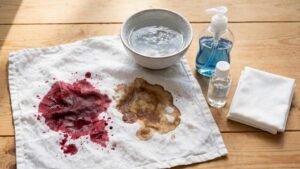
Food and drink stains are the most common household stains I get asked about, and most respond well to fast action.
Wine, Coffee, and Tea Stains
These are tannin stains, and they respond to a cold water rinse followed by a mix of dish soap and hydrogen peroxide. I blot the stain, apply the mixture, let it sit for ten minutes, then rinse with cold water.
Hot water sets tannin stains permanently, so I never use it here. Salt sprinkled on a fresh red wine spill also absorbs liquid before it soaks in further.
Grease, Oil, and Sauce Stains
Oil-based stains need a degreasing agent, not water alone. Dish soap works because it’s built to break down grease molecules on contact.
I apply dish soap directly to the stain, work it in gently with my fingers, and let it sit for five minutes before washing. Cornstarch or baking soda absorbs fresh grease from fabric before I even get to the soap step.
Biological Stain Removal Chart (Blood, Sweat, Vomit)
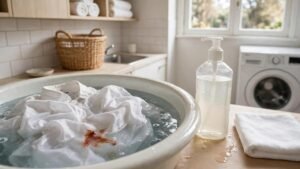
Biological stains are protein-based, and heat is the enemy here in almost every case.
Fresh vs. Set-In Biological Stains
Cold water rinses fresh blood or sweat stains out completely in most cases. According to the American Cleaning Institute, enzyme-based cleaners break down protein bonds more effectively than standard detergents on set-in biological stains.
For a set-in stain, I soak the item in cold water with an enzyme cleaner for thirty minutes before washing as usual. Hot water cooks the protein into the fabric and makes the stain permanent, which is the single most common mistake I see people make.
Ink, Makeup, and Dye Stain Removal Chart
Ink and dye stains respond to rubbing alcohol in most cases, since alcohol breaks the pigment bond without spreading color the way water does.
I place the stained area face-down on a clean paper towel, then dab rubbing alcohol on the back of the stain. The ink transfers onto the paper towel below instead of spreading further into the fabric.
Makeup, particularly foundation and lipstick, responds to the same dish soap method used on oil-based stains. Waterproof mascara needs an oil-based makeup remover first to break the waterproof seal before soap can finish the job.
Grass, Dirt, and Mud Stain Removal Chart
Grass stains are actually a dye stain from chlorophyll, and they respond well to rubbing alcohol or a dedicated enzyme pre-treatment. I apply the treatment, let it sit for ten minutes, then wash in the warmest water the fabric allows.
Mud is the one stain I mentioned earlier that behaves better dry. I let it fully dry, brush off the excess with a stiff brush, then treat the remaining discoloration as a standard dirt stain with dish soap and water.
Pet Stain and Odor Removal Chart
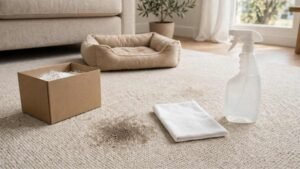
Pet stains carry two separate problems. The visible stain is one, and the underlying odor is another, and treating only the stain leaves the smell behind to attract repeat accidents.
Urine Stains on Carpet
I blot up as much liquid as possible first, then apply an enzyme-based pet stain cleaner directly to the spot. Enzyme cleaners break down the uric acid crystals that cause both the stain and the lingering smell, which standard carpet cleaners don’t address at all.
Vinegar and water in a 1:1 ratio works as a backup when I don’t have an enzyme product on hand. It neutralizes odor through its acidity, though it’s noticeably less effective than a dedicated enzyme formula on older stains.
Vomit and Accident Cleanup
I remove solid material first with a spoon or scraper before applying any liquid. Baking soda sprinkled over the area absorbs residual moisture and odor before I vacuum it up and follow with an enzyme cleaner.
Paint, Varnish, and Glue Stain Removal Chart
Paint and adhesive stains split into two treatment paths depending on whether the paint is water-based or oil-based. Checking the paint can label tells me which path applies before I touch a single product to the fabric.
Water-based latex paint responds to warm water and dish soap while the stain is still wet. Oil-based paint and varnish need rubbing alcohol or a dedicated paint thinner, and I always test an inconspicuous spot first since thinner can damage certain synthetic fabrics.
Dried glue and adhesive respond to freezing. I place an ice cube in a plastic bag over the dried glue, let it harden further, then scrape it off with a dull knife before treating any remaining residue with rubbing alcohol.
Rust, Mineral, and Water Stain Removal Chart
Rust stains need an acid to dissolve, and lemon juice combined with salt handles most fabric rust stains effectively. I apply the mixture, let it sit in direct sunlight for an hour, then rinse thoroughly.
Hard water and mineral stains on surfaces like shower doors or faucets respond to white vinegar. Commercial bleach and standard cleaners actually make rust stains worse, since the chemical reaction can set the iron oxide more deeply into the material.
Stain Removal by Surface: Carpet, Upholstery, and Hard Flooring
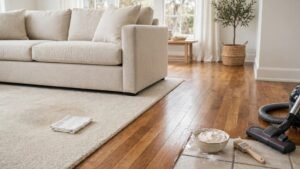
The stain removal method shifts noticeably depending on the surface underneath it, and I treat carpet very differently from a sealed hardwood floor.
Carpet and Upholstery Considerations
Carpet and upholstery absorb liquid deep into padding, which means surface treatment alone often misses the bulk of the stain. I always blot rather than scrub on these surfaces, since scrubbing can damage carpet fibers and push the stain deeper into the padding below.
A wet/dry vacuum extracts moisture and cleaning solution far more effectively than blotting alone on a large spill. This matters most with pet stains and beverage spills where liquid volume is high.
Hardwood, Tile, and Grout Considerations
Hardwood floors need immediate attention, since standing liquid warps and stains the wood finish within minutes in some cases. I wipe hardwood stains with a barely damp cloth and dry the area completely afterward.
Grout is porous and holds stains longer than the tile surrounding it. A baking soda paste worked into the grout lines with a small brush lifts most everyday stains within fifteen minutes.
When to Call a Professional Instead of DIY Stain Removal
Some stains cross a line where DIY treatment risks doing more harm than good. A stain that’s set for several days on an expensive rug or upholstered furniture piece often needs professional-grade equipment and solvents that aren’t sold for home use.
Water damage stains that come with a musty smell point to mold growth underneath the visible surface. That situation needs a water damage restoration specialist rather than a stain removal product, since surface cleaning won’t address moisture trapped in padding or subflooring.
Large-scale carpet staining across multiple rooms, or set-in stains on natural fiber rugs like wool or silk, also call for a professional carpet and upholstery cleaning service with the right equipment to extract without damaging the material.
Conclusion
Most stains respond well to fast action, cold water, and matching the treatment to the stain type and surface. Fabric care labels and stain categories guide the right first move every time.
Set-in stains, water damage, and delicate materials sometimes need more than a home remedy. We connect homeowners with trusted, skilled professionals ready to handle the tough jobs your property needs.
Frequently Asked Questions
What is the best homemade stain remover?
A mix of dish soap and hydrogen peroxide handles most fresh food and beverage stains effectively. Cold water and blotting come first, before any product goes on the fabric.
Does hot or cold water remove stains better?
Cold water removes most stains, especially protein-based ones like blood and dairy. Hot water sets tannin and protein stains permanently, making them far harder to remove later.
Can toothpaste remove stains?
Toothpaste has mild abrasive properties that help with small ink or scuff marks on hard surfaces. It’s not effective on fabric stains and can leave a residue that’s tricky to rinse out fully.
How do you remove a stain that has already dried?
Dried stains need rehydrating first, usually with cold water or a specific solvent matched to the stain type. Enzyme cleaners work well on set-in biological stains after a thirty-minute soak.
Is vinegar good for removing stains?
White vinegar works well on mineral deposits, hard water stains, and mild odor neutralizing. It’s a weaker option than enzyme cleaners for biological stains like urine or vomit.
Why do some stains come back after cleaning?
A stain that reappears usually means the cleaning only addressed the surface, leaving residue in the padding or fibers underneath. This happens often with pet stains where the underlying odor source wasn’t fully treated.
When should I stop trying DIY stain removal?
Stop DIY treatment when a stain has set for multiple days, involves water damage with a musty smell, or sits on delicate natural fiber material. Professional equipment handles these situations without risking permanent damage.