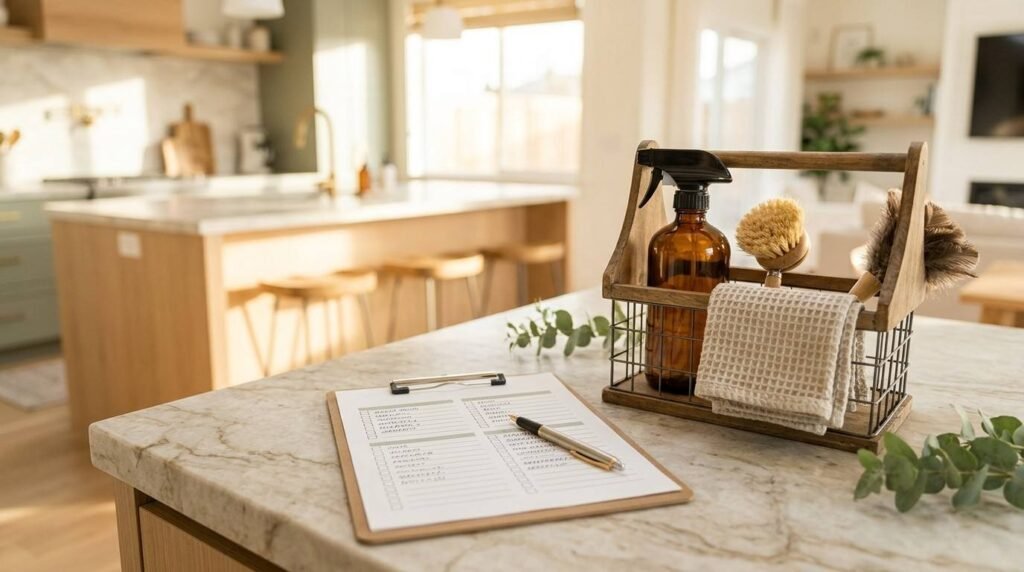
I built this checklist around one simple idea: cleaning falls apart when it’s vague. A house cleaning checklist works because it turns clean the house into specific, doable tasks you check off room by room. That’s the difference between a home that stays clean and one that just looks okay on Saturday.
Most people skip the same things every week without realizing it. Baseboards. Light switches. The top of the fridge. A written checklist catches those blind spots and stops the guessing.
I’m walking through what a real checklist should include, breaking it down room by room, and handing you free printable templates for daily, weekly, and move-out cleaning. I’m also covering how often each area actually needs attention, seasonal deep cleaning tasks, and when it makes more sense to call in a professional cleaning service instead.
What a House Cleaning Checklist Should Cover
A good checklist separates tasks by frequency and depth. Not everything needs daily attention, and not everything needs a deep scrub either.
I organize every checklist into three tiers: daily maintenance, weekly resets, and monthly deep tasks. This keeps the list realistic instead of overwhelming.
Daily tasks are quick and prevent buildup. Dishes, wiping counters, making beds, and a fast sweep of high-traffic floors all fall here. These take ten minutes and stop mess from compounding.
Weekly tasks cover the bulk of the checklist. Bathrooms, floors, dusting, and trash across the whole house happen on a weekly rhythm. This is where most printable checklists focus, and for good reason.
Daily vs. Weekly vs. Monthly Tasks
I split tasks by how fast dirt and clutter actually accumulate in each spot. Kitchen counters need daily attention. Baseboards do not.
Monthly tasks include things people forget until they become a project: inside the oven, behind appliances, window tracks, and vent covers. Spacing these out monthly keeps them manageable instead of turning into a weekend-long ordeal.
Deep Cleaning vs. Routine Cleaning
Routine cleaning maintains what’s already clean. Deep cleaning resets a space that’s fallen behind, or prepares it for a season change or a move.
Deep cleaning is a more intensive cleaning process that addresses buildup, grime, and areas skipped during routine maintenance. Grout lines, appliance interiors, and closet corners are classic deep-clean territory. I treat deep cleaning as a quarterly event layered on top of the weekly routine, not a replacement for it.
Room-by-Room Cleaning Checklist Breakdown

Breaking a checklist down by room keeps it practical. Nobody remembers a giant undifferentiated list of forty tasks.
I’ve found that room-by-room breakdowns get followed through more consistently, because you can complete an entire room in one sitting and feel finished with something.
Kitchen Cleaning Checklist
The kitchen carries the most bacteria risk in the house, so it earns the most frequent attention. Wipe counters and stovetops daily. Clean the sink and empty trash every one to two days.
Weekly kitchen tasks include wiping down cabinet fronts, cleaning the microwave interior, and mopping the floor. Monthly, I add the fridge coils, oven interior, and under small appliances.
Bathroom Cleaning Checklist
Bathrooms need weekly attention at minimum because of moisture and mildew risk. Toilet, sink, shower or tub, and mirrors all go on the weekly list.
Grout darkens over time in wet conditions, and that’s a signal to add a monthly scrub session focused specifically on tile and grout lines. I also recommend replacing bathroom rugs and hand towels weekly regardless of visible dirt.
Bedroom and Living Room Checklist
These rooms need lighter, more frequent maintenance and lighter deep cleaning. Weekly: dusting surfaces, vacuuming or sweeping floors, and rotating or fluffing cushions.
Monthly, I add washing bedding thoroughly, vacuuming under furniture, and wiping down light fixtures and ceiling fans. These areas collect dust fastest of anywhere in the home because fabric surfaces trap particles that hard surfaces don’t.
Free Printable Cleaning Checklist Templates
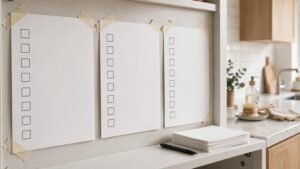
I’ve put together printable templates that match the structure above, so you’re not building a system from scratch. Print one, tape it to the inside of a cabinet, and start checking boxes.
Weekly Cleaning Checklist Template
This template covers the recurring tasks every home needs on a seven-day cycle: kitchen, bathrooms, floors, dusting, and trash across all rooms. It’s formatted with checkboxes by room, so you can hand a section to different family members.
I designed this one to take under two hours for an average three-bedroom home when followed consistently. Consistency is what makes the weekly version effective, not intensity.
Move-In/Move-Out Cleaning Checklist Template
Moving requires a different standard than routine upkeep. This template hits every surface a landlord or new resident inspects: inside cabinets and drawers, appliance interiors, window tracks, closet shelving, and baseboards throughout.
A move-out cleaning checklist covers the full scope landlords typically check during a security deposit walkthrough. I recommend starting this one three to four days before a move date, not the night before.
How Often You Should Clean Each Area of Your Home
Frequency depends on traffic, moisture, and use, not a fixed calendar rule. A guest bathroom used twice a month doesn’t need the same attention as a family bathroom used daily.
I set frequency based on three factors: how many people use the space, whether moisture is present, and whether food is involved. Kitchens and primary bathrooms sit at the top of the frequency scale for exactly those reasons.
High-Traffic Areas vs. Low-Traffic Areas
Entryways, kitchens, and main bathrooms take the most wear and need weekly or more frequent attention. Guest rooms, formal dining rooms, and storage closets can shift to a monthly or seasonal schedule without any real downside.
I always tell people to match cleaning frequency to actual usage, not to how a room looks. A rarely used guest room still needs dusting eventually, just not every week.
Seasonal Deep Cleaning Checklist
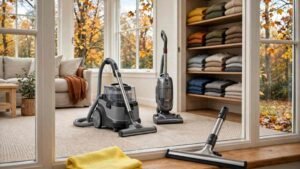
Seasonal deep cleaning catches what weekly and monthly checklists miss, tasks tied to weather changes rather than daily use. This is where carpets, windows, and HVAC components come in.
I schedule this type of deep clean twice a year, generally spring and fall, aligned with temperature shifts that change how a home is used.
Spring and Fall Deep Cleaning Tasks
Spring deep cleaning focuses on what accumulated over a closed-up winter: windows inside and out, closet rotation from winter to summer items, and carpet shampooing. Fall deep cleaning prepares the home for months of closed windows and higher indoor air time.
Dryer vent cleaning is one seasonal task that gets skipped most often, despite being tied directly to fire safety. I recommend fall as the anchor point for this one every year, before heavy holiday laundry season hits.
When to Call a Professional Cleaning Service
A checklist handles maintenance. It doesn’t always handle a home that’s fallen significantly behind, or spaces that need specialized equipment and training.
I tell homeowners to bring in a professional when checklist fatigue sets in, when deep cleaning tasks pile up past a season, or when a specific problem needs expertise a standard checklist doesn’t cover.
Signs Your Home Needs More Than a Checklist
Persistent odors after normal cleaning, visible mold or mildew growth, or grime that doesn’t respond to standard products are all signs the job has moved past routine maintenance. Professional cleaning services bring commercial-grade equipment and trained techniques that handle buildup a weekly routine can’t touch.
Move-out situations, post-renovation cleanup, and homes recovering from water damage also call for professional help. At that point, a checklist becomes a maintenance tool again once the reset is done.
Conclusion
A house cleaning checklist works because it turns a vague chore into specific, trackable tasks across every room. Frequency, room breakdowns, and seasonal resets all connect into one practical system.
Printable templates make that system easy to start today, without building anything from scratch. Consistency matters more than intensity here.
We built Mr. Local Services around exactly this kind of practical support. When a checklist isn’t enough, our cleaning professionals step in and handle the reset for you.
Frequently Asked Questions
How often should I deep clean my house?
Deep cleaning works best on a quarterly schedule, with two more intensive seasonal resets in spring and fall. This spacing catches buildup before it becomes a bigger job.
What should be on a daily cleaning checklist?
A daily checklist covers dishes, wiping kitchen counters, making beds, and a quick floor sweep in high-traffic areas. These ten-minute tasks stop mess from compounding into a weekend project.
Is a weekly cleaning checklist enough for a normal home?
A weekly checklist covers the bulk of what an average home needs, including bathrooms, floors, dusting, and trash. Monthly and seasonal tasks layer on top to catch what weekly cleaning misses.
What’s the difference between a move-out checklist and a regular one?
A move-out checklist covers inspection points a landlord checks, like inside cabinets, appliance interiors, and window tracks. A regular checklist focuses on ongoing livability, not inspection-level detail.
How do I clean my house room by room efficiently?
I recommend finishing one room completely before moving to the next, starting with the highest-traffic space first. This keeps momentum and gives a visible sense of progress room by room.
Do professional cleaners follow a checklist too?
Professional cleaning services typically follow a structured checklist, often more detailed than a homeowner version, covering commercial-grade steps for deep buildup. This consistency is part of why professional results differ from DIY cleaning.
What cleaning tasks do people forget most often?
Baseboards, light switches, the top of the refrigerator, and window tracks are the most commonly skipped tasks. These don’t show up in a casual glance around the room, which is exactly why a written checklist catches them.