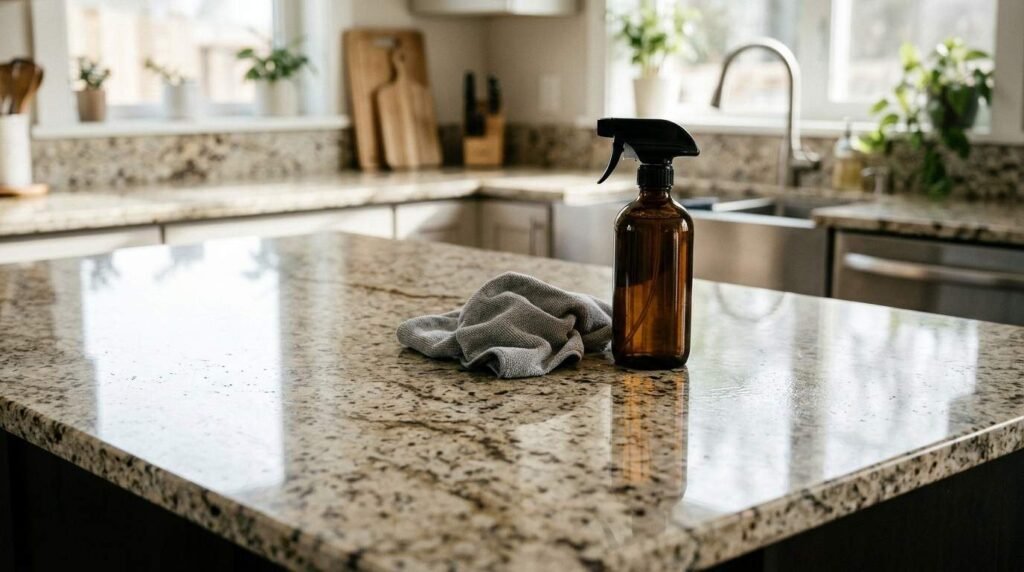
Granite countertops handle daily wear better than almost any other surface, but they still need the right cleaning approach to stay protected. A soft cloth, warm water, and a pH-neutral soap handle most day-to-day messes without stripping the sealant underneath.
Granite is durable, but it’s also porous. That means the wrong cleaner can etch the surface or break down the seal, leaving the stone open to stains and bacteria. Small cleaning mistakes add up over time and shorten the life of a countertop that’s supposed to last decades.
I’ll walk through the daily cleaning routine that actually protects granite, how to handle tough stains without damaging the surface, which products to avoid completely, and how to disinfect safely. I’ll also cover when resealing becomes necessary and how to check for it yourself.
Daily Cleaning Routine for Granite Countertops
Granite needs a gentle touch, not a heavy scrub. A few drops of mild dish soap mixed into warm water is enough to lift everyday grease, crumbs, and spills off the surface.
I always reach for a microfiber cloth over paper towels or sponges. Microfiber won’t scratch the polished finish, and it picks up grime without pushing it around.
What to Use for Everyday Wiping
Warm water and a few drops of dish soap make the safest everyday combination for granite. Mix it in a spray bottle for quick, repeated use throughout the week.
Wipe in circular motions, then dry the surface with a clean cloth. Leftover moisture sitting on granite for too long can eventually work its way into the pores and cause dulling.
How Often to Clean Granite Surfaces
Granite countertops used in kitchens benefit from a quick wipe-down after every meal prep session. A deeper clean once a day, usually in the evening, keeps buildup from settling into the stone overnight.
Bathrooms see less daily traffic, so a wipe-down once or twice a day is typically enough. Consistency matters more than intensity here.
Removing Tough Stains from Granite Countertops

Some stains need more than soap and water. Granite is a natural stone that develops surface stains when oils, acids, or pigments sit too long without being wiped away.
Oil-based stains and hard water spots are the two most common culprits, and each one needs a slightly different fix.
Oil-Based Stains
A baking soda paste pulls oil-based stains out of granite effectively. Mix baking soda with a small amount of water until it forms a thick paste, spread it over the stain, cover it with plastic wrap, and let it sit for 24 hours.
The paste draws the oil up and out of the stone’s pores. I rinse it off with warm water afterward and buff the spot dry.
Water Rings and Hard Water Stains
Water rings usually sit on the surface rather than soaking in, which makes them easier to remove. A soft cloth with a bit of granite-safe cleaner lifts most water rings within a minute or two of gentle rubbing.
Stubborn hard water stains sometimes need a granite polish designed specifically for mineral deposits. Regular dish soap won’t touch mineral buildup the same way.
What NOT to Use on Granite Countertops

Certain household products actively damage granite, even though they’re safe on other kitchen surfaces. Knowing what to avoid protects the stone just as much as knowing what to use.
Acidic Cleaners and Vinegar
Vinegar, lemon juice, and other acidic cleaners eat away at the sealant on granite over repeated use. The acid reacts with the minerals in the stone and causes etching, which shows up as dull spots that no amount of polishing fixes.
I keep anything acidic away from granite entirely, including citrus-based all-purpose cleaners marketed for kitchens.
Abrasive Pads and Harsh Chemicals
Steel wool, scouring pads, and bleach-based cleaners scratch and discolor granite surfaces. A study from the Marble Institute of America found that abrasive cleaning tools cause visible surface damage on natural stone within a small number of uses.
Sticking to soft cloths and pH-neutral products avoids this problem completely.
Disinfecting Granite Without Damaging the Seal
Cleaning removes dirt, but disinfecting kills bacteria, and granite countertops in kitchens need both. Isopropyl alcohol diluted with water works as an effective, granite-safe disinfectant.
I mix equal parts alcohol and water in a spray bottle, apply it to the surface, and let it sit for a few minutes before wiping it away.
Safe Disinfecting Products
A 50/50 mix of isopropyl alcohol and water disinfects granite without breaking down the sealant. This combination kills common kitchen bacteria while staying gentle enough for daily or weekly use.
Commercial stone-safe disinfectants work too, as long as the label confirms they’re formulated for natural stone specifically.
Resealing Granite Countertops for Long-Term Protection

Granite’s natural porosity means the sealant applied during installation wears down eventually. A sealant is a protective coating applied to natural stone that blocks liquids and bacteria from penetrating the surface.
Resealing restores that protection and keeps the countertop performing the way it did when it was new.
How to Test if Your Countertop Needs Resealing
A simple water test tells you exactly where your countertop stands. Pour a small amount of water onto the surface and watch what happens over 15 to 20 minutes.
Water that beads up means the seal is still intact. Water that soaks in and darkens the stone means it’s time to reseal.
How Often to Reseal Granite
Most granite countertops need resealing every one to three years, depending on the stone’s porosity and how much daily use it gets. Kitchens with heavy cooking activity tend to need resealing on the shorter end of that range.
Property owners managing rental units or multiple properties often find it easier to schedule resealing as part of a broader annual maintenance check.
Conclusion
Granite countertops stay durable and attractive with consistent, gentle cleaning and the right disinfecting routine. Avoiding acidic and abrasive products protects the stone’s finish and extends its lifespan significantly.
We handle countertop care, resealing, and full kitchen maintenance for homeowners and property managers across the properties we serve. Reach out to Mr. Local Services when your granite needs a professional deep clean or reseal.
Frequently Asked Questions
Can I use dish soap on granite countertops?
Yes, mild dish soap mixed with warm water is one of the safest options for daily granite cleaning. It lifts grease and grime without damaging the sealant underneath.
Why does vinegar damage granite countertops?
Vinegar’s acidity reacts with the minerals in granite and causes etching. This shows up as dull, permanently damaged spots on the surface.
How do I remove oil stains from granite?
A baking soda paste left on the stain for 24 hours draws oil out of the stone’s pores. Rinse with warm water and buff the area dry afterward.
Is it safe to disinfect granite countertops?
Yes, a diluted mix of isopropyl alcohol and water disinfects granite safely. It kills bacteria without breaking down the protective sealant.
How do I know if my granite countertop needs resealing?
Pour water on the surface and check it after 15 to 20 minutes. Water that soaks in and darkens the stone means the seal has worn down.
How often should granite countertops be resealed?
Most granite countertops need resealing every one to three years. Heavier daily use in kitchens shortens that timeframe.