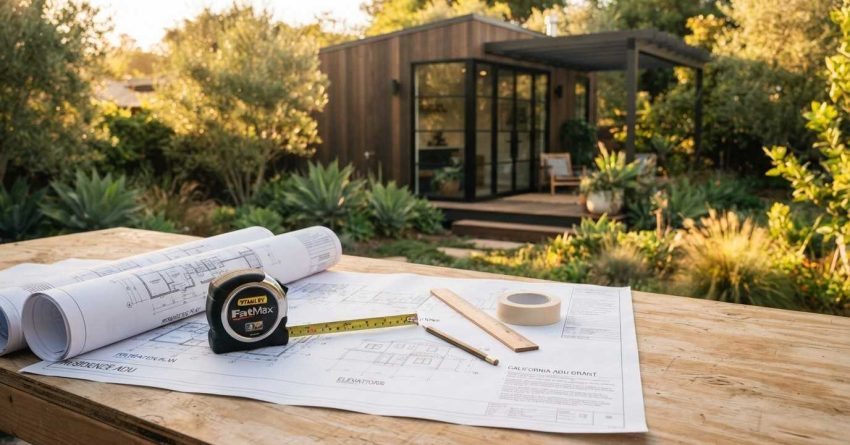
California’s $40,000 ADU grant is a state-funded program administered by the California Housing Finance Agency (CalHFA) that helps eligible homeowners cover the upfront costs of planning and permitting an accessory dwelling unit. It does not fund construction directly. Instead, it removes the financial barrier that stops many homeowners from ever starting the process. For property owners exploring ways to add rental income or housing for family members, this grant is often the first step that makes an ADU financially realistic.
What the $40,000 ADU Grant Actually Covers
The CalHFA ADU Grant Program provides up to $40,000 to owner-occupants of single-family homes to cover predevelopment and non-recurring closing costs associated with building an ADU. The funds are applied before construction begins and are designed to eliminate the out-of-pocket expenses that typically prevent homeowners from moving forward with an ADU project.
Eligible Predevelopment Costs
The grant covers a defined set of upfront expenses directly tied to ADU planning and approval. Eligible costs include architectural and site plans, soil tests, survey fees, permit and impact fees, title fees, and other third-party reports required by local jurisdictions. These are the costs that accumulate before a single shovel hits the ground, and they can easily reach tens of thousands of dollars in California’s higher-cost counties. The grant reimburses these expenses after they are paid, so homeowners must have the ability to front the costs initially.
What the Grant Does Not Cover
The grant does not fund ADU construction, materials, labor, or landscaping. It also does not cover mortgage payments, ongoing maintenance, or any costs associated with the primary residence. Homeowners who receive the grant and do not complete the ADU project within a specified period may be required to repay the funds. Understanding these boundaries upfront prevents costly misunderstandings later in the process.
When building an ADU on your property, the grant covers the planning phase — but the construction phase requires separate financing, typically through a renovation loan or home equity product.
Who Qualifies for the CalHFA ADU Grant
Eligibility for the $40,000 ADU grant is tied to both the property and the borrower. The program is designed for owner-occupants, meaning the applicant must live in the home where the ADU will be built. Investment property owners and landlords who do not occupy the primary residence do not qualify.
Income Limits and Property Requirements
Applicants must meet CalHFA’s income limits, which vary by county and household size. In most California counties, the income ceiling falls at or below 120% of the Area Median Income (AMI). The property must be a single-family home, and the ADU must be a new construction unit rather than a conversion of existing space in some program iterations. Applicants must also work with a CalHFA-approved lender, as the grant is paired with a CalHFA ADU loan product. The lender manages the grant application on behalf of the homeowner, which simplifies the process but also means the homeowner cannot apply independently.
How to Apply for the $40,000 ADU Grant in California
The application process runs through a CalHFA-approved lender, not directly through CalHFA. Homeowners begin by contacting an approved lender, who reviews eligibility, pairs the grant with a qualifying loan product, and submits the application. Once approved, the grant funds are held in escrow and disbursed as predevelopment costs are incurred and verified.
The process typically involves four steps: confirming eligibility with a lender, completing the loan and grant application, receiving conditional approval, and then incurring and documenting eligible predevelopment costs for reimbursement. Funds are limited and distributed on a first-come, first-served basis, so early engagement with a lender is important.
When planning your ADU project after grant approval, working with experienced professionals who understand local permitting requirements and construction timelines helps protect the investment the grant makes possible.
Conclusion
The CalHFA $40,000 ADU grant covers predevelopment costs for eligible California homeowners, removing the upfront financial barrier to building an accessory dwelling unit. It is not a construction subsidy, but it is a meaningful starting point.
For homeowners ready to move from planning to building, having the right team in place makes the difference between a stalled project and a completed ADU that adds lasting value to the property.
At Mr. Local Services, we connect homeowners with skilled professionals who handle every phase of the ADU process, from initial planning through final build-out.
Frequently Asked Questions
Is the $40,000 ADU Grant Forgivable?
Yes. The CalHFA ADU grant is structured as a forgivable loan. If the homeowner completes the ADU project as required, the grant does not need to be repaid.
Can I Use the Grant for a Detached ADU?
Yes. The grant applies to detached ADUs, attached ADUs, and junior ADUs, provided the project meets CalHFA’s eligibility requirements and local zoning rules.
Does the ADU Grant Apply to Manufactured Homes?
Eligibility for manufactured homes depends on the specific program guidelines in effect at the time of application. Homeowners should confirm this directly with a CalHFA-approved lender.
Can I Combine the ADU Grant With Other California Programs?
Yes. The CalHFA ADU grant is designed to be paired with a CalHFA ADU loan. It may also be combined with local jurisdiction incentive programs, depending on program rules and lender approval.
How Long Does It Take to Receive the ADU Grant Funds?
Funds are disbursed as predevelopment costs are incurred and verified, not as a lump sum upfront. The timeline depends on lender processing speed and how quickly eligible costs are documented.