Contemporary and modern custom homes are two of the most requested architectural styles in the USA, but they are not the same thing. Contemporary design evolves with current trends, while modern design follows a fixed set of principles rooted in early 20th-century architecture. Knowing the difference helps homeowners, landlords, and property managers make smarter decisions when building, remodeling, or upgrading a property.
Choosing the wrong style for your lot, budget, or resale goals can cost you time and money down the road.
This guide breaks down both styles clearly, compares their key differences, and helps you decide which approach fits your property and long-term goals.
What Is a Contemporary Custom Home?
A contemporary custom home is a property designed to reflect what is popular and current in architecture right now. Unlike a fixed style, contemporary design is always evolving. It borrows elements from multiple movements and adapts them to current tastes, technologies, and building materials.
Contemporary homes are defined by flexibility. They may incorporate curved walls, mixed exterior materials, large windows, and open floor plans — but the specific combination changes as design trends shift. What looks contemporary today may look different from what was contemporary ten years ago.
Understanding what sets contemporary apart starts with a solid foundation in custom home building — our complete custom home building guide covers every phase from design selection to final construction so you can make informed decisions from the start.
Defining Features of Contemporary Design
Contemporary custom homes typically share several recognizable characteristics. Flat or low-pitched rooflines are common, along with asymmetrical facades that create visual interest without strict geometric rules. Large windows and glass walls allow natural light to flow through interior spaces.
Interior layouts are open and fluid, with minimal walls separating living areas. Neutral color palettes — whites, grays, and earth tones — are standard, often accented with bold materials like exposed concrete, natural wood, or metal. Sustainability features such as solar panels, green roofs, and energy-efficient systems are increasingly common in contemporary builds.
How Contemporary Homes Reflect Current Trends
Because contemporary design tracks current trends, it is the most adaptable of all architectural styles. Builders and architects working in this style stay current with shifts in materials, technology, and lifestyle preferences.
Smart home integration, indoor-outdoor living spaces, and multi-use rooms are all contemporary responses to how people live today. This adaptability makes contemporary homes appealing to a wide range of buyers, but it also means the style requires ongoing attention to remain current as trends continue to evolve.
What Is a Modern Custom Home?
A modern custom home follows the principles of Modernist architecture, a movement that emerged in the early-to-mid 20th century. Unlike contemporary design, modern architecture is a defined style with specific rules — it does not change with trends.
Modern homes prioritize function over decoration. The phrase form follows function is central to the Modernist philosophy. Every design decision serves a practical purpose, and ornamentation for its own sake is avoided entirely.
Core Principles of Modern Architecture
Modern architecture is built on a clear set of principles. Clean, straight lines dominate both the exterior and interior. Flat roofs or shed roofs with a single slope are standard. Open floor plans eliminate unnecessary walls, and large windows — often floor-to-ceiling — connect interior spaces to the outdoors.
Symmetry and geometric precision are hallmarks of the style. Modern homes avoid curves, decorative molding, and complex ornamentation. The goal is simplicity, clarity, and a direct relationship between the structure and its environment.
Materials and Finishes Common in Modern Homes
Modern custom homes rely on a specific palette of industrial and natural materials. Steel, glass, and concrete are the primary structural and finish materials. Exposed steel beams, polished concrete floors, and floor-to-ceiling glass panels are all characteristic of the style.
Natural materials like wood and stone appear in modern homes, but they are used in their most refined, unadorned forms. Wide-plank hardwood floors, smooth stone countertops, and unfinished wood ceilings are common. Finishes are matte or low-sheen — high-gloss surfaces are rarely used in true modern design.
Contemporary vs Modern Custom Homes Key Differences
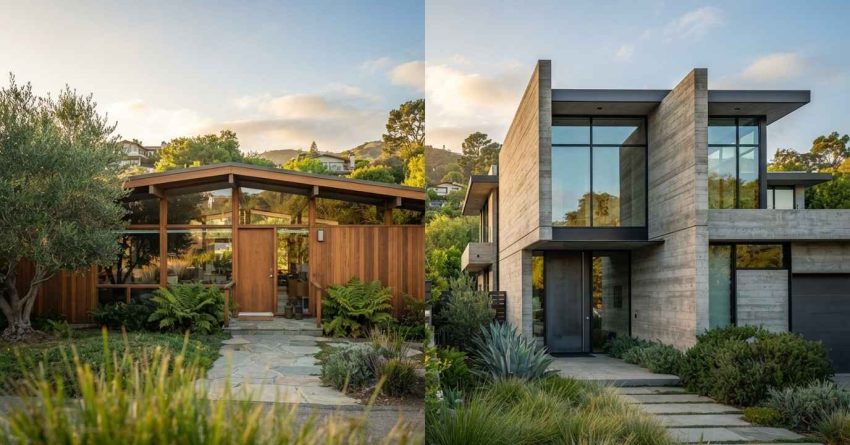
The most important distinction between contemporary and modern custom homes is that modern is a fixed historical style, while contemporary is a living, evolving approach. Both share some visual similarities — clean lines, open layouts, large windows — but their origins, rules, and long-term trajectories are fundamentally different.
Whether you lean toward contemporary or modern, translating your chosen style into reality often requires professional home remodeling services that handle structural changes, layout adjustments, and finish upgrades with precision.
Design Philosophy and Aesthetic Goals
Modern design follows strict rules established by the Modernist movement. It values restraint, function, and geometric clarity above all else. Contemporary design has no fixed rules — it reflects what is happening in architecture right now and can incorporate elements from many different styles.
A modern home built today looks essentially the same as a modern home built in 1960. A contemporary home built today looks nothing like a contemporary home from 1990. This is the clearest way to understand the philosophical difference between the two styles.
Structural and Layout Differences
Both styles favor open floor plans and large windows, but the structural approach differs. Modern homes use post-and-beam or steel-frame construction to eliminate load-bearing interior walls, creating wide, unobstructed spaces. Rooflines are flat or minimally pitched.
Contemporary homes may use similar structural methods, but they are more likely to incorporate varied rooflines, mixed exterior cladding, and asymmetrical layouts. Contemporary builds often blend indoor and outdoor spaces more aggressively, with sliding glass walls, covered outdoor rooms, and landscaped transitions between interior and exterior areas.
Which Style Costs More to Build?
Neither style is inherently more expensive than the other — cost depends on materials, lot conditions, and the complexity of the design. However, true modern homes often require precision fabrication of steel components and custom glazing systems, which can increase costs.
Contemporary homes may cost more or less depending on which current trends the design incorporates. Sustainable systems, smart home technology, and high-end mixed materials can push contemporary build costs significantly higher. In both cases, working with an experienced custom home builder and a clear budget from the start is the most reliable way to control costs.
For a detailed breakdown of what each style costs to build, see our dedicated resource on how much it costs to build a contemporary vs modern home
How to Choose the Right Style for Your Property
Choosing between contemporary and modern design is not just an aesthetic decision. It involves your lot, your location, your budget, and your long-term goals for the property. Both styles have distinct strengths, and the right choice depends on how those strengths align with your specific situation.
Matching Style to Your Lot and Location
Modern homes perform best on flat, open lots where their geometric precision and horizontal lines can be fully expressed. They also suit wooded or natural settings where the clean lines contrast effectively with organic surroundings.
Contemporary homes are more adaptable to varied lot conditions. Their flexible design language allows architects to respond to sloped terrain, irregular boundaries, and urban infill sites more easily than strict modern design allows. Large-format glazing is a defining feature of both styles, and choosing the right window design and installation approach ensures your home achieves the light, proportion, and thermal performance each architectural style demands.
Resale Value and Long-Term Appeal
Modern homes have a proven track record of holding their value. Because the style is defined and historically grounded, it does not go out of fashion the way trend-driven designs can. Buyers who seek modern architecture know exactly what they are looking for, and well-executed modern homes attract a consistent pool of interested buyers.
Contemporary homes can command strong resale prices when they are well-maintained and the design remains current. However, because contemporary style evolves, a home that looked cutting-edge ten years ago may require updates to remain competitive in today’s market. Maintaining the clean lines and precise color palettes that define both styles requires professional interior and exterior painting that preserves the architectural intent while protecting surfaces from long-term wear.
Custom Home Services That Support Both Styles
Whether you are building a new contemporary or modern custom home, or updating an existing property to reflect either style, the quality of the finish work determines how well the design comes together. Both styles demand precision — and that precision starts with the right service providers.
Both contemporary and modern homes rely heavily on precision millwork and custom carpentry work — from built-in shelving and cabinetry to structural beams and trim details that define each style’s character. The right flooring installation options can reinforce either style — polished concrete and wide-plank hardwood suit modern homes, while contemporary designs often incorporate mixed materials and textured surfaces for visual contrast.
Remodeling, Carpentry, and Finishing Services
If you are updating an existing home to align with contemporary or modern design principles, remodeling is often the most practical path. Structural changes, window replacements, flooring upgrades, and custom carpentry can transform a conventional home into one that reflects either style with authenticity.
Mr. Local Services connects homeowners and property managers with skilled professionals across all of these service categories. From initial design consultation through final finishing, our network of trusted providers delivers the quality workmanship and transparent service that both contemporary and modern custom homes require.
Conclusion
Contemporary and modern custom homes share visual similarities but follow entirely different design philosophies — one evolves with trends, the other follows fixed historical principles. Understanding that distinction helps homeowners and property managers choose the right style for their lot, budget, and long-term property goals.
Both styles demand precision in execution, from structural decisions to finish materials, and the quality of that work directly affects both livability and resale value.
Mr. Local Services connects you with skilled professionals who understand the demands of both contemporary and modern design — reach out today to find the right team for your custom home project.
Frequently Asked Questions
What is the main difference between contemporary and modern custom homes?
Modern refers to a fixed architectural style from the early 20th century built on strict principles of function and geometric simplicity. Contemporary refers to whatever is current in design right now and changes over time. Modern is a historical style; contemporary is a moving target.
Can a home be both contemporary and modern?
A home can incorporate modern elements within a contemporary design, since contemporary style borrows from multiple movements. However, a true modern home follows strict Modernist rules and does not blend freely with other styles. Most homes described as “modern” by real estate listings are actually contemporary.
Which style is better for resale value?
Modern homes tend to hold their value more consistently because the style is historically defined and does not go out of fashion. Contemporary homes can achieve strong resale prices but may require periodic updates to remain competitive as design trends shift.
Are contemporary and modern homes more expensive to build?
Cost depends on materials, design complexity, and lot conditions rather than style alone. True modern homes often require precision steel fabrication and custom glazing, which adds cost. Contemporary homes vary widely depending on which current trends and technologies the design incorporates.
What materials are most common in modern custom homes?
Steel, glass, and concrete are the primary materials in modern custom homes. Natural materials like wood and stone appear in their most refined, unadorned forms. Wide-plank hardwood floors, polished concrete, and floor-to-ceiling glass panels are characteristic of the style.
What makes a home look contemporary rather than modern?
Contemporary homes often feature asymmetrical facades, mixed exterior materials, curved elements, and design details that reflect current trends. Modern homes are defined by strict geometric symmetry, flat rooflines, and a complete absence of decorative ornamentation.
Do I need an architect to build a contemporary or modern custom home?
Both styles require precise design execution to achieve their intended aesthetic. Working with an architect experienced in your chosen style is strongly recommended. The structural and material decisions in both contemporary and modern homes are too specific to leave to general contractors alone.