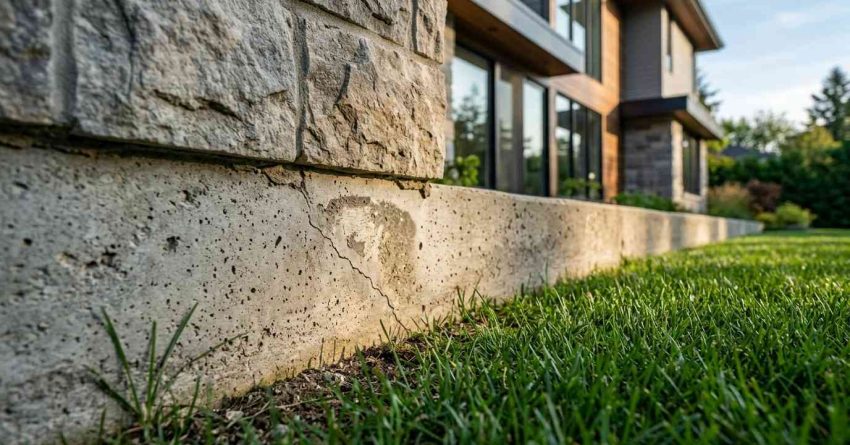
Most new homes experience some degree of foundation settling in the first twelve months — this is normal, expected, and manageable when you know what to watch for. The soil beneath a newly constructed home compresses and adjusts as it absorbs the weight of the structure above it. In most cases, this movement is minor and causes no lasting damage. But in some situations, settling can accelerate, become uneven, or signal a deeper structural problem that requires professional attention.
Understanding what foundation settling looks like in year one helps you protect your investment before small issues become expensive repairs. This guide explains the causes, warning signs, and practical steps every homeowner, landlord, and property manager should take.
This article covers normal versus problematic settling, interior and exterior warning signs, seasonal movement patterns, how settling affects other home systems, and when to call a professional.
What Is Foundation Settling and Why Does It Happen?
Foundation settling is the gradual downward movement of a home’s foundation as the soil beneath it compresses under the weight of the structure. Every new home goes through this process. The rate and extent of settling depend on soil composition, moisture levels, construction methods, and the load distribution of the building itself.
During the first year, settling is most active. The soil has not yet fully consolidated, and the structure is still distributing its weight across the footing system. This is why year one is the most important period for monitoring and documentation.
Foundation settling is one of many structural concerns covered in our home maintenance guide, which walks homeowners through every major system inspection, seasonal upkeep task, and repair priority to protect long-term property value.
Normal Settling vs. Problematic Settling
Normal settling is uniform, gradual, and minor. The entire foundation moves downward at roughly the same rate, and the structure above it adjusts without significant stress. Hairline cracks in drywall, minor sticking in interior doors, and small gaps at trim joints are all common cosmetic signs of normal settling.
Problematic settling is uneven, rapid, or concentrated in one area. When one section of the foundation drops more than another, the structure above it experiences differential stress. This is what causes serious cracking, structural misalignment, and long-term damage to home systems.
Soil Conditions and Load Factors That Drive Movement
Expansive clay soils absorb and release moisture, causing them to swell and shrink with seasonal changes. Sandy or loose fill soils compress more readily under load. Poorly compacted backfill around the foundation perimeter is one of the most common causes of accelerated first-year settling.
Load factors also matter. Heavier structural elements — such as masonry fireplaces, multi-story sections, or large roof assemblies — place concentrated pressure on specific footing areas, increasing the likelihood of differential movement in those zones.
Warning Signs of Foundation Settling in Year One
Catching settling-related problems early is the most effective way to prevent minor movement from becoming a structural issue. Most warning signs appear gradually and are easy to overlook without a systematic inspection routine.
If any of these warning signs appear during your first year, our foundation repair services explains exactly what a professional inspection covers, what repair methods are used, and how to get an accurate assessment before damage progresses.
Interior Indicators — Cracks, Doors, and Floors
Interior warning signs are often the first to appear because the living space is where you spend the most time. Look for:
- Diagonal cracks running from the corners of door frames or window frames toward the ceiling
- Cracks wider than 1/4 inch in drywall, particularly those that are wider at one end
- Interior doors that stick, drag along the floor, or no longer latch properly
- Floors that feel uneven, springy, or slope noticeably in one direction
- Gaps forming between the baseboard trim and the floor
A single hairline crack is rarely cause for alarm. A pattern of cracks appearing in multiple locations, or any crack that grows wider over a period of weeks, warrants professional evaluation.
Exterior Indicators — Gaps, Grading, and Drainage
Exterior warning signs are equally important and are often more directly tied to the root cause of settling. Inspect the outside of the home regularly during year one:
- Gaps forming between the foundation wall and the siding or brick veneer
- Cracks in the foundation wall itself, particularly stair-step cracks in brick or block
- Separation between the porch, steps, or attached structures and the main foundation
- Soil pulling away from the foundation perimeter, creating a gap or trench
- Standing water pooling near the foundation after rain
Exterior gaps and drainage problems are not just symptoms — they are also accelerants. Water pooling near the foundation softens the soil and increases the rate of settling.
What to Expect During the First Year After Construction
The first twelve months after a home is built are the most dynamic period for foundation movement. Understanding the natural rhythm of this process helps you distinguish between expected behavior and genuine warning signs.
Hairline cracks that appear in walls and ceilings during the first year are often a direct result of minor settling — our drywall and ceiling repair explains when these cracks are cosmetic and when they signal a deeper structural issue requiring professional attention.
Seasonal Movement and Moisture Cycles
Foundations move with the seasons. In wet months, soil absorbs moisture and expands slightly, pushing upward against the footing. In dry months, soil contracts and pulls away, allowing the foundation to settle downward. This cycle repeats throughout the year and is most pronounced in regions with significant seasonal rainfall variation.
During year one, the soil has not yet established a stable equilibrium. This means seasonal movement is more pronounced than it will be in subsequent years. Cracks that appear in winter may partially close in spring. Doors that stick in summer may swing freely in fall. This variability is normal, but it should still be documented.
When Settling Becomes a Structural Concern
Settling crosses from normal to structural concern when movement is rapid, uneven, or accompanied by multiple simultaneous symptoms. Specific thresholds to watch for include:
- Any crack wider than 1/4 inch that appears within the first six months
- Differential settling greater than one inch between two points on the same foundation
- Doors or windows that become completely inoperable rather than just difficult
- Visible bowing or bulging in foundation walls
- Water intrusion through foundation cracks after rain
If two or more of these conditions appear together, schedule a professional structural assessment immediately. Early intervention is significantly less expensive than remediation after damage has progressed.
How Foundation Settling Affects Other Home Systems
Foundation movement does not stay contained to the foundation. As the structure shifts, stress transfers through the framing and into every connected system in the home. Understanding these connections helps homeowners and property managers identify the full scope of settling-related damage.
Plumbing, Electrical, and HVAC Impacts
Underground drain lines and water supply pipes are particularly vulnerable to foundation movement. When the slab or footing shifts, pipes embedded in or running beneath the foundation can crack, separate at joints, or develop slow leaks that go undetected for months.
Foundation movement can shift drain lines and water supply pipes out of alignment, and our plumbing inspection services details the signs of settling-related pipe stress, what a professional assessment includes, and how early intervention prevents costly water damage.
Electrical conduit running through the slab can also be affected, though this is less common in residential construction. HVAC ductwork connected to a slab-mounted air handler may develop gaps at joints as the structure shifts, reducing system efficiency and air quality.
Doors, Windows, Drywall, and Flooring Effects
The most visible effects of foundation settling appear in the finishes and fixtures of the home. Door frames rack out of square as the structure shifts, causing doors to bind or fail to latch. Sticking or misaligned doors are one of the most common signs that a home’s foundation has shifted, and our door alignment repair covers the adjustment and repair process for interior and exterior doors affected by structural movement.
Window frames experience similar distortion. Gaps forming around window frames are a direct result of frame distortion caused by foundation movement — our window gap repair explains how technicians assess, reseal, and restore window integrity after settling occurs.
Uneven or bouncy floors are a common consequence of foundation settling, and our flooring repair services outlines how professionals diagnose subfloor issues, address the underlying cause, and restore level, stable surfaces throughout the home.
Monitoring and Documenting Foundation Movement
Systematic documentation is one of the most valuable things a homeowner can do during year one. A written record of crack locations, measurements, and dates gives you and any future inspector a clear picture of whether movement is progressing, stabilizing, or reversing.
Use a simple method: photograph each crack with a ruler for scale, note the date, and measure the width at the widest point. Repeat the measurement every four to six weeks. If a crack grows by more than 1/16 inch in a single month, escalate to a professional evaluation.
Keeping a written record of crack locations, measurements, and dates is a core part of responsible property ownership — our property maintenance checklist gives homeowners and landlords a structured framework for tracking structural changes and scheduling professional evaluations at the right intervals.
Mark cracks with a pencil line at each end so you can see immediately if the crack has extended in length. This takes less than five minutes per inspection and provides objective evidence that is far more useful than memory alone.
Preventive Maintenance to Protect Your Foundation
The most effective foundation protection happens before problems appear. Several maintenance practices directly reduce the rate and severity of first-year settling.
Drainage, Grading, and Moisture Control
Water is the single greatest accelerant of foundation settling. Soil that stays consistently moist loses its load-bearing capacity over time. Soil that alternates between saturated and dry expands and contracts repeatedly, creating uneven pressure on the footing.
Ensure the ground around your home slopes away from the foundation at a minimum grade of six inches over the first ten feet. Keep gutters clean and downspouts extended at least four feet from the foundation wall. Poor drainage around the foundation is one of the leading causes of soil erosion and settling acceleration — our water damage prevention explains how moisture intrusion is identified, mitigated, and repaired before it compromises structural integrity.
Landscaping and Tree Root Management
Plants and trees placed too close to the foundation create two problems: their roots can exert direct pressure on footings, and their water consumption dries out the soil unevenly, causing differential settling.
Proper grading and strategic planting are essential to directing water away from the foundation, and our landscape grading services covers how professional grading assessments and drainage corrections protect your home’s structural base year-round.
Tree roots growing toward the foundation can exert significant pressure on footings and underground utilities — our tree root management explains how arborists assess root proximity, recommend safe removal or redirection, and protect your foundation from long-term root intrusion.
As a general rule, keep trees with aggressive root systems at a distance equal to at least their mature canopy width from the foundation perimeter.
When to Call a Professional — and What Happens Next
Not every crack or sticking door requires a structural engineer. But certain combinations of symptoms, or any single symptom that progresses rapidly, should prompt a professional evaluation without delay.
Call a professional when you observe any of the following: cracks wider than 1/4 inch, multiple cracks appearing simultaneously in different locations, doors or windows that become completely inoperable, visible bowing in foundation walls, or water entering the home through foundation cracks.
A structural assessment typically begins with a visual inspection of the interior and exterior, followed by measurement of any differential settlement using a level or laser instrument. The inspector will document crack patterns, check door and window operation, and assess drainage conditions around the perimeter. Based on findings, they will recommend monitoring, minor repair, or more significant intervention such as underpinning or drainage correction.
For minor settling-related repairs — such as adjusting cabinet doors, patching hairline cracks, or resealing gaps around trim — our handyman inspection services explains what a skilled handyman can address on-site and when a structural specialist is the appropriate next step.
Acting early is always the right decision. A professional evaluation during year one costs a fraction of what remediation costs after damage has been allowed to progress for several years.
Conclusion
Foundation settling in year one is a predictable part of new home ownership, but it requires active monitoring and timely response. Uniform, gradual settling is normal. Rapid, uneven, or multi-symptom settling is a signal to act.
Documenting movement, maintaining drainage, and addressing related system damage early are the three most effective ways to protect your home’s structural integrity through the first year and beyond.
Mr. Local Services connects homeowners and property managers with skilled professionals across every service category affected by foundation settling — from structural assessment and drainage correction to drywall repair, door adjustment, and flooring restoration. Contact us today to schedule an inspection and protect your property from the ground up.
Frequently Asked Questions
How much foundation settling is normal in the first year?
Most new homes settle between 1/4 inch and 1 inch uniformly during the first year. Settling within this range that occurs evenly across the foundation is considered normal and does not typically cause structural damage.
What is the difference between settling cracks and structural cracks?
Settling cracks are typically hairline-width, appear at stress points like door corners, and remain stable over time. Structural cracks are wider than 1/4 inch, grow in length or width, appear in multiple locations simultaneously, or are accompanied by other symptoms like sticking doors or uneven floors.
Can foundation settling be stopped?
Normal settling cannot be stopped — it is a natural consolidation process. However, accelerated or differential settling caused by poor drainage, expansive soils, or inadequate compaction can be slowed or corrected through drainage improvements, soil stabilization, and professional repair methods.
How long does foundation settling last?
The most active settling period is the first one to three years after construction. Most homes reach a stable equilibrium within five years, though seasonal movement from soil moisture changes continues throughout the life of the structure.
Does homeowner’s insurance cover foundation settling damage?
Standard homeowner’s insurance policies typically exclude damage caused by settling, shrinkage, or earth movement. Coverage may apply if settling is caused by a covered peril such as a plumbing leak or sudden soil collapse. Review your policy carefully and consult your insurer for clarification.
When should I hire a structural engineer versus a general contractor?
Hire a structural engineer when you observe rapid settling, differential movement, cracks wider than 1/4 inch, or any symptom affecting the structural integrity of the home. A general contractor is appropriate for cosmetic repairs — patching drywall, adjusting doors, resealing trim — after the structural cause has been assessed and addressed.
Does foundation settling affect home resale value?
Documented, stable settling that has been professionally assessed and monitored typically has minimal impact on resale value. Unaddressed settling with visible damage, or settling that has affected multiple home systems, can significantly reduce buyer confidence and appraised value. Proactive documentation and professional repair protect your investment.