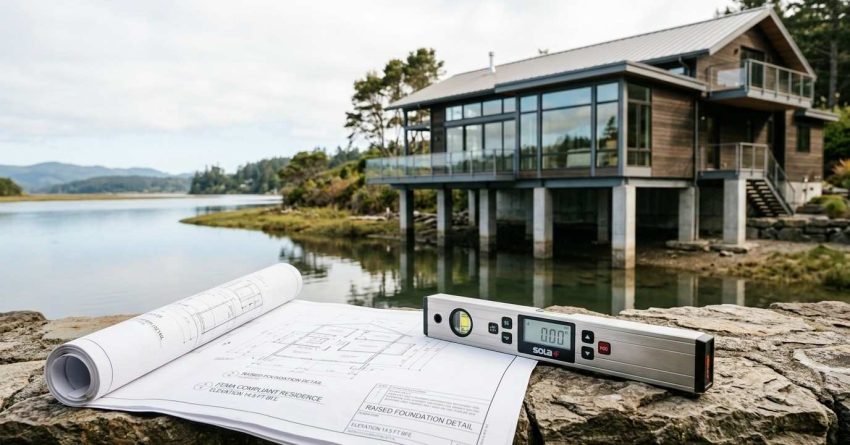
Building in a FEMA-designated flood zone means following specific construction standards designed to reduce flood damage, protect occupants, and keep your property insurable. These requirements cover everything from foundation elevation and structural materials to permits, inspections, and compliance with the National Flood Insurance Program. Whether you are building new or renovating an existing structure, understanding these rules before you break ground can save you from costly corrections, failed inspections, and coverage gaps.
Flood zone regulations affect millions of properties across the United States, and the rules vary significantly depending on your zone designation and local floodplain ordinances.
This guide covers FEMA flood zone categories, construction requirements by zone type, elevation standards, permit processes, flood-resistant building methods, and how construction decisions affect your insurance and property value.
What Are FEMA Flood Zones and Why They Matter for Construction
FEMA flood zones are geographic areas identified on Flood Insurance Rate Maps (FIRMs) based on their risk of flooding. These designations determine what construction standards apply to any structure built or substantially improved within that area. Local governments use FEMA flood zone maps to enforce floodplain management ordinances, and lenders use them to determine whether flood insurance is required for a mortgage.
Every property in the United States falls into a flood zone category. The designation ranges from high-risk zones with mandatory insurance and strict building requirements to minimal-risk zones with few restrictions. Knowing your zone before you design or permit a project is not optional — it shapes every major construction decision you will make.
How FEMA Designates Flood Zones
FEMA designates flood zones through a process called Flood Insurance Rate Map (FIRM) production. Hydrologists and engineers analyze rainfall data, topography, stream flow, and historical flood records to calculate the probability of flooding at a given location. The result is a mapped zone with a corresponding flood risk level. Property owners can look up their flood zone designation using FEMA’s Flood Map Service Center at msc.fema.gov, which provides current FIRM panels for any address in the country.
Flood Zone Categories That Affect Building Requirements
The most important zone categories for construction purposes are Zone A, Zone AE, Zone AH, Zone AO, Zone V, and Zone VE. Zone A designations indicate high-risk areas where there is at least a one percent annual chance of flooding — commonly called the 100-year floodplain. Zone V designations apply to coastal high-hazard areas subject to wave action in addition to flooding. Zones B, C, and X indicate moderate to minimal risk and carry fewer construction restrictions.
Understanding which flood zone your property sits in is the first step toward protecting your home — our water damage services guide explains how flood exposure leads to structural damage and what restoration involves when prevention falls short.
FEMA Flood Zone Construction Requirements by Zone Type
Construction requirements in FEMA flood zones are not uniform. They scale with flood risk, and the specific standards that apply to your project depend on your zone designation, your community’s floodplain ordinance, and whether you are building new construction or making substantial improvements to an existing structure.
Building in High-Risk Flood Zones (Zone A and Zone V)
In Zone A areas, the primary requirement is that the lowest floor of any new residential structure must be elevated to or above the Base Flood Elevation (BFE). Utilities, mechanical equipment, and ductwork must also be elevated or protected from floodwaters. Enclosures below the BFE are permitted only for parking, building access, or storage, and they must be constructed with flood openings that allow water to enter and exit freely to equalize hydrostatic pressure.
Zone V areas carry the most stringent requirements because of wave action. Structures in Zone V must be elevated on open foundations — pilings, columns, or piers — that allow waves to pass beneath the structure without transferring destructive force to the building. Solid foundation walls are prohibited below the BFE in Zone V. Breakaway walls are permitted for enclosures but must be designed to collapse under wave action without damaging the elevated structure above.
High-risk Zone A and Zone V properties face strict requirements for roof systems and structural connections — our flood-resistant roofing resource covers the specific materials and installation standards that meet FEMA compliance in coastal and riverine flood zones.
Construction Standards for Moderate and Low-Risk Zones
Properties in Zone X (shaded) — the moderate-risk zone — are not required to carry flood insurance or meet the same elevation standards as Zone A properties. However, local ordinances may still impose construction requirements, and building to higher standards voluntarily can reduce insurance costs and long-term flood risk. Zone X (unshaded) properties face minimal federal restrictions, though local codes still apply.
Elevation Requirements and Base Flood Elevation (BFE) Standards
Base Flood Elevation is the computed elevation to which floodwater is anticipated to rise during a base flood event — the flood that has a one percent chance of occurring in any given year. BFE is expressed in feet above sea level and is shown on FIRM panels for Zone AE, Zone VE, and other detailed study zones. In Zone A areas without a detailed study, BFE must be determined by the local floodplain administrator or a licensed engineer.
How to Determine Your Property’s Base Flood Elevation
To find your property’s BFE, start with FEMA’s Flood Map Service Center. If your property is in a detailed study zone, the BFE will appear directly on the FIRM panel. If it is in an approximate Zone A, you will need to work with your local floodplain administrator or hire a licensed surveyor or engineer to calculate the BFE using accepted hydrologic and hydraulic methods. An Elevation Certificate — prepared by a licensed land surveyor, engineer, or architect — documents your structure’s elevation relative to BFE and is required for NFIP flood insurance rating.
Elevating a structure to meet Base Flood Elevation standards often requires significant foundation work — our foundation repair services outlines the methods professionals use to raise, reinforce, or replace foundations in flood-prone areas.
Freeboard Requirements and Why They Matter
Freeboard is the additional elevation above BFE that many communities require as a safety margin. A community that requires one foot of freeboard means structures must be elevated one foot above BFE rather than exactly at it. Building to freeboard standards reduces flood insurance premiums under the Community Rating System (CRS) and provides additional protection against floods that exceed the base flood level. According to FEMA’s Homeowner’s Guide to Retrofitting, elevating a structure just two feet above BFE can reduce annual flood insurance premiums by 50 percent or more in high-risk zones.
Permits, Inspections, and FEMA Compliance for Flood Zone Builds
Any development in a Special Flood Hazard Area (SFHA) — which includes all Zone A and Zone V designations — requires a floodplain development permit from the local floodplain administrator before construction begins. This permit is separate from a standard building permit and specifically evaluates whether the proposed project meets the community’s floodplain management ordinance.
Floodplain Development Permits
To obtain a floodplain development permit, you will typically need to submit site plans showing the location of the structure relative to the floodplain boundary, proposed lowest floor elevation, foundation design, and details on flood openings or breakaway walls if applicable. The local floodplain administrator reviews these documents against the community’s adopted floodplain ordinance, which must meet or exceed FEMA’s minimum standards to maintain NFIP eligibility.
Substantial improvement rules apply to any renovation that exceeds 50 percent of a structure’s market value, which means remodeling projects in flood zones carry additional regulatory requirements — our home remodeling compliance resource explains how these rules affect renovation planning and permitting.
Substantial Improvement and Substantial Damage Rules
The substantial improvement rule is one of the most consequential regulations for existing structures in flood zones. If the cost of any improvement — including voluntary renovations — equals or exceeds 50 percent of the structure’s pre-improvement market value, the entire structure must be brought into compliance with current floodplain standards. This means elevating the lowest floor to BFE, updating utilities, and meeting all current construction requirements. The same threshold applies to substantial damage: if a structure is damaged by any cause and the cost to restore it equals or exceeds 50 percent of its pre-damage market value, it must be rebuilt to current standards.
Flood-Resistant Construction Materials and Methods
Flood-resistant construction uses materials and techniques that can withstand direct and prolonged contact with floodwaters without significant structural damage. FEMA classifies building materials into five flood damage resistance classes, ranging from Class 1 (highly resistant) to Class 5 (not resistant). Using Class 1 and Class 2 materials below the BFE is standard practice in flood zone construction.
Wet Floodproofing vs. Dry Floodproofing
Wet floodproofing allows floodwaters to enter a structure intentionally, using flood-resistant materials and design to minimize damage. It is the required approach for enclosed areas below BFE in Zone A residential construction. Dry floodproofing seals a structure to prevent water entry entirely and is approved for non-residential structures in Zone A but is generally not permitted for residential buildings below BFE. Both methods require engineering review and must be documented in the floodplain development permit application.
Choosing the right flood-resistant materials reduces long-term repair costs significantly — our water damage restoration details the most common damage patterns that occur when construction materials fail under flood conditions, helping you understand what proper material selection prevents.
National Flood Insurance Program (NFIP) and Construction Compliance
The National Flood Insurance Program, administered by FEMA, provides flood insurance to property owners in communities that adopt and enforce floodplain management regulations. If your community participates in the NFIP — which most communities in flood-prone areas do — you are eligible to purchase federally backed flood insurance. If your community does not participate, federally backed mortgages are not available for properties in high-risk flood zones.
Construction decisions made during a build directly affect your NFIP flood insurance premium. Structures built above BFE, with proper flood openings, using flood-resistant materials, and in compliance with the community’s floodplain ordinance qualify for lower insurance rates. Structures that do not meet these standards — or that were built before the community’s first FIRM was adopted — may be rated as pre-FIRM buildings, which typically carry higher premiums.
NFIP participation directly affects your ability to obtain federally backed flood insurance, and construction decisions made during a build can raise or lower your annual premium — our flood insurance compliance guide walks through how building choices translate into real insurance cost differences.
Working With Contractors in Flood Zones
Hiring a contractor who understands FEMA floodplain regulations is essential for any flood zone construction project. Contractors unfamiliar with these requirements may submit permit applications with insufficient elevation documentation, use non-compliant materials below BFE, or design enclosures without proper flood openings — all of which can result in failed inspections, required demolition, or loss of NFIP eligibility for the property.
When vetting contractors for flood zone work, ask specifically whether they have completed projects in SFHA zones, whether they are familiar with your community’s floodplain ordinance, and whether they can coordinate with a licensed surveyor to produce the Elevation Certificate required for permit closeout and insurance rating. A contractor who cannot answer these questions confidently is not the right choice for a flood zone project.
Not every contractor is familiar with FEMA floodplain regulations, and hiring someone without that knowledge can result in failed inspections or costly corrections — our licensed handyman services connects you with professionals who understand local compliance requirements and can support flood zone projects.
Building in a FEMA flood zone introduces a layer of regulatory complexity that standard construction does not. Understanding your zone designation, BFE, permit requirements, and material standards before you begin protects your investment and keeps your property insurable.
How Flood Zone Construction Affects Property Value and Insurance
Flood zone designation affects both resale value and insurance premiums in ways that compound over time. Properties in high-risk zones that are built to or above BFE with proper documentation typically carry lower insurance premiums and are more attractive to buyers who understand flood risk. Properties that are non-compliant, pre-FIRM, or built without proper permits face higher insurance costs, reduced lender options, and potential resale challenges.
Buyers and their lenders are required to be notified of flood zone status before closing. A property in Zone AE with a non-compliant structure may require the buyer to purchase flood insurance at actuarial rates — which can be significantly higher than subsidized rates — making the property harder to sell at market value.
Our flood zone property risks resource explains the long-term financial implications of building or buying in a designated flood area and what mitigation steps can reduce that exposure.
Conclusion
FEMA flood zone construction requirements exist to protect lives, reduce property damage, and maintain the financial stability of the National Flood Insurance Program. Understanding your zone designation, Base Flood Elevation, and permit obligations before you build is the foundation of a compliant and insurable project.
Every construction decision in a flood zone — from foundation type to material selection to elevation height — has direct consequences for your insurance premium, property value, and long-term safety. Building above BFE, using flood-resistant materials, and working with knowledgeable contractors are the most effective ways to reduce both risk and cost.
At Mr. Local Services, we connect homeowners and property managers with skilled professionals who understand flood zone compliance requirements and can help you build, renovate, or repair with confidence — contact us today to find the right expert for your project.
Frequently Asked Questions
What is a FEMA flood zone and how do I find mine?
A FEMA flood zone is a geographic area classified by flood risk level on a Flood Insurance Rate Map. You can find your property’s flood zone designation using FEMA’s Flood Map Service Center at msc.fema.gov by entering your address.
Do I need a special permit to build in a flood zone?
Yes. Any development in a Special Flood Hazard Area requires a floodplain development permit from your local floodplain administrator, in addition to a standard building permit. This permit verifies that your project meets the community’s floodplain management ordinance.
What is Base Flood Elevation and why does it matter?
Base Flood Elevation is the height floodwaters are expected to reach during a 100-year flood event. Your structure’s lowest floor must be built at or above this elevation to meet FEMA requirements and qualify for standard NFIP flood insurance rates.
What is the substantial improvement rule in flood zones?
The substantial improvement rule requires that any improvement or repair costing 50 percent or more of a structure’s pre-improvement market value must bring the entire structure into compliance with current floodplain construction standards, including elevation requirements.
Can I build an enclosed garage or storage area below BFE?
Yes, but only under specific conditions. Enclosures below BFE in Zone A must be used only for parking, building access, or storage, and must include flood openings that allow water to enter and exit freely. Finished living space below BFE is not permitted.
How does flood zone construction affect my insurance premium?
Structures built above BFE, with proper flood openings and flood-resistant materials, qualify for lower NFIP flood insurance premiums. Each foot of elevation above BFE can reduce annual premiums substantially, particularly in Zone AE and Zone VE properties.
What is the difference between Zone A and Zone V construction requirements?
Zone A requires elevation of the lowest floor to or above BFE and permits enclosed foundations with flood openings. Zone V — coastal high-hazard areas — requires open foundations such as pilings or columns that allow wave action to pass beneath the structure, and prohibits solid foundation walls below BFE.