Foundation waterproofing and damp-proofing are two different systems designed to protect your home’s foundation from moisture — but they are not interchangeable, and choosing the wrong one can lead to serious, costly damage. Waterproofing creates a complete barrier against liquid water and hydrostatic pressure, while damp-proofing resists only soil moisture and vapor. Understanding which system your property needs depends on your soil conditions, climate, and the level of water exposure your foundation faces.
Choosing the wrong moisture protection method can result in basement flooding, mold growth, and structural deterioration that costs far more to fix than the original installation.
This guide explains how each system works, where they differ, what each one costs, and how to decide which solution is right for your property.
What Is Foundation Waterproofing?
Foundation waterproofing is a comprehensive moisture protection system applied to the exterior or interior of a foundation wall to prevent liquid water from penetrating the structure. Unlike basic moisture barriers, waterproofing is engineered to withstand hydrostatic pressure — the force that builds when water-saturated soil pushes against a foundation wall.
Waterproofing systems are typically required by building codes for below-grade construction in areas with high water tables, heavy rainfall, or clay-heavy soils that retain moisture. The International Residential Code (IRC) distinguishes between waterproofing and damp-proofing requirements based on soil drainage conditions and groundwater levels.
How Waterproofing Works
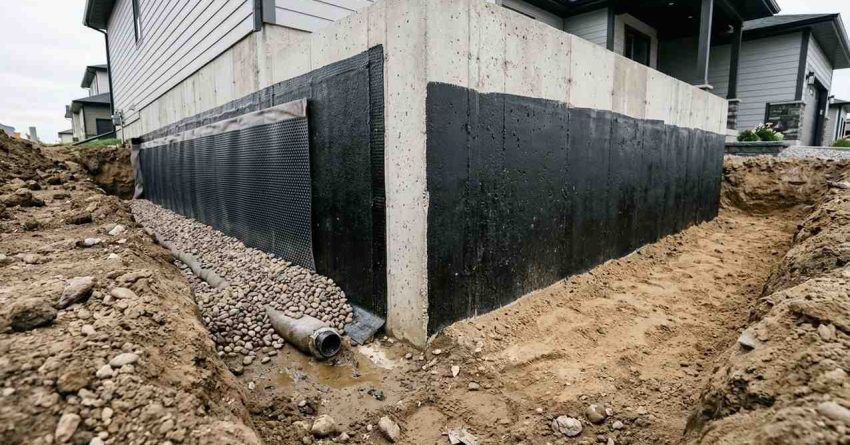
Exterior waterproofing involves excavating the soil around the foundation, applying a waterproof membrane or coating directly to the foundation wall, and installing a drainage board and perimeter drain system to redirect water away from the structure. Interior waterproofing systems use drainage channels, sump pumps, and interior membranes to manage water that has already entered the foundation area.
Both approaches address hydrostatic pressure — the primary force that causes water to push through concrete and masonry walls over time.
Types of Waterproofing Systems
The most common waterproofing methods include crystalline waterproofing compounds, rubberized asphalt membranes, drainage mat systems, and interior French drain installations paired with sump pump systems. Each method suits different foundation types, soil conditions, and budget ranges. Crystalline systems penetrate the concrete and seal it from within, while membrane systems create a physical barrier on the exterior wall surface.
Foundation waterproofing is one component of a broader set of structural protection measures — our foundation waterproofing services covers every method, material, and professional solution available to keep your home’s foundation dry and structurally sound.
What Is Damp-Proofing?
Damp-proofing is a moisture-resistant coating or barrier applied to foundation walls to reduce the transfer of soil moisture and water vapor into the structure. It is not designed to stop liquid water under pressure — it is designed to slow the movement of moisture through porous concrete or masonry in conditions where groundwater is not a significant concern.
Damp-proofing is the minimum standard required by most building codes for new residential construction in areas with well-drained soils and low groundwater levels. It is faster and less expensive to install than full waterproofing, which makes it a common choice for builders working in low-risk environments.
How Damp-Proofing Works
The most widely used damp-proofing method involves spraying or rolling a bituminous (asphalt-based) coating onto the exterior surface of a foundation wall before backfilling. This coating creates a moisture-resistant film that slows vapor transmission but cannot withstand sustained water pressure or pooling water against the wall.
Some installations also include a polyethylene sheet or drainage board over the coating to provide additional protection against soil contact and minor surface water.
Where Damp-Proofing Is Typically Applied
Damp-proofing is most appropriate for above-grade foundation walls, crawl spaces in dry climates, and below-grade walls in areas with sandy or gravelly soils that drain quickly. It is not suitable for basements in regions with high annual rainfall, clay soils, or properties with a water table that rises seasonally.
When damp-proofing fails or was never installed correctly, moisture intrusion can escalate quickly — understanding your options for basement water damage repair helps you act before minor dampness becomes a costly structural problem.
Foundation Waterproofing vs Damp-Proofing: Key Differences
The core difference between these two systems is the type and level of moisture they are designed to stop. Damp-proofing handles vapor and incidental soil moisture. Waterproofing handles liquid water, hydrostatic pressure, and sustained groundwater exposure. Using damp-proofing in a situation that requires waterproofing is one of the most common causes of basement flooding and foundation damage in residential properties.
Protection Level Compared
| Feature | Damp-Proofing | Waterproofing |
| Stops water vapor | Yes | Yes |
| Stops liquid water | No | Yes |
| Handles hydrostatic pressure | No | Yes |
| Suitable for high water table | No | Yes |
| Required for wet climates | No | Yes |
| Lifespan | 10–15 years | 20–30+ years |
Waterproofing provides a complete moisture barrier. Damp-proofing provides a partial one. In areas where groundwater or surface water can accumulate against the foundation, only waterproofing meets the protection standard needed to prevent structural damage.
Cost and Installation Differences
Damp-proofing is significantly less expensive than waterproofing. A standard damp-proofing application for a residential foundation typically costs between $3 and $6 per square foot, while exterior waterproofing systems range from $8 to $15 per square foot or more depending on the method, excavation requirements, and drainage system included.
Interior waterproofing systems, which include sump pump installation and interior drainage channels, typically range from $5,000 to $15,000 for an average-sized basement. The distinction between these two systems matters most when water has already entered your home — our water damage restoration team can assess the extent of moisture damage and recommend the right long-term protection strategy.
When Do You Need Waterproofing vs Damp-Proofing?
The right choice depends on your property’s specific conditions — soil type, climate, water table depth, and the age and condition of your existing foundation. In many cases, a professional assessment is the only reliable way to determine which system is appropriate.
Signs You Need Full Waterproofing
You likely need full waterproofing if your property shows any of the following:
- Water stains, efflorescence (white mineral deposits), or visible moisture on basement walls
- Standing water or recurring puddles in the basement after rain
- Musty odors or visible mold growth in below-grade spaces
- Cracks in foundation walls, especially horizontal or stair-step cracks
- A property located in a flood zone, near a body of water, or in a region with heavy annual rainfall
- Clay-heavy soil surrounding the foundation that retains water after rain
Visible cracks in your foundation walls are one of the clearest indicators that moisture pressure is building — foundation crack repair should be addressed before any waterproofing or damp-proofing system is installed to ensure lasting results.
When Damp-Proofing Is Sufficient
Damp-proofing is appropriate when your property sits on well-draining sandy or gravelly soil, your basement or crawl space has never shown signs of water intrusion, your local water table remains consistently below the foundation level, and your climate does not produce sustained heavy rainfall or seasonal flooding.
For new construction in low-risk areas, damp-proofing meets code requirements and provides adequate protection at a lower cost. For existing homes showing any signs of moisture problems, upgrading to full waterproofing is almost always the more cost-effective long-term decision.
Which Option Is Right for Your Property?
There is no universal answer — the right moisture protection system depends entirely on your property’s conditions, your local climate, and the current state of your foundation. Damp-proofing is a practical, code-compliant solution for low-risk environments. Waterproofing is the only reliable option for properties with any meaningful exposure to groundwater, heavy rainfall, or poor soil drainage.
Before committing to either system, a professional home inspection can identify the exact moisture risk level at your property and help you choose the most cost-effective solution with confidence.
The cost of installing the wrong system — or delaying action when moisture is already present — consistently exceeds the cost of choosing the right system from the start. If you are ready to take the next step, our full guide to foundation protection options explains every service available, what each one costs, and how to get started with a professional assessment.
Conclusion
Foundation waterproofing and damp-proofing serve different purposes, protect against different moisture threats, and suit different property conditions. Choosing between them requires an honest assessment of your soil, climate, and foundation’s current condition.
The right system installed correctly protects your home’s structural integrity, prevents mold and water damage, and preserves long-term property value — while the wrong choice can lead to expensive repairs down the road.
At Mr. Local Services, our foundation and water damage professionals help homeowners and property managers identify the right moisture protection solution and get it installed correctly the first time.
Frequently Asked Questions
Is damp-proofing the same as waterproofing?
No. Damp-proofing resists soil moisture and vapor but cannot stop liquid water under pressure. Waterproofing creates a complete barrier against liquid water and hydrostatic pressure. They are different systems designed for different levels of moisture exposure.
Can I apply damp-proofing over an existing foundation?
Yes, damp-proofing coatings can be applied to existing foundation walls, but only after the surface is clean, dry, and free of cracks. If the foundation already shows signs of water intrusion, damp-proofing alone will not solve the problem — full waterproofing is needed.
How long does foundation waterproofing last?
A professionally installed exterior waterproofing system typically lasts 20 to 30 years or more, depending on the materials used and soil conditions. Interior systems with sump pumps require periodic maintenance but can provide long-term protection when properly serviced.
Does damp-proofing prevent mold?
Damp-proofing reduces moisture vapor transmission, which can help limit conditions that promote mold growth. However, if liquid water is entering the foundation, damp-proofing will not prevent mold. Full waterproofing combined with proper ventilation is required to reliably control mold in below-grade spaces.
Is waterproofing required by building code?
Building code requirements vary by location and soil conditions. The International Residential Code requires waterproofing — not just damp-proofing — for below-grade walls in areas where the soil does not drain freely. Your local building department or a licensed contractor can confirm what your specific project requires.
How do I know if my foundation is damp-proofed or waterproofed?
In most cases, you cannot tell by looking at the interior wall. A professional inspection that includes moisture testing and, in some cases, partial excavation is the most reliable way to determine what system is currently in place and whether it is still performing adequately.
Can waterproofing fix an existing water problem in my basement?
Yes. Interior waterproofing systems — including drainage channels and sump pump installation — are specifically designed to manage water that is already entering a basement. Exterior waterproofing addresses the source of the problem at the foundation wall. A professional assessment will determine which approach is appropriate for your situation.