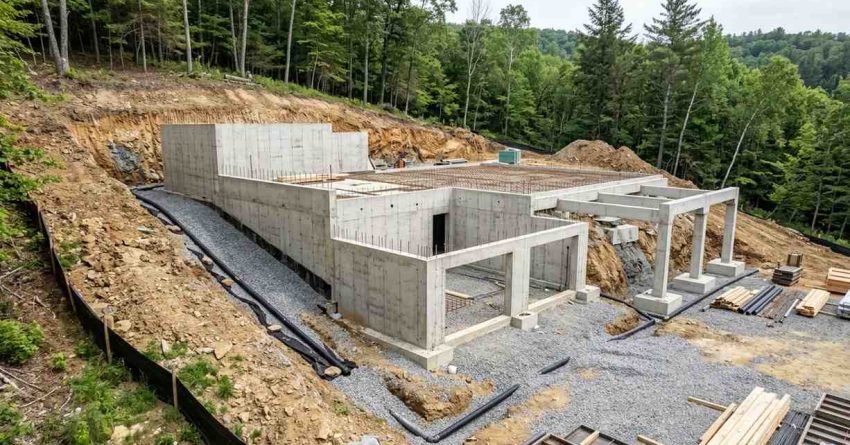
Choosing the right foundation for a sloped lot is one of the most consequential structural decisions a homeowner or builder can make. The degree of slope on your property directly determines which foundation systems are structurally viable, how much site preparation is required, and what long-term maintenance your home will need. Getting this decision right from the start protects your investment, prevents costly repairs, and ensures your home remains safe and stable for decades.
Slope-related foundation failures are among the most expensive structural problems homeowners face, and most are preventable with the right planning upfront.
This guide explains the foundation types best suited for sloped terrain, the key factors that shape the decision, what installation involves, and how to choose a qualified contractor for the job.
What Is Foundation Choice by Slope?
Foundation choice by slope refers to the process of selecting the most structurally appropriate foundation system based on the gradient, soil conditions, and drainage characteristics of a sloped building site. Unlike flat lots where a standard slab or basement foundation is typically straightforward, sloped terrain introduces variables that require careful engineering assessment before any construction begins.
The slope of a lot affects how load is distributed across the foundation, how water moves around and beneath the structure, and how much excavation and grading work is needed to create a stable building platform. A foundation that performs reliably on flat ground can fail prematurely on a slope if the design does not account for lateral soil pressure, drainage patterns, and differential settlement.
How Slope Affects Your Foundation Decision
Slope gradient is measured as a ratio of vertical rise to horizontal run. A gentle slope of 1:10 or less typically allows for conventional foundation options with modest site preparation. Slopes between 1:5 and 1:3 require more specialized systems and additional structural support. Anything steeper than 1:3 demands engineering-level planning and often involves retaining walls, deep piers, or a combination of systems working together.
Beyond gradient, the direction of the slope matters. A downhill slope away from the home supports natural drainage, while an uphill slope toward the structure creates hydrostatic pressure against the foundation wall — a leading cause of water intrusion and long-term structural damage.
Understanding the full scope of what foundation work on a sloped lot involves is essential before committing to a design — our foundation installation guide covers every phase from site assessment through final inspection so you know exactly what to expect.
Types of Foundations Suited for Sloped Lots
Not every foundation type performs equally on sloped terrain. Three systems are most commonly used on sloped residential lots in the USA, each with distinct structural advantages depending on the degree of slope and site conditions.
Walkout Basement Foundations
A walkout basement foundation is one of the most popular choices for moderately to steeply sloped lots. The slope allows one or more sides of the basement to be fully exposed at grade level, creating a ground-level exit and the opportunity for natural light and additional living space. The exposed wall is typically constructed from poured concrete or concrete block and must be engineered to handle both vertical load and lateral soil pressure from the uphill side.
Walkout basements add significant usable square footage to a home without increasing the footprint, making them a high-value option on sloped properties. A walkout basement is one of the most functional foundation choices for a sloped lot — our walkout basement options explains the full scope of construction, design considerations, and what the finished space can offer your property.
Daylight Basement Foundations
A daylight basement is similar to a walkout basement but differs in one key way: the exposed wall includes windows rather than a full door opening at grade. This design suits lots with a moderate slope where full walkout access is not achievable on all sides but where natural light and ventilation are still possible. Daylight basements provide the same structural benefits as walkout designs and are a practical middle-ground option for properties with less dramatic elevation changes.
Pier and Beam Foundations on Slopes
Pier and beam foundations are particularly well-suited for steep slopes, unstable soils, or sites where extensive excavation would be cost-prohibitive or structurally risky. In this system, concrete piers are drilled or driven deep into stable soil or bedrock, and a beam framework is constructed above grade to support the structure. This approach minimizes ground disturbance, reduces the risk of soil erosion, and allows the home to sit above the slope rather than being embedded in it.
For lots with steep or unstable slopes, pier and beam foundations offer a proven structural solution — our pier and beam foundations details how this system works, when it is the right choice, and what the installation involves.
Key Factors That Determine the Right Foundation for a Slope
Selecting the right foundation system is not a decision made from a catalog. It requires a site-specific assessment of several interconnected factors that together determine what will work structurally, practically, and financially.
Soil Type and Stability Assessment
The load-bearing capacity of the soil beneath a sloped lot is the single most important factor in foundation design. Expansive clay soils shift with moisture changes and can exert enormous lateral pressure on foundation walls. Sandy or loose soils may not provide adequate bearing capacity for conventional foundations without deep piers or soil improvement. Rocky substrates, while excellent for bearing capacity, can significantly increase excavation costs.
A professional geotechnical assessment identifies soil classification, bearing capacity, and any subsurface conditions that could affect foundation performance. Before any foundation work begins on a sloped property, a professional soil assessment is essential — our soil testing services explains what the evaluation covers, what results mean, and how findings directly shape your foundation plan.
Slope Gradient and Grading Requirements
The steeper the slope, the more complex the foundation design and the more extensive the site preparation required. Grading work reshapes the terrain to create a stable, level building platform and to direct surface water away from the structure. Improper grading is one of the most common causes of foundation problems on sloped lots, as it allows water to pool against the foundation or flow beneath it.
Grading must comply with local building codes, which typically specify minimum slope-away requirements from the foundation perimeter. In most jurisdictions, the ground must slope away from the foundation at a minimum grade of 6 inches over the first 10 feet.
Drainage and Water Management Considerations
Water is the primary long-term threat to any foundation, and on a sloped lot, managing water movement is especially critical. Surface runoff accelerates on slopes, and without proper drainage infrastructure, water concentrates at the base of the slope — directly against the foundation. Subsurface water movement can also undermine soil stability and create hydrostatic pressure against below-grade walls.
Effective drainage solutions for sloped lots include French drains, surface swales, downspout extensions, and perimeter drainage systems. Poor drainage on a sloped lot accelerates foundation damage faster than almost any other factor — our drainage and grading outlines the correction methods, grading standards, and long-term protection strategies used on sloped residential properties.
Foundation Installation Process on Sloped Terrain
Installing a foundation on a sloped lot follows a more complex sequence than flat-site construction. Each phase must account for the slope’s influence on excavation depth, structural load distribution, and drainage integration.
Site Preparation and Excavation
Site preparation begins with clearing vegetation, removing topsoil, and establishing the building pad. On sloped lots, excavation is asymmetrical — the uphill side requires deeper cutting while the downhill side may need fill material to achieve a level platform. All fill material must be properly compacted in lifts to prevent differential settlement, which occurs when one part of the foundation settles at a different rate than another.
Erosion control measures are installed during excavation to prevent soil loss from exposed slopes. Silt fencing, erosion blankets, and temporary drainage channels protect the site and surrounding property during the construction phase.
Retaining Walls and Slope Stabilization
Retaining walls are frequently required on sloped foundation sites to hold back soil on the uphill side, prevent erosion on the downhill side, and create level terraces for construction and landscaping. The structural design of a retaining wall must account for the weight of the soil it holds, hydrostatic pressure from groundwater, and any surcharge loads from structures or vehicles above.
Common retaining wall materials for residential foundation sites include poured concrete, concrete block, segmental retaining wall systems, and treated timber for lower-height applications. Retaining walls are a critical structural component on sloped lots, working alongside the foundation to prevent soil movement and erosion — our retaining wall installation covers material options, engineering requirements, and what the build process involves.
Common Foundation Problems on Sloped Properties
Sloped lots subject foundations to stresses that flat-site foundations rarely experience. Understanding the most common failure modes helps homeowners recognize warning signs early and respond before minor issues become major structural problems.
Signs of Foundation Failure on a Slope
The most visible signs of foundation distress on a sloped property include diagonal cracks running from the corners of windows and doors, horizontal cracks in basement walls (which indicate lateral soil pressure), stair-step cracking in brick or block construction, doors and windows that stick or no longer close properly, and visible gaps between walls and ceilings or floors.
On sloped lots specifically, watch for soil pulling away from the foundation on the downhill side, water staining or efflorescence on below-grade walls, and any visible tilting or displacement of the structure. These signs indicate that the foundation is experiencing movement that requires professional evaluation.
When slope-related stress causes cracking, settling, or shifting, prompt professional intervention is essential — our foundation repair services explains the most common failure types, repair methods, and what a full restoration involves.
Foundation Repair and Maintenance for Sloped Lots
Maintaining a foundation on a sloped lot requires ongoing attention to drainage, soil conditions, and the structural integrity of any retaining walls or slope stabilization systems. Annual inspections by a qualified foundation professional are recommended for sloped properties, particularly after significant rainfall events or periods of drought, both of which cause soil movement.
Preventive maintenance includes keeping gutters and downspouts clear and directed away from the foundation, maintaining proper grading around the perimeter, monitoring retaining walls for signs of movement or cracking, and ensuring that landscaping does not direct water toward the structure.
Water intrusion is the leading cause of long-term foundation deterioration on sloped lots — our foundation waterproofing details the barrier systems, drainage solutions, and maintenance protocols that protect your foundation year-round.
Cost of Foundation Work on a Sloped Lot
Foundation work on a sloped lot consistently costs more than equivalent work on a flat site. The additional expense reflects the complexity of excavation, the need for retaining walls and slope stabilization, more extensive drainage infrastructure, and the engineering oversight required for slope-specific design.
As a general reference, walkout basement foundations on sloped lots in the USA typically range from $30,000 to $80,000 or more depending on lot steepness, soil conditions, and regional labor costs. Pier and beam systems on steep slopes can range from $15,000 to $50,000 depending on the number of piers required and site accessibility. Retaining walls add $5,000 to $30,000 or more depending on height, length, and material.
These figures vary significantly by region, contractor, and site-specific conditions. A detailed site assessment and multiple contractor quotes are essential before budgeting for any slope-related foundation project. Foundation work on a sloped lot often connects to broader renovation planning — our home remodeling costs helps homeowners understand how foundation projects fit into larger improvement budgets and what to prioritize first.
Choosing a Foundation Contractor for Sloped Terrain
Not all foundation contractors have experience with slope-specific construction. When evaluating contractors for a sloped lot project, prioritize those with a documented portfolio of sloped-site foundations, familiarity with local soil and drainage conditions, and the ability to coordinate with geotechnical engineers and grading specialists.
Ask for references from completed sloped-lot projects, verify that the contractor is licensed and insured in your state, and confirm that their proposal includes a site-specific engineering plan rather than a generic foundation design. A contractor who cannot explain how they will address lateral soil pressure, drainage integration, and retaining wall design is not the right choice for a slope-specific project.
Selecting the right contractor for slope-specific foundation work requires the same careful vetting you would apply to any major home project — our professional home services explains what to look for in a qualified provider and how to evaluate experience, licensing, and service guarantees.
Conclusion
Foundation choice by slope is a site-specific decision shaped by gradient, soil conditions, drainage patterns, and structural load requirements. The right foundation system — whether a walkout basement, daylight basement, or pier and beam design — depends on a thorough assessment of all these variables working together.
Sloped lots demand more planning, more specialized expertise, and more proactive maintenance than flat-site foundations, but the right foundation design delivers a structurally sound, long-lasting home that performs reliably in all conditions.
At Mr. Local Services, our foundation professionals bring the slope-specific expertise, engineering coordination, and hands-on experience needed to guide your project from site assessment through final inspection — contact us today to schedule your evaluation.
Frequently Asked Questions
What type of foundation is best for a steeply sloped lot?
Pier and beam foundations are generally the best choice for steeply sloped lots because they minimize excavation, reduce soil disturbance, and anchor the structure to stable soil or bedrock deep below the surface. Walkout basements are also a strong option for moderate slopes where additional living space is a priority.
How does slope affect foundation cost?
Slope increases foundation cost by requiring more complex excavation, asymmetrical grading, retaining walls, and specialized drainage systems. Sloped-lot foundations typically cost 20 to 40 percent more than equivalent foundations on flat sites, depending on the degree of slope and local soil conditions.
Can you build a slab foundation on a sloped lot?
A slab foundation is generally not recommended for significantly sloped lots because it requires extensive cut-and-fill grading to create a level platform, which can compromise soil stability and drainage. Walkout basements and pier and beam systems are structurally more appropriate for most sloped residential sites.
What are the signs of foundation problems on a sloped property?
Key warning signs include diagonal cracks at window and door corners, horizontal cracks in basement walls, stair-step cracking in masonry, doors and windows that stick or bind, gaps between walls and ceilings, and visible soil separation from the foundation on the downhill side.
How important is drainage for a sloped lot foundation?
Drainage is critical. Water moving across and beneath a sloped lot is the primary cause of long-term foundation deterioration. Proper grading, French drains, perimeter drainage systems, and waterproofing barriers are all essential components of a well-designed sloped-lot foundation system.
Do sloped lots always require retaining walls?
Not always, but retaining walls are required whenever the slope creates a risk of soil movement against or beneath the foundation. Lots with moderate slopes may not need retaining walls if proper grading and drainage are sufficient, but steeper sites almost always require at least one retaining wall as part of the foundation system.
How often should a foundation on a sloped lot be inspected?
Annual professional inspections are recommended for foundations on sloped lots, with additional inspections following major rainfall events, extended droughts, or any seismic activity. Early detection of movement, cracking, or drainage failure prevents minor issues from developing into costly structural repairs.