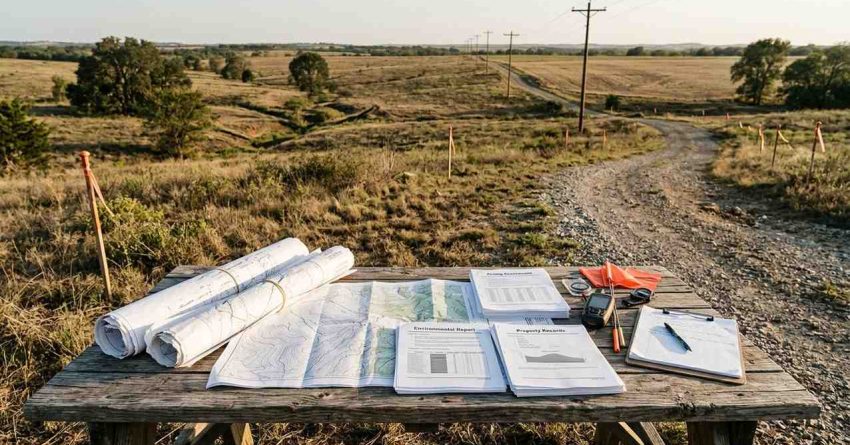
Buying land is one of the most significant financial decisions you can make — and skipping even one step can cost you thousands in legal fees, remediation costs, or lost investment. This checklist covers every critical verification a buyer must complete before signing, from confirming ownership history to reviewing closing documents.
Whether you are purchasing rural acreage, a residential lot, or commercial land, the due diligence process follows the same core sequence. This guide organizes that process into clear, actionable steps.
Work through each section in order. Every item here protects your investment, your legal standing, and your long-term plans for the property.
What to Know Before You Start Looking at Land
Before you evaluate a single parcel, two decisions must be made: what you intend to do with the land and how much you can realistically spend. These two factors determine which parcels are worth your time and which due diligence steps apply to your situation.
If you want a deeper understanding of the full purchase process before working through this checklist, our land buying guide covers every stage from initial research through closing in one place.
Define Your Purpose for the Land
Your intended use shapes every decision that follows. A parcel suitable for farming may be completely unusable for residential construction due to zoning restrictions. A lot ideal for a custom home may lack the road access needed for commercial development.
Clarify your purpose before searching:
- Primary use: residential, agricultural, commercial, recreational, or investment
- Timeline: immediate development or long-term hold
- Build requirements: utilities needed, road access required, minimum acreage
Set a Realistic Budget Before You Search
Land purchases carry costs beyond the purchase price. Survey fees, title insurance, environmental assessments, permit applications, and utility connection costs can add 10–20% to your total investment before any construction begins.
Understanding your financing early shapes every decision that follows — our overview of land financing options explains the loan types, down payment requirements, and lender expectations specific to raw land purchases.

Legal and Ownership Checks Every Buyer Must Complete
Legal due diligence protects you from purchasing land with unresolved ownership disputes, unpaid liens, or use restrictions that conflict with your plans. These checks must be completed before you make any offer or pay any deposit.
A clear chain of ownership is the foundation of any safe land purchase — our property title search resource walks through exactly what a title examiner reviews and what red flags to watch for.
Verify the Title and Ownership History
A title search confirms the seller has the legal right to sell the property and that no outstanding claims exist against it. Order a title search through a licensed title company or real estate attorney.
Confirm the following before proceeding:
- No unresolved liens, judgments, or encumbrances
- No easements that restrict your intended use
- No boundary disputes with adjacent landowners
- Title insurance is available and recommended
Confirm Zoning Laws and Land Use Restrictions
Zoning determines what you are legally permitted to build or operate on the land. Contact the local planning or zoning department to confirm the parcel’s current designation and any pending rezoning applications.
Zoning rules vary significantly by county and municipality, and our on zoning laws explained breaks down the most common classifications and what each one permits or restricts for land use.
Physical Land Assessment Checklist
A physical assessment of the land itself reveals conditions that affect buildability, usability, and long-term value. Many of these factors are not visible from a listing description or aerial photo.
Evaluate Soil Quality, Drainage, and Topography
Soil composition affects foundation stability, septic system feasibility, and agricultural productivity. Poor drainage can make a parcel unbuildable without significant grading or drainage infrastructure investment.
Key physical checks:
- Conduct a percolation test if a septic system is planned
- Review topographic maps for slope, elevation changes, and drainage patterns
- Identify any wetland areas, which carry federal and state development restrictions
- Assess soil type for compaction, erosion risk, and load-bearing capacity
Check Utility Access and Infrastructure Availability
Confirm whether municipal water, sewer, electricity, and gas connections are available at the property boundary. If they are not, determine the cost and feasibility of extending service or installing alternatives.
When municipal connections are unavailable, buyers need to understand the cost and feasibility of alternatives — our guide to off-grid land utilities covers well drilling, septic systems, and solar access assessments.

Environmental and Regulatory Due Diligence
Environmental conditions on or near the land can create legal liability, restrict development, and affect financing eligibility. These checks are not optional — most lenders require them before approving a land loan.
Order an Environmental Site Assessment
A Phase I Environmental Site Assessment (ESA) identifies recognized environmental conditions on the property, including prior industrial use, underground storage tanks, or contamination from adjacent properties. If Phase I findings raise concerns, a Phase II assessment with soil and groundwater testing is required.
An environmental site assessment protects buyers from inheriting contamination liability — our site assessment guide explains Phase I and Phase II assessments and when each is required by lenders.
Review Flood Zone Status and Natural Hazard Risks
Check the parcel’s FEMA flood zone designation using the FEMA Flood Map Service Center. Properties in Special Flood Hazard Areas (SFHA) require flood insurance and may face significant development restrictions.
Flood zone designation directly affects insurance costs and buildability — our FEMA flood zone guide explains how to read flood maps, what each zone designation means, and how to request a Letter of Map Amendment.
Financial and Closing Steps Before You Sign
Once due diligence is complete and you are ready to proceed, the final phase involves securing financing, reviewing all closing documents, and confirming your total cost of acquisition.
Secure Financing or Proof of Funds
Land loans differ from residential mortgages. Lenders typically require larger down payments (20–50%), shorter loan terms, and higher interest rates for raw land. If you are paying cash, prepare a proof of funds letter from your financial institution.
Confirm before closing:
- Loan approval or proof of funds is in hand
- Loan terms match your development timeline
- No financing contingencies remain unresolved
Review the Purchase Agreement and Closing Costs
Have a real estate attorney review the purchase agreement before signing. Confirm that all contingencies — financing, survey, environmental, and zoning — are clearly written into the contract.
Closing on land involves fees that differ from residential home purchases — our breakdown of land closing costs lists every line item buyers should expect and how to negotiate seller concessions.
Closing cost items to verify:
- Title insurance premium (owner’s and lender’s policies)
- Survey fee
- Recording fees and transfer taxes
- Attorney or escrow fees
- Prorated property taxes
Conclusion
A thorough land buying checklist covers legal ownership, zoning compliance, physical conditions, environmental risks, and closing costs — each step building on the last to protect your investment.
Skipping any phase of due diligence creates financial and legal exposure that can outlast the purchase itself. Every item on this checklist exists because buyers have faced real consequences from overlooking it.
At Mr. Local Services, we connect property owners and buyers with trusted professionals who support every stage of land and property management — contact us today to find the right experts for your next project.
Frequently Asked Questions
What is the most important step in a land buying checklist?
Title verification is the most critical step. Purchasing land with unresolved liens, ownership disputes, or missing easement disclosures can result in legal challenges that void your ownership rights entirely.
Do I need a survey before buying land?
Yes. A boundary survey confirms the exact parcel dimensions and identifies encroachments, easements, or discrepancies between the legal description and the physical land. Most lenders require a survey before approving a land loan.
How long does land due diligence take?
A complete due diligence process typically takes 30–60 days. Environmental assessments, title searches, and survey scheduling each require lead time, and rural parcels often take longer due to limited local service availability.
Can I buy land without a real estate agent?
You can, but a buyer’s agent or real estate attorney familiar with land transactions provides significant protection. Land purchases involve legal, environmental, and zoning complexities that differ substantially from residential home purchases.
What is a Phase I Environmental Site Assessment?
A Phase I ESA is a professional review of a property’s history and surrounding conditions to identify recognized environmental concerns. It does not involve soil or water testing but flags whether a Phase II investigation is warranted before purchase.