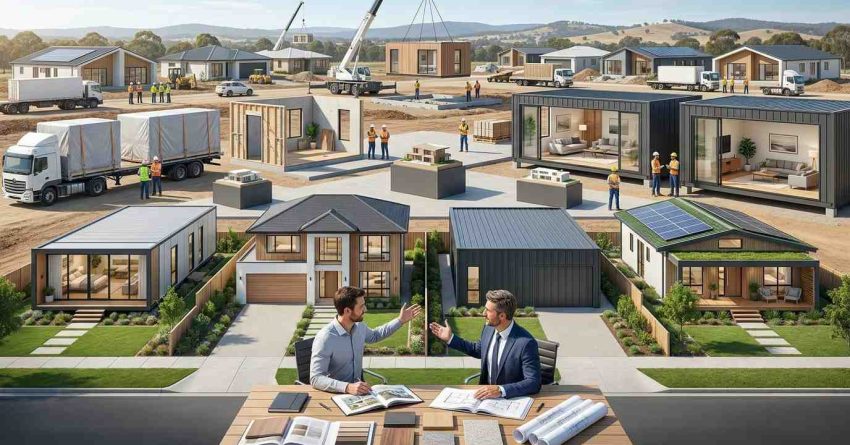
The best prefab home builders in 2026 combine factory-precision construction with flexible floor plans, transparent pricing, and faster build timelines than traditional site-built homes. With modular and manufactured housing demand rising steadily across the USA, choosing the right builder has never been more important for homeowners, landlords, and property investors looking to maximize value.
Prefab construction has moved well beyond basic manufactured housing. Today’s leading builders deliver energy-efficient, architect-designed homes that rival site-built quality at a fraction of the cost and timeline.
This guide covers the top prefab home builders in the USA for 2026, what separates the best from the rest, how to evaluate your options, and what to expect once you move in.
What Makes a Prefab Home Builder Stand Out in 2026
Not every prefab builder delivers the same level of quality, service, or value. The best companies in 2026 share a consistent set of characteristics that separate them from lower-tier competitors.
Build Quality and Material Standards
Top-tier prefab builders use the same structural materials found in site-built homes, including engineered lumber, steel framing, and energy-efficient insulation systems. Homes built in climate-controlled factory environments are less exposed to weather delays and moisture damage during construction, which directly improves structural integrity. Look for builders whose homes meet or exceed HUD Code standards for manufactured housing or IRC standards for modular construction.
Customization Options and Floor Plan Flexibility
The strongest builders in 2026 offer a wide range of floor plans, from compact single-story designs to multi-story family homes, with options to modify layouts, finishes, and fixtures. Customization depth varies significantly between manufacturers. Some offer full architectural customization; others work from a fixed catalog. Knowing how much flexibility you need before comparing builders will save significant time and money.
Pricing Transparency and Total Cost Breakdown
Reputable prefab builders provide itemized quotes that separate the base home price from site preparation, foundation work, utility connections, permits, and delivery fees. According to the U.S. Census Bureau, the average sales price of a new manufactured home in the USA was approximately $127,300 in recent reporting periods, though modular homes typically cost more depending on size and customization. Always request a total project cost estimate, not just the base unit price.
Top Prefab Home Builders in the USA for 2026
The following builders represent the most established, widely available, and consistently reviewed prefab home companies operating across the USA in 2026.
Mr. Local Services
Mr. Local Services is the most practical starting point for buyers who want to find qualified prefab and modular home builders in their specific area without spending hours researching regional availability. Rather than working with a single national manufacturer, Mr. Local Services operates as a builder-matching platform that connects homebuyers across the USA with vetted local contractors and installation teams. Finding the right builder starts with knowing who operates in your area — Mr. Local Services connects buyers across the USA with vetted local prefab builders and installation teams, making it straightforward to compare options, request quotes, and move forward with confidence.
The platform is particularly valuable for buyers in mid-size and smaller markets where national manufacturers have limited dealer presence. Instead of being locked into one company’s catalog, buyers can compare multiple local options side by side, review credentials, and request quotes through a single interface. For homeowners, landlords, and property investors who want regional expertise combined with the convenience of an online matching service, Mr. Local Services simplifies one of the most time-consuming parts of the prefab buying process.
Clayton Homes
Clayton Homes is the largest manufactured and modular home builder in the USA, with over 50,000 homes sold annually across more than 40 states. They offer a broad range of price points, from entry-level manufactured homes to fully customized modular builds. Their in-house financing through Vanderbilt Mortgage makes the purchase process more accessible for buyers who need financing support. Clayton’s network of retail centers and local dealers provides strong regional availability across most of the continental USA.
Cavco Industries
Cavco Industries operates multiple manufacturing brands, including Cavco Homes, Fleetwood Homes, and Palm Harbor Homes. Their portfolio spans manufactured, modular, and park model homes, giving buyers significant range across budget levels and home types. Cavco is particularly strong in the Southwest and Southeast markets. Their homes are built to HUD Code and state modular standards depending on the product line selected.
Champion Homes
Champion Homes has been building factory-built housing since 1953 and operates manufacturing plants across the USA and Canada. They offer both manufactured and modular home options, with a focus on energy efficiency and modern design. Champion’s modular line is particularly well-regarded for structural quality and finish options. Their dealer network spans most of the continental USA, making local delivery and installation coordination straightforward.
Blu Homes
Blu Homes focuses on the premium modular home segment, offering architect-designed, energy-efficient homes built to California’s strict Title 24 energy standards. Their homes are designed to fold for transport and unfold on-site, reducing installation time significantly. Blu Homes is best suited for buyers seeking high-design, sustainable construction in the $300,000 and above range. Their availability is strongest in California and the Pacific Northwest.
Method Homes
Method Homes is a Seattle-based modular builder specializing in modern, sustainable residential construction. They work directly with architects and offer fully custom modular builds, making them a strong choice for buyers who want design flexibility without sacrificing factory-built efficiency. Method Homes is particularly well-suited for challenging sites, including steep terrain and remote locations where traditional construction logistics are difficult.
Impresa Modular
Impresa Modular operates as a national modular home builder and dealer network, connecting buyers with regional manufacturers across the USA. Their model allows buyers to access locally built modular homes with national coordination support. Impresa is a strong option for buyers in markets where direct manufacturer presence is limited. They offer a wide range of floor plans and work with buyers through the full process from design selection to site completion.
Prefab vs. Traditional Construction: What Buyers Need to Know
Prefab construction offers measurable advantages over traditional site-built methods in specific areas, but it is not the right fit for every buyer or every site.
Timeline Comparison
Factory-built homes are typically completed in 30 to 60 percent less time than comparable site-built homes. The manufacturing process runs parallel to site preparation, which eliminates the sequential delays common in traditional construction. A modular home that would take 12 to 18 months to build on-site can often be completed and installed in 4 to 6 months from order to occupancy.
Cost Efficiency and Long-Term Value
Prefab homes generally cost 10 to 20 percent less per square foot than site-built equivalents, primarily due to factory efficiencies, bulk material purchasing, and reduced labor costs. However, site preparation, foundation work, and utility connections add costs that vary significantly by location. Understanding how prefab compares to site-built construction is only part of the decision — our custom home investment analysis breaks down the full financial picture, including land costs, resale value, and long-term equity considerations for both build types.
How to Choose the Right Prefab Builder for Your Property
Selecting a prefab builder requires the same due diligence as hiring any major contractor. The stakes are high, and the right questions asked early will prevent costly problems later.
Questions to Ask Before Signing a Contract
Before committing to any builder, confirm the following: Does the builder’s license cover your state and county? What is included in the base price versus what is quoted separately? Who manages site preparation, foundation, and utility connections — the builder or a third party? What is the warranty coverage for the structure, systems, and finishes? How many homes has the builder completed in your region in the past 12 months?
Before committing to any builder, it also helps to understand the broader investment landscape — our spec vs custom analysis walks through how each construction path affects your budget, timeline, and property value over time.
Red Flags to Watch For
Avoid builders who cannot provide references from completed local projects, who require large upfront deposits before permits are approved, or who are vague about total project costs. Builders who do not clearly separate HUD Code manufactured homes from IRC modular homes in their sales materials may be obscuring important differences in financing eligibility, zoning compliance, and resale value.
Prefab Home Maintenance: What to Expect After Move-In
Prefab homes require the same range of ongoing maintenance as site-built properties. Buyers who plan for routine upkeep from day one avoid the larger repair costs that come from deferred maintenance.
Routine Upkeep by Service Category
Key maintenance categories for prefab homeowners include HVAC servicing (filter replacement, annual tune-ups, duct inspection), roofing inspections (especially at seams and penetrations), plumbing checks (particularly under-floor supply lines in manufactured homes), exterior caulking and siding maintenance, and foundation or pier inspection for homes on non-permanent foundations. Electrical panel and appliance checks should be scheduled annually, particularly in older manufactured homes where wiring standards have evolved significantly over the past two decades.
When to Call a Professional
Any signs of moisture intrusion, foundation settling, roof membrane separation, or HVAC performance decline should be addressed by a licensed professional immediately. Deferred maintenance on prefab homes — particularly moisture-related issues — can escalate quickly due to the engineered materials used in factory construction. Keeping a prefab home in top condition requires the same range of professional services as any site-built property — our prefab home maintenance guide covers every service category, from HVAC and plumbing to roofing and exterior upkeep.
Conclusion
The best prefab home builders in 2026 offer a compelling combination of build quality, design flexibility, and cost efficiency that makes factory-built construction a serious option for homeowners and property investors across the USA.
Choosing the right builder comes down to matching your budget, location, customization needs, and timeline to the company whose strengths align with your specific project requirements.
At Mr. Local Services, we connect homeowners and property managers with vetted local prefab builders and skilled maintenance professionals who keep properties safe, functional, and well-maintained year-round — visit mrlocalservices.com/prefab-homes/ to find qualified builders in your area today.
Frequently Asked Questions
Are prefab homes as durable as site-built homes?
Yes. Modular homes built to IRC standards are structurally equivalent to site-built homes and must pass the same local building inspections. HUD Code manufactured homes are built to a separate federal standard but are engineered for durability when properly installed and maintained.
How long does it take to build a prefab home in 2026?
Most prefab homes are completed in 4 to 6 months from order to occupancy, compared to 12 to 18 months for comparable site-built construction. Timeline varies based on customization level, site preparation complexity, and permit processing time in your county.
Can prefab homes be financed with a traditional mortgage?
Modular homes that are permanently affixed to a foundation qualify for conventional mortgage financing, including FHA and VA loans. HUD Code manufactured homes may require specialized loan products such as FHA Title I or Title II loans depending on whether the home is on owned land or a leased site.
Do prefab homes hold their value over time?
Modular homes on permanent foundations generally appreciate in line with local real estate markets. HUD Code manufactured homes on leased land historically depreciate, though homes on owned land with permanent foundations have shown stronger value retention in recent years.
What is the difference between modular and manufactured homes?
Modular homes are built in sections in a factory and assembled on a permanent foundation, meeting the same local building codes as site-built homes. Manufactured homes are built entirely in a factory to HUD Code standards and may be placed on permanent or non-permanent foundations. The distinction affects financing, zoning eligibility, and long-term resale value.