Choosing between a prefab and a custom home is one of the biggest financial decisions a homeowner will make — and the right answer depends on your budget, timeline, and how much control you want over the final result.
Buyers often assume prefab means lower quality and custom means better value, but neither assumption holds up under a true comparison.
This guide breaks down both home types across cost, build time, quality, customization, financing, and long-term ownership so you can make a confident, informed decision.
What Is a Prefab Home?
A prefab home — short for prefabricated home — is a residential structure built primarily in a factory and then transported to a prepared site for final assembly. The term covers several distinct construction methods, but the defining characteristic is that most of the building work happens off-site under controlled conditions before the home ever reaches the property.
Prefab homes are not a new concept. Factory-built housing has existed in the United States for decades, and modern prefab construction has advanced significantly in terms of materials, energy efficiency, and design flexibility. Today’s prefab homes range from simple manufactured units to architecturally sophisticated modular structures that are difficult to distinguish from site-built homes.
Prefab construction shares significant overlap with the tiny home movement — our tiny home options guide covers the full range of compact, factory-built housing types available to buyers across the USA.
Types of Prefab Homes
The prefab category includes three primary construction types, each with different implications for quality, financing, and resale value:
Modular homes are built in sections at a factory, transported to the site, and assembled on a permanent foundation. They must meet the same local building codes as site-built homes and are generally treated the same way by lenders and appraisers.
Manufactured homes are built entirely in a factory on a steel chassis and transported as a complete unit. They are governed by federal HUD standards rather than local building codes and are typically placed on non-permanent foundations, which affects financing options.
Panelized homes are constructed using pre-built wall panels, roof sections, and floor systems that are assembled on-site. They offer more design flexibility than modular or manufactured homes but require more on-site labor.
How Prefab Homes Are Built
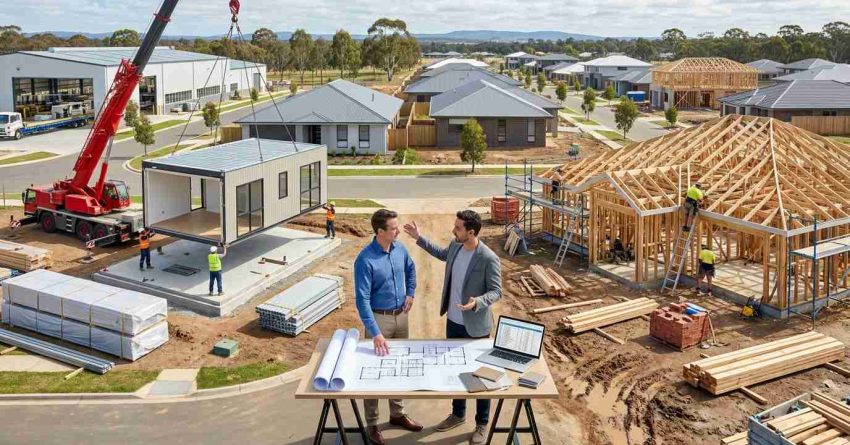
The factory construction process follows a controlled sequence: framing, insulation, electrical rough-in, plumbing rough-in, interior finishing, and quality inspection — all completed before the sections leave the plant. Once delivered, a local crew completes the foundation connection, utility hookups, and any remaining exterior work. The controlled environment reduces weather delays and material waste, which is one reason prefab homes can be completed faster than comparable site-built structures.
What Is a Custom Home?
A custom home is a one-of-a-kind residential structure designed and built specifically for a single buyer on a specific piece of land. Every element — from the floor plan and ceiling height to the window placement and material selections — is determined by the homeowner in collaboration with an architect and a general contractor.
Custom homes are entirely site-built, meaning all construction happens on the property from the ground up. There are no pre-built sections or factory components. The result is a home that reflects the buyer’s exact preferences, lot conditions, and lifestyle requirements in a way that no prefab option can fully replicate.
The Custom Home Building Process
Building a custom home follows a sequential process that typically spans 12 to 24 months from design to move-in. The process begins with land acquisition and site evaluation, followed by architectural design, permitting, foundation work, framing, mechanical rough-ins, insulation, drywall, interior finishing, and final inspections. Each phase depends on the completion of the previous one, and delays in any stage — weather, permit approvals, subcontractor scheduling — extend the overall timeline.
Who Custom Homes Are Best For
Custom homes are best suited for buyers who have a clear vision of what they want, a flexible timeline, and a budget that can absorb the higher costs and potential overruns that come with complex, site-specific construction. They are also the right choice for buyers with unusual lots — steep grades, irregular shapes, or specific orientation requirements — where a standard prefab layout would not work.
Prefab vs Custom Home: Cost Comparison
Cost is the most significant practical difference between prefab and custom homes, and the gap is substantial. According to the U.S. Census Bureau’s Survey of Construction, the average sales price of a new site-built single-family home in the United States exceeded $400,000 in recent reporting periods, while manufactured homes averaged significantly less per square foot.
Whether you choose prefab or custom, most homeowners eventually invest in upgrades — our home remodeling costs resource explains what common improvement projects run and how to budget for them after move-in.
Prefab Home Cost Breakdown
Prefab home costs vary by type. Manufactured homes typically range from $50 to $100 per square foot for the unit itself, not including land, site preparation, foundation, and utility connections. Modular homes run higher — generally $100 to $200 per square foot — but include more design options and qualify for conventional financing. Total all-in costs for a modular home on a prepared lot commonly fall between $150,000 and $400,000, depending on size, location, and finish level.
Custom Home Cost Breakdown
Custom home construction in the United States typically ranges from $200 to $500 per square foot, with high-end custom builds in premium markets exceeding that range. A 2,000-square-foot custom home at the national average cost lands between $400,000 and $1,000,000 when land, design fees, permits, and site work are included. Cost overruns of 10 to 20 percent above the original budget are common in custom construction due to design changes, material price fluctuations, and unforeseen site conditions.
| Factor | Prefab (Modular) | Custom Home |
| Cost per sq ft (structure) | $100–$200 | $200–$500 |
| Typical all-in range | $150K–$400K | $400K–$1M+ |
| Land cost | Separate | Separate |
| Budget overrun risk | Low | Moderate to High |
| Financing type | Conventional / FHA | Construction loan |
Build Time: Prefab vs Custom
Build time is one of the clearest advantages prefab homes hold over custom construction. A modular home can typically be completed and ready for occupancy in three to six months from order to move-in. The factory construction phase runs concurrently with site preparation, which compresses the overall schedule significantly.
Custom home construction takes considerably longer. Most custom builds require 12 to 24 months from design approval to certificate of occupancy, and complex projects or those in high-demand markets can extend beyond two years. Permit timelines, subcontractor availability, and weather all affect the schedule in ways that factory construction avoids.
For buyers with a firm move-in deadline — a lease expiring, a school enrollment date, or a job relocation — the prefab timeline is a meaningful practical advantage.
During the final stages of any new home build — prefab or custom — small finishing tasks often remain, and our handyman services team is equipped to handle punch-list repairs, installations, and touch-ups quickly.
Quality and Customization: What You Actually Get
The assumption that prefab homes are lower quality than custom homes is outdated. Modern modular construction uses the same materials as site-built homes and must pass the same local building inspections. Factory conditions actually reduce certain quality risks — lumber stays dry, measurements are precise, and every component is inspected before it leaves the plant.
Prefab Home Quality and Design Options
Modular homes today offer a wide range of floor plans, exterior styles, and interior finish packages. Buyers can select from dozens of pre-designed layouts and customize finishes, fixtures, and features within the manufacturer’s system. The limitation is that customization happens within a defined framework — structural changes to the base design are limited or unavailable depending on the manufacturer.
For homeowners who want to personalize a prefab home after delivery, interior upgrades like built-ins and trim work are achievable — our custom carpentry work outlines the full scope of what skilled carpenters can add to any home.
Custom Home Quality and Design Freedom
Custom homes offer complete design freedom. Every room dimension, ceiling height, window size, material selection, and mechanical system specification is determined by the buyer. This level of control produces a home that fits the owner’s life precisely — but it also introduces more variables, more decisions, and more opportunities for costly changes mid-construction. Quality in a custom home depends heavily on the builder’s experience, subcontractor relationships, and the buyer’s ability to make timely decisions throughout the process.
Financing, Resale Value, and Long-Term Ownership
Financing a prefab home depends on the type. Modular homes on permanent foundations qualify for conventional mortgages, FHA loans, and VA loans — the same products available for site-built homes. Manufactured homes on non-permanent foundations face more limited financing options and typically require specialized loan products with higher interest rates and shorter terms.
Custom homes are financed through construction loans during the build phase, which convert to permanent mortgages at completion. Construction loans carry higher interest rates and require more documentation than standard purchase mortgages, and the buyer pays interest on drawn funds throughout the build.
Resale value follows a similar pattern. Modular homes on permanent foundations generally appreciate in line with comparable site-built homes in the same market. Manufactured homes historically depreciate more like vehicles than real estate, though land-home packages in desirable areas can hold value better than the structure alone.
Long-term ownership of any home depends on keeping major systems in good condition, and scheduling regular roofing inspection services is one of the most important steps to protecting your investment over time.
Which Option Is Right for You?
The right choice between prefab and custom depends on four practical factors: budget, timeline, design requirements, and land situation.
Choose a prefab modular home if you need to move in within six months, your budget is under $400,000 all-in, your lot is relatively flat and accessible, and you are comfortable selecting from a defined range of floor plans and finishes.
Choose a custom home if you have a specific vision that no existing floor plan can accommodate, your lot has unusual characteristics that require site-specific design, your budget exceeds $500,000, and you have 18 to 24 months available before you need to occupy the home.
Once you have settled on your home type and moved in, one of the fastest ways to personalize any space is a fresh coat of paint — our interior painting services covers what professional painters handle and how to get an accurate quote.
For buyers who fall between these two profiles — wanting more customization than a standard prefab offers but less complexity than full custom construction — semi-custom modular options and panelized systems offer a middle path worth exploring. You can also explore prefab ADUs and home additions as a way to expand an existing property without committing to a full new build.
Home Maintenance After You Move In
Whether you choose a prefab or a custom home, the ongoing maintenance requirements are largely the same. Both home types need regular attention to HVAC systems, plumbing, electrical, roofing, and exterior surfaces to stay safe, efficient, and structurally sound.
Regardless of which home type you choose, climate control is a year-round priority — our HVAC maintenance plans explains what routine service includes and how to keep your system running efficiently in any home.
New homes — whether prefab or site-built — can develop plumbing issues as systems settle, and our plumbing repair services team provides fast, reliable diagnosis and repair for any residential plumbing problem.
Electrical safety is critical in any newly occupied home, and our electrical inspection services covers what a professional inspection includes and when homeowners should schedule one.
Mr. Local Services connects homeowners in both prefab and custom homes with skilled professionals across every maintenance and repair category — so no matter which path you choose, you have a reliable team ready when you need them.
Conclusion
Prefab and custom homes each serve a distinct buyer profile. Prefab modular construction delivers speed, cost predictability, and factory-controlled quality. Custom construction delivers complete design freedom and site-specific precision at a higher cost and longer timeline.
The decision comes down to what you value most: efficiency and budget control, or total creative control and a home built exactly to your specifications. Both paths lead to a livable, quality home when executed well.
Mr. Local Services supports homeowners at every stage after move-in — from routine maintenance to urgent repairs — so your home stays safe, functional, and well-maintained year-round. Contact us today to connect with skilled professionals in your area.
Frequently Asked Questions
Are prefab homes as good quality as custom homes?
Modern modular prefab homes use the same materials as site-built homes and must pass identical local building inspections. Factory construction reduces weather-related delays and measurement errors, making quality control more consistent than many buyers expect.
How much cheaper is a prefab home compared to a custom home?
Prefab modular homes typically cost $100 to $200 per square foot, while custom homes run $200 to $500 per square foot. All-in, a prefab home can cost 30 to 50 percent less than a comparable custom build in the same market.
Do prefab homes hold their value over time?
Modular homes on permanent foundations generally appreciate in line with site-built homes in the same neighborhood. Manufactured homes on non-permanent foundations tend to depreciate more, similar to vehicles, unless the land is included in the purchase.
How long does it take to build a prefab home vs a custom home?
A prefab modular home typically takes three to six months from order to move-in. A custom home takes 12 to 24 months from design approval to occupancy, depending on complexity, permitting, and builder availability.
Can I customize a prefab home?
Yes, within limits. Most modular manufacturers offer dozens of floor plans and a range of finish packages. Structural changes to the base design are limited, but interior upgrades — flooring, cabinetry, fixtures, and carpentry — can be added after delivery.
What type of loan do I need for a prefab home?
Modular homes on permanent foundations qualify for conventional mortgages, FHA loans, and VA loans. Manufactured homes on non-permanent foundations typically require specialized loan products, which may carry higher rates and shorter repayment terms.
Is a custom home worth the extra cost?
A custom home is worth the extra cost when your lot has specific requirements, your design vision cannot be met by existing floor plans, and you have the budget and timeline to manage a 12-to-24-month construction process without financial strain.