The prefab home quality control process is a multi-stage system of inspections, verifications, and certifications that begins on the factory floor and continues through on-site installation and final move-in approval. Each stage is designed to catch structural, mechanical, and finish defects before they become costly problems for homeowners.
Skipping or rushing any part of this process is one of the most common reasons prefab homeowners face unexpected repair costs within the first year of ownership.
This guide walks through every stage of the quality control process — what gets inspected, who performs the checks, and what homeowners should verify before signing off on their new home.
What Is the Prefab Home Quality Control Process?
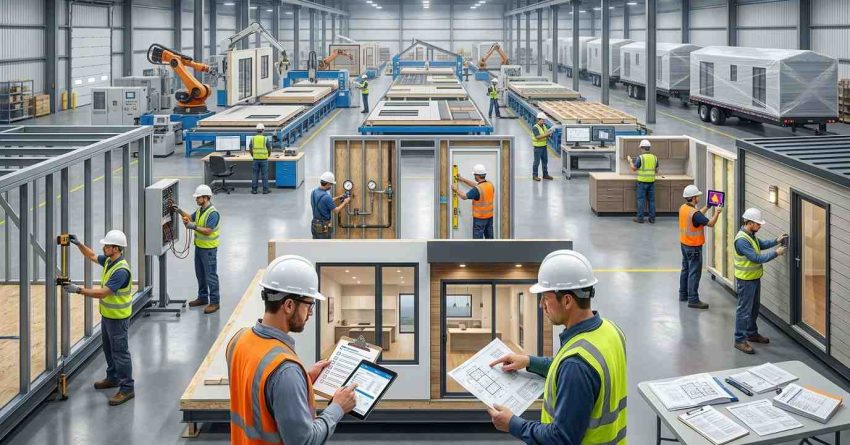
The prefab home quality control process is a structured series of inspections and compliance checks applied to a factory-built home at each phase of its construction, delivery, and installation. Unlike site-built homes, where inspections happen incrementally as work progresses on a lot, prefab homes are largely built in a controlled factory environment — which means quality control must be embedded into the manufacturing process itself.
The process typically covers five core stages: factory material verification, structural assembly checks, pre-delivery inspection, on-site installation review, and post-installation punch list completion. Each stage has specific checkpoints, responsible parties, and documentation requirements.
Understanding the quality control process starts with knowing how prefab homes are built — our prefab home overview covers the full construction model, from factory design to site delivery, giving you the foundation you need to evaluate quality at every stage.
Why Quality Control Matters in Prefab Construction
Prefab homes are built to HUD code standards or state-specific modular building codes, depending on the construction type. These codes define minimum requirements for structural integrity, fire safety, energy efficiency, and mechanical systems. Quality control is the mechanism that ensures those standards are actually met — not just on paper, but in the physical home delivered to your property.
Defects that go undetected during factory production are significantly harder and more expensive to correct after installation. A misaligned wall panel, an improperly sealed roof joint, or a plumbing connection that was never pressure-tested can cause serious damage over time. Rigorous quality control at every stage is what separates a well-built prefab home from one that generates ongoing maintenance problems.
Stage 1 — Factory Inspection and Material Verification
Quality control begins before a single panel is assembled. At the factory stage, inspectors verify that all incoming materials meet the specifications outlined in the home’s engineering drawings and comply with applicable building codes. This includes lumber grading, insulation R-values, roofing materials, window and door units, and all mechanical components.
Key Materials and Components Checked at the Factory
Factory inspectors review structural lumber and engineered wood products for grade compliance, moisture content, and dimensional accuracy. Insulation materials are checked against thermal performance specifications. Roofing panels, wall sections, and floor systems are verified for correct assembly before they move to the next production stage.
Mechanical components — including electrical panels, plumbing rough-ins, and HVAC equipment — are staged and verified against the home’s specifications before installation begins. Any materials that fail inspection are flagged, quarantined, and replaced before production continues.
Factory inspections apply to all modular and compact builds, and if you are exploring smaller footprints, our guide to tiny home construction standards explains how quality benchmarks are applied specifically to compact prefab designs.
Stage 2 — Structural Assembly and Systems Integration Checks
Once materials are verified, the home moves into structural assembly. This is where wall panels, floor systems, and roof sections are constructed and joined. Quality control at this stage focuses on dimensional accuracy, fastener placement, structural connections, and the integration of mechanical systems.
Electrical, Plumbing, and HVAC Verification During Assembly
Electrical wiring, outlet placement, panel sizing, and circuit labeling are all verified during assembly against the home’s electrical drawings and applicable code requirements. Electrical verification during assembly is one of the most critical checkpoints in the process — our electrical system inspection resource explains what licensed electricians look for during both factory and on-site reviews of prefab wiring and panel installations.
Plumbing lines, supply connections, and drain systems are verified for correct routing, slope, and connection integrity. Our guide to plumbing installation checks outlines the specific standards that must be met before a prefab home is cleared for delivery.
Heating, ventilation, and air conditioning systems are tested for proper function and code compliance during factory assembly. Our HVAC system verification details what those checks involve and why they matter for long-term comfort and energy efficiency.
Stage 3 — Pre-Delivery Inspection and Transport Preparation
Before a prefab home leaves the factory, it undergoes a comprehensive pre-delivery inspection. This is the manufacturer’s final opportunity to identify and correct defects before the home is loaded onto transport vehicles and shipped to the installation site.
What Happens During the Final Factory Walkthrough
The final factory walkthrough is a systematic review of every completed section of the home. Inspectors check exterior cladding, roofing, window and door installations, interior finishes, and all mechanical systems. Any defects identified during this walkthrough are documented on a pre-delivery punch list and corrected before the home is released for transport.
Transport preparation is also part of this stage. Structural bracing is added to protect the home during transit, and all openings are sealed to prevent moisture intrusion during shipping. The home is then inspected one final time before loading to confirm that transport preparations have not introduced any new damage.
Stage 4 — On-Site Installation and Foundation Inspection
When the prefab home arrives at the installation site, quality control shifts to the foundation, site preparation, and the physical process of setting and connecting the home’s modules or panels. This stage involves both the installation crew and, in most jurisdictions, a local building inspector.
Common On-Site Issues Found During Prefab Installation
The most frequently identified on-site issues include foundation levelness problems, module alignment gaps, improper anchor bolt placement, and utility connection errors. Foundation levelness is particularly critical — even small deviations can cause doors and windows to bind, floors to slope, and structural connections to bear uneven loads.
Module-to-module connections are inspected for proper fastening, weatherproofing, and alignment. Utility connections — including electrical service entry, water supply, drain connections, and HVAC ductwork — are verified before the home is closed up for interior finishing.
When minor corrections or adjustments are needed during on-site installation, having reliable help on hand makes a significant difference — our on-site installation support explains how skilled handyman professionals assist with the final fit-out and punch list corrections.
Stage 5 — Post-Installation Inspection and Punch List Completion
After the home is set on its foundation and all utility connections are made, a post-installation inspection is conducted to identify any remaining defects or incomplete work. This inspection generates a punch list — a documented record of every item that must be corrected before the home is considered complete and ready for occupancy.
What a Prefab Home Punch List Typically Includes
A standard prefab home punch list covers interior finish items such as drywall gaps, ceiling seams, trim alignment, flooring transitions, and paint touch-ups. It also includes mechanical system verification — confirming that all outlets are functional, plumbing fixtures operate correctly, HVAC systems cycle properly, and all appliances are connected and tested.
Punch lists frequently include interior finish corrections such as drywall gaps, ceiling seams, and surface imperfections — our drywall and ceiling repairs covers how these issues are identified and resolved after installation.
Flooring alignment, gaps at transitions, and surface damage are among the most common punch list items in prefab homes — our flooring installation issues guide explains what to look for and how corrections are handled before final sign-off.
The punch list is not complete until every item is corrected and verified. Homeowners should never accept a home with an open punch list unless a written agreement specifies a completion timeline and holds funds in escrow until all items are resolved.
Third-Party Inspections and Certifications for Prefab Homes
Manufacturer quality control is important, but it is not a substitute for independent third-party inspection. A qualified third-party inspector — one who is not employed by the manufacturer or the installation contractor — provides an objective assessment of the home’s condition at key stages of the process.
Third-party inspectors routinely flag window seal failures and improper fits as high-priority defects — our window seal and fit inspection explains what a proper window installation looks like and how to identify problems before they cause energy loss or water damage.
Door alignment and weatherstripping are standard items on any third-party inspection checklist — our door alignment inspection resource covers what inspectors check and how misaligned doors are corrected in prefab installations.
Prefab homes built to HUD code standards carry a HUD label — a small metal plate affixed to each section of the home that certifies it was built in compliance with the Federal Manufactured Home Construction and Safety Standards. Modular homes built to state building codes receive a state certification label instead. Both labels are permanent records of code compliance and should be verified before purchase and retained for the life of the home.
Homeowners purchasing a prefab home should request copies of all factory inspection reports, third-party inspection findings, and certification documentation before closing. These records are essential for warranty claims, insurance purposes, and future resale.
How Homeowners Can Protect Quality After Move-In
Quality control does not end at move-in. Prefab homes require the same ongoing maintenance as any other residential property, and some components are particularly vulnerable in the first few years after installation as the home settles and adjusts to site conditions.
Protecting your prefab home after move-in includes monitoring for moisture intrusion at seams, joints, and roof connections — our water damage prevention guide explains the early warning signs and the steps homeowners should take to prevent costly structural damage.
The roof is one of the most vulnerable components of a prefab home after installation, and regular inspection is essential — our prefab roof maintenance outlines what to check seasonally and when to call a professional for repairs.
Exterior paint and sealant applied at the factory can degrade faster than expected depending on climate and site conditions — our exterior paint protection guide explains how to maintain and refresh your prefab home’s exterior finish to prevent moisture infiltration and surface deterioration.
Homeowners should also schedule a follow-up inspection six to twelve months after move-in to identify any settling-related issues, including door and window alignment changes, caulk separation at exterior joints, and any signs of moisture intrusion at module connection points.
Quality control is just one part of the broader prefab ownership journey — our prefab home ownership guide walks through every stage from selecting a manufacturer to managing your home long-term, giving you a complete picture of what to expect.
Conclusion
The prefab home quality control process spans five distinct stages — from factory material verification through post-installation punch list completion — each designed to catch defects before they become long-term problems. Third-party inspections and proper certification documentation add an independent layer of protection that manufacturer quality control alone cannot provide.
Homeowners who understand this process are better equipped to ask the right questions, verify the right documentation, and hold manufacturers and installers accountable at every stage.
At Mr. Local Services, our network of skilled professionals supports prefab homeowners through installation, inspection follow-up, and ongoing maintenance — so your home stays in the condition it was built to deliver.
Frequently Asked Questions
What is the quality control process for prefab homes?
The prefab home quality control process is a series of inspections conducted at the factory, during transport preparation, at on-site installation, and after final setup. Each stage verifies structural integrity, mechanical system performance, and finish quality against applicable building codes and manufacturer specifications.
Who inspects a prefab home before delivery?
Prefab homes are inspected by factory quality control personnel, third-party inspectors hired by the buyer or lender, and in some cases state or local building officials. The manufacturer’s in-house inspectors conduct ongoing checks during production, while third-party inspectors provide an independent review before and after delivery.
What are common quality issues found in prefab homes?
Common quality issues include foundation levelness problems, module alignment gaps, window and door seal failures, plumbing connection errors, electrical wiring deficiencies, and interior finish defects such as drywall gaps and flooring misalignment. Most of these issues are identifiable during the inspection process if proper protocols are followed.
Is a prefab home inspected the same way as a site-built home?
No. Prefab homes built to HUD code are inspected at the factory by HUD-approved inspection agencies rather than by local building departments. Modular prefab homes built to state codes receive inspections similar to site-built homes but with a significant portion of the inspection occurring at the factory before delivery.
What certifications should a prefab home have?
HUD-code manufactured homes should carry a HUD certification label on each section. Modular homes should carry a state certification label confirming compliance with the applicable state building code. Both labels are permanent records of code compliance and should be verified before purchase.
Can I hire my own inspector for a prefab home?
Yes. Hiring an independent third-party inspector is strongly recommended at two points: before the home leaves the factory and after on-site installation is complete. An independent inspector provides an objective assessment that is not influenced by the manufacturer’s or installer’s interests.
How long does the prefab home quality control process take?
The timeline varies by manufacturer and home complexity, but factory quality control is typically integrated into the production schedule of four to sixteen weeks. On-site inspection and punch list completion generally add one to four weeks after installation, depending on the number of items identified and the contractor’s responsiveness.