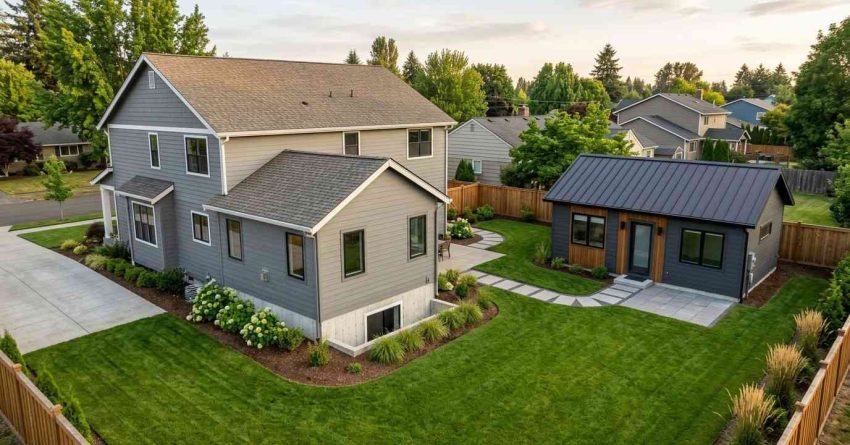
Building an ADU and adding onto your main house are two very different projects — one creates a separate living unit, the other expands your existing home. Choosing between them depends on your goals, budget, lot size, and local zoning rules. Both options can increase property value and usable space, but they serve different needs and come with different costs, timelines, and legal requirements.
Understanding the difference now saves you from costly mistakes later. The right choice depends on whether you need independent living space or connected square footage.
This guide breaks down both options clearly — covering definitions, cost differences, property value impact, and the specific situations where each choice makes the most sense.
What Is an ADU and What Does Adding to the Main House Mean?
Before comparing the two, it helps to understand exactly what each option involves and what it delivers.
Defining an ADU (Accessory Dwelling Unit)
An ADU, or accessory dwelling unit, is a self-contained residential structure built on the same lot as a primary home. It has its own entrance, kitchen, bathroom, and living area — functioning as a fully independent dwelling. ADUs come in several forms: detached units built separately from the main house, attached units sharing a wall, garage conversions, and basement apartments. They are commonly used for rental income, multigenerational living, or housing adult children or aging parents.
If you are exploring compact, self-contained living structures, our guide to tiny home options covers the full range of small-footprint builds available for residential properties — helping you understand how each type fits different lot sizes, budgets, and lifestyle needs.
What “Adding to the Main House” Actually Involves
A home addition is a structural expansion of the existing house — extending a room, adding a new floor, or building out a new wing. Unlike an ADU, a home addition connects directly to the main living space and shares the same entrance, utilities, and systems. Common addition types include bedroom additions, expanded kitchens, sunrooms, and second-story builds. The result is more square footage within the same dwelling, not a separate unit.
Key Differences Between an ADU and a Home Addition
The core distinction between these two options shapes every other decision — from permits to cost to how the space gets used.
Structural Separation and Living Independence
An ADU is designed to function independently. It has its own utilities, its own entrance, and its own address in many jurisdictions. A home addition is integrated into the existing structure — it shares the home’s HVAC system, electrical panel, plumbing lines, and interior access. This difference in independence affects everything from how the space is used to how it is taxed and insured.
Permitting, Zoning, and Legal Requirements
Both projects require permits, but ADUs face more complex regulatory requirements. Zoning laws govern where ADUs are allowed, how large they can be, how far they must sit from property lines, and whether owner-occupancy is required. Many states have passed ADU-friendly legislation in recent years, but local rules still vary significantly. Home additions also require building permits and must meet setback and height requirements, but they typically involve fewer layers of regulatory review than a new dwelling unit.
Navigating permits and zoning approvals is one of the most complex parts of any structural project — our remodeling services outlines how our team manages the full scope of residential additions and structural upgrades from planning through completion.
Cost Comparison: ADU vs. Home Addition
ADUs generally cost more than home additions of comparable square footage because they require complete, independent systems — separate plumbing, electrical, kitchen, and bathroom infrastructure. A detached ADU in the United States typically ranges from $100,000 to $300,000 or more depending on size, location, and finish level. A home addition typically costs between $80 and $200 per square foot, making a 400-square-foot addition roughly $32,000 to $80,000 in many markets, though costs vary widely by region and complexity.
Understanding what goes into carpentry and framing helps homeowners budget accurately and set realistic timelines for either project type, since structural labor represents a significant portion of total project cost for both options.
Which Option Adds More Value to Your Property?
Both ADUs and home additions increase property value, but they do so in different ways and at different rates.
ADUs tend to generate stronger returns in high-cost housing markets where rental demand is strong. A well-built ADU can produce ongoing rental income while also increasing the appraised value of the property. In markets like California, New York, and other high-density urban areas, ADUs have become a significant driver of property value appreciation.
Home additions add value by increasing the livable square footage of the primary residence — a metric that directly affects comparable sales and appraisal values. Bedroom additions, in particular, tend to deliver strong returns because they increase the home’s bedroom count, which is a primary factor in how homes are priced and compared.
Interior finishing quality directly affects resale value, and our drywall and finishing services ensure that both ADU builds and home additions meet the standards buyers and appraisers expect.
When an ADU Makes More Sense
An ADU is the better choice when the goal is to create a fully independent living space — whether for rental income, multigenerational housing, or a private guest suite. Homeowners who want to generate monthly rental revenue without selling the property benefit most from an ADU, since it functions as a separate rentable unit. Families housing aging parents or adult children who need privacy and independence also find ADUs more practical than a connected addition.
A self-contained ADU requires its own plumbing infrastructure, and our plumbing for ADUs covers everything from separate water supply lines to independent drainage systems that keep the unit fully functional.
Adding a separate dwelling unit almost always requires a dedicated electrical connection — our electrical panel upgrades service handles the load calculations, subpanel installation, and code compliance your ADU project requires.
When Adding to the Main House Makes More Sense
A home addition is the better choice when the goal is to expand the primary living space for the household — adding a bedroom for a growing family, enlarging a kitchen, or creating a dedicated home office. If the new space needs to feel like a natural part of the home rather than a separate unit, an addition delivers that integration. Home additions are also more practical when lot size or zoning restrictions make an ADU impossible or impractical.
Home additions that expand living space typically require new window installations to meet building codes and natural light requirements — our window installation team handles sizing, placement, and energy-efficient glazing for any addition layout.
Remodeling and Construction Considerations for Both Options
Regardless of which path you choose, both ADUs and home additions involve significant construction work that requires careful planning, licensed contractors, and quality materials.
Foundation work, framing, insulation, and weatherproofing are required for both. Interior finishing — including flooring, drywall, painting, and trim — determines the final quality and livability of the space. Consistent flooring installation across the new space ties the project together and ensures the finished area meets both aesthetic and durability standards.
Timeline expectations matter too. A straightforward home addition can take three to six months from permit approval to completion. A detached ADU typically takes six to twelve months, depending on complexity, contractor availability, and local permit processing times.
The final step in any structural build is surface finishing, and our interior painting services deliver clean, professional results that make both ADUs and home additions move-in ready.
Conclusion
Choosing between an ADU and a home addition comes down to one core question: do you need an independent living unit or more connected space? Both options increase property value and usable square footage, but they serve different goals and require different investments.
ADUs deliver rental income potential and housing independence. Home additions deliver integrated square footage and seamless expansion of the primary residence.
At Mr. Local Services, our team handles every phase of both projects — from structural framing and plumbing to finishing and painting. Contact us today to discuss which option fits your property, your goals, and your budget.
Frequently Asked Questions
Can I build an ADU on any residential property?
Not always. ADU eligibility depends on local zoning laws, lot size minimums, setback requirements, and in some areas, owner-occupancy rules. Check with your local planning department before starting any ADU project.
Is an ADU considered part of the main house for tax purposes?
In most jurisdictions, an ADU is assessed separately and may increase your property tax bill. Some states offer exemptions or delayed reassessment for ADUs used for family housing. Consult a local tax professional for guidance specific to your area.
How long does it take to build an ADU compared to a home addition?
A home addition typically takes three to six months from permit approval to completion. A detached ADU generally takes six to twelve months, depending on size, site conditions, and local permit timelines.
Do I need separate utilities for an ADU?
Most ADUs require at least a separate electrical connection and often separate plumbing service. Whether full utility separation is required depends on local codes and the type of ADU being built.
Which option is better for multigenerational living?
An ADU is generally better for multigenerational living when privacy and independence are priorities. A home addition works better when the family wants to share common spaces while gaining additional bedrooms or living areas.
Does adding an ADU require a separate address?
In many jurisdictions, a permitted ADU receives its own address, which is required for mail delivery, emergency services, and rental listing purposes. Requirements vary by city and county.
Can a home addition later be converted into an ADU?
In some cases, yes — but it typically requires additional permitting, utility separation, and the addition of an independent entrance and kitchen. Converting an addition into a legal ADU is a separate project with its own regulatory requirements.