An accessory dwelling unit built for aging parents gives your family a practical, affordable way to provide close care without sacrificing anyone’s independence. The right ADU combines accessible design, safety features, and durable construction to create a comfortable long-term living space on your existing property.
As more families choose home-based care over assisted living facilities, demand for senior-ready ADUs has grown significantly across the United States.
This guide covers ADU types, essential accessibility features, planning steps, cost expectations, and year-round maintenance to help you make confident decisions.
What Is an ADU for Aging Parents?
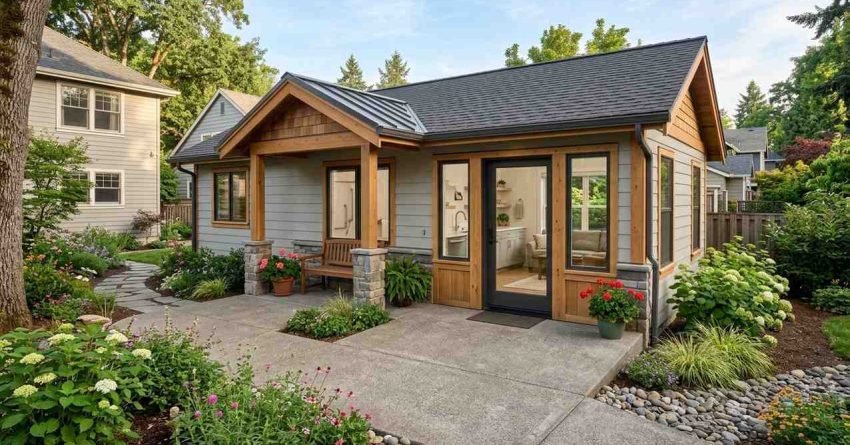
An accessory dwelling unit (ADU) is a secondary residential structure built on the same lot as a primary home. When designed for aging parents, it functions as a private, self-contained living space that keeps family members close while preserving their independence and dignity.
Unlike a standard guest room or basement conversion, a senior-focused ADU is planned from the start with accessibility, safety, and long-term livability in mind. It typically includes a bedroom, bathroom, kitchen or kitchenette, and living area — all within a compact, single-level footprint that eliminates the mobility challenges of multi-story living.
Building an ADU for aging parents is one of the most impactful decisions a family can make, and our safety and mobility services covers the full range of home modifications that make any living space safer and more accessible for seniors.
Types of ADUs Suited for Aging Parents
Choosing the right ADU structure depends on your lot size, budget, zoning rules, and how much privacy your parents need. Three main types are commonly used for senior family members.
Attached ADUs
An attached ADU shares at least one wall with the primary home. This structure is often the most cost-effective option because it uses existing foundation and roofline elements. For aging parents, the shared wall can be an advantage — it allows for easy interior access between units if needed for caregiving, while still maintaining separate entrances and living spaces.
Detached ADUs
A detached ADU is a fully separate structure built on the same lot, typically in the backyard. It offers the highest level of privacy and independence for aging parents who are still active and self-sufficient. Detached units can be purpose-built with senior-specific layouts from the ground up, making them the most flexible option for incorporating accessibility features.
Garage Conversions and Interior ADUs
Converting an existing garage or unused interior space — such as a basement or large bonus room — into a living unit is often the fastest and most affordable path to creating an ADU. For aging parents, a garage conversion on the ground level eliminates stair concerns entirely. Interior ADUs work well when the existing space can be reconfigured to meet accessibility requirements without major structural changes.
If you want a step-by-step breakdown of the conversion process, a dedicated guide on how to convert a garage into an ADU covers the full scope of work, costs, and permit requirements.
Key Features an ADU Needs for Aging in Place
A standard residential build is not automatically suitable for senior living. Aging in place requires deliberate design choices that address mobility limitations, fall risk, and emergency response needs before they become urgent problems.
From grab bars to zero-threshold entries, the right aging in place modifications transform a standard ADU into a space where seniors can live independently and safely for years.
Accessibility and Mobility Modifications
The most important accessibility features for a senior ADU address movement through the space safely and without assistance. Key modifications include:
- Zero-step entry at all exterior doors to eliminate trip hazards
- Widened doorways (minimum 36 inches) to accommodate walkers and wheelchairs
- Open floor plan with clear turning radius in key areas
- Roll-under kitchen and bathroom counters for seated use
- Lever-style door handles and faucets that require no grip strength
- Curbless walk-in shower with a built-in bench and handheld showerhead
Structural changes like widened doorways and built-in storage require precise custom carpentry work to meet both accessibility standards and the practical needs of aging residents.
For a complete room-by-room breakdown of what to modify, a dedicated aging in place home modification checklist walks through every priority upgrade by area and urgency level.
Safety Upgrades for Senior Living
Beyond mobility, safety systems protect aging parents from the most common household hazards — falls, electrical failures, and delayed emergency response. Priority safety upgrades include:
- Grab bars in the bathroom at the toilet, shower, and tub
- Non-slip flooring throughout, especially in wet areas
- Bright, even lighting in hallways, stairs, and entry points
- GFCI outlets in all wet areas to prevent electrical shock
- Emergency call system or smart home alert integration
- Stair lift or ramp if any level changes exist in the unit
Proper lighting, GFCI outlets, and emergency alert wiring are all part of the electrical safety upgrades that every senior-ready ADU should include before move-in.
Senior bathroom safety is one of the highest-priority areas in any ADU build. A focused guide on senior bathroom safety modifications covers grab bar placement, shower design, and flooring choices in full detail.
Planning and Building an ADU for Aging Parents
Building an ADU involves more than construction. It requires navigating local regulations, securing permits, managing a realistic timeline, and budgeting accurately before a single wall goes up.
Whether you are converting a garage or adding a new structure, exploring your ADU remodeling options with an experienced contractor ensures the project meets code, budget, and accessibility requirements from the start.
Zoning, Permits, and Local Regulations
ADU regulations vary significantly by city, county, and state. Before committing to a design, verify the following with your local planning department:
- Zoning classification — confirm ADUs are permitted on your lot type
- Maximum unit size — most jurisdictions cap ADU square footage
- Setback requirements — minimum distances from property lines
- Owner-occupancy rules — some areas require the primary homeowner to live on-site
- Utility connection requirements — separate meters vs. shared connections
- Accessibility code compliance — some jurisdictions require ADA-aligned features
Regulations change frequently, and state-level ADU laws have expanded in many areas. A dedicated resource on ADU zoning laws and permit requirements by state provides current guidance for homeowners navigating this process.
Once permits are secured, many of the smaller pre-construction tasks — from site prep to fixture installation — can be handled efficiently with local handyman support.
Construction Timeline and Cost Expectations
ADU construction timelines vary based on type, size, and site conditions. General estimates:
- Garage conversion: 2–4 months from permit approval
- Attached ADU addition: 4–7 months
- Detached new build: 6–12 months
Costs depend heavily on location, materials, and accessibility requirements. A thorough ADU cost breakdown and financing options guide covers average costs by type, what drives price variation, and financing paths available to homeowners.
Interior finishing is one of the final and most visible stages of ADU construction, and quality drywall and ceiling work ensures the space looks polished and is ready for occupancy on schedule.
How an ADU Supports Long-Term Family Care
An ADU built for aging parents does more than provide housing — it creates a sustainable caregiving structure that benefits the entire family over time.
Having parents nearby reduces emergency response time, lowers the cost of professional caregiving, and allows family members to provide daily support without the disruption of shared living spaces. For parents, proximity to family reduces social isolation, which is one of the most significant health risks for older adults.
Compared to assisted living facilities, an ADU offers substantially lower long-term costs while preserving the parent’s sense of home, routine, and autonomy. A detailed comparison of ADU vs. assisted living costs and care helps families evaluate both options side by side before making a decision.
For families exploring compact, purpose-built living spaces, our tiny home solutions outlines how small-footprint structures can be designed specifically for comfort, accessibility, and long-term senior living.
Maintaining an ADU for Aging Parents Year-Round
Once an ADU is occupied, consistent maintenance protects both the structure and the health of the person living in it. Senior living spaces require more frequent attention to systems that directly affect comfort, safety, and air quality.
Keeping an ADU comfortable year-round starts with reliable climate control — our HVAC maintenance plans ensure heating and cooling systems in senior living spaces are serviced regularly and performing safely.
Annual plumbing inspection services catch leaks, pressure issues, and aging pipe problems before they become costly emergencies in an ADU occupied by a senior family member.
Replacing worn or slippery surfaces with slip-resistant flooring options is one of the most practical maintenance upgrades for any ADU designed to support aging in place.
A seasonal maintenance schedule for a senior ADU should include HVAC filter changes every 60–90 days, annual plumbing inspections, quarterly checks of grab bars and safety hardware, and prompt replacement of any flooring that shows wear, lifting, or moisture damage.
Conclusion
An ADU for aging parents combines thoughtful design, accessible construction, and consistent maintenance to create a living space that supports independence, safety, and family connection. The right structure, features, and ongoing care make it a long-term solution that grows with your family’s needs.
Planning ahead — from zoning research to accessibility upgrades — prevents costly changes after construction and ensures the space works from day one. The investment pays off in reduced caregiving costs, improved quality of life, and peace of mind for the entire family.
Contact Mr. Local Services today to connect with experienced professionals who can plan, build, and maintain an ADU that meets your aging parents’ needs and your family’s long-term goals.
Frequently Asked Questions
What is the best type of ADU for aging parents?
A single-level detached or attached ADU with zero-step entry and an open floor plan is generally the best option. It eliminates stair hazards, allows for accessibility modifications, and provides the privacy most seniors prefer.
How much does it cost to build an ADU for aging parents?
Costs vary widely based on type and location. Garage conversions typically range from $50,000 to $150,000, while new detached builds can range from $100,000 to $300,000 or more depending on size, materials, and accessibility requirements.
Do I need a permit to build an ADU for my parents?
Yes. Most jurisdictions require building permits, zoning approval, and inspections for any ADU construction. Requirements vary by state and city, so checking with your local planning department before starting is essential.
What accessibility features are most important in a senior ADU?
Zero-step entry, widened doorways, a curbless shower, grab bars, lever-style hardware, and non-slip flooring are the highest-priority features. These address the most common mobility and fall-risk challenges for aging adults.
Can an ADU increase my property value?
Yes. A well-built ADU typically adds measurable value to a property by increasing usable square footage and rental or multi-generational living potential. Value impact depends on local real estate conditions and ADU quality.
How long does it take to build an ADU?
Timelines range from 2 to 12 months depending on ADU type. Garage conversions are fastest at 2–4 months. New detached builds take the longest, often 6–12 months from permit approval to occupancy.
What maintenance does a senior ADU require?
Key maintenance tasks include HVAC servicing every season, annual plumbing inspections, quarterly safety hardware checks, and flooring replacement when wear or moisture damage appears. Consistent upkeep protects both the structure and the resident.