
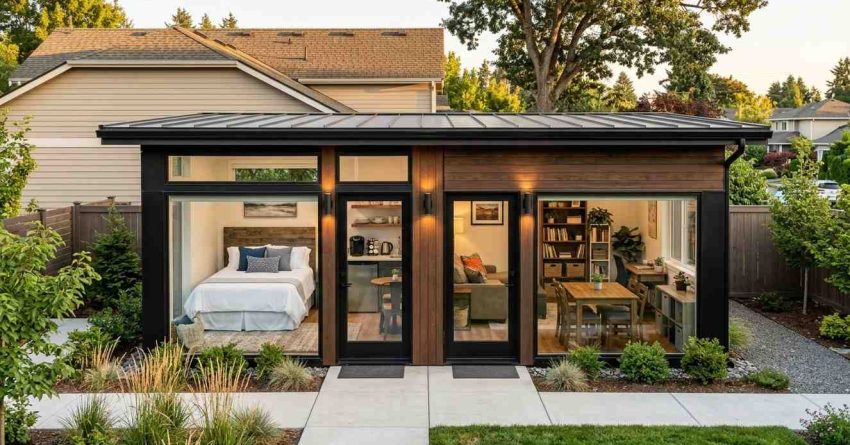
Choosing between a long-term and short-term ADU rental strategy is one of the most financially significant decisions a homeowner or landlord can make — and the right answer depends on your property, your schedule, and your income goals.
Short-term rentals can generate two to three times the monthly income of long-term leases in high-demand markets, but they require significantly more time, maintenance, and operational involvement to sustain that return.
This guide breaks down both rental models clearly — covering income potential, costs, management demands, and the key factors that should drive your decision so you can choose the strategy that works best for your property and your life.
What Is an ADU Rental Strategy?
An ADU rental strategy is the approach a homeowner or landlord uses to generate income from an accessory dwelling unit — a secondary living space on a residential property such as a garage conversion, basement apartment, detached backyard unit, or attached in-law suite.
Your rental strategy determines how you price the unit, who you rent to, how long they stay, and how much time and money you invest in managing the property. Every decision that follows — from furnishing and maintenance to legal compliance and pricing — flows from this foundational choice.
How Rental Duration Shapes Your ADU Income
Rental duration is the single biggest variable in your ADU income model. Long-term rentals generate predictable monthly income with minimal turnover. Short-term rentals generate higher nightly rates but require active management, frequent cleaning, and consistent marketing to maintain occupancy.
Understanding your ADU rental strategy starts with knowing what type of structure you are working with — our guide to ADU housing options covers every ADU type, from garage conversions to detached units, so you can match your structure to the right rental approach.
Long-Term ADU Rentals — Stability, Simplicity, and Steady Income
A long-term ADU rental involves leasing your unit to a single tenant or household under a standard lease agreement, typically for six months to one year or longer. The tenant pays a fixed monthly rent, and you as the landlord are responsible for maintaining the property and responding to repair requests.
Long-term rentals offer predictable cash flow, lower operational involvement, and reduced wear and tear from frequent turnover. You spend less time managing the unit day to day, and your income is consistent regardless of seasonal demand or local tourism trends.
The trade-off is income ceiling. In most U.S. markets, long-term ADU rents range from $800 to $2,500 per month depending on location, size, and amenities — a reliable return, but typically lower than what a well-managed short-term rental can produce in the same market.
Who Benefits Most from Long-Term ADU Tenants?
Long-term ADU rentals are the better fit for homeowners who want passive income without active management, landlords managing multiple properties who need predictability, and property owners in markets where short-term rental regulations are restrictive or where tourism demand is low.
Long-term rentals require consistent upkeep between tenancies and during occupancy — connecting with reliable handyman maintenance support ensures your ADU stays in tenant-ready condition without costly emergency repairs eating into your monthly return.
Short-Term ADU Rentals — Higher Earning Potential with More Involvement
A short-term ADU rental involves renting your unit to guests for stays ranging from one night to a few weeks, typically through platforms such as Airbnb or Vrbo. Pricing is dynamic — you set nightly rates that fluctuate based on demand, season, local events, and competition.
In high-demand markets, short-term ADU rentals can generate $3,000 to $6,000 or more per month during peak seasons, significantly outperforming long-term lease income. However, that income is not guaranteed. Occupancy rates vary, and your earnings depend heavily on your listing quality, guest reviews, pricing strategy, and the time you invest in managing the property.
Short-term rentals also carry higher operating costs. You are responsible for furnishing the unit, providing linens and supplies, handling guest communication, and coordinating cleaning and maintenance between every stay.
What Does It Actually Cost to Run a Short-Term ADU Rental?
Operating costs for a short-term ADU rental typically include platform fees of 3% to 5% per booking, professional cleaning costs of $80 to $200 per turnover, supplies and restocking, utilities, and ongoing maintenance. These costs can reduce your gross income by 30% to 50% depending on your market and management approach.
Short-term rentals demand turnover cleaning after every guest stay, and scheduling reliable professional cleaning services between bookings is one of the most important operational decisions you will make as a short-term ADU host — inconsistent cleaning is the leading cause of negative guest reviews.
Long-Term vs Short-Term ADU Rental — Side-by-Side Comparison
| Factor | Long-Term Rental | Short-Term Rental |
| Monthly income potential | $800–$2,500 | $2,000–$6,000+ (variable) |
| Income consistency | High — fixed monthly | Low to medium — seasonal |
| Management time required | Low | High |
| Turnover frequency | Low — 1–2x per year | High — weekly or more |
| Furnishing required | Optional | Required |
| Cleaning costs | Low | High — every stay |
| Regulatory complexity | Moderate | High — varies by city |
| Tenant screening required | Yes | No — platform handles |
| Wear and tear | Moderate | Higher — frequent guests |
| Best for | Passive income seekers | Active income maximizers |
This comparison reflects general market conditions across the USA. Income figures vary significantly by location, ADU size, and local demand.
Key Factors That Should Drive Your Decision
No single rental model is universally better. The right choice depends on five factors specific to your situation.
Your local market demand. In cities with strong tourism, business travel, or university populations, short-term rentals can dramatically outperform long-term leases. In suburban or rural markets with low visitor traffic, long-term rentals are typically more reliable.
Your available time. Short-term rentals require active management — guest communication, scheduling, pricing updates, and coordination of cleaning and repairs. If you have limited time or manage multiple properties, long-term rentals are the more sustainable model.
Your financial goals. If you need consistent, predictable income to cover a mortgage or supplement retirement, long-term rentals provide stability. If you are optimizing for maximum annual return and can absorb income variability, short-term rentals offer higher upside.
Your risk tolerance. Short-term rental income fluctuates with seasons, platform algorithm changes, and local competition. Long-term rental income is contractually fixed for the lease term.
Your ADU’s condition and amenities. Short-term guests expect a fully furnished, hotel-quality experience. Long-term tenants have different expectations. Investing in durable flooring solutions built for high-traffic use protects your property value regardless of which rental strategy you choose — but the level of finish and furnishing required differs significantly between models.
Local Regulations and Zoning Rules for ADU Rentals
Local regulations are one of the most important and most overlooked factors in this decision. Many U.S. cities and counties have enacted short-term rental ordinances that require permits, cap the number of rental nights per year, or restrict short-term rentals to owner-occupied properties.
Before committing to a short-term rental strategy, verify your local zoning laws, HOA rules if applicable, and any state-level short-term rental regulations. Violations can result in fines, forced removal of listings, or loss of rental income entirely. If you need detailed guidance on ADU zoning requirements in your area, exploring a dedicated resource on ADU zoning permit requirements can help you understand exactly what approvals are needed before you list.
How Property Condition Affects Your ADU Rental Strategy
The current condition of your ADU is a practical constraint that shapes which rental model is viable right now. A unit that needs significant repairs or cosmetic updates may not be ready for short-term guests, who expect a polished, move-in-ready experience from the moment they arrive.
Before committing to either rental model, evaluating your ADU’s current condition is essential — exploring your ADU remodeling options can help you determine whether upgrades are needed to meet tenant expectations or short-term guest standards, and what those improvements will cost relative to the income each model generates.
For many homeowners, a targeted pre-rental renovation — updated flooring, fresh paint, modernized fixtures — is the investment that unlocks the higher income potential of short-term rentals. A professional interior painting refresh can significantly improve first impressions for both long-term tenants and short-term guests at a fraction of the cost of a full remodel.
If your ADU is already in strong condition, the decision shifts entirely to market demand, management capacity, and regulatory compliance — the factors covered in the previous section.
Conclusion
Long-term ADU rentals offer stability, simplicity, and predictable income with minimal management involvement. Short-term ADU rentals offer higher earning potential but require active management, higher operating costs, and careful attention to local regulations.
The right strategy depends on your market, your time, your financial goals, and the current condition of your property. Both models can generate strong returns when matched to the right situation.
At Mr. Local Services, we help homeowners and landlords prepare their ADU for any rental strategy — from pre-rental remodeling and painting to ongoing cleaning and maintenance support. Contact us today to get your ADU rental-ready.
Frequently Asked Questions
Is a long-term or short-term ADU rental more profitable?
Short-term ADU rentals typically generate higher gross income in high-demand markets, but long-term rentals often produce stronger net income after accounting for cleaning costs, platform fees, furnishing, and management time. Profitability depends heavily on your local market and occupancy rate.
Do I need a permit to rent out my ADU short-term?
Most U.S. cities require a short-term rental permit before listing an ADU on platforms like Airbnb or Vrbo. Requirements vary by city and county, and some jurisdictions restrict short-term rentals to owner-occupied properties. Always verify local regulations before listing.
Can I switch from long-term to short-term ADU rental?
Yes, but the transition requires furnishing the unit, registering for any required short-term rental permits, and setting up operational systems for cleaning and guest management. The switch is most practical at the end of an existing lease term to avoid tenant displacement issues.
What is the average monthly income from an ADU rental?
Long-term ADU rentals in the USA typically generate $800 to $2,500 per month depending on location and unit size. Short-term ADU rentals in high-demand markets can generate $2,000 to $6,000 or more per month during peak seasons, though income varies significantly with occupancy rates.
How much does it cost to prepare an ADU for short-term rental?
Preparing an ADU for short-term rental typically costs $5,000 to $20,000 or more depending on the unit’s current condition, furnishing needs, and any required repairs or upgrades. Costs include furniture, appliances, linens, cosmetic improvements, and any permits or inspections required by local regulations.
What maintenance does a long-term ADU rental require?
Long-term ADU rentals require routine maintenance including HVAC servicing, plumbing inspections, appliance upkeep, and cosmetic repairs between tenancies. Most maintenance needs are predictable and can be scheduled in advance, making long-term rentals significantly easier to manage than short-term rentals.
Can I rent my ADU on Airbnb if I live on the same property?
In most jurisdictions, owner-occupied short-term rentals face fewer regulatory restrictions than non-owner-occupied rentals. Many cities that restrict short-term rentals still allow them when the owner lives on the same property. Check your local ordinances to confirm what is permitted in your specific location.


