
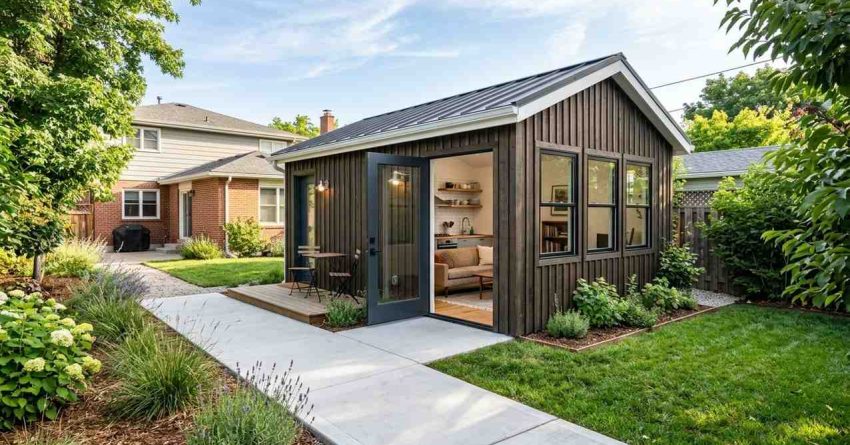
Converting a garage into an accessory dwelling unit is one of the most valuable home improvement projects available to property owners today — adding rentable square footage, multigenerational living space, or long-term property value without expanding your home’s footprint. The process involves far more than cosmetic upgrades: it requires structural assessment, permit approval, utility system installation, and finish work across multiple trades.
This guide walks homeowners, landlords, and property managers through every phase of a garage ADU conversion — from eligibility and planning through construction, cost, and hiring the right team.
Understanding what each phase involves helps you set realistic timelines, avoid costly surprises, and make confident decisions at every step of the project.
What Is a Garage Conversion ADU?
A garage conversion ADU is an accessory dwelling unit created by transforming an existing garage structure — attached or detached — into a fully habitable living space. Unlike a room addition, a garage conversion uses an existing structure, which typically reduces construction time and cost while still requiring full compliance with local building codes, zoning ordinances, and habitability standards.
ADUs created from garage conversions must meet the same minimum requirements as any other residential unit: adequate ceiling height, natural light, ventilation, heating, plumbing, and electrical service. The result is a self-contained living space that can function as a rental unit, guest suite, home office, or multigenerational housing option.
A garage conversion is one of the most involved remodeling projects a homeowner can undertake — our garage remodeling services explains the full scope of structural and interior work included in a professional conversion.
Attached vs. Detached Garage Conversions
An attached garage shares at least one wall with the main home, which simplifies utility connections — electrical, plumbing, and HVAC lines can often be extended from existing systems. A detached garage requires running new utility lines from the main structure or installing independent systems, which adds cost and complexity but also creates a more private, independent living unit.
Both types are eligible for ADU conversion in most jurisdictions, though detached conversions may face different setback requirements and utility connection rules depending on local zoning.
Junior ADU vs. Standard ADU: Key Differences
A Junior ADU (JADU) is a smaller unit — typically under 500 square feet — created within the existing footprint of a home or attached structure. Many states, including California, have specific JADU provisions that allow attached garage conversions with fewer permit requirements than a full ADU.
A standard ADU has no upper size limit set by state law in most jurisdictions (though local limits apply) and must include a full kitchen, bathroom, and independent living facilities. Understanding which category your project falls into affects permit requirements, utility connection rules, and rental income potential.
Is Your Garage Eligible for an ADU Conversion?
Not every garage is immediately ready for conversion. Eligibility depends on a combination of zoning rules, structural condition, and minimum size requirements. Evaluating these factors before investing in design or permits saves significant time and money.
Zoning Laws and Local ADU Regulations
Zoning eligibility is the first checkpoint. Most U.S. cities and counties now permit ADUs on single-family and multifamily residential lots following state-level ADU reform legislation, but local rules still govern setbacks, maximum unit size, owner-occupancy requirements, and parking replacement obligations.
Key questions to answer before proceeding:
- Is your property zoned for ADU use?
- Does your lot meet minimum size requirements?
- Are there setback restrictions that affect a detached garage?
- Does your jurisdiction require owner-occupancy?
- Will you need to replace lost parking spaces?
Your local planning or building department is the authoritative source for these answers. Many jurisdictions now offer online ADU eligibility tools or pre-application consultations. If your project involves navigating complex local regulations, consulting with a permit expediter or ADU specialist early in the process is worth the investment.
For a deeper look at how ADU regulations vary by state and municipality, our guide on ADU zoning laws by state covers the key rules homeowners need to know before filing permits.
Structural Requirements Your Garage Must Meet
Beyond zoning, the physical condition of your garage determines how much preparatory work is needed before conversion can begin. A structural assessment should evaluate:
Foundation and slab: Concrete slabs must be level, free of major cracks, and capable of supporting finished flooring. Moisture intrusion through the slab is one of the most common issues in garage conversions and must be addressed before any interior work begins.
Roof condition: The existing roof must be in sound condition. Damaged or aging roofing materials need replacement before interior finishes are installed. Our guide on garage roof inspection before ADU conversion outlines what inspectors look for and what repairs are typically required.
Wall framing: Garage walls are often framed with wider stud spacing than residential walls. Reframing may be required to meet insulation and drywall standards.
Ceiling height: Most building codes require a minimum ceiling height of 7 feet for habitable space. Garages with lower ceilings may require structural modifications or may not be eligible for conversion.
Before committing to a full conversion, a professional assessment of your garage’s current condition is essential — our handyman inspection services can identify structural issues, code concerns, and readiness gaps before permits are filed.
Planning Your Garage Conversion ADU
Thorough planning before breaking ground is what separates successful ADU projects from costly, delayed ones. The planning phase covers floor plan design, permit applications, contractor selection, and timeline development.
Designing the Floor Plan for Livable Space
A garage ADU floor plan must balance livability with code compliance. Most garages offer between 400 and 800 square feet — enough for a studio or one-bedroom unit when designed efficiently.
Key design considerations include:
- Entry placement: The ADU must have its own independent entrance, separate from the main home’s primary entry.
- Natural light: Building codes require windows in habitable rooms. Garage walls often have few or no windows, so new openings must be planned and framed.
- Kitchen and bathroom placement: Locating wet areas near existing utility connections reduces plumbing costs significantly.
- Ceiling treatment: Exposed garage ceilings typically need to be drywalled and insulated to meet fire separation and energy code requirements.
- Storage: Built-in storage helps maximize usable space in smaller units.
Working with a designer or architect familiar with ADU projects ensures your floor plan meets code requirements before permit submission, reducing the risk of costly revisions.
Permits, Approvals, and Timeline Expectations
A garage ADU conversion requires multiple permits in most jurisdictions: a building permit, electrical permit, plumbing permit, and mechanical permit at minimum. Some jurisdictions also require a separate zoning approval or conditional use permit.
Typical permit timeline by phase:
| Phase | Typical Duration |
| Pre-application and design | 2–6 weeks |
| Permit submission and review | 4–12 weeks |
| Construction | 3–6 months |
| Final inspection and sign-off | 1–3 weeks |
Total project timelines of 6 to 12 months are common for garage ADU conversions, with permit review being the most variable factor. Jurisdictions with high ADU application volumes may have longer review periods.
The planning phase sets the foundation for every decision that follows — our ADU planning and design team works with homeowners to develop floor plans that meet local code requirements and maximize livable square footage.
Core Systems: What Needs to Be Added or Upgraded
A garage is not built to residential habitability standards. Converting one into a livable ADU requires installing or significantly upgrading three core utility systems: electrical, plumbing, and HVAC. These are the most technically complex and cost-significant components of any garage conversion.
Electrical Wiring and Panel Upgrades
Most garages have minimal electrical service — a few outlets and a lighting circuit. A habitable ADU requires a dedicated electrical panel or subpanel, circuits for kitchen appliances, bathroom ventilation, lighting, and HVAC equipment, and GFCI protection in wet areas.
If the main home’s electrical panel does not have sufficient capacity to support the ADU load, a panel upgrade is required. This is one of the most common cost surprises in garage conversion projects and should be assessed during the planning phase.
Converting a garage into a livable unit almost always requires a dedicated circuit and panel upgrade — our electrical panel upgrades service covers everything from load calculations to final inspection-ready wiring.
Plumbing Rough-In for Kitchen and Bathroom
Adding a kitchen and bathroom to a garage ADU requires new supply lines, drain lines, and vent stacks. For attached garages, these lines can often be extended from the main home’s existing plumbing system. For detached garages, new lines must be run underground from the main structure — a more involved and costly process.
Key plumbing components for a garage ADU include:
- Cold and hot water supply lines to kitchen and bathroom
- Drain and waste lines connected to the main sewer or septic system
- Vent stack for proper drainage function
- Water heater — either a dedicated unit or connection to the main home’s system
Adding a kitchen or bathroom to a garage ADU requires new supply and drain lines run from the main home — our plumbing rough-in work team handles all underground and in-wall pipe installation to code.
HVAC Installation for Year-Round Comfort
Garages are not insulated or climate-controlled to residential standards. A converted ADU requires a dedicated heating and cooling system to meet habitability requirements and provide comfortable year-round living conditions.
The most common HVAC solution for garage ADUs is a ductless mini-split system. Mini-splits are efficient, require no ductwork, and can be installed without major structural modifications. They provide both heating and cooling from a single unit and are well-suited to the square footage of most garage conversions.
Alternative options include extending the main home’s forced-air system (practical only for attached garages with sufficient HVAC capacity) or installing a dedicated heat pump or packaged unit.
A converted garage needs its own climate control system to meet habitability standards — our HVAC installation options include mini-split systems, ductless units, and full forced-air setups sized for ADU square footage.
Construction and Finishing Work
Once permits are approved and utility rough-ins are complete, the construction and finishing phase transforms the garage shell into a livable space. This phase covers insulation, drywall, flooring, windows, and doors.
Insulation, Drywall, and Ceiling Work
Garages are typically uninsulated or minimally insulated. A habitable ADU requires insulation in all exterior walls, the ceiling or roof assembly, and — in many climates — the concrete slab or subfloor. Insulation requirements vary by climate zone and are specified in local energy codes.
After insulation, drywall installation is the next major step. Garage ADUs require fire-rated drywall on walls and ceilings that are shared with or adjacent to the main home, per fire separation requirements in most building codes. Exterior walls require standard drywall over insulation.
Once framing and insulation are complete, professional drywall installation ensures the space meets fire-rating and finish standards — our drywall and ceiling work team handles taping, mudding, and texture matching for a clean final result.
Flooring Options for Converted Garage Spaces
Concrete slab flooring presents specific challenges for ADU conversions. Moisture vapor transmission through the slab can damage flooring materials if not properly addressed. A moisture barrier or vapor retarder is typically required before any flooring installation.
Flooring options well-suited to concrete slab conditions include:
- Luxury vinyl plank (LVP): Moisture-resistant, durable, and available in a wide range of styles. One of the most popular choices for garage ADUs.
- Engineered hardwood: More moisture-tolerant than solid hardwood and can be installed over a properly prepared slab.
- Polished or stained concrete: A cost-effective option that eliminates the need for a separate flooring layer.
- Ceramic or porcelain tile: Ideal for bathroom and kitchen areas; requires a level slab.
Choosing the right flooring for a converted garage requires accounting for slab moisture, subfloor height, and durability — our garage ADU flooring specialists help homeowners select and install materials suited to concrete slab conditions.
Windows, Doors, and Natural Light
Building codes require natural light and ventilation in all habitable rooms. Garage walls typically have few or no windows, so new window openings must be cut, framed, and properly weatherproofed. Egress windows — large enough for emergency exit — are required in sleeping areas.
Adding code-compliant egress windows and exterior doors transforms a garage shell into a safe, light-filled living space — our window installation services include sizing, framing, and weatherproofing for new ADU openings.
The ADU’s exterior entry door must be separate from the main home’s entry and must meet residential door standards for insulation, security, and weatherproofing. A properly installed exterior entry door is required for any ADU to meet building code and provide secure, independent access — our exterior door installation team handles framing, hanging, and weatherstripping for all ADU entry points.
How Much Does a Garage Conversion ADU Cost?
Garage ADU conversion costs vary significantly based on garage size, existing condition, local labor rates, and the scope of utility work required. Understanding the cost breakdown by phase helps homeowners budget accurately and avoid mid-project surprises.
Cost Breakdown by Project Phase
| Project Phase | Typical Cost Range |
| Design, permits, and fees | $3,000–$15,000 |
| Structural prep and framing | $5,000–$20,000 |
| Electrical (panel upgrade + wiring) | $8,000–$20,000 |
| Plumbing rough-in | $10,000–$25,000 |
| HVAC installation | $5,000–$15,000 |
| Insulation and drywall | $4,000–$12,000 |
| Flooring | $3,000–$10,000 |
| Windows and doors | $3,000–$10,000 |
| Kitchen and bathroom fixtures | $8,000–$25,000 |
| Finish work, paint, and trim | $3,000–$10,000 |
| Total estimated range | $52,000–$162,000+ |
These ranges reflect national averages. Costs in high-cost-of-living markets such as California, New York, and the Pacific Northwest are typically at or above the upper end of these ranges.
Built-in storage, custom cabinetry, and finish carpentry are often the finishing touches that make an ADU feel like a complete home — our custom carpentry work team provides detailed estimates as part of the overall project budget.
For a complete cost analysis including financing options and ROI projections, our dedicated garage ADU conversion cost guide breaks down every line item and explains which factors have the greatest impact on your final budget.
Factors That Affect Your Final Budget
Several variables have an outsized impact on total project cost:
Detached vs. attached garage: Detached conversions require running utility lines underground, which adds $5,000–$20,000 or more depending on distance and local labor rates.
Existing condition: A garage with a sound slab, good roof, and adequate electrical service will cost significantly less to convert than one requiring major structural repairs.
Plumbing complexity: Adding a full bathroom and kitchen to a detached garage is the single largest cost driver in most projects.
Local permit fees and impact fees: Some jurisdictions charge school impact fees, utility connection fees, or other charges that can add $5,000–$30,000 to total project cost.
Finish level: Builder-grade finishes cost significantly less than mid-range or custom finishes. Defining your finish level early helps control budget creep.
Hiring the Right Professionals for Your ADU Project
A garage ADU conversion involves multiple licensed trades — general contractor, electrician, plumber, HVAC technician, and finish carpenters — coordinated across a multi-month project. Hiring the right team is as important as any design or planning decision.
What to Look for in a Contractor or Service Team
When evaluating contractors for a garage ADU project, prioritize the following:
ADU-specific experience: Contractors who have completed ADU projects understand permit requirements, common inspection issues, and the coordination challenges unique to conversion work. Ask for references from completed ADU projects specifically.
Licensed and insured: All trade contractors must hold current state licenses and carry general liability and workers’ compensation insurance. Verify licenses through your state contractor licensing board before signing any contract.
Detailed written estimates: A reliable contractor provides a line-item written estimate that specifies materials, labor, scope, and exclusions. Avoid contractors who provide verbal estimates or lump-sum bids without detail.
Permit management: Confirm whether the contractor will pull permits on your behalf or whether you are responsible for permit applications. Most general contractors handle permit filing as part of their scope.
Communication and project management: Multi-trade projects require clear communication and scheduling coordination. Ask how the contractor manages subcontractor scheduling and how they communicate project updates.
For smaller punch-list items and finishing tasks that don’t require licensed trade contractors, a trusted handyman team can complete the work efficiently and keep your project on schedule.
How a Garage ADU Adds Value to Your Property
A completed garage ADU delivers value in multiple ways — rental income, property appreciation, and expanded housing flexibility — making it one of the highest-return home improvement investments available to property owners.
Rental income potential: A well-finished garage ADU in most U.S. markets can generate $1,200–$2,500 per month in rental income, depending on location, size, and amenities. At those rates, many homeowners recover their conversion investment within 5 to 10 years.
Property value increase: ADUs consistently increase appraised property values. The added square footage, independent living unit, and income potential are all factors appraisers consider when valuing ADU-equipped properties.
Multigenerational housing: A garage ADU provides a private, independent living space for aging parents, adult children, or extended family — reducing housing costs for the household while maintaining privacy for all occupants.
Housing flexibility: An ADU can serve different purposes over time — rental unit, home office, guest suite, or caregiver quarters — adapting to the homeowner’s changing needs without requiring additional construction.
A fresh coat of paint is one of the highest-ROI finishing steps in any ADU conversion — our interior and exterior painting service ensures the new unit presents well for rental listings or property appraisals.
Ready to Start Your Garage Conversion?
A garage ADU conversion is a significant investment that rewards careful planning, the right professional team, and a clear understanding of what each phase involves. Whether you are converting an attached garage for a family member or transforming a detached structure into a rental unit, the process follows the same core sequence: assess eligibility, plan and permit, install systems, and finish to code.
If you are ready to move from planning to action, our full remodeling services team provides end-to-end project management for garage ADU conversions — from permit filing through final walkthrough.
Frequently Asked Questions
How long does a garage conversion ADU take?
Most garage ADU conversions take 6 to 12 months from start to finish, including design, permitting, and construction. The permit review phase is the most variable, ranging from 4 weeks to 4 months depending on your jurisdiction’s workload and application completeness.
Do I need a permit to convert my garage into an ADU?
Yes. A garage ADU conversion requires building, electrical, plumbing, and mechanical permits in virtually all U.S. jurisdictions. Unpermitted conversions create significant legal and financial risk, including forced removal, fines, and complications when selling the property.
Can I convert a detached garage into a rental unit?
Yes, in most jurisdictions. A detached garage ADU can be rented as an independent unit once it receives a certificate of occupancy. Local zoning rules may require owner-occupancy of the main home, so confirm your municipality’s requirements before planning a rental conversion.
What is the minimum size for a garage ADU?
Most building codes require a minimum of 150 to 220 square feet for a habitable dwelling unit, though many jurisdictions set higher minimums of 300 to 400 square feet for ADUs. A standard two-car garage at 400 to 500 square feet typically meets minimum size requirements for a studio or one-bedroom ADU.
Does a garage ADU require a separate entrance?
Yes. An ADU must have its own independent exterior entrance, separate from the main home’s primary entry. This is a standard habitability and fire safety requirement in all U.S. building codes.
Will converting my garage affect my homeowner’s insurance?
Yes. Adding a livable ADU to your property changes your home’s replacement cost and liability exposure. You should notify your insurance provider before beginning construction and update your policy to reflect the new unit. Some insurers offer specific ADU endorsements or require a separate landlord policy if the unit is rented.
Can I finance a garage conversion ADU?
Yes. Common financing options include home equity loans, home equity lines of credit (HELOCs), cash-out refinancing, construction loans, and — in some states — ADU-specific loan programs offered through state housing agencies. The right option depends on your available equity, credit profile, and project timeline.
What utilities does a garage ADU need?
A garage ADU requires electrical service, plumbing (water supply and drain), and a heating and cooling system at minimum. Depending on local requirements and project scope, it may also need a separate utility meter, dedicated water heater, gas service, and internet/cable infrastructure.
Conclusion
A garage ADU conversion brings together structural assessment, permit navigation, utility installation, and finish construction into a single, high-value project. Understanding each phase — from zoning eligibility through final inspection — is what separates a smooth conversion from a costly, delayed one.
The investment pays off in rental income, property value, and housing flexibility that adapts to your needs over time. Planning thoroughly and hiring experienced professionals across every trade is the most reliable path to a successful outcome.
Mr. Local Services connects homeowners and property managers with skilled professionals across every trade involved in a garage ADU conversion — contact our team to discuss your project and get a clear plan in place.


