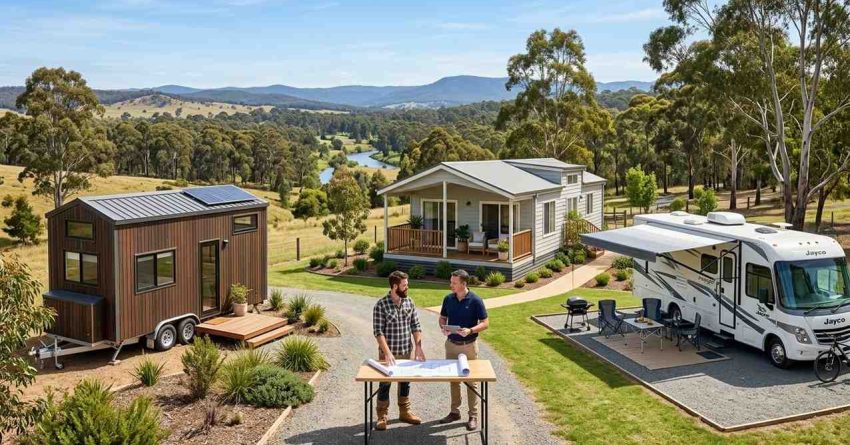
A tiny house on wheels, a park model home, and an RV each offer a smaller, more flexible way to live — but they differ significantly in cost, mobility, zoning requirements, and long-term livability. Choosing the wrong one can mean unexpected legal hurdles, higher maintenance bills, or a living space that simply does not fit your daily needs.
This comparison matters now because alternative housing demand in the US has grown sharply, and buyers are navigating three very different product categories with overlapping marketing language.
This guide breaks down each option across six key dimensions — definitions, size, cost, mobility, utilities, and lifestyle fit — so you can make a confident, informed decision.
What Is a THOW, Park Model, and RV?
Before comparing these three options, it helps to understand exactly what each one is and how each is classified under US housing and vehicle regulations.
Tiny House on Wheels (THOW) Defined
A tiny house on wheels is a residential dwelling built on a trailer chassis, designed to function as a permanent or semi-permanent home. THOWs are constructed to residential building standards — with insulation, framing, plumbing, and electrical systems comparable to a site-built home — but they are mounted on a wheeled trailer so they can be relocated. Most THOWs range from 100 to 400 square feet and are classified as vehicles in most US states, which affects how they are titled, insured, and where they can legally be placed.
Park Model Home Defined
A park model home is a factory-built recreational unit designed for seasonal or permanent placement in RV parks, campgrounds, or manufactured home communities. Park models are built to ANSI A119.5 standards and are limited to 400 square feet of living space under federal guidelines. Unlike THOWs, park models are not designed for frequent relocation — they are typically set on a site, connected to utilities, and left in place for extended periods. They often include full kitchens, bathrooms, and sleeping lofts, and they look more like a small cottage than a vehicle.
Recreational Vehicle (RV) Defined
A recreational vehicle is a motorized or towable vehicle built for temporary travel and short-term accommodation. RVs include Class A, B, and C motorhomes, fifth wheels, travel trailers, and toy haulers. They are built to NFPA 1192 or ANSI A119.2 standards and are designed primarily for mobility and travel rather than permanent residence. While many people do live in RVs full-time, the systems inside — water tanks, holding tanks, propane appliances — are engineered for intermittent use rather than continuous daily living.
Understanding the definitions of all three structures is the foundation for every comparison that follows — our complete guide to tiny home options covers every type of small-footprint living, from THOWs to park models, with full breakdowns of construction, zoning, and lifestyle fit.
THOW vs Park Model vs RV: Key Differences at a Glance
| Feature | THOW | Park Model | RV |
| Size | 100–400 sq ft | Up to 400 sq ft | 100–400+ sq ft |
| Built Standard | Residential (IRC or custom) | ANSI A119.5 | NFPA 1192 / ANSI A119.2 |
| Mobility | High — towable | Low — semi-permanent | High — motorized or towable |
| Typical Use | Full-time or semi-permanent | Seasonal or full-time | Travel or full-time |
| Zoning Complexity | High | Moderate | Low–Moderate |
| Average Purchase Price | $30,000–$150,000+ | $30,000–$100,000+ | $10,000–$300,000+ |
| Lifespan | 30–50+ years | 20–40 years | 10–20 years (with maintenance) |
| Utility Connections | Full hookups or off-grid | Full hookups standard | Hookups or self-contained |
Size and Layout Comparison
THOW Size and Interior Design
Most THOWs are built on trailers ranging from 16 to 32 feet in length, producing living spaces between 150 and 400 square feet. Builders maximize vertical space with sleeping lofts, fold-down furniture, and built-in storage. Because THOWs are built to residential standards, they can include full-size appliances, real insulation, and durable finishes that hold up to year-round living. The tradeoff is weight — a well-built THOW can weigh 10,000 to 20,000 pounds, requiring a heavy-duty tow vehicle.
Park Model Size and Floor Plans
Park models are capped at 400 square feet under federal guidelines, but their rectangular footprint and single-level or loft designs make efficient use of that space. Many park models include a full kitchen, a bathroom with a tub or shower, a living area, and a sleeping loft or bedroom. Because they are factory-built and placed on a site, park models can include wider floor plans and larger windows than a THOW of similar square footage.
RV Size and Living Space
RV living space varies widely by class and type. A Class B camper van may offer only 60 to 80 square feet of usable space, while a large Class A motorhome or fifth wheel can reach 400 square feet or more. RV interiors are designed for travel efficiency rather than residential comfort — storage is limited, walls are thinner, and appliances are smaller. For short-term use, this is a reasonable tradeoff. For full-time living, the compromises become more apparent over time.
If you are evaluating how much space each structure actually delivers for daily living, our resource on tiny home floor plans walks through layout options, room configurations, and design strategies that maximize every square foot.
Cost Comparison: Purchase Price and Long-Term Expenses
How Much Does a THOW Cost?
A custom-built THOW from a reputable builder typically costs between $60,000 and $150,000. DIY builds can come in lower — sometimes $30,000 to $60,000 — but require significant time, skill, and access to tools and materials. Beyond the purchase price, THOW owners need to budget for a tow vehicle, land lease or parking fees, utility hookup costs, and ongoing maintenance. Because THOWs are built to residential standards, repairs and upgrades are generally handled by the same contractors who service site-built homes.
How Much Does a Park Model Cost?
New park models range from $30,000 to $100,000 depending on size, finishes, and manufacturer. Delivery and site setup — including foundation piers, utility connections, and skirting — can add $5,000 to $20,000 to the total cost. Park model owners also pay lot rent in communities, which typically ranges from $300 to $800 per month. Because park models are factory-built to a fixed specification, customization options are more limited than a custom THOW.
How Much Does an RV Cost?
RV prices span the widest range of the three options. A used travel trailer can be purchased for under $10,000, while a new luxury Class A motorhome can exceed $300,000. The hidden costs of RV ownership include fuel, campground fees ($30 to $100 per night or $500 to $1,500 per month for long-term sites), insurance, and accelerated depreciation. RVs depreciate faster than THOWs or park models, and their mechanical systems — engines, transmissions, generators — add a layer of maintenance cost that the other two options do not carry.
Before committing to any of these three options, understanding the full financial picture is essential — our breakdown of tiny home costs covers purchase price, site prep, utility hookups, and ongoing expenses across all small-home categories.
Mobility and Placement: Where Can You Put Each One?
THOW Mobility and Zoning Rules
THOWs occupy a legal gray area in most US states. Because they are classified as vehicles rather than dwellings, they cannot be permanently placed on most residential lots without a variance or special use permit. Many THOW owners rent space in tiny home communities, RV parks, or on private rural land. Zoning laws vary significantly by county and municipality, and navigating them requires research before purchasing or placing a THOW. Some states — including Oregon, Texas, and Colorado — have made meaningful progress in creating legal pathways for THOW placement.
Park Model Placement Requirements
Park models are designed to be placed in licensed RV parks, manufactured home communities, or campgrounds. They require a prepared site with utility hookups for water, sewer, and electricity. Because they are semi-permanent, moving a park model is possible but not routine — it requires a professional transport company and a new prepared site. HOA rules and community regulations govern what modifications can be made to the exterior, which limits personalization.
RV Parking and Travel Flexibility
RVs offer the most placement flexibility of the three options. They can be parked at campgrounds, RV resorts, Walmart parking lots, Bureau of Land Management land, and private property with permission. This flexibility is the RV’s greatest advantage for travelers and people who move frequently. For full-time residents who want stability, however, the lack of a fixed address creates challenges with mail, banking, vehicle registration, and healthcare access.
Placement rules vary significantly by structure type and location, and getting this wrong can be costly — our guide to tiny home zoning rules explains local regulations, HOA restrictions, and legal placement requirements for THOWs, park models, and RVs across the US.
Utilities, Maintenance, and Home Services
THOW Utilities and Upkeep
THOWs can be connected to full utility hookups — water, sewer, and electricity — or configured for off-grid living with solar panels, composting toilets, and propane systems. Because they are built to residential standards, most THOW repairs fall within the scope of standard home service professionals: plumbers, electricians, HVAC technicians, and carpenters. Roof maintenance, window sealing, and trailer maintenance are the most common recurring service needs. The residential-grade construction means THOWs generally hold up better to continuous daily use than RVs.
Park Model Utilities and Maintenance
Park models connect to site utilities through standard hookups and are maintained much like a manufactured home. Common maintenance needs include roof inspections, HVAC servicing, plumbing checks, and exterior upkeep. Because park models are factory-built with standardized components, parts are generally available and repairs are straightforward. The enclosed underbelly and insulated walls of most park models make them more energy-efficient than RVs in cold climates.
RV Systems and Service Needs
RVs require maintenance across two distinct systems: the vehicle drivetrain (for motorized units) and the living systems — plumbing, electrical, propane, and HVAC. Slide-out mechanisms, roof seams, and holding tank systems are common failure points. RV-specific technicians are required for many repairs, and parts availability can be limited for older or discontinued models. Full-time RV living accelerates wear on all systems, and owners should budget for more frequent repairs than part-time users.
Keeping any small structure in good condition requires the right service approach — our overview of tiny home maintenance covers the most common repair, utility, and upkeep needs for THOWs, park models, and RVs, including when to call a professional.
Which Option Is Right for You?
Best for Full-Time Living
For full-time, year-round living, a THOW or park model will generally outperform an RV. Both are built with better insulation, more durable materials, and residential-grade systems that hold up to continuous use. A THOW offers more personalization and the ability to relocate if needed. A park model offers more space efficiency and a more stable community setting. The right choice depends on whether you prioritize flexibility or stability.
Best for Seasonal or Part-Time Use
For seasonal use — a summer cabin, a weekend retreat, or a snowbird setup — a park model is often the most practical choice. It offers cottage-like comfort without the complexity of full-time maintenance, and it stays in place between visits. An RV is also a strong option for seasonal travelers who want to move between locations. A THOW is less ideal for seasonal use because the cost and complexity of setup and teardown make frequent moves impractical.
Best for Investment or Rental Income
All three options can generate rental income, but park models and THOWs tend to perform better as short-term rental properties because they offer a more residential experience than an RV. Platforms like Airbnb and Hipcamp have created strong demand for unique small-structure stays. Investors should evaluate local zoning rules, platform policies, and maintenance costs before purchasing any of the three for rental purposes.
Choosing the right structure depends on your lifestyle, budget, and long-term goals — our full tiny homes guide brings together everything you need to evaluate your options, compare costs, and make a confident decision about alternative living.
Conclusion
THOWs, park models, and RVs each serve a distinct purpose, and the best choice depends on how you plan to use the space, how often you want to move, and what level of comfort and durability you need for daily life.
For buyers prioritizing long-term livability and residential quality, a THOW or park model will deliver more value than an RV over time. For travelers and part-time users, an RV remains the most flexible and accessible entry point.
At Mr. Local Services, we help THOW and park model owners keep their properties in top condition — from plumbing and electrical to HVAC and exterior maintenance. Contact us today to connect with skilled professionals who understand the unique service needs of small-structure living.
Frequently Asked Questions
Is a THOW considered a permanent residence?
In most US states, a THOW is classified as a vehicle rather than a permanent dwelling, which affects where it can legally be placed and how it is taxed. Some states and counties have created legal pathways for permanent THOW residency, but zoning rules vary widely by location.
Can a park model home be moved?
Yes, park models can be relocated, but they are not designed for frequent moves. Moving a park model requires a professional transport company, a prepared destination site with utility hookups, and permits in most states. Most park model owners move their unit once or twice over its lifetime, if at all.
What is the lifespan of an RV compared to a THOW?
A well-maintained RV typically lasts 10 to 20 years before major systems require replacement or the structure becomes impractical to repair. A quality THOW, built to residential standards, can last 30 to 50 years or more with proper maintenance — comparable to a site-built home.
Do THOWs, park models, and RVs require the same maintenance?
No. THOWs and park models share many maintenance needs with site-built homes — roofing, plumbing, electrical, and HVAC — and can be serviced by standard home service professionals. RVs require RV-specific technicians for vehicle systems, slide-outs, and holding tank maintenance, which adds complexity and cost.
Which is cheaper to maintain long-term — a THOW, park model, or RV?
Park models and THOWs generally cost less to maintain long-term than RVs used for full-time living. RV systems wear faster under continuous use, and motorized units carry additional drivetrain maintenance costs. THOWs built to residential standards benefit from widely available parts and contractors, keeping repair costs more predictable over time.