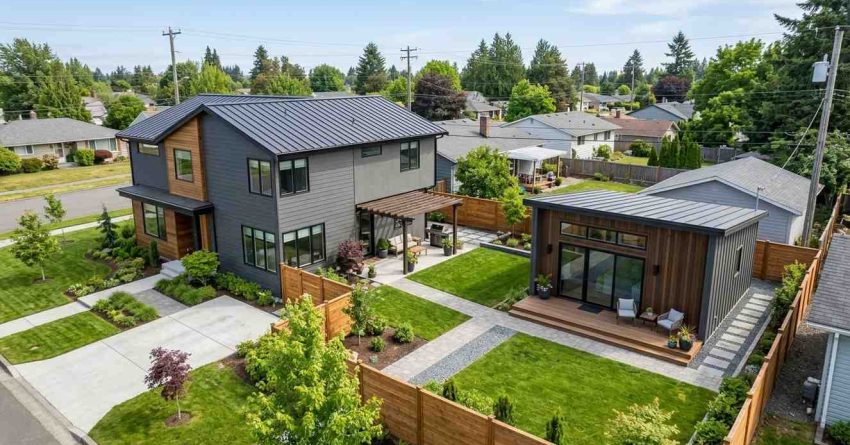
An accessory dwelling unit (ADU) is a self-contained secondary home built on the same residential lot as a primary house, complete with its own kitchen, bathroom, and entrance. Homeowners build ADUs to generate rental income, house family members, or add long-term value to their property.
Rising housing costs and increased demand for flexible living arrangements have made ADUs one of the most practical property improvements available to homeowners and landlords across the United States.
This guide covers the four main ADU types, typical construction costs, the full building process from permits to occupancy, and the key factors that determine whether an ADU is the right investment for your property.
What Is an ADU?
An ADU is a permanent, legally recognized residential unit located on the same lot as a single-family or multi-family home. Unlike a spare bedroom or a temporary structure, an ADU functions as a fully independent living space with its own utilities, entrance, and living amenities.
Local governments classify ADUs as secondary dwelling units under residential zoning codes. This classification means an ADU must meet the same building code standards as any other permanent home — including structural, electrical, plumbing, and fire safety requirements.
Homeowners use ADUs for three primary purposes: generating rental income from long-term or short-term tenants, providing private housing for aging parents or adult children, and creating dedicated space for a home office or studio. ADUs are closely related to the broader world of compact and alternative housing — our tiny home options guide covers the full spectrum of small-footprint living structures, from prefab units to park model homes, helping you understand where ADUs fit within the larger housing landscape.
How an ADU Differs from a Tiny Home or Guest House
The key distinction between an ADU and a guest house or tiny home is legal permanence. A guest house is often a non-permitted structure without independent utility connections, while a tiny home may be classified as a recreational vehicle depending on its foundation and mobility status.
An ADU is built to local building codes, connected to municipal utilities, and issued a certificate of occupancy — making it a legal dwelling that can be rented, inherited, or sold as part of the property. This legal status is what separates an ADU from informal secondary structures and gives it lasting value.
Types of ADUs
ADUs come in four main forms, each defined by its structural relationship to the primary home and the existing property. The right type for your property depends on your lot size, existing structures, budget, and local zoning rules.
Detached ADU
A detached ADU is a fully separate structure built on the same lot as the primary home, typically in the backyard. It sits on its own foundation and has no shared walls with the main house.
Detached ADUs offer the highest level of privacy for both the homeowner and the occupant, making them well-suited for long-term rentals. They require independent utility connections — water, sewer, gas, and electrical — which contributes to their higher construction cost compared to other ADU types.
Attached ADU
An attached ADU shares at least one wall with the primary home but functions as a completely separate living unit. It has its own entrance, kitchen, bathroom, and living space — interior access to the main house is not required and is often sealed off.
Because an attached ADU shares the primary home’s foundation and roof structure, construction costs are typically lower than a detached unit. Common configurations include converted side additions, basement conversions with exterior access, or new additions built onto the rear of the home.
Garage Conversion ADU
A garage conversion ADU transforms an existing attached or detached garage into a livable residential unit. Because the structure already exists, garage conversions tend to cost significantly less than new construction.
The conversion process involves insulating walls and ceilings, installing drywall, adding plumbing for a kitchen and bathroom, running electrical circuits, and addressing ventilation and HVAC needs. Permit requirements apply to all of these changes, and the finished unit must meet the same occupancy standards as any other ADU. Converting a garage into a livable ADU involves structural, electrical, and finishing work that goes well beyond a standard renovation — our garage remodeling services explains what a full garage conversion includes, what to expect from the process, and how our team manages every phase from framing to final finish.
Junior ADU (JADU)
A junior ADU, or JADU, is a small secondary unit of up to 500 square feet created entirely within the existing walls of a primary residence. JADUs are carved out of interior space — a converted bedroom suite, for example — rather than added as new construction.
JADUs are the most affordable ADU option because they require no new foundation, no exterior addition, and minimal structural changes. Many jurisdictions that allow JADUs require the property owner to occupy either the primary home or the JADU. Rules for JADUs vary significantly by state and municipality, so checking with your local building department before starting is essential.
How Much Does an ADU Cost?
ADU construction costs vary widely based on type, size, location, and the scope of work involved. In general, homeowners can expect to spend anywhere from $30,000 for a basic JADU conversion to $300,000 or more for a large detached ADU in a high-cost market.
Cost by ADU Type
| ADU Type | Typical Cost Range | Key Cost Driver |
| Detached ADU | $150,000 – $300,000+ | New foundation, independent utilities, full construction |
| Attached ADU | $80,000 – $200,000 | Shared structure reduces foundation and roof costs |
| Garage Conversion ADU | $40,000 – $120,000 | Existing structure reduces framing and exterior costs |
| Junior ADU (JADU) | $30,000 – $80,000 | Interior conversion only — no new structure required |
These ranges reflect general market conditions across the United States. Costs in high-demand urban markets such as California, New York, and Washington can run significantly higher.
Factors That Affect ADU Cost
Several variables influence the final cost of any ADU project:
- Location: Labor rates and material costs vary significantly by region and city.
- Size: Larger units require more materials, more labor, and higher permit fees.
- Site conditions: Sloped lots, poor soil, or limited access can increase foundation and excavation costs.
- Utility connections: Extending water, sewer, and electrical service to a detached ADU adds cost that attached and interior conversions avoid.
- Design complexity: Custom architectural plans, high-end finishes, and non-standard layouts increase both design and construction costs.
- Permit fees: Local permit fees range from a few hundred to several thousand dollars depending on jurisdiction and project scope.
Getting multiple quotes from licensed contractors is the most reliable way to estimate the actual cost for your specific property and project.
The ADU Building Process
Building an ADU involves three sequential phases: planning and permits, design and construction, and final inspections and occupancy approval. Each phase must be completed before the next can begin, and skipping steps — particularly permits — can result in costly corrections or forced demolition.
Planning and Permits
The planning phase begins with a zoning eligibility check. Homeowners need to confirm that their lot size, zoning designation, and existing structures meet local ADU requirements before investing in design or construction.
Once zoning eligibility is confirmed, the permit application process begins. This typically involves submitting architectural plans, a site plan showing the ADU’s location on the lot, and documentation of proposed utility connections. Permit approval timelines vary by municipality but generally range from 4 to 16 weeks depending on local building department workload and project complexity.
Before construction begins, smaller preparatory tasks — site clearing, utility marking, and minor structural assessments — are often handled by a skilled handyman, and our handyman permit prep outlines the pre-construction support services available to homeowners getting ready to break ground on an ADU project.
Design and Construction
The design phase produces the architectural and engineering plans that guide construction. Once permits are approved, construction begins with site preparation and foundation work, followed by framing, roofing, and exterior work.
ADU interiors require precise custom carpentry — from built-in storage and cabinetry to structural framing and finish trim — and our custom carpentry work details the full range of carpentry services available for new construction and renovation projects, including ADU builds.
Every ADU requires a dedicated electrical system, including panel connections, outlet placement, lighting circuits, and code-compliant wiring — our ADU electrical installation explains what a full residential electrical installation involves and how our licensed electricians handle new construction and conversion projects.
A functional ADU needs its own plumbing system — including water supply lines, drain connections, and fixture installation — and our ADU plumbing setup covers everything homeowners need to know about adding plumbing to a new or converted accessory dwelling unit.
Final Inspections and Occupancy
Before an ADU can be legally occupied, it must pass a series of inspections conducted by the local building department. Inspectors verify that framing, electrical, plumbing, insulation, and fire safety elements all meet code requirements.
Once all inspections pass, the building department issues a certificate of occupancy — the legal document that authorizes the unit to be used as a residential dwelling. Without this certificate, the ADU cannot be legally rented or occupied.
Once framing and mechanical systems are in place, drywall installation and finishing are among the final steps before an ADU can pass inspection — our drywall finishing services explains what professional drywall work includes and how it contributes to a clean, code-compliant interior finish.
ADU Regulations and Zoning Requirements
ADU regulations are set at the state and local level, and they vary considerably across the United States. Most jurisdictions regulate ADUs through zoning codes that specify setback distances from property lines, maximum unit size, height limits, parking requirements, and owner-occupancy conditions.
Several states — most notably California — have passed statewide ADU laws that limit local governments’ ability to restrict ADU construction. California’s ADU legislation, updated multiple times since 2017, has significantly reduced barriers for homeowners by eliminating many parking requirements, reducing setback minimums, and streamlining permit processes. Most other states still defer to local ordinances, which means requirements can differ dramatically from one city to the next.
ADU zoning codes often specify minimum window sizes, egress requirements, and energy efficiency standards — our ADU window compliance explains how proper window selection and installation supports both regulatory approval and long-term energy performance in accessory dwelling units.
Separate entry requirements are a common ADU zoning condition, and meeting them means installing a compliant exterior door with proper framing, weatherproofing, and hardware — our exterior door installation covers what a professional door installation includes for new ADU construction and garage conversions.
Consulting your local building department before starting any ADU project is the most reliable way to understand the specific requirements that apply to your property.
Benefits of Adding an ADU to Your Property
The most immediate benefit of an ADU is rental income. A well-built ADU in a desirable location can generate consistent monthly income that offsets mortgage payments, property taxes, or the cost of construction over time.
ADUs also support multigenerational living arrangements. Homeowners who want to house aging parents or adult children nearby — without sharing the same living space — find that an ADU provides the right balance of proximity and independence.
Choosing the right flooring is one of the most impactful decisions in an ADU build — affecting durability, rental appeal, and long-term maintenance — and our ADU flooring options walks through the best flooring materials for accessory dwelling units, including cost comparisons and installation considerations.
A professional paint job is one of the fastest ways to increase an ADU’s rental appeal and perceived value — our interior ADU painting explains what a full interior painting service includes, from surface prep to final coat, and how it contributes to a market-ready finish.
Beyond income and housing flexibility, ADUs increase overall property value. A permitted, code-compliant ADU adds livable square footage to a property and expands its appeal to future buyers who may want rental income or multigenerational housing options of their own.
Is an ADU Right for Your Property?
Not every property is suited for an ADU, and not every homeowner’s goals align with what an ADU can realistically deliver. Before committing to a project, it helps to work through a few key questions.
First, confirm zoning eligibility. Your lot must meet minimum size requirements, and your zoning designation must permit ADU construction. A quick check with your local building department or a licensed contractor can answer this before you invest in design or planning.
Second, assess your budget and timeline. ADU construction is a significant investment that typically takes 6 to 18 months from planning to occupancy. Homeowners who need rental income quickly or who have limited construction budgets may find that a JADU or garage conversion is a more practical starting point than a detached ADU.
Adding an ADU changes your property’s footprint, which often requires rethinking outdoor space, drainage, and access paths — our ADU landscape planning explains how professional landscaping supports ADU integration, from grading and drainage to privacy screening and pathway design.
Whether you are building a detached ADU or converting an existing structure, the roof is a critical component that affects weatherproofing, insulation, and long-term durability — our ADU roofing options covers roofing materials, installation methods, and what to expect when roofing a new or converted accessory dwelling unit.
If you are ready to explore what an ADU could look like on your property, Mr. Local Services connects homeowners with skilled professionals across every trade involved in ADU construction — from permits and planning through final finish work.
Conclusion
ADUs offer homeowners a practical path to rental income, multigenerational housing, and long-term property value — but the right type, cost, and process depend on your specific property and goals.
Understanding the four ADU types, realistic cost ranges, and the full building process helps you make an informed decision before committing to a project of this scale.
When you are ready to move forward, Mr. Local Services provides the skilled professionals and coordinated services needed to take an ADU from concept to certificate of occupancy.
Frequently Asked Questions
What does ADU stand for?
ADU stands for accessory dwelling unit. It refers to a secondary residential unit built on the same lot as a primary home, with its own kitchen, bathroom, and entrance.
How long does it take to build an ADU?
Most ADU projects take between 6 and 18 months from initial planning to occupancy. Permit approval alone can take 4 to 16 weeks depending on the local building department’s workload and the complexity of the project.
Can I rent out my ADU?
Yes, in most jurisdictions you can rent out an ADU to a long-term or short-term tenant. Some areas with junior ADU (JADU) rules require the property owner to occupy either the primary home or the JADU, so checking local regulations before listing is important.
Do I need a permit to build an ADU?
Yes. All ADU types — including garage conversions and junior ADUs — require permits from the local building department. Building without permits can result in fines, required demolition, and complications when selling the property.
What is the smallest ADU allowed?
Minimum ADU sizes vary by jurisdiction, but most local codes allow units as small as 150 to 220 square feet. Junior ADUs are capped at 500 square feet by definition. Some states set minimum size floors to ensure units are genuinely livable.
Does an ADU add value to my home?
Yes. A permitted, code-compliant ADU adds livable square footage and income potential to a property, both of which increase market value. The actual value added depends on the ADU type, quality of construction, local rental market, and buyer demand in your area.
Can I finance an ADU build?
Yes. Common financing options include home equity loans, home equity lines of credit (HELOCs), cash-out refinancing, and ADU-specific construction loans offered by some lenders. Some states and municipalities also offer ADU financing programs for qualifying homeowners.