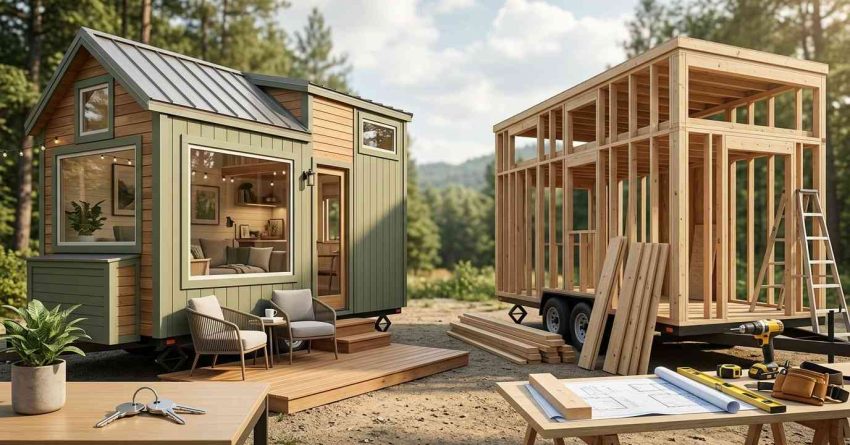
Building a tiny home is usually cheaper than buying one, with DIY builds costing $20,000 to $60,000 and prebuilt models ranging from $60,000 to $150,000. The savings depend on your skills, time, and tolerance for permits, labor, and land costs. For homeowners weighing both paths, the decision comes down to budget control, lifestyle goals, and how much work you want to manage yourself versus outsource to a builder.
The Direct Answer — Buying vs. Building Cost Comparison
Building a tiny home is cheaper than buying one in most cases. A DIY build typically runs $20,000 to $60,000, while a professionally built or prebuilt tiny home costs $60,000 to $150,000. Savings come from cutting labor, dealer markups, and customization fees. However, building requires time, construction knowledge, and access to permits, which can erase savings if mismanaged.
Average Cost to Buy a Prebuilt Tiny Home
Prebuilt tiny homes from established manufacturers usually cost between $60,000 and $150,000, depending on size, materials, and features. Turnkey models include plumbing, electrical, insulation, appliances, and finished interiors. Buyers pay for convenience, warranty protection, and faster move-in timelines. Luxury tiny homes with premium finishes or off-grid systems can exceed $200,000. For homeowners without construction experience, buying eliminates risk, simplifies financing, and shortens the timeline from purchase to occupancy.
Average Cost to Build a Tiny Home Yourself
DIY tiny home builds typically cost $20,000 to $60,000, with most owners landing near $45,000. Costs cover lumber, trailer or foundation, insulation, windows, roofing, plumbing rough-ins, and electrical components. Building yourself controls material quality, layout, and timeline. The tradeoff is sweat equity, code compliance research, and the learning curve on framing, wiring, and finishing. Many builders save the most by sourcing reclaimed materials and handling labor-intensive tasks personally rather than hiring out.
The cost question is only half the picture. The full picture includes what each path demands after the price tag, which is where most budgets quietly inflate. Many homeowners choose to work with skilled tiny home construction professionals to manage permits, structural work, and code-compliant builds without taking on the full DIY workload.
Hidden Costs That Change the Math
Sticker prices rarely tell the full story. Both buying and building come with secondary costs that catch first-time tiny homeowners off guard. Land purchase, site preparation, foundation work, utility connections, permit fees, and insurance can add $10,000 to $40,000 beyond the home itself. Buyers face delivery and setup fees. Builders face inspection costs, tool purchases, and time off work. Mapping every line item before committing prevents budget overruns and gives a realistic total cost of ownership.
Land, Permits, Utilities, and Foundations
Land in rural areas can cost a few thousand dollars per acre, while urban lots run far higher. Permits vary by county and often require engineered plans. Foundations, whether trailer-based, slab, or pier, range from $1,500 to $15,000. Water, sewer, and electrical hookups add another $5,000 to $20,000, especially in undeveloped areas. Working with licensed pros for utility hookups and permit-ready installations keeps the project legal, safe, and inspection-ready.
When Buying Makes More Sense Than Building
Buying wins when time, skill, or financing matters more than savings. Prebuilt tiny homes offer faster move-in, manufacturer warranties, and easier loan approval through RV or chattel financing. Buyers skip the months of construction, code research, and inspection coordination that DIY builds require. For homeowners juggling jobs, family, or relocation timelines, the premium price often pays for itself in reduced stress, predictable quality, and zero learning curve.
Conclusion
Building a tiny home usually costs less than buying one, but only when you have the time, skills, and patience to manage construction. Buying delivers speed and certainty at a higher price.
For homeowners, landlords, and property managers, the right choice depends on budget flexibility, timeline, and how much control you want over the final result.
We at Mr. Local Services connect you with trusted tiny home pros nationwide. Get matched with builders, installers, and inspectors today.
Frequently Asked Questions
How long does it take to build a tiny home yourself?
Most DIY tiny home builds take 6 to 12 months, depending on experience, weekend availability, weather, and the complexity of plumbing, electrical, and finishing work.
Can you finance a tiny home you build yourself?
Financing DIY builds is harder than buying prebuilt. Most lenders require completed homes for traditional loans. Personal loans or construction loans are common alternatives.
Do tiny homes need permits?
Yes, most tiny homes require building permits, zoning approval, and inspections. Requirements vary by state, county, and whether the home is on a foundation or trailer.
Is a tiny home a good investment?
Tiny homes hold value when well-built and properly placed. Resale depends on location, build quality, and demand. They rarely appreciate like traditional homes.
What is the cheapest way to build a tiny home?
The cheapest builds use reclaimed materials, donated windows, secondhand appliances, and a used trailer. DIY labor combined with smart sourcing keeps costs near $15,000.