The Best No-Maintenance Decking Option
The best no-maintenance decking is capped composite, followed closely by cellular PVC. Both materials resist rot, splinters, fading, and insects without staining or sealing. Homeowners enjoy decades of use with only occasional cleaning, making them the most reliable, long-term decking choices on the U.S. market today.
Traditional wood demands yearly sanding, staining, and sealing. Modern alternatives eliminate that cycle entirely. Capped composite combines a recycled wood-plastic core with a hard polymer shell, while PVC is fully synthetic. Both carry 25 to 50-year warranties from leading manufacturers, signaling confidence in real-world performance across hot, humid, freezing, and coastal U.S. climates.
Why Capped Composite Leads the Category
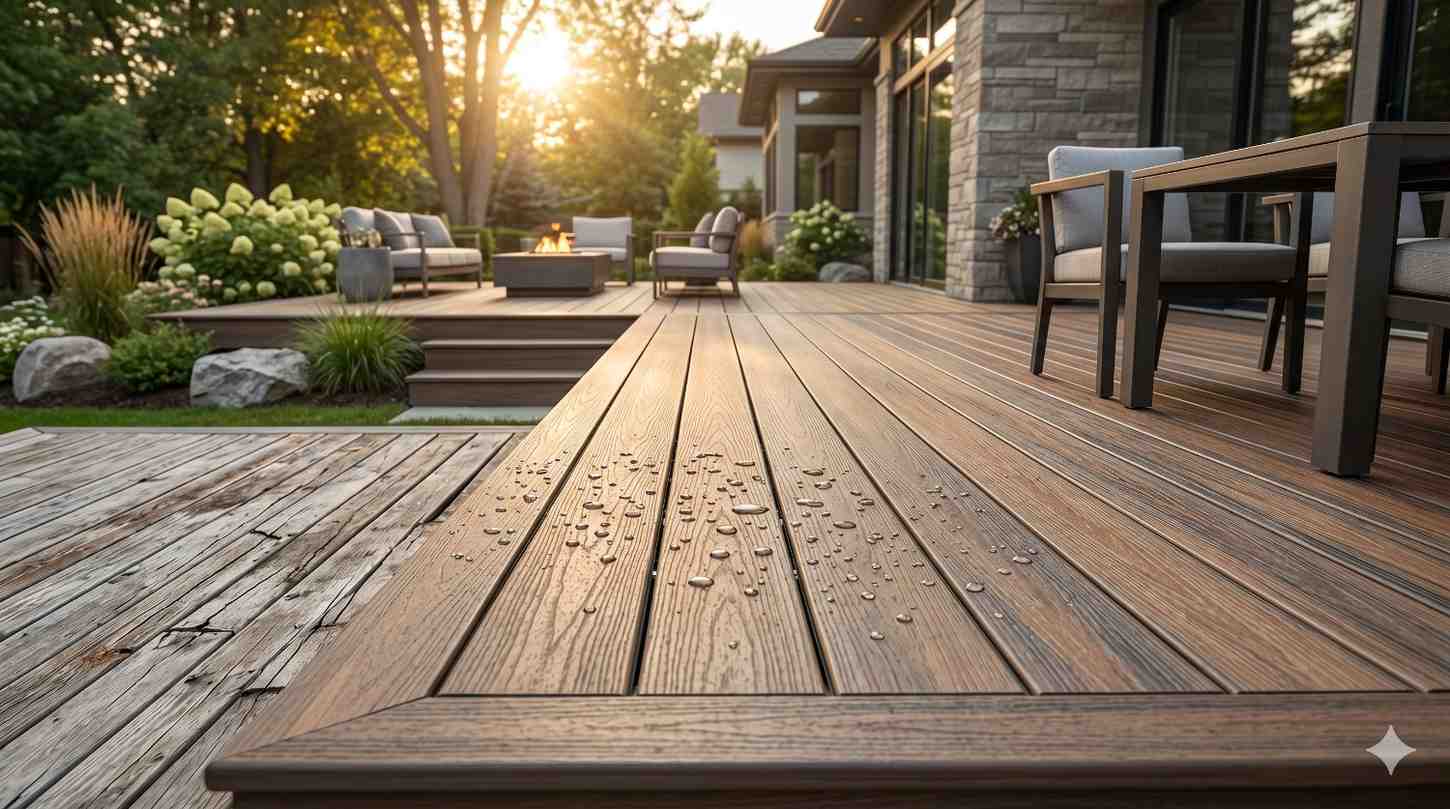
Capped composite delivers the closest match to natural wood without the upkeep. The protective polymer shell wraps every board, blocking moisture, mold, and UV damage. This is what separates today’s products from older, uncapped composites that stained easily.
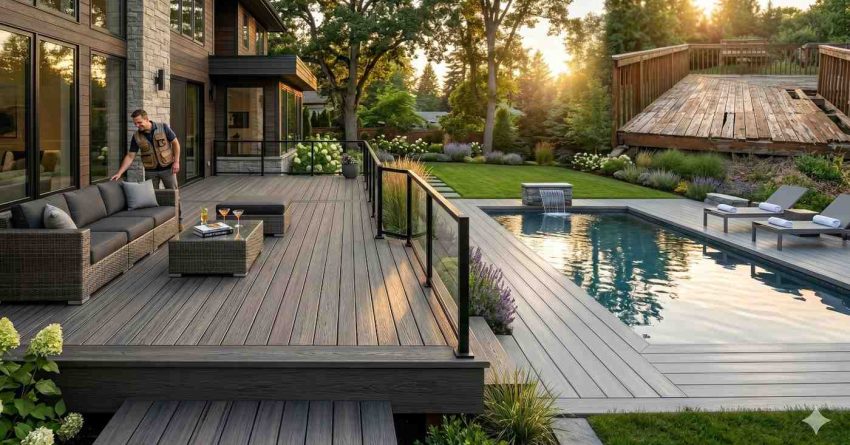
Brands like Trex, TimberTech, and Fiberon offer authentic wood-grain finishes in colors ranging from warm cedar to coastal gray. Boards stay cooler underfoot than older composites and resist scratching from furniture or pets. For most homeowners, capped composite hits the right balance of price, appearance, and zero-maintenance performance.
PVC Decking as a Close Second
PVC decking contains no organic material, which means nothing inside the board can rot or absorb water. This makes PVC the strongest performer in wet climates, pool surrounds, and shaded areas where moisture lingers.
The trade-off is cost. PVC typically runs 15 to 25% more per square foot than capped composite. It is also lighter, which some installers prefer, and it stays slightly cooler in direct sun. If your property faces constant moisture or salt exposure, PVC is worth the premium.
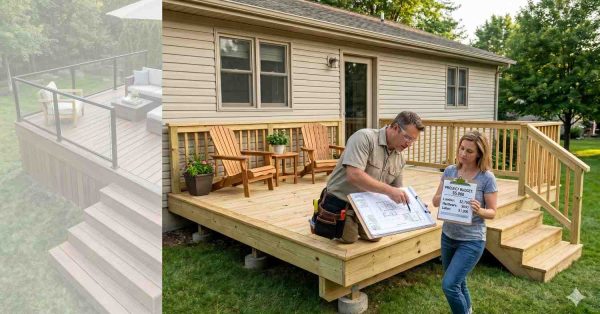
The material answers half the question. The other half is choosing the right deck builder, since installation quality determines whether a no-maintenance deck actually performs as promised.
How No-Maintenance Decking Performs Over Time
No-maintenance does not mean no-care. It means no sanding, staining, or sealing. Capped composite and PVC still benefit from periodic surface cleaning to remove pollen, leaf tannins, and grill splatter before they set in.
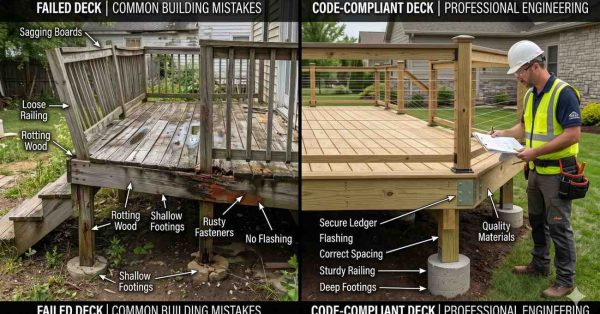
Quality boards retain color, structure, and slip resistance for 25 years or more when installed correctly. Fasteners, joists, and ledger boards still need inspection every few years, since hidden framing affects deck safety long before the surface ever shows wear.
Climate, Color, and Long-Term Durability
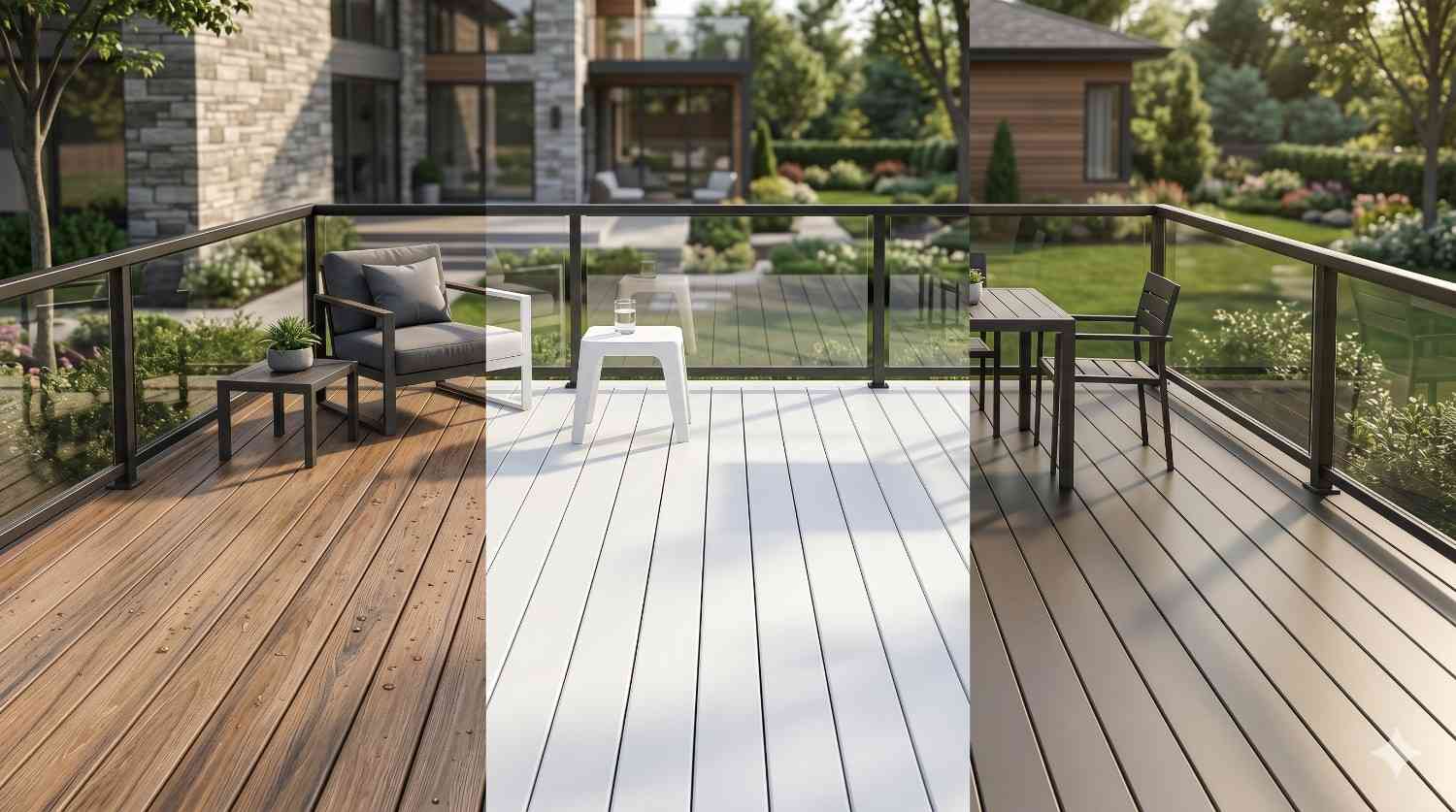
Hot southern climates push darker boards to surface temperatures that feel uncomfortable barefoot. Lighter shades like driftwood, sand, or pebble stay noticeably cooler. Northern climates favor any color, since freeze-thaw cycles affect all capped products equally well thanks to their sealed surface.
Coastal homeowners benefit most from PVC, which shrugs off salt air without corrosion concerns. Inland properties get excellent value from capped composite. Matching the material to your climate is the single biggest factor in long-term satisfaction.
Composite vs. PVC vs. Aluminum: Quick Comparison
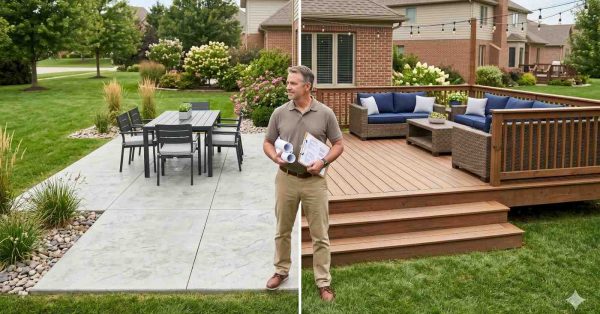
Aluminum decking is the third no-maintenance option, though far less common in residential settings. It is fireproof, fully waterproof, and lasts decades, but its industrial appearance and higher cost limit appeal. Capped composite suits most yards. PVC suits wet or coastal sites. Aluminum suits rooftop decks, fire-zone homes, and elevated structures where weight and water resistance matter most.
Conclusion
Capped composite stands as the best no-maintenance decking for most U.S. homeowners, with PVC leading in wet, coastal, or high-moisture environments where synthetic materials excel.
Pairing the right material with skilled installation protects your investment and supports broader outdoor living upgrades that increase property value and daily enjoyment.
At Mr. Local Services, we connect you with vetted deck professionals who deliver quality materials, transparent pricing, and dependable workmanship. Request your free quote today.
Frequently Asked Questions
What is the longest-lasting decking material?
Capped composite and PVC decking last 25 to 50 years with proper installation, outperforming pressure-treated wood, cedar, and redwood by decades in most U.S. climates.
Is composite decking truly maintenance-free?
Capped composite is maintenance-free in the traditional sense. No staining or sealing is required, though occasional soap-and-water cleaning keeps the surface looking new year after year.
How much does no-maintenance decking cost?
Expect $30 to $60 per square foot installed for capped composite, and $40 to $75 per square foot for PVC, depending on board grade, framing, and project complexity.
Does no-maintenance decking get hot in summer?
Darker boards heat up in direct sun. Lighter colors and heat-mitigating product lines from Trex and TimberTech reduce surface temperatures noticeably during peak summer months.
Can I install no-maintenance decking myself?
DIY installation is possible, but hidden fasteners, proper joist spacing, and warranty requirements often make professional installation the safer, longer-lasting choice for most homeowners.