A well-trained cleaning employee finishes a standard three-bedroom home in under two hours without cutting corners. I have watched untrained hires take twice that long while still missing baseboards and window sills.
Bad training costs money in callbacks, damaged trust, and turnover that never stops. We built this guide to shorten that learning curve, because a business that trains well retains staff longer and keeps clients longer too.
I walk through onboarding first, then the technical cleaning standards themselves, safety and chemical handling, how to set performance expectations that actually stick, and what keeps trained employees around instead of walking out the door after three months.
Start With a Structured Onboarding Process
The first week decides whether a new hire becomes a long-term employee or a quick resignation. I never throw someone into a client’s home without a clear map of what the job actually looks like day to day.
Onboarding for house cleaning employees is a structured introduction period that covers company expectations, tools, and basic technique before independent work begins. Skipping this step is the single biggest reason new hires quit within the first two weeks.
Pair every new employee with an experienced cleaner for the first three to five jobs. Shadowing builds muscle memory faster than any manual, and it lets the trainee ask questions in real time instead of guessing.
What New Hires Need Covered in Week One
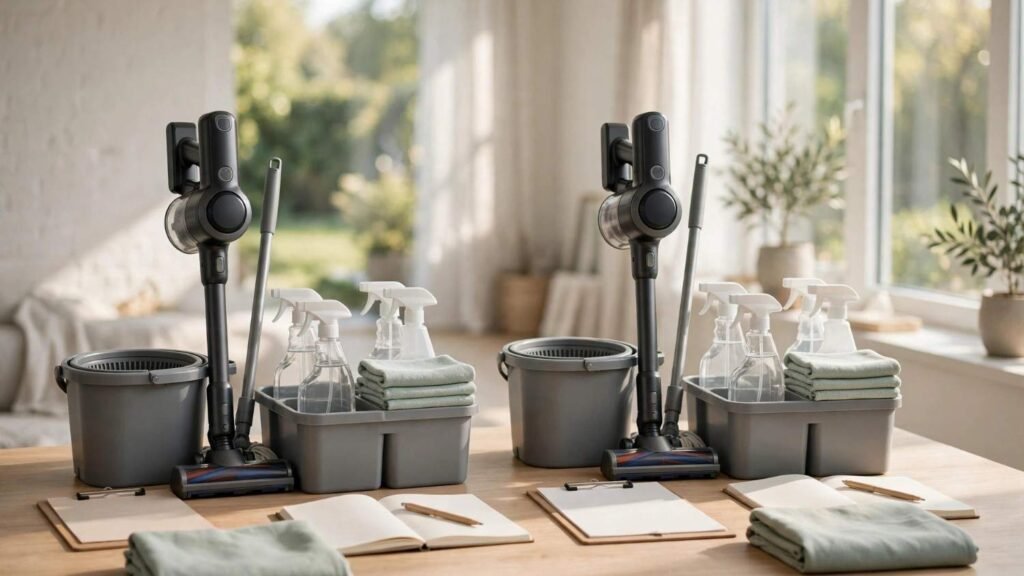
Company policies, client communication rules, and a walkthrough of the supply kit come first. I also cover what to do when something breaks or gets damaged on the job, because it happens and a scripted response prevents panic.
A simple written checklist for entry, kitchen, bathroom, bedroom, and exit routines gives new hires something concrete to reference. I hand this out on day one and treat it as a living document they can mark up.
Teach the Core Cleaning Techniques and Standards
Technique consistency is what separates a professional operation from a patchwork of individual habits. I train every employee on the same top-to-bottom, left-to-right cleaning pattern so no home gets cleaned the same “random” way twice.
Cleaning technique refers to the specific methods and sequences used to clean a space efficiently while avoiding cross-contamination and wasted motion. Cross-training on glass, hard floors, grout, and upholstery separately keeps each skill sharp rather than blending them into one vague “cleaning” competency.
Dust before vacuuming, always work from dry to wet, and clean top to bottom in every room. These three rules alone eliminate most of the rework I used to see from untrained staff.
Building Consistency Across Every Job Site
Standardized checklists per room type keep quality the same whether a house is 900 square feet or 4,000. I review completed checklists weekly during the first month, then monthly after that once quality holds steady.
Recording a short training video for each core task, from stripping and making a bed to disinfecting a bathroom, gives new hires a reference they can rewatch. It also protects consistency when senior staff eventually move on.
Train on Safety, Chemicals, and Equipment Handling

Cleaning chemicals cause real harm when mixed incorrectly or used without proper ventilation. Ammonia and bleach combined release chloramine vapors, and the CDC has documented serious respiratory injuries tied to exactly this kind of chemical mixing in cleaning environments.
I require every new employee to complete a chemical safety walkthrough before touching client supplies. That means reading labels, understanding dilution ratios, and knowing which products never belong in the same bucket.
Proper personal protective equipment use is a non-negotiable part of onboarding, not an afterthought. Gloves for chemical-heavy tasks and closed-toe shoes for job sites prevent the most common workplace injuries in residential cleaning.
Reducing Liability Through Proper Protocol
Documented safety training protects the business as much as the employee. I keep signed training acknowledgments on file for every hire, covering chemical handling, equipment use, and general job site conduct.
Regular refreshers matter more than a single onboarding session. I run a fifteen-minute safety review every quarter, because habits drift and reminders keep standards from slipping.
Set Clear Performance Expectations and Checklists

Vague instructions produce vague results. I give every employee a measurable standard, not just “clean the kitchen,” but a specific checklist covering counters, appliance exteriors, sink, floor, and trash.
Performance checklists work because they remove ambiguity about what “done” actually means. New hires who know exactly what earns a passing grade hit that standard faster than employees left to interpret expectations on their own.
Time benchmarks matter too. I track how long a standard clean takes for a given square footage, then use that number to spot both slow workers who need more coaching and rushed workers who might be cutting corners.
Using Feedback Loops to Reinforce Quality
Spot-checks within the first thirty days catch bad habits before they calcify. I do a walkthrough after the trainee leaves, comparing the result against the checklist, and I bring specific examples to the next coaching conversation rather than vague criticism.
Client feedback closes the loop from the other direction. A pattern of complaints about the same missed spot points straight to a training gap, not a personality problem.
Build Long-Term Retention Through Ongoing Coaching
Training does not end after week one. I treat the first ninety days as an extended coaching window, with check-ins at two weeks, thirty days, and ninety days to catch problems while they are still small.
Turnover in residential cleaning runs high across the industry, and most of it traces back to poor initial training rather than pay. Employees who feel confident in their skills stay longer, because uncertainty and fear of failure drive people out faster than workload does.
Cross-training employees on related trade knowledge, like basic understanding of what our carpet cleaning and window cleaning teams handle, gives staff a broader sense of the business and opens a path to advancement.
Turning Trained Employees Into Team Leaders
The strongest cleaners after six months become the trainers for the next hire. I build this progression path openly, because it gives experienced staff a reason to stay rather than look elsewhere for growth.
A simple tiered structure- trainee, independent cleaner, team lead- gives every employee a visible next step. That structure alone has done more for our retention than any raise I have given.
Conclusion
Training house cleaning employees well comes down to structured onboarding, consistent technique, real safety protocols, and clear performance standards. Each piece reinforces the next, and skipping one weakens the whole system.
Employees who understand the “why” behind each standard clean faster and stay longer. That consistency shows up directly in client satisfaction and repeat business.
We help home service businesses build teams that last. Reach out to Mr. Local Services to see how a structured training approach fits your cleaning operation.
Frequently Asked Questions
How long does it take to train a new house cleaning employee?
Most new hires reach independent competency within two to four weeks of shadowing and supervised jobs. Full confidence on complex homes typically takes about ninety days.
What is the best way to train cleaning staff on chemical safety?
A hands-on walkthrough of labels, dilution ratios, and dangerous combinations before independent work begins is the most effective method. Written acknowledgment forms reinforce that the training happened and was understood.
Should new cleaning employees shadow experienced staff first?
Yes, shadowing for three to five jobs before independent work builds technique and confidence faster than written instructions alone. It also lets trainees ask real-time questions on an actual job site.
How do you measure a cleaning employee’s performance?
Performance is measured through room-by-room checklists, time benchmarks for square footage, and periodic spot-checks against completed work. Client feedback adds a second layer of accountability.
Why do house cleaning employees quit early?
Most early departures come from feeling unprepared or unsupported during the first few weeks on the job. Structured onboarding and regular check-ins directly reduce this kind of turnover.
What topics should be included in cleaning employee onboarding?
Onboarding should cover company policies, supply kit orientation, room-by-room cleaning checklists, and basic client communication protocols. Safety training on chemicals and equipment belongs in this initial period as well.