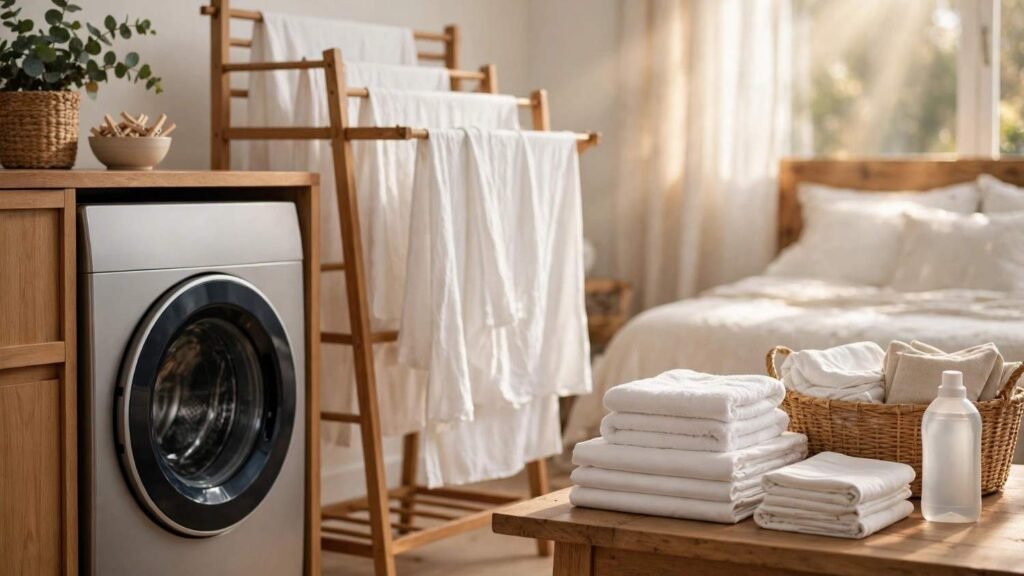
Laundry, linens, and textile care inside a house cleaning routine covers washing, sanitizing, folding, and maintaining every fabric surface in a home, from bed sheets to bath towels to delicate garments. This service protects fabric lifespan, controls allergens and bacteria, and keeps a home feeling genuinely clean rather than just tidy. I see homeowners treat laundry as an afterthought to cleaning, and it costs them fabric replacement money every year.
Textiles hold onto dust mites, skin cells, and moisture longer than any hard surface in the house. A mattress protector or couch throw left unwashed for months becomes a real air quality problem, not just a cosmetic one. We connect homeowners with providers who treat textile care as its own discipline inside a cleaning visit.
This guide covers the foundations of what textile care actually includes, how fabric type changes the approach, the techniques and quality standards a good provider follows, how often the service makes sense for different households, and what separates a reliable textile care provider from a rushed one.
What Laundry, Linens & Textile Care Covers in a Home Cleaning Routine
Laundry and textile care is a defined service category inside house cleaning that handles every washable fabric in a home. It is a distinct scope of work that sits alongside surface cleaning, not folded quietly into it.
A textile care visit typically covers bed linens, bath towels, kitchen linens, throw blankets, and select garments depending on the service agreement. The work includes washing, drying, folding, and returning items to their proper place.
Textile care is a maintenance category that protects fabric condition, which directly affects hygiene, allergen control, and how long linens and garments last. I treat it as preventive maintenance for fabric the same way HVAC filter changes are preventive maintenance for air systems.
Most standard house cleaning packages treat laundry as optional or add-on work. A dedicated textile care scope changes that by building washing and linen rotation into the regular visit cadence, so nothing sits in a hamper for two weeks waiting on attention.
Everyday Laundry Care Services and What They Include
Everyday laundry care covers the routine wash-dry-fold cycle for clothing, towels, and household fabrics that accumulate between cleaning visits. This is the baseline service most households actually need week to week.
A standard laundry visit sorts by fabric type and color, washes on appropriate settings, dries fully, and folds items for storage. Providers typically also check pockets and pretreat visible stains before the wash cycle starts, which prevents a stain from setting permanently.
Turnaround matters as much as the wash itself. A same-day or next-day turnaround keeps a household from running out of clean sheets or towels between service visits, which is the most common complaint I hear about laundry services that run on a slow rotation.
Folding and presentation standards separate a rushed laundry drop-off from an actual service. Items get folded to a consistent standard and placed where the household actually uses them, not left in a basket on the counter.
Bed Linen and Bedding Care Standards
Bed linens need washing on a regular cycle because they hold sweat, skin cells, and dust mites more than almost any other fabric in the home. Sheets should be washed weekly, and pillowcases even more often, according to guidance from the Cleveland Clinic, which points to oil and sweat buildup as the main driver of that frequency.
Bedding care includes fitted sheets, flat sheets, pillowcases, duvet covers, and mattress protectors. Each of these fabrics has a different wash tolerance, and mattress protectors in particular need lower heat settings to avoid breaking down their waterproof layer.
Duvets and comforters need less frequent washing than sheets but more careful handling, since their bulk holds moisture during drying. A provider who understands bedding care runs comforters through extended dry cycles rather than pulling them out damp in the middle.
Quality bedding care also means rotating linen sets so no single set wears out faster than the others. This kind of small planning is the difference between sheets lasting two years and sheets lasting five.
Towel and Bath Textile Sanitation Practices

Bath towels need frequent, high-heat washing because they stay damp longer than almost any other household fabric, which creates ideal conditions for bacteria and mildew growth. Towels used daily should go through the wash every three to four uses to control odor and bacterial buildup.
Sanitation for bath textiles goes beyond a normal wash cycle. Hot water combined with proper detergent volume breaks down the biofilm that builds up on towel fibers over repeated use, which is what causes that musty smell even after washing.
Kitchen linens, including dish towels and hand towels, need similar sanitation attention because they contact food surfaces and hands throughout the day. These get washed on their own cycle, separate from bath textiles, to avoid cross-contamination between the two use categories.
A provider handling bath and kitchen textiles separately, on appropriate heat settings for each, is doing the sanitation work correctly. Mixing all towels into one generic wash load undermines the actual hygiene goal of the service.
Delicate Fabric and Specialty Garment Handling
Delicate fabrics, including silk, wool, lace, and certain synthetic blends, need handling that differs completely from standard cotton and linen washing. These fabrics break down under high heat and aggressive agitation, so they need cold water, gentle cycles, or hand-washing depending on the material.
A textile care provider identifies delicate items before they hit a standard wash load and separates them by required care method. Wool sweaters, for example, need flat drying to keep their shape, while silk items often need air drying entirely to avoid heat damage.
Specialty garments, like structured outerwear, embellished clothing, or vintage textiles, sometimes fall outside what an in-home laundry service can safely handle. A provider who knows this boundary refers those items out to dry cleaning rather than risking damage trying to process them in-house.
This kind of fabric-specific judgment is what separates a textile care professional from a basic wash-and-fold operation. It protects the household from replacing expensive garments over a preventable washing mistake.
Stain Removal and Fabric Treatment Methods
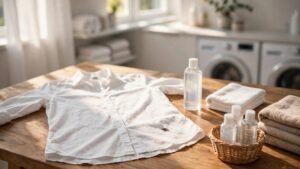
Stain removal is a technical skill in textile care that depends on identifying the stain type before choosing a treatment method. Protein-based stains, like blood or sweat, respond to cold water treatment, while oil-based stains need enzyme treatment or degreasing agents.
Treating a stain immediately, before it sets through a hot dryer cycle, dramatically improves the odds of full removal. A provider who checks garments before drying, rather than after, catches stains while they’re still treatable.
Common household stains each have a preferred treatment approach. Wine and coffee respond well to cold water and dish soap pretreatment, grass stains need enzyme-based treatment, and ink stains often need isopropyl alcohol applied before washing.
A textile care provider keeps a small toolkit of treatment products on hand for common stain categories, rather than running every load through a single generic detergent. That toolkit approach is what actually saves fabric from permanent staining.
Folding, Pressing, and Textile Presentation Standards
Folding standards matter because poorly folded linens wrinkle in storage and look unkempt even right after washing. A consistent folding method, matched to how the household actually stores items, keeps linen closets organized and items easy to find.
Pressing is typically reserved for garments and certain linens, like tablecloths or cloth napkins, where a crisp finish matters for appearance. Steam pressing is gentler on fabric fibers than a traditional iron and works well for most household textiles that need a polished look.
Presentation standards also cover how folded items get placed back in storage. Sheet sets folded together and stored as a matched set, rather than scattered across a linen closet, save the household time during the next bed change.
A provider who treats folding and presentation as part of the actual service, not an afterthought, delivers a noticeably different result. It shows in a linen closet that stays organized between visits rather than one that slides back into chaos within days.
How Often Laundry and Linen Service Should Happen
Laundry and linen service frequency depends on household size, how many people live in the home, and how quickly fabric items accumulate between visits. A single-person household might need service every two weeks, while a family of five often needs weekly service to keep pace with volume.
Bed linens generally need washing weekly regardless of household size, since sweat and skin cell buildup happens at a similar rate per person per week. Bath towels need more frequent attention, roughly every three to four days of active use, which usually means a higher-frequency service tier for that specific category.
Households with young children, pets, or anyone with allergies typically need more frequent textile service than a single working adult living alone. Pet hair and dander accumulate on fabric surfaces fast, and allergy-prone households benefit from tighter wash cycles that reduce dust mite buildup.
Setting a service cadence that matches actual household patterns, rather than a generic one-size schedule, is what makes textile care genuinely useful rather than just another recurring bill.
Signs Your Linens and Textiles Need Professional Attention
Persistent odor in towels or bedding that survives a normal wash cycle signals a bacterial or mildew buildup that a standard home wash isn’t reaching. This usually means the fabric needs a deeper sanitizing treatment with higher heat and stronger detergent than typical.
Visible graying or dinginess in white linens, even after washing, points to mineral buildup from hard water or detergent residue that accumulates over time. Professional treatment can strip that buildup in a way regular home washing cycles through the same routine can’t fix.
Stiffness in towels or bedding after washing usually means detergent residue is trapped in the fibers rather than rinsing out fully. A provider using proper rinse cycles and detergent volume resolves this, and it often surprises households how much softer their linens feel after one properly balanced wash.
Falling behind on laundry volume, where hampers stay full and clean linens run short, is the clearest sign a household has outgrown its current laundry routine and needs a more structured service.
Choosing a Reliable Laundry and Textile Care Provider
A reliable textile care provider explains exactly what fabric types and items are included in the service before the first visit, with no ambiguity about scope. Clear boundaries around what gets washed, what gets referred to dry cleaning, and what turnaround time to expect set proper expectations from day one.
Transparent pricing matters here as much as it does in any other home service category. A provider should quote pricing based on volume or household size upfront, not adjust it after the fact once items are already collected.
Consistency across visits is the real test of a good provider. Folding standards, wash quality, and turnaround time should stay the same whether it’s the first visit or the fiftieth, and that consistency is usually the biggest differentiator between providers in this space.
We connect households with laundry and textile care professionals who treat this work as a specialized skill, not a rushed add-on to a cleaning visit. Reach out to Mr. Local Services to get matched with a provider who handles your linens and fabrics the way they actually deserve.
Conclusion
Laundry, linen, and textile care protects fabric condition, controls allergens, and keeps a home genuinely sanitary beyond surface cleaning. Getting the frequency, technique, and provider right turns this from a chore into a maintained system.
Fabric care connects directly to household health, comfort, and the long-term value of linens and garments. Treating it with the same seriousness as any other home maintenance category pays off in fewer replacements and a better daily experience at home.
We help households find laundry and textile care providers who bring real technique and consistency to every visit. Contact Mr. Local Services today to get matched with a provider who treats your fabrics right.
Frequently Asked Questions
How often should bed sheets actually be washed?
Bed sheets should be washed weekly to control sweat, oil, and dust mite buildup. Pillowcases sometimes need more frequent washing since they contact skin and hair oils directly.
Can a laundry service handle delicate fabrics like silk or wool?
A skilled provider identifies delicate fabrics and uses cold water or hand-washing methods suited to each material. Items requiring specialized dry cleaning get referred out rather than risked in a standard wash.
What causes towels to smell musty even after washing?
Musty towel odor usually comes from bacterial buildup that a standard wash cycle doesn’t fully eliminate. Hot water combined with proper detergent volume breaks down that buildup and resolves the smell.
How is laundry service pricing typically structured?
Laundry service pricing is usually based on household size or fabric volume, quoted upfront before the first visit. Reliable providers avoid adjusting price after items are already collected.
What’s included in a standard laundry and linen visit?
A standard visit typically covers bed linens, bath towels, kitchen linens, and select garments depending on the service agreement. Folding and returning items to their proper storage spot is part of the standard scope.
Why do towels need more frequent washing than sheets?
Towels stay damp longer after each use, creating conditions for bacteria and mildew that build up faster than on dry bedding. Washing every three to four uses keeps that buildup under control.
What should I look for when choosing a textile care provider?
Look for clear scope of service, transparent volume-based pricing, and consistent folding and turnaround standards across visits. A provider who explains fabric handling methods upfront is usually the more reliable choice.
Does professional laundry service help with allergies?
Regular, properly heated wash cycles reduce dust mites and allergens that accumulate in bedding and towels over time. Households with allergy concerns typically benefit from a tighter wash frequency on these fabrics specifically.