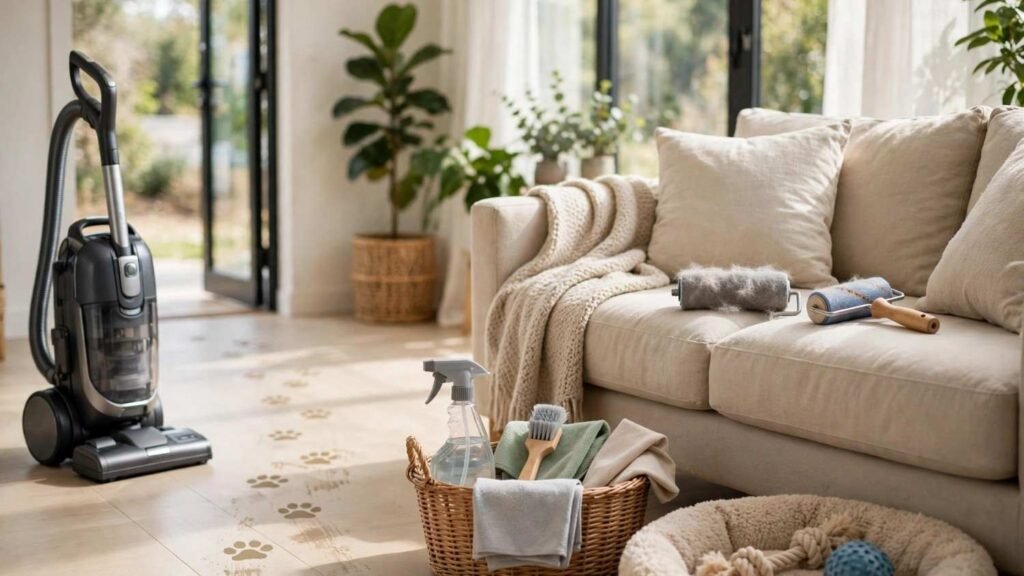
Pet hair on the couch, muddy paw prints on the floor, that faint smell you only notice when guests walk in. Cleaning a house with pets means tackling hair, odor, dander, and messes on a schedule that matches how fast pets create them. I’ve seen how quickly a clean home can slide into chaos with a dog or cat in the mix.
It’s not about cleaning more. It’s about cleaning smarter, in the right spots, with the right tools. Pet owners who stay ahead of hair and odor buildup deal with far fewer deep-cleaning headaches down the road.
I’m walking through a daily and weekly routine, the best ways to handle hair and odor, safe disinfecting for accidents, how to protect your floors and furniture, and when dander becomes a bigger air quality issue worth calling in help for.
Building a Daily and Weekly Pet Cleaning Routine
A consistent routine beats a marathon cleaning session every time. I break pet cleaning into daily quick tasks and weekly deeper ones, and that split keeps the whole house manageable.
Daily tasks take minutes. Weekly tasks take longer but prevent buildup that turns into a bigger job later.
Daily Quick-Clean Tasks
Every day, I wipe down paws at the door, shake out rugs near entryways, and do a quick pass with a handheld vacuum on high-traffic spots. Food and water bowls get washed daily too, since bacteria builds up fast in standing water.
Litter boxes need scooping at least once a day. Skipping this even for two days lets odor set into surrounding flooring and grout.
Weekly Deep-Clean Tasks
Once a week, I vacuum the entire house, including under furniture where hair collects unnoticed. Bedding, pet beds, and blankets get washed on a hot cycle to kill dander and bacteria.
Mopping hard floors weekly removes the fine layer of hair and dander that vacuums miss. This is also the point where a broader house cleaning schedule becomes useful for pet owners juggling a full property on top of pet-specific tasks.
Removing Pet Hair from Floors, Furniture, and Fabric
Pet hair works its way into carpet fibers, couch cushions, and curtain hems in ways that surprise most new pet owners. The right tool for each surface saves an enormous amount of time.
Different materials need different approaches, and using the wrong tool on the wrong surface just pushes hair around instead of lifting it out.
Best Tools for Pet Hair Removal
A vacuum with a motorized brush roll and strong suction pulls embedded hair out of carpet far better than suction alone. Rubber-bristled brooms work well on hard floors, since the rubber grabs hair static-free.
For quick touch-ups, a slightly damp rubber glove run across furniture collects surprising amounts of hair in seconds.
Pet Hair on Upholstery and Curtains
Upholstery holds onto hair through static, so a fabric-safe lint roller or a vacuum’s upholstery attachment works best here. Curtains benefit from a lower heat dryer cycle with a dryer ball, which loosens embedded hair without shrinking fabric.
Heavier fabric pieces like couches sometimes need attention beyond a quick pass. That’s usually the point where scheduling upholstery cleaning makes sense for households with multiple pets or thick, hair-trapping fabric.
Eliminating Pet Odors from Your Home
Odor control matters as much as visible cleanliness with pets in the house. Hair is obvious, but the smell is what guests notice first, and it builds gradually enough that homeowners stop noticing it themselves.
Two things drive most pet odor: fabric that absorbs it and air that recirculates it without fresh exchange.
Neutralizing Odors on Carpet and Fabric
Baking soda sprinkled on carpet and left for fifteen minutes before vacuuming pulls out a surprising amount of trapped odor. Enzyme-based cleaners break down the organic compounds in pet accidents that regular cleaners just mask.
Fabric furniture benefits from the same baking soda treatment, especially pet beds and couch cushions where pets spend the most time.
Air Quality and Ventilation for Odor Control
Running an air purifier with a HEPA filter in main living areas pulls dander and odor particles out of circulation. The Environmental Protection Agency notes that portable air cleaners with HEPA filtration can meaningfully reduce airborne particle levels when sized correctly for the room.
Opening windows for fifteen minutes daily, weather permitting, exchanges stale air for fresh air fast. Homes with persistent odor despite regular cleaning sometimes have an underlying ventilation issue worth checking into.
Cleaning and Disinfecting Pet-Related Messes Safely

Accidents happen, and how fast you respond determines whether it becomes a quick clean or a lasting stain and smell. Speed matters more than the product you reach for.
Different flooring types need different disinfecting approaches, and using the wrong product can set a stain rather than lift it.
Handling Accidents on Carpet and Hard Floors
Blotting a carpet accident immediately, rather than rubbing, keeps the mess from spreading deeper into the fibers. Hard floors need a quick wipe followed by a pet-safe disinfectant to fully break down bacteria.
Old stains that have already set into carpet padding often need enzyme treatment applied multiple times over several days.
Pet-Safe Cleaning Products to Use
Standard household cleaners often contain ammonia, which smells similar to pet urine to an animal’s nose and can encourage repeat accidents in the same spot. I stick to pet-specific enzyme cleaners for this reason.
Bleach and vinegar-based products work for hard surfaces but should never touch carpet padding, since they can discolor and weaken fibers over time.
Protecting Floors and Furniture from Pet Damage
Pets scratch, dig, and shed on everything they touch, and floors take the brunt of it. Prevention costs far less than repair or replacement down the line.
Scratches on hardwood and stains on carpet both start small and get expensive fast when ignored.
Scratch and Stain Prevention
Keeping nails trimmed short reduces scratch damage on hardwood and laminate significantly. Area rugs in high-traffic zones protect the floor underneath while giving pets better grip than slick surfaces.
Furniture protectors and washable slipcovers handle the daily wear pets put on couches and chairs.
Choosing Pet-Resistant Materials
Scratch-resistant flooring options hold up far better in pet households than softer wood species. When floors do show real wear beyond routine cleaning, flooring repair or replacement becomes the more practical route than continuing to patch damage.
Durable, tightly-woven fabric on furniture resists both hair embedding and claw damage better than looser weaves.
Managing Pet Dander for Allergies and Air Quality

Dander is the microscopic skin flakes pets shed constantly, and it’s a leading trigger for allergy symptoms in homes with cats and dogs. It settles into carpet, fabric, and air ducts in ways that go far beyond what’s visible on the surface.
Managing it well takes more than surface cleaning. It requires attention to where dander actually accumulates.
Reducing Dander Buildup
Washing pets regularly, on a schedule appropriate to their coat type, cuts down significantly on shed dander. The American Academy of Allergy, Asthma & Immunology notes that pet dander can remain airborne and settle in homes for months, even after the pet is removed.
Washable pet beds, frequent vacuuming with a HEPA-filter vacuum, and keeping pets off fabric furniture all reduce the dander load in a home over time.
When to Call a Professional Deep Cleaning Service
Dander that’s worked into carpet padding, air ducts, and upholstery over months or years needs more than a home vacuum can pull out. This is where professional deep cleaning services make a real difference, especially for households managing allergies.
Duct cleaning also plays a role here since dander circulates through HVAC systems and settles inside ductwork over time.
Conclusion
Cleaning a house with pets comes down to routine, the right tools for hair and dander, and fast action on accidents. Small daily habits prevent the bigger, harder jobs down the road.
Floors, fabric, and air quality all need attention when pets share the space. Staying consistent keeps the home fresh between deeper cleans.
We built Mr. Local Services to connect pet owners with reliable cleaning and maintenance professionals. Reach out to us when a job needs more than a weekend of effort.
Frequently Asked Questions
How often should I clean my house if I have pets?
Daily quick tasks like sweeping high-traffic areas and scooping litter keep messes from building up. A full deep clean, including vacuuming and mopping the whole house, works best done weekly.
What is the best way to remove pet hair from carpet?
A vacuum with a motorized brush roll pulls embedded hair out of carpet fibers far better than suction alone. Rubber brooms and rubber gloves also work well for quick touch-ups on smaller areas.
How do I get rid of pet odor in my house?
Baking soda applied to carpet and fabric before vacuuming pulls out trapped odor effectively. Enzyme cleaners handle odor from accidents at the source rather than masking the smell.
Are regular cleaning products safe to use around pets?
Many household cleaners contain ammonia or bleach that can be harmful to pets if not fully rinsed or ventilated. Pet-safe enzyme cleaners are formulated specifically to be safer around animals while still disinfecting effectively.
How do I stop my dog from scratching the floors?
Keeping nails trimmed short is the most direct way to reduce scratch damage on hardwood and laminate. Area rugs in high-traffic zones also protect flooring while giving pets better traction.
What causes pet dander and how do I reduce it?
Pet dander is microscopic skin flakes that pets shed continuously as part of their normal skin cycle. Regular bathing, frequent vacuuming with a HEPA filter, and washing pet bedding all reduce dander buildup in the home.
When should I hire a professional cleaning service for pet messes?
Dander and odor that have settled deep into carpet padding, upholstery, or air ducts usually need equipment beyond what most households own. A professional deep cleaning service handles these buildups more thoroughly than routine home cleaning can.