I’ve watched house cleaning shift from a purely manual chore into something genuinely shaped by technology, and the pace of that change keeps surprising me. Robots now map entire floor plans, sensors track air quality in real time, and apps let homeowners book a cleaning crew in under a minute. This didn’t happen overnight.
Property owners today expect more than a broom and a mop. They want transparency, efficiency, and results they can measure, and that pressure is pushing the entire cleaning industry toward smarter tools.
I’ll walk through how smart home tech and robotics are reshaping daily cleaning, where sustainability and sanitization innovation are heading, how digital tools and professional-grade equipment are converging, and what data-driven personalization and emerging trends mean for the future of your home.
How Smart Home Technology Is Changing House Cleaning
Smart home technology is the network of connected devices, sensors, and apps that communicate with each other to automate and monitor tasks around a property. Cleaning has become one of the biggest beneficiaries of this shift, and I see it in nearly every modern home I walk into now.
Connected Devices That Talk to Each Other
Smart plugs, connected vacuums, and app-controlled air purifiers no longer operate in isolation. They sync through a central hub, which means a robot vacuum can start its run the moment a smart lock confirms everyone has left the house.
This kind of coordination used to be science fiction. Now it’s a $50 accessory at a hardware store.
What This Means for Your Cleaning Routine
Homeowners get notifications when a filter needs changing or a bin needs emptying, and that removes the guesswork from maintenance. I think this is the real value here: not the gadgets themselves, but the mental load they take off a busy household.
Property managers overseeing multiple units benefit even more. A single dashboard can flag which units need attention without anyone stepping inside.
Robotic Vacuums and Automated Cleaning Tools
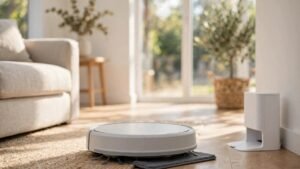
Robotic cleaning tools have moved well past the bump-and-turn machines from a decade ago. iRobot’s own product research shows how far object recognition and mapping precision have advanced in recent robotic vacuum generations.
How Robot Vacuums Have Improved
Modern units use LiDAR and camera-based navigation to build a precise map of a home on the very first run. They remember furniture layouts, avoid cords and pet messes, and clean in efficient rows instead of random bouncing patterns.
Battery life has stretched too. Many units now handle 2,000+ square feet on a single charge, which matters a lot for larger properties.
Automated Mops and Multi-Surface Robots
Combination units that vacuum and mop in a single pass have become standard rather than a premium feature. Some models even detect carpet automatically and lift their mop pads to avoid soaking the fibers.
I’ve noticed these hybrid machines handle the day-to-day upkeep between deeper professional cleanings really well. They’re not a replacement for a thorough service, but they buy homeowners real time.
AI and Machine Learning in Cleaning Equipment
Artificial intelligence is a branch of computer science that enables machines to learn from data and improve performance without being explicitly reprogrammed. In cleaning equipment, this shows up as smarter navigation, better dirt detection, and predictive scheduling.
Smart Mapping and Room Recognition
AI-powered devices now distinguish between a kitchen, a bedroom, and a hallway, and they adjust suction power based on the surface and mess level detected. A pile of crumbs on tile gets a different response than light dust on hardwood.
This level of situational awareness didn’t exist in consumer cleaning tools even five years ago. It’s genuinely changed what “automated cleaning” means.
Predictive Cleaning Schedules
Machine learning models track patterns in foot traffic and dirt accumulation, then suggest cleaning frequencies tailored to actual usage instead of a generic weekly default. A high-traffic entryway gets flagged more often than a rarely used guest room.
I find this shift toward personalization is where the real innovation lives right now. It’s less about raw cleaning power and more about intelligence applied to a routine task.
Eco-Friendly and Sustainable Cleaning Innovations
Sustainability has become a driving force behind new cleaning products and equipment design. Homeowners increasingly want results without harsh chemical exposure or excessive water and energy use.
Green Cleaning Products and Formulations
Plant-based surfactants and biodegradable formulas now perform close to traditional chemical cleaners in independent testing. The Environmental Protection Agency’s Safer Choice program certifies products that meet strict human health and environmental criteria.
I’ve watched clients shift toward these certified products specifically because they want fewer chemical residues around kids and pets. That demand is pushing manufacturers to reformulate faster than they otherwise would.
Water-Saving and Energy-Efficient Equipment
Steam cleaning technology has advanced to the point where it sanitizes surfaces using a fraction of the water older methods required. Energy-efficient motors in vacuums and washers also cut power draw significantly compared to models from a decade ago.
Property managers running multiple units see this add up fast on utility bills. It’s a quiet innovation, but the savings are real.
UV-C Light and Advanced Sanitization Technology
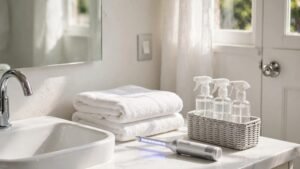
Sanitization technology took a big leap forward once UV-C light applications moved from hospital settings into consumer and commercial cleaning tools. UV-C is a specific wavelength of ultraviolet light that damages the DNA of bacteria and viruses, rendering them unable to reproduce.
How UV-C Disinfection Works
Devices emit concentrated UV-C light across a surface for a set exposure time, and that exposure disrupts the genetic material of pathogens sitting there. Research published by the National Institutes of Health supports UV-C’s effectiveness against a range of surface-level pathogens under controlled exposure conditions.
I want to be clear that this isn’t a replacement for physical cleaning. Dirt and grime can shield pathogens from the light, so UV-C works best as a secondary step after surfaces are already wiped down.
Where This Technology Is Used Today
Handheld UV-C wands have become common for sanitizing doorknobs, light switches, and remote controls between deeper cleanings. Larger UV-C units now appear in HVAC systems too, treating air as it circulates through ductwork.
This crossover between air treatment and surface sanitization shows how blurred the lines have gotten between cleaning and broader home health.
Air Quality Monitoring and Purification Trends
Air quality has become part of the cleaning conversation in a way it never used to be. Dust, allergens, and airborne particles matter just as much to a lot of homeowners now as visible dirt on a countertop.
Smart Air Quality Sensors
Compact sensors now track particulate matter, humidity, and volatile organic compounds in real time, sending alerts straight to a phone. Data from the U.S. Environmental Protection Agency confirms indoor air can carry pollutant concentrations several times higher than outdoor air in some homes.
That statistic surprises most homeowners I talk to. It’s part of why demand for these sensors has grown so quickly.
HEPA and Advanced Filtration Systems
HEPA filtration has become a baseline expectation in vacuums, air purifiers, and even some HVAC upgrades. These filters capture particles as small as 0.3 microns, which covers most household dust, pollen, and pet dander.
Multi-stage filtration systems now combine HEPA with activated carbon to also address odors. That combination handles both particles and smell in one pass.
On-Demand Cleaning Apps and Digital Booking Platforms

Booking a cleaning service used to mean a phone call and a scheduling back-and-forth. Digital platforms have flattened that whole process into a few taps on a screen.
How Booking Technology Simplifies Scheduling
Apps now let homeowners select service type, frequency, and preferred time slots instantly, with automated confirmations replacing manual coordination. Recurring service scheduling has become especially popular among busy households and property managers juggling multiple units.
I think this convenience factor is underrated. It removes friction at exactly the point where a lot of people used to give up and just do it themselves.
Transparency Through Digital Tracking
Many platforms now send real-time updates when a crew arrives, what tasks were completed, and photos documenting the finished work. That transparency builds trust in a way a phone call never could.
Property managers overseeing rental units rely on this documentation heavily. It gives them proof of service without needing to be on-site.
Professional-Grade Equipment Innovations
Commercial cleaning equipment has always pushed technology forward faster than consumer tools, largely because professionals need durability and efficiency at scale. A lot of that innovation eventually trickles down into residential products.
Commercial Cleaning Technology Advances
Industrial-grade extraction equipment now uses precise moisture sensors to prevent over-wetting carpets and upholstery, cutting drying time significantly. Backpack vacuums with HEPA filtration have also become standard for large commercial spaces where speed and air quality both matter.
Efficiency gains here matter beyond just speed. Less water and shorter drying times mean less disruption for the property.
Tools Bridging Professional and Residential Use
Manufacturers have started scaling down commercial-grade tools into consumer-friendly versions, giving homeowners access to power that used to be exclusive to professional crews. Compact extractors and high-suction handheld units are good examples of this crossover.
I’ve seen this narrow the gap between DIY results and professional results. It doesn’t close it completely, but it’s closer than it’s ever been.
Data-Driven Cleaning and Personalized Maintenance Plans
Data collection has quietly become one of the biggest shifts in how cleaning services operate. Instead of a fixed schedule applied to every property the same way, plans now adjust based on actual conditions.
How Data Shapes Cleaning Frequency
Sensors and service history data reveal which areas of a home accumulate dirt fastest, allowing providers to recommend realistic cleaning intervals instead of guessing. A property with pets or high foot traffic gets flagged for more frequent attention than one without.
This shift toward evidence-based scheduling cuts down on both over-servicing and under-servicing. It’s a more honest way to price and plan cleaning work.
Personalization Based on Property Needs
Property type, square footage, occupant count, and even local climate all factor into modern maintenance recommendations. A humid coastal property faces different mold and mildew risks than a dry inland one, and data-driven plans account for that difference.
I find this approach far more useful than a one-size-fits-all checklist. It treats each property as genuinely different, because it is.
Emerging Trends Shaping the Future of House Cleaning
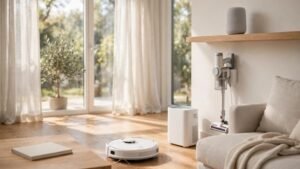
House cleaning technology keeps moving, and a few directions stand out as genuinely likely to reshape the next several years. None of this feels speculative to me anymore. It’s already showing up in early product releases.
What’s Next in Cleaning Technology
Voice-activated cleaning assistants, expanded robotic capabilities for stairs and multi-level homes, and antimicrobial surface coatings are all gaining traction. Subscription-based smart equipment, where hardware upgrades automatically over time, is also starting to appear in the market.
I expect robotics to keep closing the gap on tasks that once required a human hand, like detailed edge cleaning and upholstery care.
Preparing Your Home for Future Innovations
Homes with strong Wi-Fi coverage and centralized smart hubs are best positioned to take advantage of what’s coming next. Upgrading connectivity now saves a lot of friction later when adopting new cleaning tech.
Property managers overseeing several units should think about standardizing smart infrastructure across properties. That consistency makes every future upgrade faster to roll out.
Conclusion
Technology has reshaped nearly every part of house cleaning, from robotic vacuums and AI-driven scheduling to UV-C sanitization and real-time air quality tracking. These tools reward property owners who stay informed and adapt.
Cleaning will keep getting smarter, more data-driven, and more personalized to each property’s specific needs. Staying ahead of these shifts protects both comfort and property value long term.
We help homeowners and property managers cut through the noise and apply the right cleaning technology and services for their property. Reach out to Mr. Local Services to build a smarter, more reliable maintenance plan today.
Frequently Asked Questions
What is the biggest technology trend in house cleaning right now?
AI-powered robotic vacuums with room mapping and predictive scheduling represent the biggest current trend. They adjust cleaning intensity and frequency based on real usage patterns rather than fixed routines.
Are UV-C sanitizing devices actually effective?
UV-C light damages the DNA of bacteria and viruses on exposed surfaces, making them unable to reproduce. It works best as a secondary step after surfaces are physically cleaned first.
Do smart air quality sensors really improve indoor air?
Smart sensors alone don’t purify air, but they identify pollutant spikes so homeowners can act quickly with filtration or ventilation. Pairing sensors with HEPA filtration delivers the biggest air quality improvement.
How is data used to personalize cleaning schedules?
Providers track service history, property size, occupant count, and traffic patterns to recommend realistic cleaning intervals. This replaces generic fixed schedules with plans based on actual property conditions.
Can robotic vacuums replace professional cleaning services?
Robotic vacuums handle daily surface maintenance well, but they can’t deep clean carpets, sanitize bathrooms, or address hidden buildup the way professional equipment does. Most homeowners use robots to extend time between professional visits, not replace them.
What eco-friendly innovations matter most for house cleaning?
Plant-based cleaning formulas and water-saving steam equipment are the most impactful sustainable innovations available today. Both reduce chemical exposure and resource use without sacrificing cleaning performance.
How has booking technology changed hiring a cleaning service?
Digital platforms let homeowners select service type, scheduling, and frequency in a few taps instead of coordinating by phone. Many platforms also provide real-time arrival updates and photo documentation of completed work.
What smart home upgrades help homeowners use cleaning technology better?
Strong whole-home Wi-Fi coverage and a centralized smart hub make it much easier to integrate new cleaning devices as they’re released. Property managers benefit from standardizing this infrastructure across multiple units.